Customer Service Chatbot: The Complete 2026 Guide
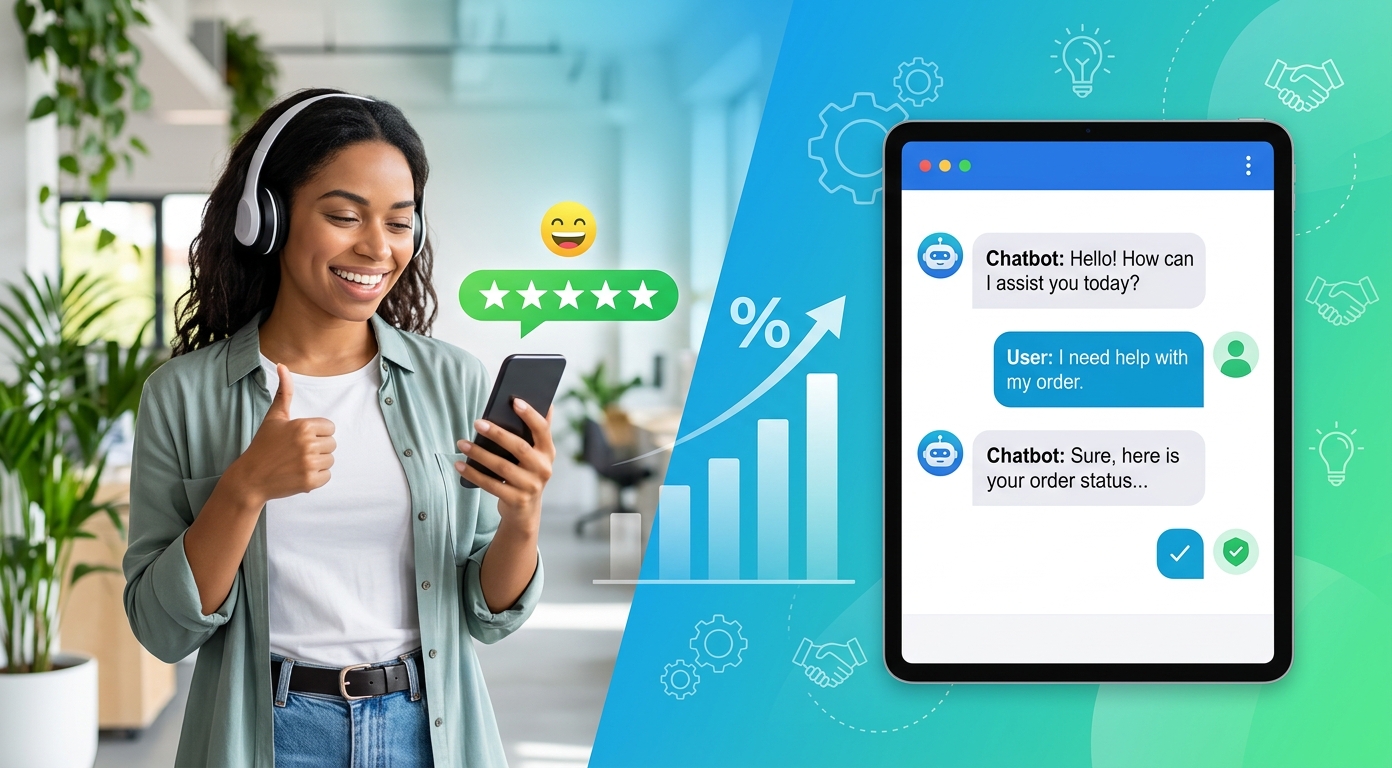
A customer service chatbot has one job, and it is not pretending to be a person. It is being excellent at the boring half of support: the order-status checks, the password resets, the "what are your hours" questions that arrive by the dozen and deserve an instant answer more than they deserve a human. Handled that way, a chatbot raises customer satisfaction rather than sinking it, and this guide covers how to get there: what a customer service chatbot should own, what must stay human, why some bots infuriate people while others quietly win them over, and how to set one up and measure it.
The thesis to keep in view throughout: customers do not hate bots. They hate being trapped by bots. Every design choice below follows from that distinction.
What a customer service chatbot is, and the two species of them
A customer service chatbot is software that handles support conversations without an agent present, and in practice it comes in two species that solve different problems. Rule-based bots run pre-built conversation flows: buttons, branches, and forms that guide a visitor to an answer or an action, perfectly predictable because they only say what you wrote. AI bots generate answers from your help content, handling questions in the customer's own words at the cost of needing guardrails and review. The strongest setups in 2026 run both: flows for the structured jobs (bookings, lead capture, routing) and an AI chatbot for open-ended questions, each handing to the other, with the broader shift covered in our AI customer service pillar. If you are still weighing bots against humans entirely, start with live chat vs chatbot; the honest answer is that mature teams run both.
The work a chatbot should own
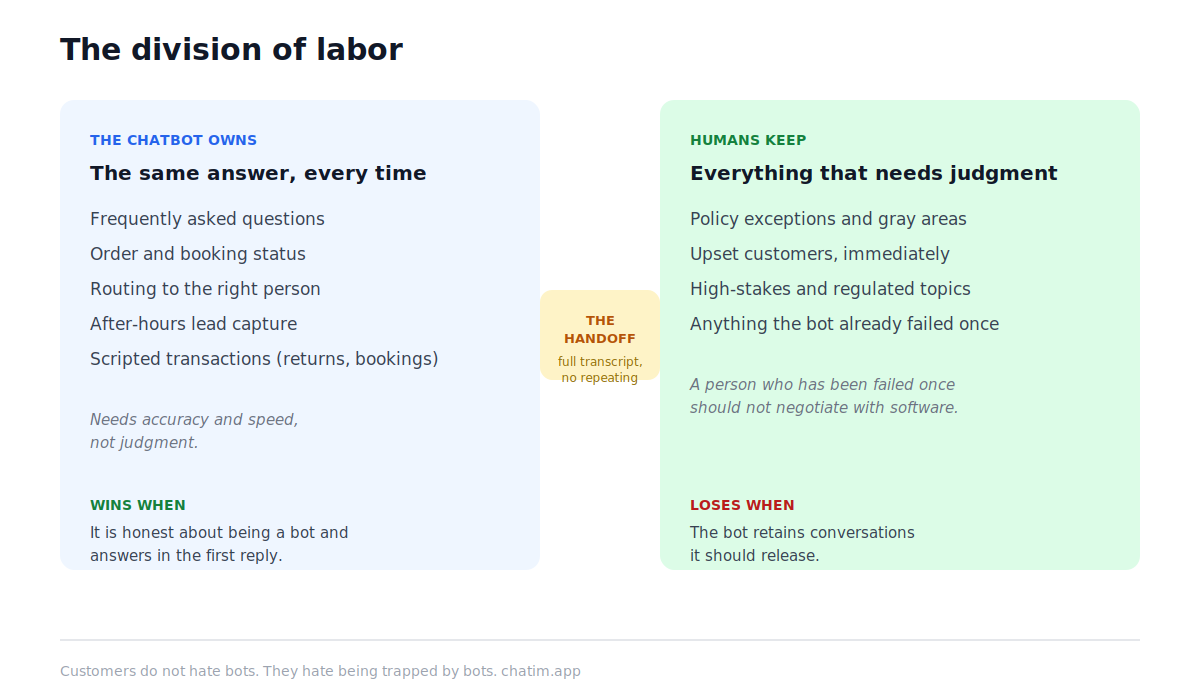
The bot's territory is any conversation where the answer is the same every time someone asks. Frequently asked questions are the obvious core: hours, shipping, returns, pricing basics, the questions your team could answer asleep. Status lookups (where is my order, when does my booking start) reward automation twice, since they are both frequent and urgent. Routing is quietly the highest-value job: two questions from the bot mean the conversation lands with the right person carrying context, instead of being bounced between agents. Lead and detail capture outside business hours turns the widget into a night shift. And follow-the-script transactions, booking a slot, starting a return, applying a promo code, are flows a bot completes faster than a human can type a greeting. What ties these together is that none of them require judgment; they require accuracy and speed, which is exactly what software is for.
What must stay human
The inverse list matters just as much, because every failure story about support automation is a story of a bot keeping a conversation it should have released. Judgment calls stay human: anything involving an exception to policy, a gray area, or a trade-off. Upset customers stay human, immediately; a person who has already been failed once should not be asked to negotiate with software, and the bot's only correct move is a fast, graceful exit to a person with the full transcript attached. High-stakes and regulated topics (medical, legal, financial specifics) stay human as a matter of risk, not capability. And anything the bot has already failed at once stays human: the second attempt at the same question is a handoff trigger, not a retry. Teams that write this list down and wire it into their flows keep the trust that makes the automated half acceptable.
Why chatbots raise satisfaction, and why they sink it
The same technology produces both outcomes, and the difference is three design choices. Honesty: bots that introduce themselves as bots score better with customers than bots that fake a human name and typing delays, because nobody enjoys discovering the deception. Speed to value: a bot that answers the actual question in its first reply justifies its existence instantly; a bot that opens with three qualifying questions before offering anything is a form wearing a face. And the escape hatch: the single biggest driver of chatbot rage is a missing or hidden path to a person. Keep "talk to a human" visible and working at every step, and paradoxically customers use it less, because the option's presence signals the bot is a convenience rather than a wall. Get these three right and the bot improves the numbers your team is judged on; get them wrong and every transcript becomes a complaint.
Setting one up in five steps
First, choose the conversations from evidence: read your last fifty chats and emails, and give the bot the two or three questions that repeat most, not the ten you can imagine. Second, start from a ready-made flow rather than a blank canvas; the customer support template and FAQ template cover the standard shapes and take minutes to deploy. Third, rewrite every message in your own voice, especially the opener, because default template copy is what makes bots feel generic. Fourth, wire the handoff before launch: route to live chat when the team is online, collect a contact and promise a reply time when it is not, and test both paths on your own phone. Fifth, launch on one page, read the first two weeks of transcripts, and promote what customers actually asked into the flow. The bot's saved answers and your team's canned responses should draw from the same library, so the voice stays consistent whether software or a person is typing.
Where customer service chatbots earn their keep
The pattern repeats across industries with different nouns. Ecommerce bots live on order status, shipping, and returns, the dominant ticket shapes for any store, covered in depth in our Shopify chatbot guide. SaaS bots deflect how-do-I questions into documentation and route trial users with buying questions to humans fast, a balance mapped in SaaS customer support. Service businesses (salons, clinics, agencies, restaurants) use bots mostly as booking and intake machines, where the conversation is really a friendly form. And every industry shares the after-hours case: the bot as the team member who never sleeps, answering the predictable and queueing the rest with expectations honestly set by a good auto-reply.
Measuring whether it works
Two numbers tell most of the story. Deflection: the share of conversations the bot resolves without human help, which is the efficiency claim made measurable; count only genuinely resolved conversations, not abandoned ones, or the metric flatters the bot for driving people away. Satisfaction: survey after both bot-resolved and human-resolved conversations and compare, using a consistent method (our free CSAT calculator does the math). A healthy pattern is deflection climbing while bot-conversation satisfaction holds near human levels on the simple questions. The warning pattern is deflection climbing while satisfaction falls, which usually means the bot is retaining conversations it should hand off. Read five bot transcripts a week alongside the numbers; the transcripts explain what the metrics only hint at, and the fundamentals in our customer service guide apply unchanged to the automated half of the team.
More on this from our team: what a chatbot is, how to build an AI chatbot, and welcome messages that get replies.
Frequently Asked Questions
What is a customer service chatbot?
Software that handles support conversations without an agent present. Two species exist: rule-based bots that run pre-built flows with buttons and branches, and AI bots that generate answers from your help content in the customer's own words. Mature setups run both, each handing conversations to the other.
Do customers actually like chatbots?
They like fast, accurate answers and dislike being trapped. Bots that introduce themselves honestly, answer the real question in the first reply, and keep a visible path to a human tend to score well on the routine questions. The rage stories almost always trace back to a missing or hidden escape hatch.
What should a customer service chatbot handle?
Anything where the answer is the same every time: frequently asked questions, order and booking status, routing to the right person, lead capture outside business hours, and scripted transactions like starting a return or booking a slot. The common thread is that these need accuracy and speed, not judgment.
What should a chatbot never handle?
Judgment calls, policy exceptions, upset customers, and high-stakes or regulated topics like medical, legal, or financial specifics. A second failed attempt at the same question also belongs to a human. Wiring these triggers into the flow before launch is what keeps automation from costing trust.
Do chatbots increase customer satisfaction?
They can move it in either direction, and design decides which. Satisfaction rises when the bot is honest about being a bot, delivers value in its first reply, and hands off gracefully. It falls when the bot fakes being human, interrogates before helping, or retains conversations it should release.
Should a chatbot pretend to be human?
No. Give it a name and a friendly voice if you like, but let it introduce itself as automated. Customers calibrate their patience and phrasing when they know what they are talking to, and discovering a fake human mid-conversation converts a neutral experience into a negative one.
How do I set up a customer service chatbot?
Five steps: pick the two or three questions that repeat most in your real transcripts, start from a ready-made template rather than a blank canvas, rewrite every message in your own voice, wire and test the human handoff before launch, then read the first weeks of transcripts and fold in what customers actually asked.
How should the handoff from bot to human work?
Visibly and instantly. Keep a talk-to-a-human option present at every step, route to live chat with the full transcript when the team is online, and collect contact details with a promised reply time when it is not. The customer should never repeat anything a bot already collected.
How do I measure whether a chatbot is working?
Track deflection (the share of conversations genuinely resolved without human help, excluding abandoned ones) alongside satisfaction surveyed after both bot and human conversations. Healthy: deflection climbs while bot satisfaction holds near human levels on simple questions. Warning: deflection climbs while satisfaction falls, which means the bot is holding conversations it should hand off.
What is a good deflection rate for a customer service chatbot?
It depends on your ticket mix, which is why chasing a universal benchmark misleads. A store drowning in order-status questions can automate a large share honestly; a consultancy with bespoke questions cannot. The better target is trend-based: deflection rising month over month while satisfaction holds.
Are AI chatbots better than rule-based chatbots for support?
They are better at different jobs. Rule-based flows win for structured tasks like booking, routing, and lead capture, because they never improvise policy. AI wins for open-ended questions phrased in the customer's own words. The strongest setups combine them rather than choosing.
How much does a customer service chatbot cost?
Rule-based chatbot flows are included free on several platforms, Chatim among them, so a small team can automate its repeated questions without a budget line. AI answering is usually metered or tiered separately across the market. Start free with flows, measure the deflection, and buy AI when open-ended questions dominate what remains.
Can a chatbot work alongside live chat agents?
That pairing is the whole model: the bot covers the predictable and the after-hours, agents take the judgment calls, and the handoff carries context between them. Sharing one saved-answer library between the bot and the team keeps the voice consistent whichever is typing.
Related articles
More in Chatbots & AI → Facebook Messenger Chatbot: The 2026 Guide + 5 Platforms
How Messenger chatbots work now: comment-to-DM automation, click-to-Messenger ads, 5 platforms compared, and when a contact button is enough.
 Chatbot Templates: 26 Free, Ready-to-Use Flows (2026)
26 free chatbot templates organized by goal and industry, what a good template contains, and the five edits that turn a ready-made flow into your own bot.
 Best WhatsApp Chatbots in 2026: 7 Platforms Compared
7 WhatsApp chatbot platforms compared, with both bills modeled: subscriptions and Meta fees. Plus the free path if you only need a WhatsApp button.
 Best Chatbot Platforms in 2026: 10 Builders Compared
10 chatbot platforms compared by what their pricing actually meters, with free plans, AI features, and a pick for each use case