Best Welcome Messages: Examples and Tips for Every Audience
A welcome message is the first thing many people hear from your brand, your team, or your community. Done well, it turns a stranger into someone who feels expected and valued. Done poorly, or skipped entirely, it leaves a quiet gap right where a relationship should start.
This guide covers welcome messages for every audience: customers landing on your website, shoppers messaging your team, new employees joining your company, and members signing up for a group. You will find examples, templates, and practical tips you can adapt today, whether you want a big welcome or a quiet, simple one.
Why welcome messages matter
A welcome message sets the tone for everything that follows. It is a small piece of communication with an outsized effect, because first impressions are sticky. When someone feels greeted, they relax, pay attention, and become far more open to your next message.
For customers, a warm welcome can lift retention from the very first visit. For a new hire, a thoughtful greeting signals that they made the right choice. For a new group member, a friendly note tells them they belong. In every case the goal is the same: make the person feel seen, and set them up for success.
There is a business case too. A good welcome message reduces early questions, points people toward a clear starting point, and begins building the trust that loyalty depends on. It takes only a little work to write, and it pays back every time someone reads it. Skipping the welcome, by contrast, quietly tells people they do not matter much, which is the opposite of what any brand or team wants.
Types of welcome messages
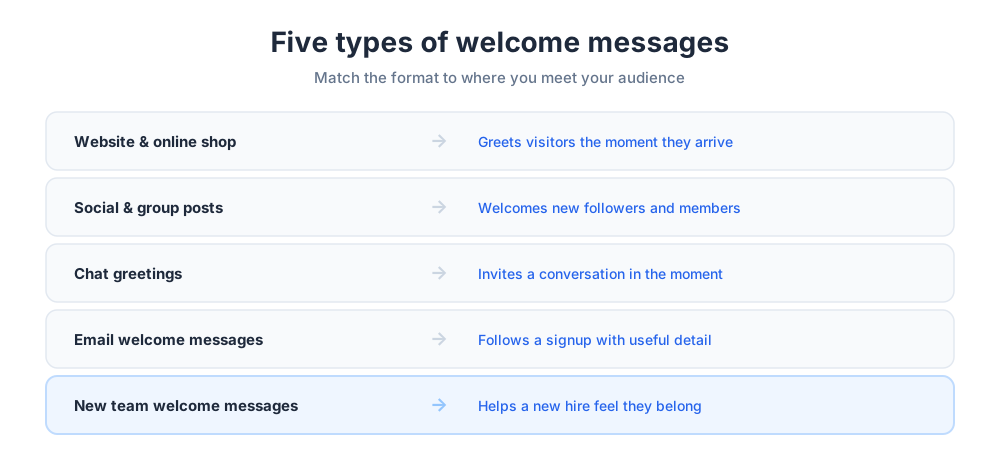
Welcome messages come in many forms, and the best one depends on where and how you meet your audience. Each type of message has its own job, so it helps to know the main options before you start writing.
Website and online shop messages
A website welcome message greets visitors the moment they arrive. It might be a banner across the top of the page, a short line in a messaging widget, or a pop-up card that offers first-time visitors a discount. Keep it brief and guide people toward what to do next, whether that is browsing a collection or claiming an offer.
Social and group messages
On social platforms, a welcome post greets new followers, while a group or club greeting welcomes people into a shared space. An email often follows, giving subscribers more detail than a single post can hold, and a blog can welcome new readers with a short introductory note. Each channel has its own rhythm, so match the format to the place.
New team welcome messages
Inside a company, welcome messages help new colleagues settle in. A note on a new employee's first day, a hello in a team channel, or a welcome card on the desk all signal that the onboarding process has a human side. These small touches matter as much as the paperwork.
Welcome messages for customers
Customer welcome messages have one job: make a visitor or buyer feel glad they showed up. A few well-placed words can turn a cold landing page into the start of a real conversation, and that is worth far more than the effort it takes.
Chat greetings
A chat greeting is one of the warmest ways to welcome a customer. When someone opens the chat window, a friendly line like "Hi! Welcome to our store, how can we help today?" invites them to talk. Live chat greetings work because they arrive at the exact moment a visitor has a question, and a quick reply can rescue a sale that would otherwise drift away. If you use live chat for sales, see our guide to lead generation through live chat. A chatbot can send the first message automatically, then hand off to a person on your team when the questions get specific.
Email welcome messages
A welcome email reaches customers just after they sign up. It can thank them, set expectations, and share one useful link. Keep the text short and the tone friendly, give readers a single clear action rather than five competing ones, and never let the text run so long that nobody reads it to the end.
Welcome messages for new employees
Welcome messages are not only for customers. When new employees join, the right words shape how quickly they settle and how soon they feel they belong. A strong start lifts employee engagement and sets the tone for the whole onboarding experience, long before the first review.
A newcomer's first day
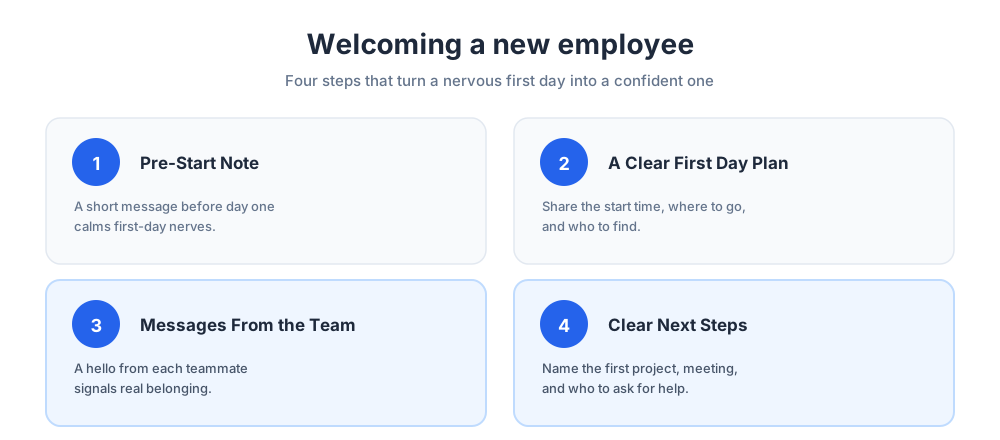
A new starter remembers their first day. A short message from their manager, sent before they arrive, calms first-day nerves: "We are so glad you are joining us. Your first day starts at 9, and your laptop and access will be ready." Mention where to go, who to find, and that questions are always welcome. A welcome letter, or a small note on the desk, adds a personal touch that a screen cannot. Starting a new job is daunting, and a kind word makes the access to a friendly face feel immediate.
Team messages and next steps
Beyond the manager, messages from the team make a newcomer feel welcome. Messages in a group channel, a quick hello from each person, or a shared note about the new team member all help. Close with what comes next: the first project, the first meeting, and where to ask for help. A clear path turns a nervous start into a confident one. A welcome that names the company culture, not just the tasks, helps a new team member picture their place in it, because stepping into a new role is as much about belonging as it is about paperwork.
Welcome back messages
Not every welcome is a first hello. These messages greet returning customers, lapsed subscribers, or an employee coming off leave. They work because they show you noticed an absence and you are genuinely glad it ended.
A welcome back message can be simple: "Welcome back! We saved your favorites and added a few new arrivals we think you will like." For a returning employee, a warm note from the team eases the return. The same idea welcomes returning guests to a hotel or a member back into a group: acknowledge the gap, then make re-entry easy and pressure-free.
Keep these messages short and specific. Reference what changed while the person was away, and give them one easy way to pick up exactly where they left off. A returning customer or colleague who feels genuinely remembered is far more likely to stay engaged, so the minute it takes to write a thoughtful welcome back note is always time well spent.
Community and social media welcome messages
A community runs on belonging, and a welcome message is how belonging begins. When someone new joins a forum, a Telegram channel, or a brand community, a warm greeting tells them they have arrived in the right place rather than a crowded, indifferent room.
Good community welcome messages do three things. They greet the new member by name where possible. They point to a first step, such as an introductions thread or a pinned guide. And they invite a reply, because a group grows when newcomers speak up rather than quietly lurk on the edges.
On social media, the same spirit applies. A welcome post for a new follower, a pinned message of the day, or a friendly chat reply all strengthen your standing with an audience. Match the tone to the group: playful for a hobby space, calm and clear for a professional one.
How to write a welcome message that works
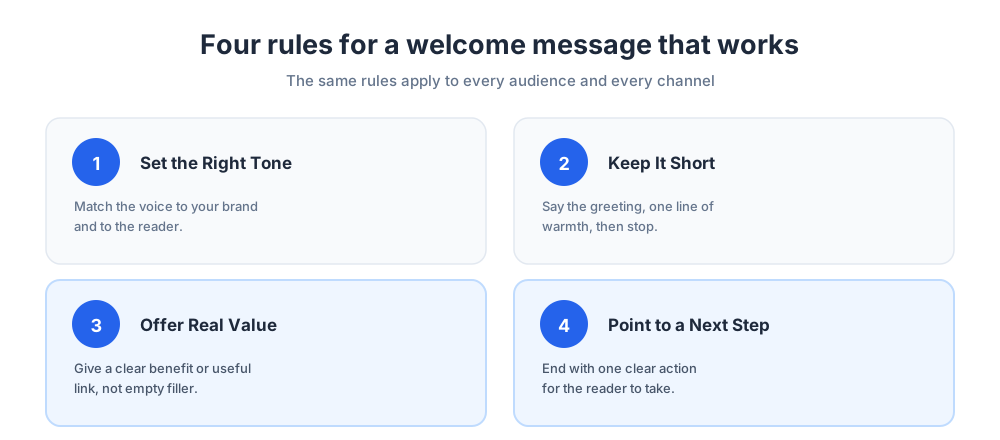
A welcome message that works follows a few simple rules, whatever the audience. Writing one is quick once you know what to aim for, and the same strategies apply across every channel you use.
Set the right tone
Tone carries more than words do. Match it to your brand and your reader: warm and playful for a lifestyle shop, calm and professional for a B2B service or a workplace culture that values precision. The same message can land as friendly or cold depending on tone alone, so read it aloud before you send it and adjust anything that sounds stiff.
Express genuine warmth
Express something real. A line that says "we are glad you are here" only works if the rest of the experience backs it up. Express appreciation, express a clear benefit, and express what happens next so the reader is never left guessing. Avoid empty filler, because a short, honest welcome beats a long, generic one, and close with a simple call to action. Good writing here is specific, not flowery.
Why personalization matters
A generic welcome message is better than none, but a personalized one is far stronger. People engage with brands and teams that treat them as individuals, not as anonymous entries in a list.
Personalization can be small. Use the person's name. Reference why they signed up, what they bought, or the new position they are joining. A personal greeting like "Welcome back, John, your saved items are waiting" feels written for one reader, because it was. The same applies to a new user exploring your product for the first time: point them to the feature most relevant to their goal.
Personalized welcome messages build the kind of presence that earns repeat business and long-term loyalty. For more on turning first impressions into lasting ones, see our guide to improving the customer experience.
Ask for feedback
The welcome is also a chance to open a two-way door. Invite questions, and ask for feedback once someone has settled in. A short survey, a single question in a chat, or a reply prompt in an email all gather the input that makes your next welcome better. Acting on feedback shows customers and employees alike that their voice counts, and a quick word with customer support should always feel welcome too.
Welcome message templates
Templates make consistency easy. Keep a few welcome messages ready to adapt and you will never scramble for words. Each one below is a starting point you can shape to fit your brand and tone.
Customer website template: "Welcome to [Business Name]! We are glad you are here. Browse our latest arrivals, and reach out any time, we are happy to help."
New employee template: "Welcome to the team, [Name]! We are excited for your start. Your schedule and access details are attached, and your onboarding buddy will meet you at reception." Pair it with a clear plan, like the one in our onboarding guide.
Community template: "Welcome aboard! Introduce yourself in the thread below, and explore the pinned post to get the most from the group."
Adapt the tone, keep each one short, and treat every template as a starting point rather than a rigid script. A successful welcome message, however it is delivered, is a small thing that makes a real difference and marks the beginning of a longer, successful journey with your brand.
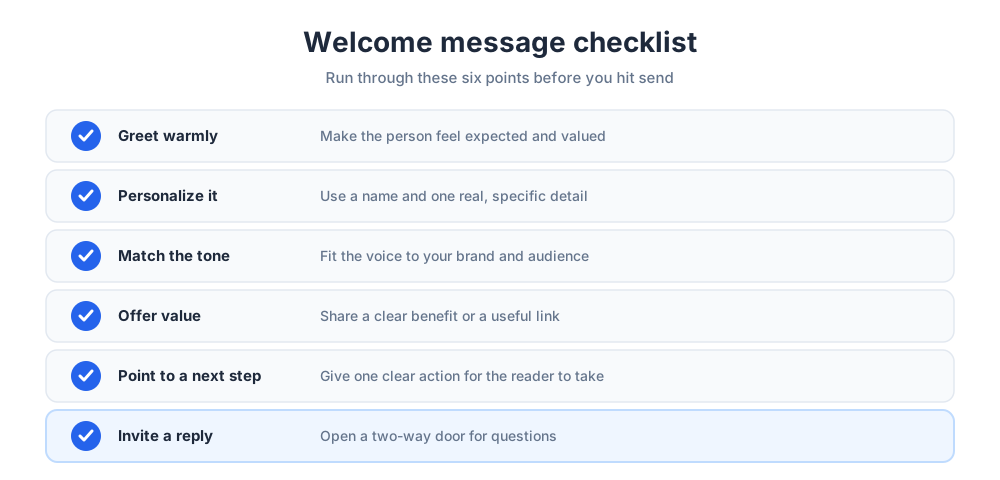
Keep going with our guides to live chat best practices and canned responses.
Frequently Asked Questions
What is a nice welcome message?
A nice welcome message is short, warm, and specific. It greets the person genuinely, makes them feel expected rather than processed, and points to one clear next step. For a customer that might be "Welcome! We are glad you are here, take a look at our latest arrivals." For a new team member it might be "Welcome aboard, we are excited to have you." The tone should match your brand, and the message should sound like a real person wrote it.
How do I write a heartfelt welcome wish?
A heartfelt welcome wish works when it is sincere and personal. Use the person's name, mention something specific about them or the moment they are joining, and express a real feeling rather than a stock phrase. For example, "Welcome, Sarah. We have been looking forward to having you on the team, and we cannot wait to see what you build with us." Keep it warm, keep it honest, and avoid filler that any reader could receive.
How do I write a short welcome?
For a short welcome, lead with the greeting, add one line of warmth, and end with a single action. A full example: "Welcome! We are glad you are here, browse our collection and reach out any time." Cut anything that is not the greeting, the feeling, or the next step. Short welcomes work well in chat windows, banners, and text messages, where readers want to move quickly and a long message simply goes unread.
What to say to a welcome message?
When you receive a welcome message, a brief, friendly reply is enough. Thank the sender, show a little enthusiasm, and ask any question you have. For a new job that might be "Thank you so much, I am excited to get started and to meet the team." In a community it could be "Thanks for the warm welcome, glad to be here." A quick response keeps the conversation open and signals that you are engaged.
What is a welcome message?
A welcome message is the first communication someone receives from a brand, team, or community. It greets a new customer on a website, a new follower on social media, a new employee on their first day, or a new member joining a group. Its job is to make the person feel expected and valued, set the tone for the relationship, and guide them toward a clear first step.
Why are welcome messages important?
Welcome messages matter because first impressions are sticky. A thoughtful greeting makes a customer more likely to stay, a new hire more confident in their choice, and a community member more likely to take part. A good welcome also reduces early questions and points people toward a useful starting point. It costs very little to write and begins building the trust that loyalty and engagement depend on.
What should a welcome message for new employees include?
A welcome message for new employees should calm first-day nerves and signal belonging. Include a warm greeting, practical details such as start time and where to go, a note that questions are welcome, and a sense of the company culture. Messages from the team, not just the manager, help a new team member settle in. Close with clear next steps so the new colleague knows exactly what comes first.
How do I write a welcome message for a new team member?
Address the new team member by name, express genuine warmth, and make the practical part easy: when to start, who to find, and what their first day looks like. Mention the onboarding plan and offer a buddy or contact for questions. A short note from each teammate adds to the effect. The goal is for the new hire to feel like part of the group before the work even begins.
What is a good welcome message for a website?
A good website welcome message is brief and guides the visitor forward. It can be a banner, a chat greeting, or a pop-up card, such as "Welcome! Enjoy a discount on your first order" or "Hi there, how can we help today?" Keep it short, match the tone to your brand, and give one clear action rather than several. The aim is to turn a cold landing page into the start of a conversation.
What is a welcome back message?
A welcome back message greets someone returning after an absence: a lapsed customer, an inactive subscriber, an employee coming off leave, or a member rejoining a community. It works because it shows you noticed they were gone. A simple example is "Welcome back! We saved your favorites and added a few new arrivals." Keep welcome back notes short, reference what changed while they were away, and make it easy to pick up where they left off.
How long should a welcome message be?
A welcome message should be as short as it can be while still doing its job. For a chat greeting, banner, or text, one or two sentences is plenty. For a welcome email or a new employee note, a short paragraph works well. The rule is simple: include the greeting, one line of warmth or value, and a clear next step, then stop. A long, generic welcome is read less often than a short, specific one.
How do I personalize a welcome message?
Personalize a welcome message by using the person's name and referencing something specific: why they signed up, what they bought, or the new position they are joining. A personal greeting like "Welcome back, John, your saved items are waiting" feels written for one reader. For a new user, point to the feature most relevant to their goal. Small, accurate details make a message feel human and build a stronger connection.
What is a good welcome message for a community or group?
A good community welcome message greets the new member by name, points to a first step such as an introductions thread or a pinned guide, and invites a reply. For example, "Welcome aboard! Introduce yourself below and explore the pinned post to get started." Match the tone to the group, playful for a hobby forum and calm for a professional one, and make it clear that newcomers are encouraged to speak up.
Related articles
More in Customer service → SaaS Customer Support: The Stage-by-Stage Guide (2026)
How SaaS customer support actually works at each stage: the right stack from founder-led live chat to a full support operation, channels, and metrics.
 How to Reduce Customer Churn: 5 Levers in Payback Order
Reduce customer churn by pulling five levers in payback order: payment recovery, onboarding, support quality, pricing fit, and a 90-day win-back.
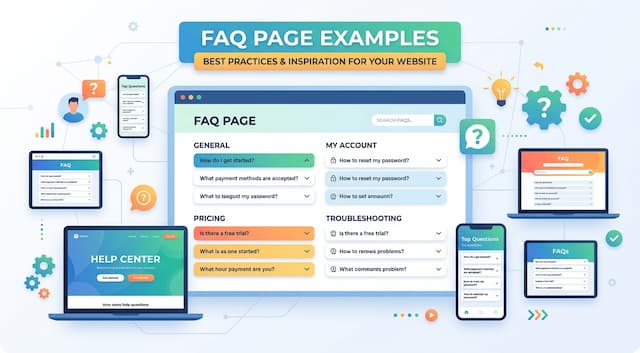 10 FAQ Page Examples That Actually Help Customers (2026)
10 FAQ page examples from Shopify, Airbnb, Slack, Nike and more, with the exact pattern each gets right and a checklist to build your own FAQ page.
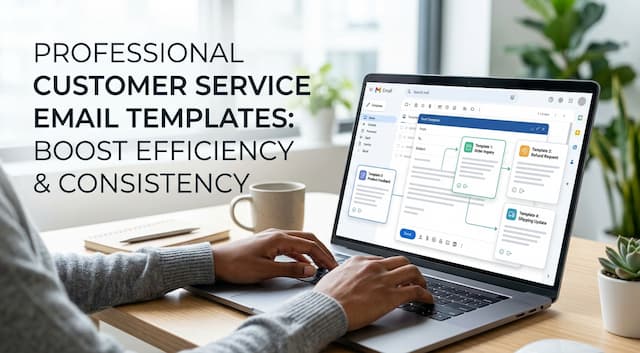 12 Customer Service Email Templates for Every Scenario (2026)
12 customer service email templates for complaints, refunds, delays, bugs and saying no, plus the five-line skeleton that keeps them sounding human.