Customer Onboarding: Steps, Examples, and Best Practices
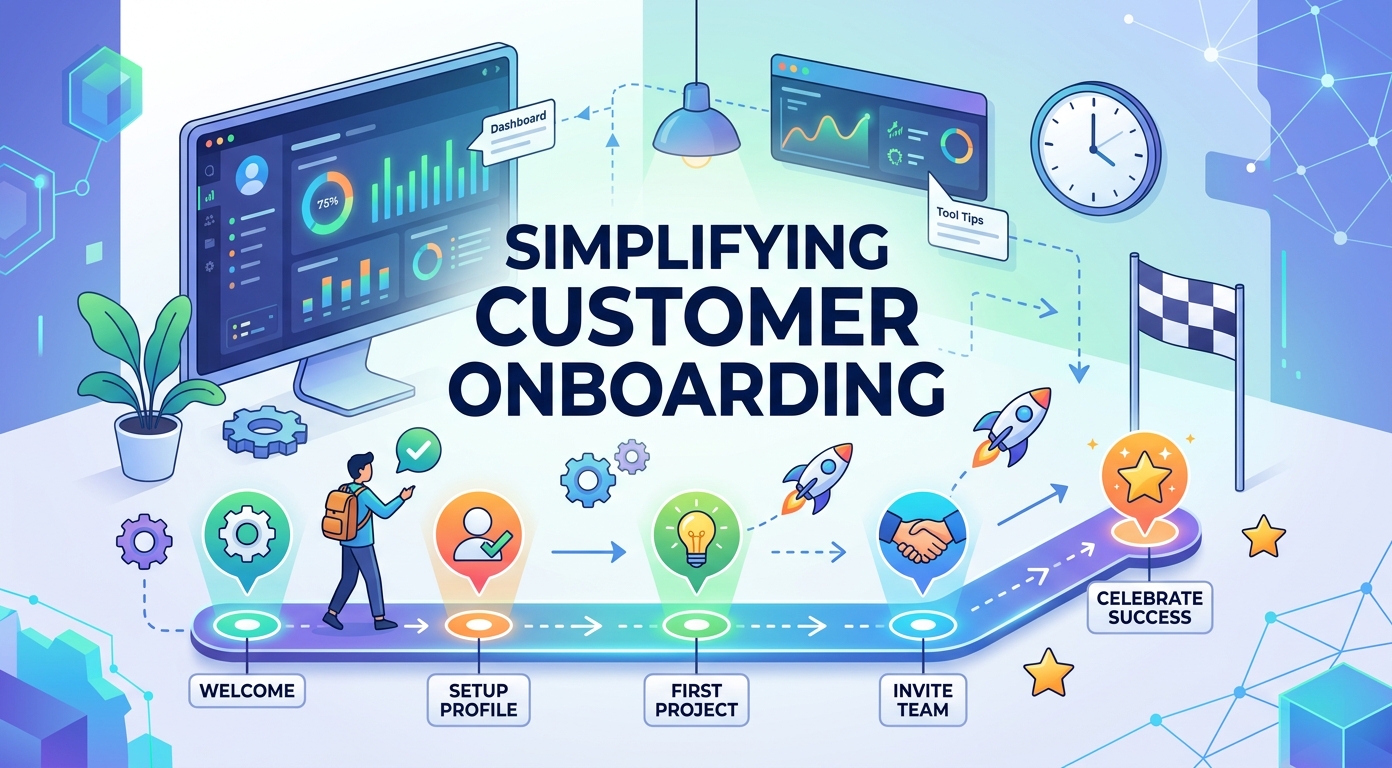
Onboarding new customers well is one of the highest-return things a business can do. A clear customer onboarding journey helps people understand the value of your product fast, and it turns a first purchase into a lasting relationship. This complete guide explains what customer onboarding is, why it matters, the key steps, real examples, and the best practices that make onboarding work across the entire customer journey.
What is customer onboarding
Customer onboarding is the process of guiding new customers through structured steps so they understand your product or service and reach real value quickly. A good onboarding flow welcomes customers, helps with account setup, and provides training, so the product fits naturally into their daily work.
The exact path varies by product complexity, industry, and customer needs, but the aim is always the same: a smooth start that leaves customers confident and supported rather than confused. Strong onboarding is less about explaining every feature and more about helping a customer succeed at the task that made them sign up in the first place.
Why customer onboarding matters
Customer onboarding shapes the first impression a new customer forms of your company. Those early interactions decide whether someone feels supported or left to struggle alone. A structured onboarding process reduces churn, drives product adoption, and lifts customer satisfaction from day one.
The business case is strong. Companies with a dedicated onboarding program tend to see better retention and higher customer lifetime value. Good onboarding builds trust early, and trust is what turns a new user into a loyal advocate who recommends your product to others.
Weak onboarding does the opposite. When a customer cannot work out how to get value, they quietly drift away, often before they ever see what the product can really do. That lost momentum is expensive, because winning a customer back costs far more than guiding them well the first time.
Onboarding also lightens the load on your support and service teams. When a customer does their early learning properly, they raise far fewer tickets later, which frees your team to focus on harder problems and on the customers who genuinely need a hand. A few hours invested in good onboarding pays back many times over across the whole customer relationship, and it does so quietly, month after month.
The customer onboarding process: key steps
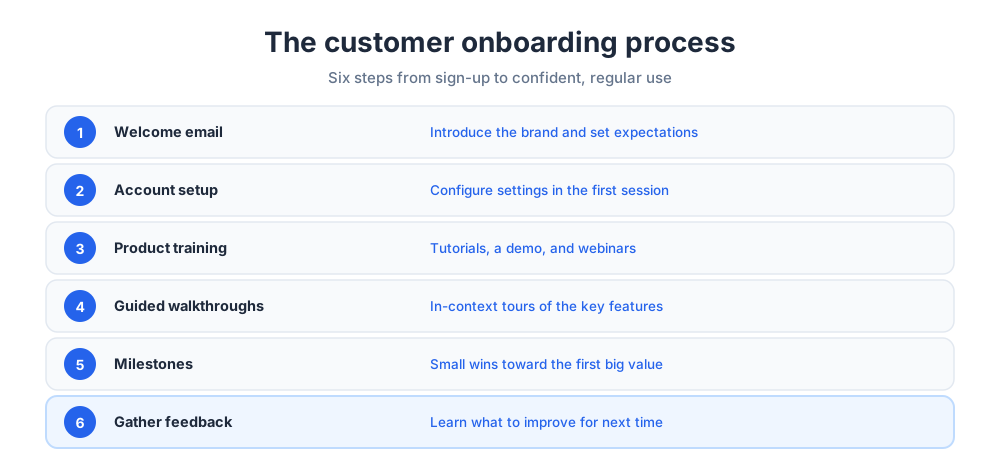
A successful customer onboarding process follows a clear sequence. While the exact steps vary by product, this step guide covers the stages most businesses need to move a customer from sign-up to confident, regular use.
Welcome email
Start the journey with a warm welcome email that introduces your brand and sets expectations for what comes next. Personalize it so the customer feels valued from the very first message; for inspiration, see our roundup of the best welcome messages.
Account setup and first log in
Guide customers through account setup and that first session, helping them configure the settings that match their needs. A smooth, low-friction setup is the foundation that everything else rests on, so remove every optional step you can.
Product training
Offer product training through tutorials, a quick demo, or webinars so customers learn how to use the product effectively. For complex products, a phased approach to learning works best, introducing one capability at a time rather than all at once.
Guided walkthroughs
Use a guided product walkthrough or in-app product tours to highlight key features in context. Hands-on learning makes the first steps memorable, and a customer who learns by doing remembers far more than one who only reads.
Milestones
Set small milestones that help customers feel real progress. Each milestone should move them closer to the moment they see the product's full value, often called the activation point or first win.
Gather feedback
Ask for feedback throughout onboarding. It improves the experience for the next customer and shows the current one that their input matters, and our guide to customer feedback covers collecting it well.
Types of customer onboarding
Onboarding is not one-size-fits-all. Low-touch onboarding relies on self-service tutorials and an onboarding checklist, which is ideal for simple products and a large user base. High-touch onboarding adds a human guide, and it suits complex or high-value accounts that need a hands-on partner, common in B2B customer service.
Most companies blend the two, matching the level of help to specific customer needs at each stage of the customer lifecycle. A small account might run entirely on a self-guided checklist, while an enterprise client gets a dedicated contact, and both can be served well by the same underlying plan.
SaaS companies face this most directly, because a SaaS product is bought, set up, and judged by the customer with very little hand-holding. For these teams, onboarding is not a nicety; it is the exact moment a free trial either becomes a paying habit or quietly lapses, so a SaaS onboarding plan deserves the same care as the product itself.
Customer onboarding examples
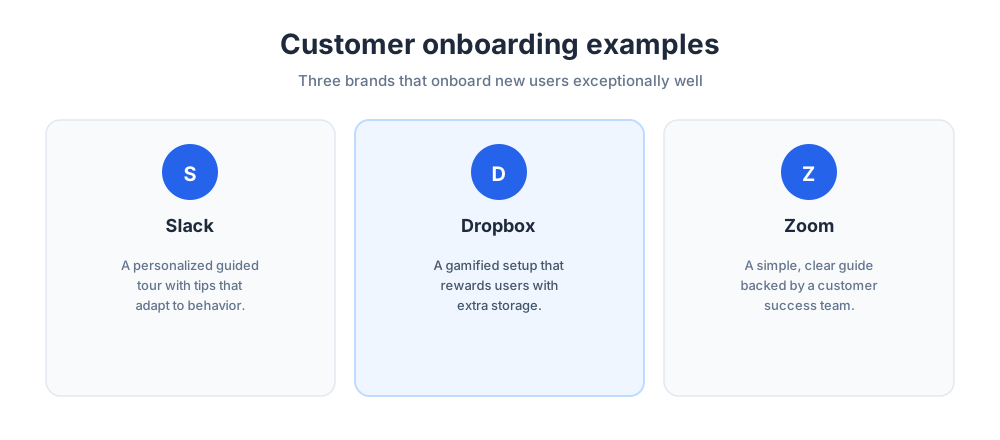
Leading companies show what great onboarding looks like in practice, and their approaches are worth studying.
Slack
Slack uses an intuitive, personalized onboarding journey. New users get a guided tour and tailored tips that adapt to their behavior, helping them find the most valuable features fast without feeling lost.
Dropbox
Dropbox gamifies onboarding, rewarding users with extra storage for completing setup tasks. It makes learning the product feel fun and interactive rather than like a chore.
Zoom
Zoom keeps onboarding simple with a clear, user-friendly guide, backed by a customer success team that helps new users reach a working setup quickly and confidently.
What these examples share is a focus on the customer's first real win. None of them tries to teach everything at once; each one removes friction, points to a single valuable action, and lets the learning build naturally from there. That simple pattern, a fast first success followed by gradual depth, is something any business can copy, whatever its product.
Customer onboarding best practices
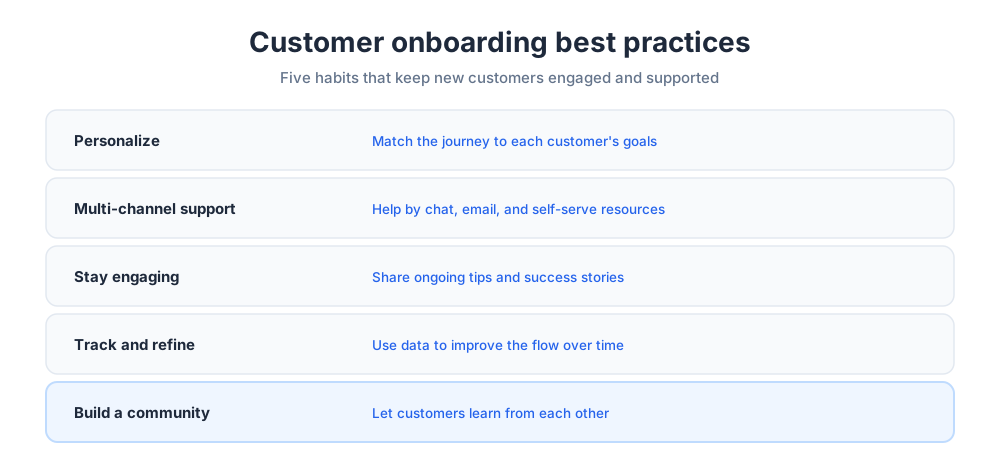
A few best practices make any onboarding experience stronger, whatever your product.
Personalize the journey to each customer's own goals so it feels relevant rather than generic. Offer multi-channel support, including live chat, email, and self-service help, so assistance is always within reach. Keep customers engaged with ongoing tips, learning resources, and success stories. Track data and refine the flow over time. And build a community where customers learn from each other, the kind of helpful support that turns onboarding into something bigger than a single tutorial.
Above all, make help easy to find at every step. A customer who hits a wall and cannot get a quick answer often gives up quietly rather than complaining, so a visible support option keeps the learning moving instead of stalling at the first hard moment.
Building a customer onboarding plan
An effective customer onboarding plan balances customer goals with business goals. A detailed plan keeps the experience cohesive instead of ad hoc, so every customer gets the same strong start.
Build a content strategy of FAQs, video tutorials, and guides so customers can learn at their own pace. Design automated email sequences that move customers through each stage, from the welcome email to advanced features. Organize a structured workflow with clear stages for setup, training, and feedback. And define success metrics so you can measure what works and what does not.
A written plan is also what makes scalable onboarding possible. As your customer base grows, a documented process means quality does not depend on who happens to be available that day.
Customer onboarding tools and resources
The right resources make onboarding easier for customers and for your team. A knowledge base or help center lets customers find answers on their own, at any hour, which keeps simple questions from becoming support tickets.
In-app tools deliver guided tours and checklists inside the product itself, where customers actually need them. For SaaS companies especially, onboarding software automates email sequences, tracks progress, and flags customers who stall so a human can step in. Marketing and product teams often share these tools, since a smooth onboarding experience supports both adoption and growth. Pair the resources with a responsive support channel, and customers always have a clear next step. Live chat is a strong addition, and lead generation through live chat shows how the same channel also wins new customers.
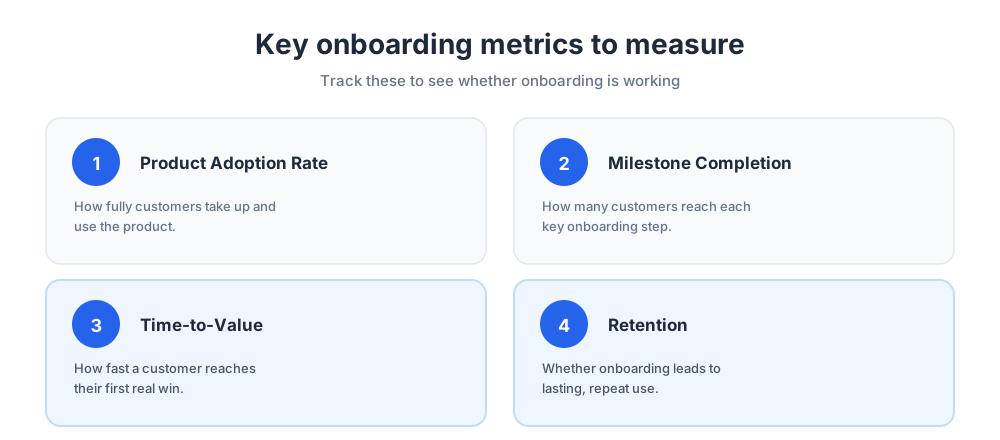
Key onboarding metrics to measure
Once your program is running, measure it. Tracking the right metrics shows what works and what to fix, so onboarding keeps improving instead of standing still.
Watch product adoption rate, milestone completion, and time-to-value, since these reveal how fast customers reach a first win. Monitor activation and retention to see whether onboarding leads to lasting results. Collect customer feedback through surveys and interviews to find the exact friction points. Then refine the workflow, because the best onboarding programs improve continuously rather than launching once and going stale.
It also helps to compare groups of customers over time. If the people who joined this quarter activate faster than last quarter's, your changes are working. If they do not, the data points to exactly where the onboarding journey still loses people, and acting on that signal is what separates a good program from a great one.
Common onboarding mistakes to avoid
Even a solid plan can stumble. The most common mistake is overwhelming new customers with every feature at once, instead of guiding them through the important steps in a sensible order.
Other mistakes include a generic experience that ignores customer priorities, no clear measure of success, and going quiet the moment setup finishes. A long, confusing first session is its own kind of poor onboarding, and it teaches customers that the product is harder than it really is. Avoid these traps, keep the journey focused, and onboarding becomes a genuine driver of growth.
The future of customer onboarding
Onboarding keeps getting smarter. Expect more personalization, with flows that adapt in real time to each user, and more automation that frees your team for the moments that truly need a human touch.
Whatever changes, the principle holds: guide customers with care, help them reach value fast, and keep improving the journey. Customer success leaders agree that onboarding done well is one of the surest paths to long-term success, and a strong start remains the foundation every lasting customer relationship is built on. Treat onboarding as a living process rather than a one-time project, revisit it as your product and your customers change, and it will keep rewarding the business long after that first sign-up.
Related reading: SaaS onboarding best practices and free trial conversion.
Frequently Asked Questions
What is meant by customer onboarding?
Customer onboarding is the process of guiding new customers through structured steps so they understand a product or service and reach real value quickly. It usually covers a welcome, account setup, training, and early support. The goal is a smooth start that leaves customers confident and supported, which builds satisfaction, loyalty, and long-term engagement instead of letting new users struggle and drift away.
What are the 5 stages of the onboarding process?
A common five-stage view of customer onboarding is: a warm welcome, account setup and first login, product training, guided walkthroughs of key features, and a milestone or first win where the customer sees real value. A sixth stage, gathering feedback, often runs alongside the rest. The exact stages vary by product, but the sequence moves a customer from sign-up to confident, regular use.
What are the 4 steps of onboarding?
A simple four-step onboarding model is: welcome the customer and set expectations, help them set up their account, train them on the core features they need, and guide them to a first success or milestone. Many teams add ongoing follow-up as a fifth step. Whether you use four steps or six, the principle is the same: remove friction and lead the customer to value fast.
What are the 5 C's of onboarding?
The 5 C's come from employee onboarding research and are usually listed as compliance, clarification, culture, connection, and check-back. Compliance covers the basics and rules, clarification sets clear expectations, culture conveys how things work, connection builds relationships, and check-back follows up over time. The same idea adapts well to customer onboarding: cover the essentials, set expectations, build a relationship, and keep checking in.
Why is customer onboarding important?
Customer onboarding shapes the first impression a new customer forms of your company, and those early interactions decide whether they feel supported or left to struggle. Strong onboarding reduces churn, drives product adoption, and lifts satisfaction, while poor onboarding loses customers before they see the product's value. Companies with a dedicated onboarding program tend to see better retention and higher customer lifetime value.
What are the steps in the customer onboarding process?
A typical customer onboarding process includes a welcome email, account setup and first login, product training through tutorials or a demo, guided walkthroughs of key features, milestones that mark progress toward a first win, and feedback collection throughout. Each step is designed to make the customer feel supported and to move them steadily from sign-up to confident, everyday use of the product.
What are the best practices for customer onboarding?
The top customer onboarding best practices are: personalize the journey to each customer's goals, offer multi-channel support so help is always reachable, keep customers engaged with ongoing tips and resources, track data and refine the flow over time, and build a community where customers learn from each other. Together these make onboarding feel relevant, supportive, and continuously improving.
What is a customer onboarding plan?
A customer onboarding plan is a documented strategy that balances customer goals with business goals. It typically includes a content strategy of guides and tutorials, automated email sequences for each stage, a structured workflow covering setup, training and feedback, and clear success metrics. A written plan keeps the experience consistent and makes scalable onboarding possible as the customer base grows.
How do you measure customer onboarding success?
Measure customer onboarding with a few key metrics: product adoption rate, milestone completion, and time-to-value show how fast customers reach a first win, while activation and retention show whether onboarding leads to lasting results. Pair these numbers with customer feedback from surveys and interviews to find friction points, then refine the workflow. Comparing cohorts over time shows whether your changes are working.
What tools are used for customer onboarding?
Common customer onboarding tools include a knowledge base or help center for self-service answers, in-app tools that deliver guided tours and checklists, and onboarding software that automates email sequences, tracks progress, and flags customers who stall. For SaaS companies these tools are essential. Pairing them with a responsive support channel, such as live chat, ensures customers always have a clear next step.
What are common customer onboarding mistakes?
The most common mistake is overwhelming new customers with every feature at once instead of guiding them through the important steps in order. Others include a generic experience that ignores customer goals, having no clear measure of success, and going quiet the moment setup finishes. A long, confusing first session is its own kind of poor onboarding that makes the product feel harder than it is.
How long should customer onboarding take?
There is no fixed length; good onboarding lasts as long as it takes the customer to reach a first real win and feel confident. A simple product might onboard a customer in minutes, while a complex platform may take weeks of phased training. The better measure is time-to-value rather than calendar time: aim to get each customer to their first success as quickly as the product allows.
What is the difference between customer onboarding and customer success?
Customer onboarding is the early phase that guides a new customer from sign-up to confident, regular use of a product. Customer success is the broader, ongoing practice of helping customers reach their goals throughout the whole relationship. Onboarding is the first and most critical stage of customer success: it sets the foundation, and a strong start makes every later stage of the customer lifecycle easier.
Related articles
More in Customer service → SaaS Customer Support: The Stage-by-Stage Guide (2026)
How SaaS customer support actually works at each stage: the right stack from founder-led live chat to a full support operation, channels, and metrics.
 How to Reduce Customer Churn: 5 Levers in Payback Order
Reduce customer churn by pulling five levers in payback order: payment recovery, onboarding, support quality, pricing fit, and a 90-day win-back.
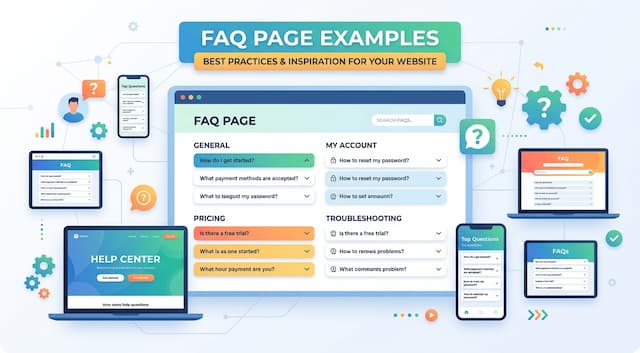 10 FAQ Page Examples That Actually Help Customers (2026)
10 FAQ page examples from Shopify, Airbnb, Slack, Nike and more, with the exact pattern each gets right and a checklist to build your own FAQ page.
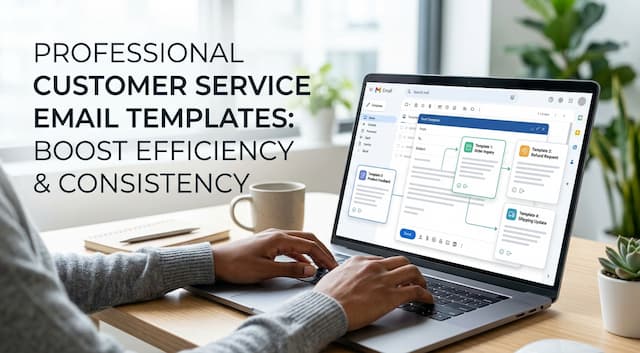 12 Customer Service Email Templates for Every Scenario (2026)
12 customer service email templates for complaints, refunds, delays, bugs and saying no, plus the five-line skeleton that keeps them sounding human.