B2B Customer Service: Strategies for Business-to-Business Support

In B2B, customer service is more than answering questions. It is how you prove your company is a reliable partner worth keeping for years. Strong B2B customer service builds trust, protects revenue, and turns a one-time deal into a lasting relationship that grows with both businesses.
This guide explains what B2B customer service is, how it differs from B2C support, and the strategies, tools, and practices that help you stand out with business clients. Whether you run a small team or a large customer service operation, the goal is the same: make every business client feel understood and well served by your support. Along the way we cover the people, the tools, and the everyday habits that separate forgettable support from the kind clients talk about. Done well, B2B customer service becomes a quiet competitive advantage that compounds over time.
What B2B customer service is
The simplest definition of B2B customer service is the support a business gives to the other businesses that buy from it. In a B2B context, customer service means helping companies use your product, solve problems, and get value, rather than serving individual shoppers one purchase at a time.
B2B customer service covers onboarding, technical help, account support, and ongoing advice. Because B2B transactions are larger and more complex than consumer purchases, this support is not a side task. It is central to whether a client renews, expands, or leaves. When you sell to other companies, your customers depend on you to keep their own operations running, so the stakes of every interaction are high.
B2B customer service and the wider picture
It helps to separate two related ideas. Reactive support is the work of resolving tickets and answering questions for your customers. Customer care is the broader, proactive mindset of looking after a client's success even when nothing is broken. Excellent B2B customer service blends both: fast fixes when something goes wrong, and steady attention the rest of the time. Companies that treat their customers as long-term partners, not ticket numbers, build deeper relationships and see fewer surprises at renewal. The work touches every customer you serve, from the smallest account to the largest.
B2B vs B2C customer service
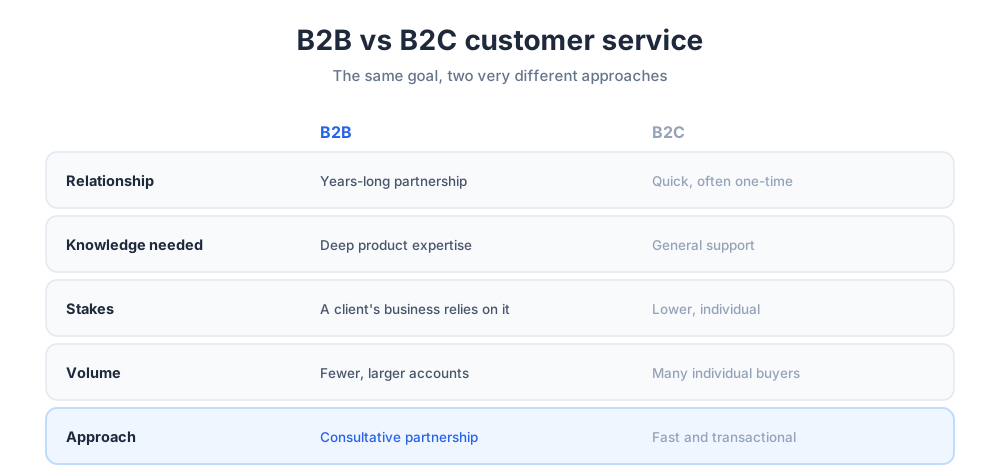
B2B customer service and B2C customer service share a goal but work very differently. B2C customer service handles many individual buyers making quick decisions. The B2B side deals with fewer clients, each one strategically important to your revenue and your reputation.
The differences are clear. A B2B account can last years, not minutes. B2B buyers need specialized knowledge, because their own business depends on your product working as promised. Where B2C support is built for one-off interactions, B2B buyers expect a partner who stays. B2C sales are simple and fast; B2B purchases involve contracts, multiple stakeholders, and higher stakes. A B2C company can rely on scale, while a B2B business must rely on depth and trust.
That contrast shapes how you staff and measure a team. B2C companies optimize for volume and speed, often pushing customers toward self-service for routine questions. A B2B team optimizes for outcomes: did the client succeed, did the account stay healthy, did the relationship deepen. B2C service tends to be transactional, while B2B customer support is consultative. The agent is not just closing a ticket; they are protecting a partnership. If you want a broader primer on the discipline, our overview of customer service fundamentals is a useful companion to this guide.
Why B2B customer service matters
Great B2B customer service is a growth engine. When a client trusts your customer service, they renew, they buy more, and they recommend you to peers. Poor customer service does the opposite, and in a small market, word travels fast, hurting your brand reputation and making every new deal harder to win. Reliable service is what keeps clients from quietly drifting to a competitor.
B2B customer service also protects revenue. Losing one business client can cost far more than losing one consumer, so customer retention is a core business outcome, not a soft metric. Strong customer support and steady customer retention are tightly linked. A single unhappy account can represent months of pipeline and years of expected revenue.
Customer service and your reputation
In B2B markets, buyers talk to each other. They attend the same conferences, sit on the same forums, and check references before they sign. That means your service quality is public in a way it never is for a consumer brand. Consistently strong customer service earns referrals and material for stories you can share; weak service produces complaints that follow you. Treating service as a marketing asset, not just a cost, is one of the smartest moves a B2B company can make.
Essential elements of great B2B customer service
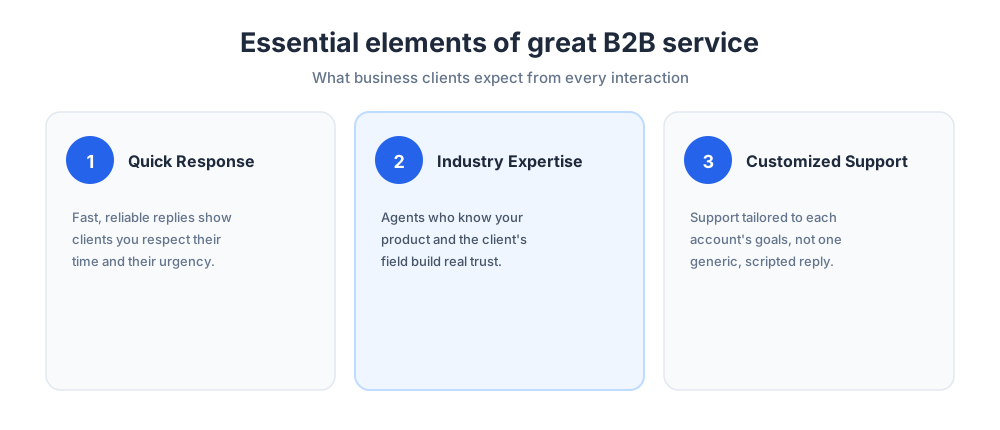
What do business clients actually want? A few essentials define exceptional customer service in B2B, and they apply whether you support ten accounts or ten thousand.
Quick, reliable response
Business clients cannot wait. Fast response times show you respect their schedule. When a client's system is down, a quick acknowledgment, even before a full fix, reassures them that help is on the way. Reliability matters as much as raw speed; clients want to know that customer service behaves the same way every time.
Industry expertise
Your team should understand your product and the client's industry. That knowledge builds confidence and meets real customer needs. An agent who can speak the client's language turns a routine ticket into a moment of trust. Generic support frustrates business buyers; informed customer service keeps them loyal, especially when they need answers and solutions fast.
Customized support
One size fits no one in B2B. Tailor your support to each client's goals, and the customer experience improves immediately. Some accounts want a hands-on partner; others want fast, low-touch answers and a good self-service channel. Knowing the difference, and adjusting, is what makes support feel personal at scale.
Building a proactive B2B support strategy
In B2B, waiting for a problem is waiting too long. A proactive B2B customer service strategy anticipates needs before they become issues, so clients feel guided rather than rescued.
Schedule regular check-ins to catch small problems early. Use data to predict what your customers need next. Gather customer feedback often and act on it. A well-run, proactive approach turns support from a cost center into a driver of customer loyalty and a reason clients choose to stay.
Designing the B2B customer service experience
A strong service journey is intentional, not accidental. Map the full path a client takes, from the first call to renewal, and decide what good support looks like at each step. Strong customer onboarding sets the tone: customers who learn your product quickly raise fewer tickets and reach value sooner. From there, proactive outreach, clear documentation, and predictable response times keep the experience smooth. When the journey is designed well, support stops being a series of disconnected interactions and becomes a coherent partnership that customers trust.
Using feedback to improve
Feedback is the raw material of improvement. Collect input from your customers through surveys, check-ins, and the patterns in your ticket data, then route it to the teams who can act. The companies that grow are the ones that treat feedback as a loop, not a checkbox: they ask, they listen, they change something, and they tell the client what changed. That visible response builds confidence and encourages customers to keep sharing honest feedback.
B2B customer service best practices
Strong practices keep B2B support consistent. The practices below apply to teams of any size, and adopting them steadily beats chasing a perfect process all at once.
Document everything so any agent can pick up a case. Set clear expectations and meet them. Personalize communication for each account. Close the loop on every piece of customer feedback. These practices build the steady, dependable B2B customer experience that clients stay for.
Practices that scale with your team
As you grow, good practices have to survive new hires and busier queues. Build a shared internal wiki so answers stay consistent. Standardize how tickets are tagged so you can spot trends. Review hard cases together so the whole team learns from each one. Pair these habits with the right tools and you protect quality even as volume rises. The aim is not bureaucracy; it is making excellent customer service repeatable.
Building relationships clients value
Process matters, but relationships are what clients remember. Strong partnerships come from many small, reliable moments: a promise kept, a follow-up that actually followed up, an agent who remembered last month's issue. Invest in continuity so customers are not re-explaining their setup every time. Effective B2B customer relationship management means knowing each account's history, goals, and quirks, and using that context to make every conversation feel informed rather than generic. Over time, these habits turn satisfied customers into genuine advocates.
B2B customer service software and tools
The right customer service software makes good support scalable. A solid platform ties together tickets, accounts, and history so nothing slips through the cracks and every agent sees the full picture for each of your customers.
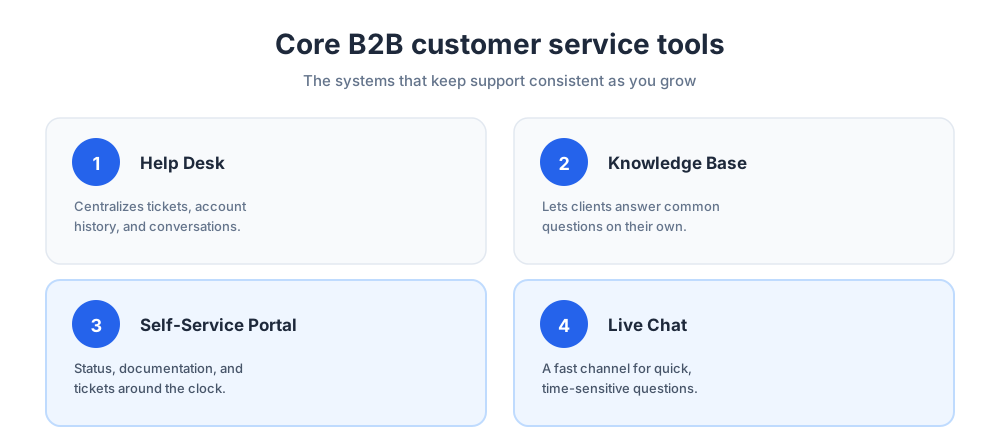
A help desk centralizes requests. A knowledge base lets customers answer common questions themselves and reduces ticket volume while improving satisfaction. A client portal gives customers status and documentation around the clock. Live chat adds a fast channel for quick questions. Picking customer support software that fits your workflow is one of the highest-return decisions a support team makes, because the wrong tools slow agents down and frustrate customers.
Choosing tools that fit your team
The best B2B customer support software is the software your team will actually use. Look for tools that integrate with your CRM, surface account context automatically, and report on the metrics you care about. Avoid buying more platform than you need; a lean stack that everyone understands beats a sprawling one that nobody trusts. When you evaluate options, weigh how each tool fits your specific workflow, not just its feature list. The aim is fewer barriers between your agents and your customers.
Self-service portals and a knowledge base
Self-service is where good tooling pays off twice: customers get instant answers, and your team gets time back. A self-service portal lets customers track tickets, download documentation, and manage their account without waiting in a queue. Pair it with strong written content; our guide to the top knowledge base software can help you choose a platform that customers will actually use. Live chat complements self-service by catching the questions a help article cannot, and chat can even support lead generation through live chat when prospects arrive with pre-sales questions.
B2B technical support and call centers
Technical support is often the lifeline of B2B customer service. Customers need issues fixed fast by someone who truly understands the product, the integration, and the consequences of downtime for their own customers.
A B2B call center, sometimes called a B2B contact center, needs agents trained for business clients and their complex, time-sensitive questions. Unlike a consumer line, a B2B contact center handles fewer calls but far higher stakes. Strong B2B support systems and skilled agents keep customers running, and a single well-handled emergency can secure a relationship for years. The phone is not dead in B2B; for urgent technical problems, many customers still want a real person.
Coordinating support across the company
Hard problems rarely sit with one person. Frontline agents, technical specialists, and engineering all need clean handoffs. Define who owns escalations, set internal response targets, and keep the client informed at each step so they never wonder what is happening. When everyone coordinates well, complexity becomes invisible to the customer; when they do not, every handoff is a chance to lose trust. Clear ownership protects both your customers and your team's sanity.
Account management and service level agreements
For important clients, dedicated account management changes the relationship. A named contact who knows the account removes friction and builds business relationships that last well beyond a single contract term.
A written agreement sets clear promises on response and resolution times. Honest commitments give customers confidence that your B2B customer support will deliver when it matters most. A named account owner plus realistic service targets turn vague reassurance into something a client can plan around.
How a named account owner builds B2B customer relationships
A dedicated account manager is the human thread that holds a partnership together. They learn the client's roadmap, flag risks early, and translate between the client's goals and your teams. That continuity is what deepens the partnership over time. Customers with a strong account owner rarely shop around, because switching would mean losing a partner who already understands their business. This is also where many customers first feel the value of being a B2B client rather than just another buyer.
Measuring B2B customer service success
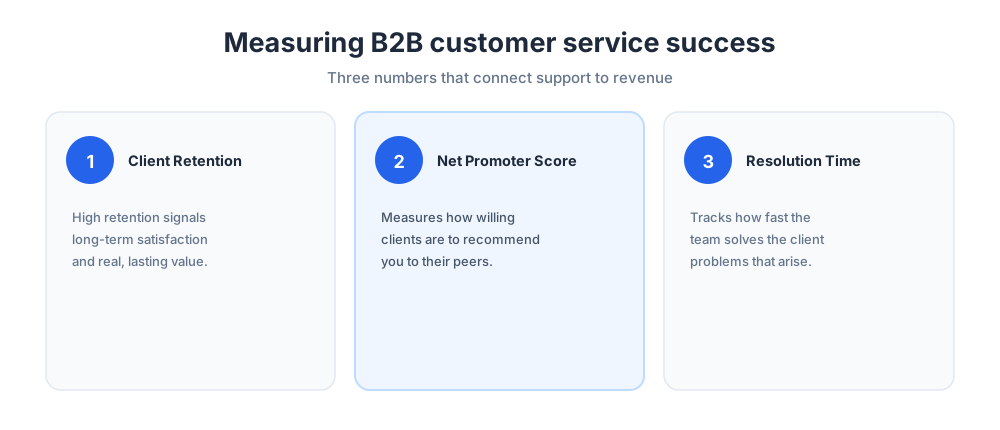
You cannot improve what you do not measure. A few clear numbers show whether your B2B customer service is working, and tracking them consistently keeps the team honest.
Client retention rate shows long-term satisfaction. Net Promoter Score measures customer satisfaction and willingness to recommend. Resolution time shows how responsive your team is. Tracked together, these numbers turn service quality into something you can manage rather than guess at.
The numbers that matter most
Not every metric deserves a dashboard. Focus on the figures that connect support to revenue: retention and renewal rates, expansion within existing accounts, first-response and resolution times, and customer satisfaction scores after key interactions. Watch trends, not single readings, and segment by account size so a few large customers do not hide problems among smaller ones. The right performance metrics tell you not just how busy support is, but whether it is keeping customers successful. Pair the hard numbers with what your customers tell you so you understand the why behind every score.
Training B2B support teams
Skilled people make great service. Even the best tools cannot rescue an untrained team, so training is an investment, not an expense.
Three skills every agent needs
Industry knowledge helps agents relate to client needs and speak credibly about the client's world. Technical skills help them solve problems quickly and confidently. Communication skills help them explain solutions clearly, set expectations, and build rapport. Together these three areas turn capable hires into trusted advisors that clients ask for by name.
Keeping B2B teams sharp over time
Training is not a one-time event. Run regular refreshers when the product changes, share recordings of strong calls, and let agents shadow account managers to see the bigger picture. Encourage support staff to study real customer interactions and learn from the e-commerce world too; the same principles in our piece on quick ways to improve your e-commerce customer experience translate well to B2B. Investing in your people pays back in stronger relationships and steadier renewals.
B2B customer service examples and case studies
Real-world stories make the strategies concrete. Consider a software vendor that assigns each client a specialist for onboarding, or a supplier that reviews account health every quarter and reaches out before contracts lapse.
Stories from B2B companies consistently show the same pattern: proactive, knowledgeable, personalized support drives retention. The best business customer service stories are rarely dramatic; they are simply consistent. One distributor cut churn by calling every account in its first ninety days; one platform raised renewals by publishing clear documentation and trimming response times. Across these companies, the lesson repeats: small, reliable habits beat occasional heroics. Read enough of these stories and you notice they are less about clever tactics and more about disciplined teams that genuinely care about their customers.
Common B2B customer issues to avoid
Some problems come up again and again, and most are preventable. Slow responses top the list. Generic, scripted replies are a close second, because business clients expect real answers from people who understand their account.
Other recurring problems include poor handoffs between teams, ignored feedback, and inconsistent information across channels. Avoid these, and you avoid most of the friction that pushes customers toward competitors. The companies that retain customers are usually not the ones with the flashiest features; they are the ones that quietly remove these everyday frustrations. A short audit of your own queue will usually surface two or three habits worth fixing this quarter, and your customers will feel the difference quickly.
B2B customer service FAQs
A short set of frequently asked questions helps clients and new staff alike. Keep answers clear and current, covering what B2B customer service means, how it differs from B2C support, and where to get help. Good service solutions and a clear set of service options remove doubt before it becomes a ticket.
Is B2B customer service different from a business service desk?
They overlap. A business service desk is one channel within the wider practice of B2B customer service, which also includes account support, proactive outreach, and customer care. The desk handles requests; the broader function owns the relationship and the long-term customer experience.
How fast should a B2B team respond?
It depends on the contract and the severity, which is exactly why written response targets exist. Set targets you can meet consistently, communicate them clearly, and treat them as a floor, not a ceiling. Clients value predictability as much as raw speed.
What should a growing team prioritize?
Start with the basics that scale: a help desk to organize requests, self-service content, and a clear escalation path for technical support. The best support tools are the ones your team adopts fully, so favor practical, simple solutions over feature-heavy platforms nobody uses. Lean solutions keep customer support fast and your service consistent.
Bringing it all together
Strong B2B customer service is not a single feature; it is a system of habits, people, and customer support working together. The B2B companies that win on customer service treat support as an investment in client relationships rather than a queue of tickets. They respond quickly, listen to feedback, and design the customer service journey with the business client in mind.
If you remember one idea, make it this: consistency beats heroics. Good customer service compounds. Each issue resolved with practical solutions, and each promise kept, makes the next sale easier. The payoff of great customer service shows up in retention, in referrals, in stronger relationships, and in a customer experience and standard of customer support that clients reward with loyalty.
Related reading: SaaS customer support and B2B sales.
Frequently Asked Questions
What is an example of a B2B customer?
A B2B customer is a business that buys from another business. For example, a company that buys a CRM platform for its sales team is a B2B customer of the software vendor. So is a restaurant that buys ingredients from a wholesale supplier, or an agency that pays for a project management tool. In each case the buyer is an organization using the product to run its own operations, not an individual shopper making a personal purchase.
What is the meaning of B2B services?
B2B services are services that one business provides to another business rather than to individual consumers. Examples include software platforms, consulting, logistics, managed IT, and marketing agencies. B2B services usually involve contracts, ongoing relationships, and account management, because the buying business depends on them to operate. B2B customer service is the support layer that keeps those services running smoothly for the client.
What is a B2B contact center?
A B2B contact center is a support operation built to serve business clients across phone, email, chat, and other channels. Unlike a consumer contact center that handles high volumes of short calls, a B2B contact center handles fewer interactions with higher stakes. Its agents need deeper product and industry knowledge, because the questions are complex and the clients depend on fast, accurate answers to keep their own businesses running.
What does B2B mean in BPO?
BPO stands for business process outsourcing, where a company hires an outside provider to run a function such as customer support. B2B in a BPO context means the outsourced work serves business clients rather than consumers. A B2B BPO provider supplies trained agents who handle technical support, account queries, and other interactions for business customers, so the hiring company can scale its support without building the whole team in-house.
What is B2B customer service?
B2B customer service is the support a business gives to the other businesses that buy from it. It covers onboarding, technical help, account management, and ongoing advice. Because B2B transactions are larger and more complex than consumer purchases, this support is central to whether a client renews, expands, or leaves. The goal is to act as a reliable partner in the client's success, not just to close tickets.
How is B2B customer service different from B2C?
B2C customer service handles many individual buyers making quick, low-stakes decisions. B2B customer service handles fewer clients, each strategically important, with relationships that last years. B2B buyers need specialized product and industry knowledge, because their own operations depend on your product. B2C support is built for volume and speed, while B2B support is consultative and outcome-focused, protecting a partnership rather than processing a single sale.
Why is B2B customer service important?
B2B customer service drives growth and protects revenue. When a client trusts your support, they renew, expand, and recommend you to peers. Because losing one business client can cost far more than losing one consumer, retention is a core business outcome. In small B2B markets, buyers also talk to each other, so consistently strong service builds your reputation while poor service quietly pushes clients toward competitors.
What are the key elements of good B2B customer service?
Three essentials stand out. First, quick and reliable response, because business clients cannot wait when their operations are affected. Second, industry expertise, so agents understand both your product and the client's world. Third, customized support that adapts to each account's goals instead of forcing one approach on everyone. Add proactive outreach and acting on feedback, and you have the foundation of exceptional B2B customer service.
What software do B2B customer service teams use?
B2B customer service teams typically use a help desk to centralize tickets and account history, a knowledge base so clients can answer common questions themselves, self-service portals for documentation and status, and live chat for fast questions. Many also use a CRM to keep account context in one place. The right customer service software ties these together so no request slips through and every agent sees the full picture.
How do you measure B2B customer service success?
Focus on metrics that connect support to revenue. Client retention and renewal rates show long-term satisfaction. Net Promoter Score measures willingness to recommend. First-response and resolution times show how responsive the team is. Account expansion shows whether support helps clients grow. Watch trends rather than single readings, segment by account size, and pair the hard numbers with direct client feedback to understand the why.
What is a B2B customer service strategy?
A B2B customer service strategy is a deliberate plan for how you support business clients. It defines your response standards, the channels you offer, how you onboard new accounts, and how you stay proactive. A strong strategy anticipates client needs before they become problems through regular check-ins, predictive use of data, and steady feedback collection, turning support from a cost center into a driver of retention and loyalty.
What are common B2B customer service mistakes?
The most common mistake is slow responses, since business clients work against deadlines. Generic, scripted replies are a close second, because B2B buyers expect real, informed answers. Other frequent issues include poor handoffs between teams, where a client must repeat their story, and collecting feedback but never acting on it. Avoiding these removes most of the friction that pushes B2B clients toward competitors.
What skills do B2B support teams need?
B2B support teams need three core skills. Industry knowledge helps agents relate to client needs and speak their language. Technical skills help them diagnose and solve complex problems quickly. Communication skills help them explain solutions clearly and build rapport. Ongoing training in all three turns a support team into a genuine asset that strengthens relationships and improves renewals.
Related articles
More in Customer service → SaaS Customer Support: The Stage-by-Stage Guide (2026)
How SaaS customer support actually works at each stage: the right stack from founder-led live chat to a full support operation, channels, and metrics.
 How to Reduce Customer Churn: 5 Levers in Payback Order
Reduce customer churn by pulling five levers in payback order: payment recovery, onboarding, support quality, pricing fit, and a 90-day win-back.
 10 FAQ Page Examples That Actually Help Customers (2026)
10 FAQ page examples from Shopify, Airbnb, Slack, Nike and more, with the exact pattern each gets right and a checklist to build your own FAQ page.
 12 Customer Service Email Templates for Every Scenario (2026)
12 customer service email templates for complaints, refunds, delays, bugs and saying no, plus the five-line skeleton that keeps them sounding human.