Live Chat Lead Generation: The Complete Guide
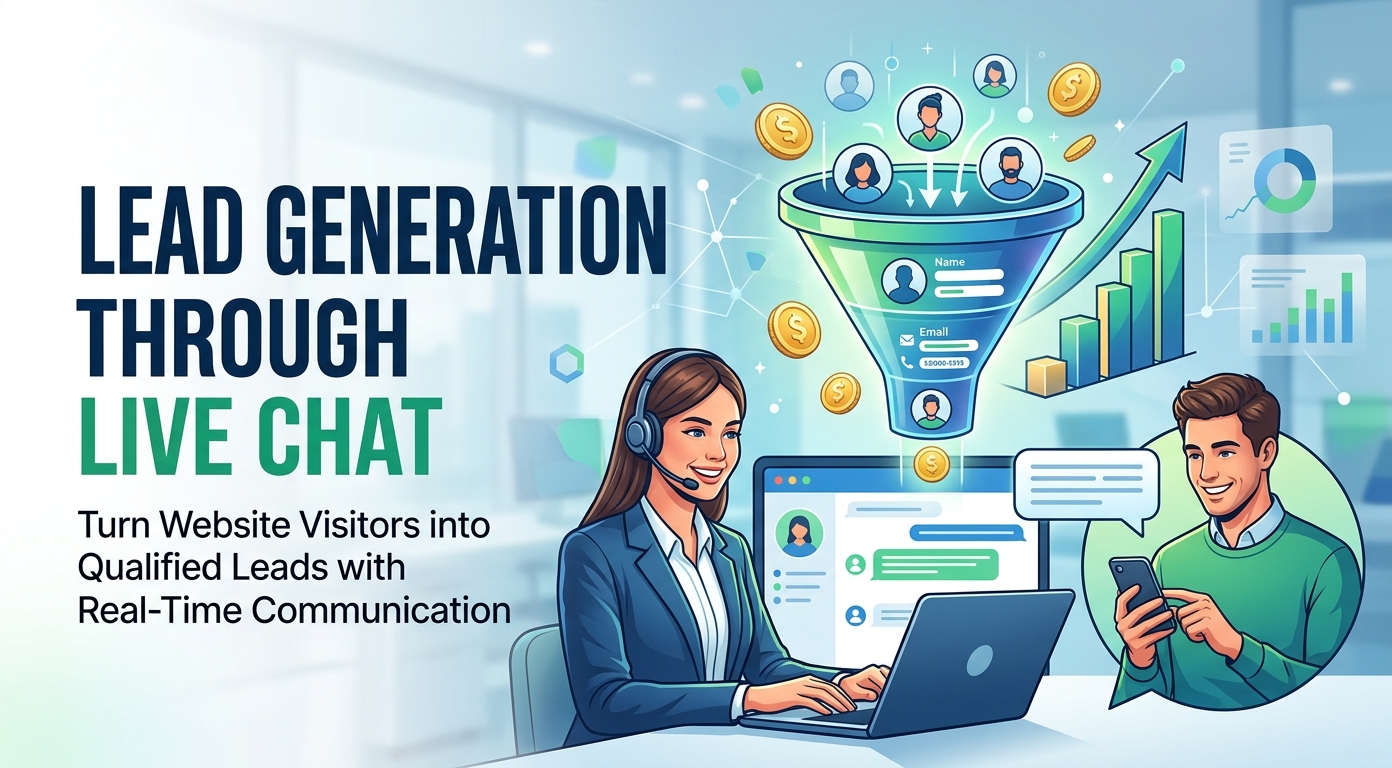
Live chat lead generation is the practice of turning website visitors into qualified leads through real-time conversation. Instead of waiting for a visitor to fill out a form, a live chat widget invites them to talk, answers their questions, and captures their details while interest is still high.
This guide explains what live chat lead generation is, why it works, and how to set it up. It then walks through the tactics and proven strategies that produce results, whether you run a small online store or a B2B sales team.
What is live chat lead generation?
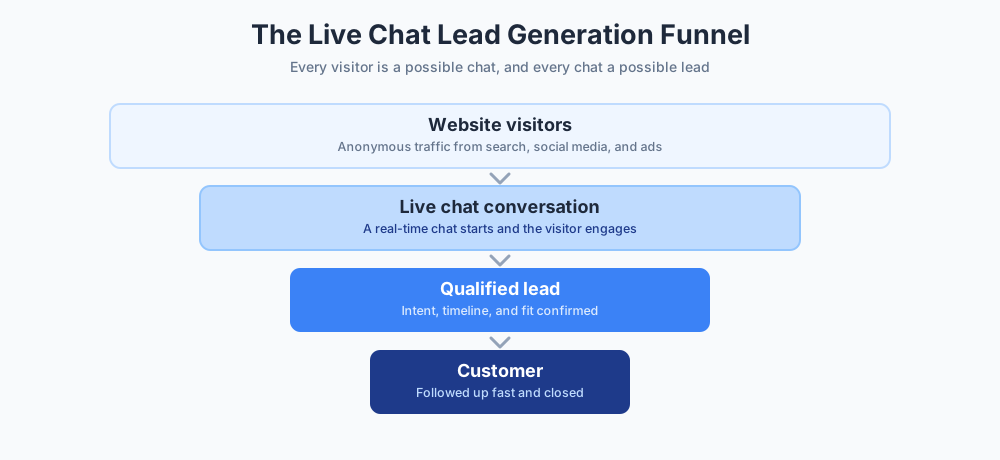
Live chat lead generation uses a live chat service on your website to start chats with visitors, qualify their interest, and pass promising contacts into your sales process. It sits at the top of the sales funnel, where one quick reply can be the difference between a captured lead and a lost one.
A traditional website is passive. A visitor lands, reads, and often leaves without a trace. A live chat system makes the site active: it greets people, offers help, and gives them an easy way to raise a hand.
At heart, live chat is a communication channel built for speed. It is the only channel where a business and a buyer hold two-way communication in the seconds that a decision is actually being made.
The leads you collect this way tend to be warmer than form fills. Someone who uses live chat has already shown intent, asked a question, and engaged with your brand. That makes live chat one of the most effective ways to grow a pipeline without raising your ad budget.
It also works with your other marketing channels. Traffic from a search engine, from social media, and from email all lands on pages where live chat sits ready. The chat does not replace those channels; it converts the visitors they send, which is why live chat fits so neatly into the rest of your marketing.
Compared with other lead generation channels, live chat is unusually direct. Paid ads and content marketing pull people to the site, but live chat is what converts them once they arrive. Treat it as the final, decisive stage of your lead generation rather than an afterthought bolted on at the end, and the whole funnel performs better.
The benefits of live chat lead generation
The benefits of live chat lead generation go well beyond collecting more contacts. Done well, live chat raises the quality of every lead, shortens the sales cycle, and hands your marketing team data it cannot get anywhere else.
Three benefits matter most: faster communication with website visitors, stronger lead qualification, and a steady stream of insight you can use across your marketing.
There is also a cost angle. Live chat reaches buyers at a fraction of the price of cold calls or paid lead generation, which is one of the simplest ways lean marketing teams stretch a budget while still growing the pipeline.
Real-time conversation with visitors
The biggest benefit is speed. Live chat lets you answer a question in the exact moment a visitor has it, while they are still on the page and still interested.
That real-time communication builds trust. A fast, helpful reply shows there are real people behind the brand, which lifts customer engagement and customer satisfaction at the point a buying decision is forming.
Speed also wins deals. A visitor who gets an instant answer through live chat rarely stops to compare three competitors. The brand that replied first often gets the sale.
This is why live chat outperforms slower channels for lead generation. Email and phone tag lose people; a live chat exchange holds their attention and keeps the lead moving.
Stronger lead qualification
Live chat is a natural qualification tool. A short live chat tells you whether someone is a casual browser or a serious buyer, so your sales team can focus where it counts.
Good lead qualification means asking a few simple questions inside the live chat: what the visitor needs, their timeline, and their budget range. The answers separate qualified leads from window shoppers before anyone picks up the phone.
This protects the sales process. Reps spend their hours on the leads most likely to convert instead of chasing contacts who were never going to buy.
It also speeds up every later step in lead generation, because a well-qualified lead reaches sales with context already attached.
Rich chat data for your marketing
Every live chat leaves a record: the questions people ask, the objections they raise, and the words they use to describe their problem.
Patterns in that record show which pages confuse website visitors, which features they care about, and which messages land. You can feed those insights straight into your content, which sharpens your marketing efforts over time.
Customer feedback gathered this way is more honest than a formal study. People in a live chat session say what they actually want, in their own words.
Over months, this becomes a quiet advantage: a growing library of real customer language and content ideas competitors never collect. That makes live chat one of the best content research tools you have.
How to set up live chat for lead generation
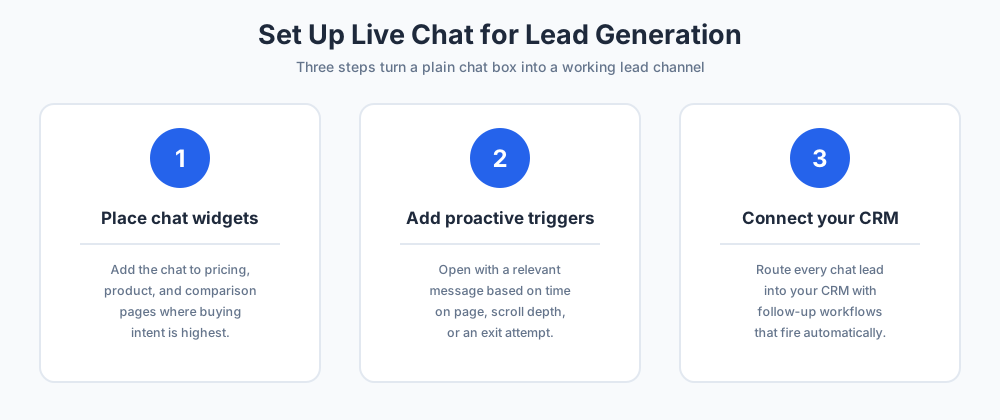
Setting up live chat for lead generation is a short process, not a long project. The goal is to put a chat in front of the right visitor at the right moment, then route what you capture into the systems you already use.
The work breaks into three parts: where the chat appears, when it speaks, and where the leads go. Treat them as a simple, repeatable routine.
Place chat widgets on high-intent pages
Start by placing the chat where buying intent is highest: pricing, product, and comparison pages. A visitor reading your pricing page is far closer to a decision than someone skimming the blog.
Keep the chat window visible but unobtrusive. It should invite a chat without covering the content the visitor came to read.
On lower-intent pages, live chat still helps, but treat those chats as awareness touchpoints rather than direct lead capture.
Add proactive chat triggers
A passive chat box waits to be clicked. Proactive chat reaches out first, opening with a relevant line based on what the visitor is doing.
Useful triggers include time on a page, scroll depth, a return visit, or an exit attempt. A visitor who has spent two minutes on your pricing page is a perfect candidate for a friendly, well-timed prompt.
Keep proactive messages short and specific. A line like "Want help comparing plans?" works far better than a generic greeting, and it starts more chats that lead somewhere.
Done well, this is one of the best ways to lift chat volume without buying a single extra visitor.
Connect your CRM and lead workflows
A captured lead is only useful if it reaches the right person. Set up a crm integration so every chat lead flows into your crm system with its full transcript attached.
From there, simple workflows can assign the lead, alert a rep, and start a follow-up sequence. The faster you follow up on a new lead, the higher the conversion rate.
If you do not run a CRM yet, even lightweight crm software is enough to start. The rule is that no chat lead should sit in an inbox and go cold.
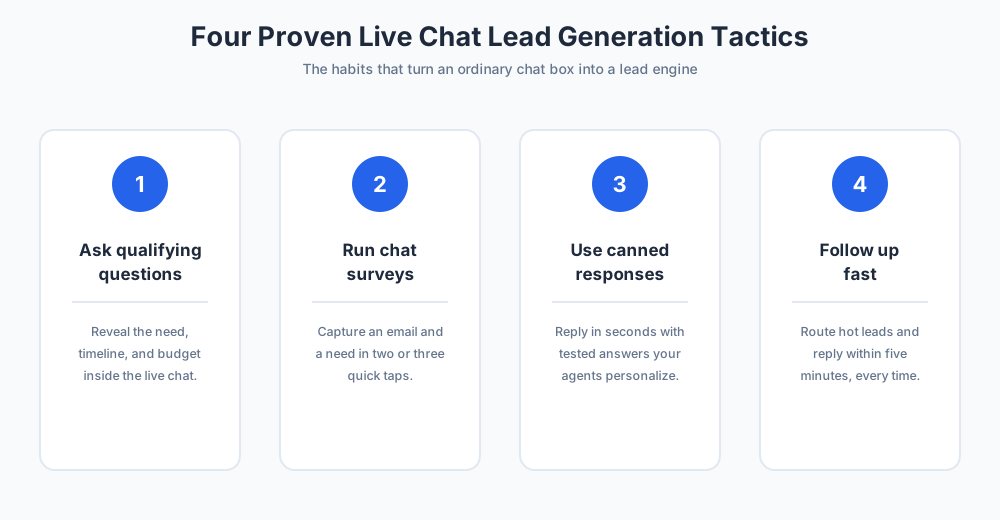
Pro tip: aim to follow up within five minutes. At this point, response time matters more than the wording of the first message.
Proven live chat lead generation tactics
Once the setup is in place, a handful of proven tactics do most of the heavy lifting. These are the practical ways teams turn ordinary chats into a steady flow of leads.
None of them are complicated. They are simple pro tips, the habits that separate a chat box that collects leads from one that only answers questions, and each shapes how a single conversation ends.
Qualify leads with the right questions
The fastest way to lift lead quality is to ask better questions. A few targeted prompts inside the live chat reveal intent without feeling like an interrogation.
Lead scoring helps here: assign points for answers that signal a strong fit, such as company size or an urgent timeline. A simple score tells your sales team which leads to call first.
Pair scoring with clear routing. Strong leads go to sales; everyone else gets nurtured. This light-touch lead generation process keeps the pipeline clean and honest.
Capture leads with chat surveys
Not every visitor wants to type out a question, so give them another path. Short surveys, run inside the live chat, capture an email and a need in two or three taps.
A pre-chat form is the simplest version: name, email, and "what brings you here today?" before the chat starts. It captures the lead even if the chat is later abandoned.
A quick rating after the chat closes the loop. It gathers honest feedback and confirms whether the visitor still wants you to follow up.
Speed up replies with canned responses
Speed is everything in chat, and canned responses keep it high. Save tested answers to your most common questions so agents reply in seconds rather than minutes.
Good saved replies are starting points, not rigid scripts. Agents should adjust each of these messages so the chat still feels human.
Used well, saved messages let a small team handle far more live chat threads at once without losing the quality of any single lead.
Advanced lead generation strategies
Once the basics run smoothly, a few advanced strategies lift results further. They build on the same foundation but add automation and smarter segmentation.
The two with the biggest payoff are automating the front line and treating your best leads differently from the rest. Both are pro tips that scale well as chat volume grows.
Leverage chatbots and AI chatbots
You cannot staff a live chat around the clock, and you do not need to. The smart move is to let chatbots cover the gaps and absorb routine volume.
A chatbot greets visitors, answers common questions, and qualifies leads when no agent is free. The newest bots understand plain-language questions and can book a meeting on their own.
The winning model puts chat and chatbots together: bots handle the routine, people handle the nuanced, high-value chat. That blend is the core of conversational marketing, and capable chatbots make it affordable.
Used this way, chatbots never sleep, so a visitor who arrives at midnight still meets a helpful first reply and never slips out of the funnel unnoticed.
Score and route hot leads
Not every lead deserves the same treatment. As chats build up, use what you learn to spot the hottest prospects, the buyers whose questions and behavior signal they are ready to act.
Route those leads instantly. A hot prospect who waits an hour for a reply is often a deal lost to a faster competitor.
Map the rest against the customer journey. A first-time visitor needs education; a returning visitor who viewed pricing twice needs a direct offer and a prompt follow-up.
Live chat lead generation for B2B and small businesses
The same playbook works at very different scales, but the emphasis shifts with the business.
B2B lead generation through live chat is about depth, not volume. Deal cycles are long and buyers research carefully, so the chat should focus on qualifying fit, capturing the right contact, and booking a call rather than closing on the spot. Strong B2B lead generation treats every chat as the start of a relationship.
For small businesses, live chat is often the most realistic way to compete with larger rivals. It costs little, needs no big team, and lets an owner answer buyers personally and offer real service, which builds the kind of trust a faceless form never will.
Whatever the size of the company, live chat lead generation rewards consistency. A team that reviews its chats every week, turns what it learns into better content, and refines its lead generation process will build a healthier sales pipeline than one that installs a chat widget and forgets it.
Choosing the right live chat software
The tool you choose shapes how well every tactic above performs. When you compare options, focus on the features that affect lead capture and follow-up, not the long marketing checklist. Reliable service and support from the vendor matter too.
Look for proactive triggers, a clean chat experience on mobile and desktop, and built-in chatbots so you have coverage outside office hours.
Integrations matter just as much. A solid link to your CRM, plus email and customer service tools, keeps leads moving without manual copy-paste.
Pay attention to how the software handles team handoffs. The best chatbots qualify a lead and then pass it cleanly to a person, so the live chat never feels like a dead end. Good software also lets one team cover both customer service and sales from a single console, which keeps service fast and consistent.
Reporting is the last must-have. You need to see how many leads live chat produced, which pages drove them, and how they progressed, so you can prove the channel earns its place.
Plenty of lead generation services and chat platforms exist, from free tools to enterprise suites. Match the tool to your team size, your lead generation goals, and expected chat volume, and start simple rather than over-buying.
How to measure live chat lead generation
If you cannot measure live chat lead generation, you cannot improve it. A small set of numbers tells you whether the channel is pulling its weight.
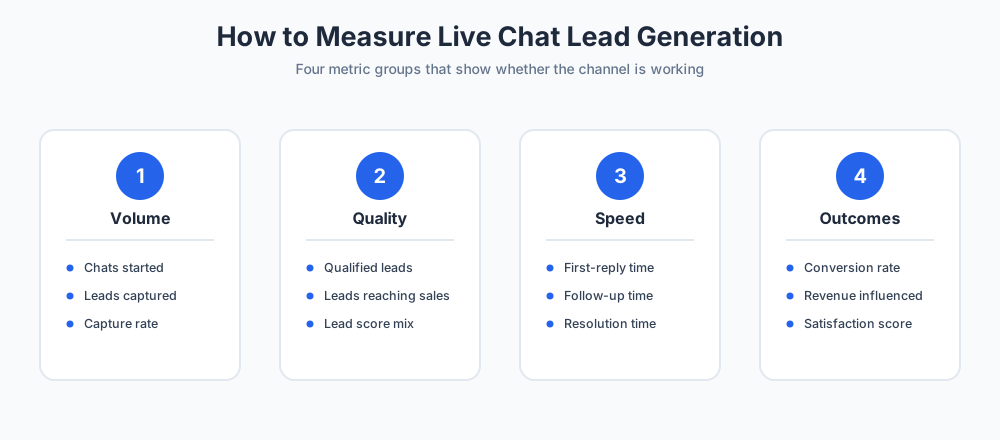
Start with volume: chats started, leads captured, and the rate between them. This shows how well your triggers turn website visitors into chats.
Then track quality. Count how many captured leads became sales-ready leads and how many reached the sales team. High chat volume with few qualified leads usually points to weak questions.
Also track speed. Measure how long visitors wait for a first reply and how fast your team follows up, because both numbers move revenue directly.
Finally, track outcomes: conversion rate, revenue influenced, and the customer satisfaction scores from your surveys. These connect live chat activity to real business results.
Pro tip: review the numbers monthly and change one thing at a time. Move the chat to better pages, rewrite weak proactive messages, or sharpen your questions, then watch the effect. Treat optimization as an ongoing process.
Common live chat lead generation mistakes to avoid
A few common mistakes quietly drain results. Avoiding them is usually easier than adding new tactics.
The first is slow replies. A chat that answers in five minutes has already lost the visitor, so treat speed as non-negotiable and follow up fast.
The second is treating live chat as customer service only. A support-only mindset misses the lead sitting right in front of you; train your customer service agents to spot buying signals and ask for the next step.
The third is ignoring the record. Transcripts and survey replies pile up and never get reviewed, so build a simple weekly habit of reading them and acting on what they show.
The fourth is over-automating. Bots are powerful, but a visitor who clearly wants a person should reach one quickly. Balance is what makes automation effective rather than annoying.
The fifth is poor handoffs. When a chat moves from a bot to a person, the customer should never have to repeat themselves.
Avoid these mistakes and the rest of your lead generation playbook works. Live chat becomes a dependable, low-cost engine for customer engagement, strong leads, and steady growth.
More on this from our team: live chat best practices, lead generation for small businesses, and B2B cold email templates.
Frequently Asked Questions
What is live chat lead generation?
Live chat lead generation is the practice of turning website visitors into qualified leads through real-time conversation. A chat widget on your site invites a visitor to talk, answers their questions, and captures their contact details while interest is high. Instead of waiting for a form fill, you start a conversation, qualify the person, and pass a warm lead into your sales process.
Can ChatGPT generate leads?
ChatGPT and similar AI models do not generate leads on their own, but they power tools that do. An AI chatbot built on this kind of model can greet visitors, answer questions, and qualify leads inside a live chat around the clock. The model supplies the conversation; your live chat software and CRM are what actually capture, store, and route each lead to your team.
How much do LiveChat agents get paid?
Pay for a live chat agent varies widely by country, experience, and whether the role is in-house or outsourced. In the United States it generally sits in the range of a customer support representative's salary, and it is often lower in common outsourcing regions. Because wages shift over time, check current local job listings for accurate, up-to-date figures.
Is LiveChat safe?
Reputable live chat software is safe to use. Look for encryption of data in transit, access controls for your agents, and compliance with privacy rules such as GDPR. As with any tool that handles customer data, safety depends on the vendor's security practices and on configuring the tool correctly, so review each provider's security documentation before you commit.
What is the best free LiveChat for small business?
There is no single best free live chat tool; the right choice depends on your size and goals. Several providers, including Chatim, offer free live chat plans suited to small businesses, usually with limits on agents or chat history. Compare the free tiers on proactive triggers, chatbot support, and CRM integration, then trial one or two with real website visitors before deciding.
How do you generate leads with live chat?
Place a chat widget on high-intent pages such as pricing and product pages, add proactive triggers that open a relevant message at the right moment, and ask a few qualifying questions inside the conversation. Capture an email through the chat or a short pre-chat form, then route the lead into your CRM so a rep can follow up quickly.
Does live chat actually increase conversions?
For most websites, yes. Live chat removes friction at the moment a visitor has a question, and a fast answer keeps them from leaving to compare competitors. It also captures leads that would never fill out a form. Results vary by traffic quality and how well the chat is staffed, so measure your own conversion rate before and after to confirm the lift.
What is proactive chat?
Proactive chat is a message the chat sends first, rather than waiting for the visitor to click. It opens with a relevant line based on visitor behavior, such as time on a pricing page, scroll depth, a return visit, or an exit attempt. A short, specific prompt like a plan-comparison offer starts more conversations and lifts lead volume without buying extra traffic.
How do you qualify leads in live chat?
Ask a few simple questions inside the conversation: what the visitor needs, their timeline, and their budget range. Use lead scoring to assign points for answers that signal a strong fit, such as company size or urgency. The score tells your team which leads to call first and separates genuine qualified leads from casual browsers before anyone picks up the phone.
Should I use a chatbot for live chat lead generation?
A chatbot is worth using when chat volume is high or you cannot staff live chat at all hours. Bots greet visitors, answer common questions, and qualify leads when no agent is free, while AI chatbots can handle plain-language questions and book meetings. The best setup blends both: bots handle routine traffic, and people take over the nuanced, high-value conversations.
What is a good response time for live chat?
Aim to answer a new chat within seconds and to follow up on a captured lead within five minutes. Speed is the main advantage live chat has over email and phone, and it fades fast: a visitor who waits several minutes has often already left. Track your average first-reply time as a core metric and treat slow replies as a problem to fix.
How do you connect live chat to a CRM?
Most live chat software offers a built-in CRM integration or connects through a tool like Zapier. Once linked, every chat lead flows into your CRM with its transcript attached, and simple workflows can assign the lead, alert a rep, and start a follow-up sequence. The goal is that no chat lead sits in an inbox and goes cold.
Is live chat good for B2B lead generation?
Yes. B2B lead generation through live chat works best when it focuses on depth rather than volume. Deal cycles are long and buyers research carefully, so use the chat to qualify fit, capture the right contact, and book a call instead of pushing for an immediate sale. Treat each chat as the start of a longer relationship.
How do you measure live chat lead generation?
Track four groups of numbers: volume (chats started and leads captured), quality (how many became qualified leads and reached sales), speed (first-reply time and follow-up time), and outcomes (conversion rate, revenue influenced, and customer satisfaction scores). Review them monthly and change one thing at a time so you can see what actually moved results.