Lead Generation for Small Business: 10 Strategies
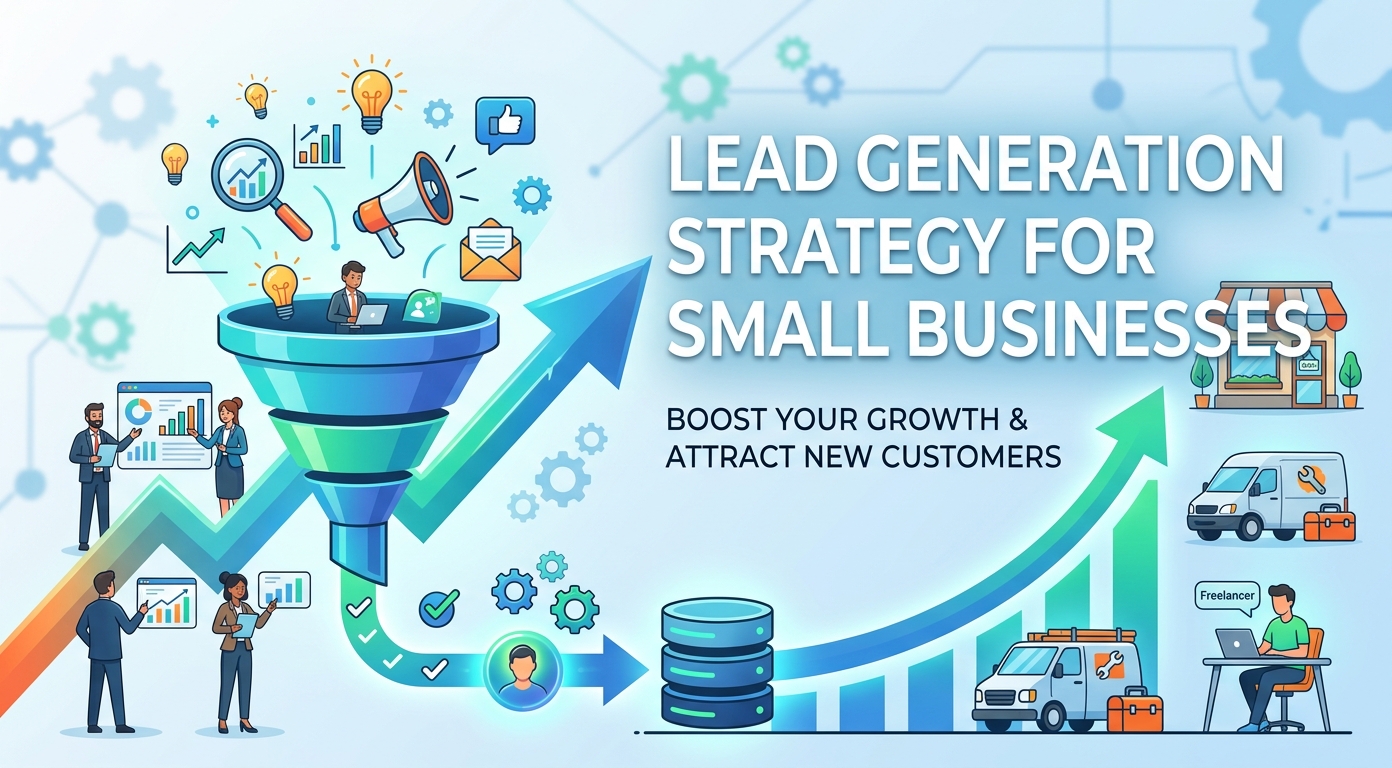
Lead generation for small business owners comes down to one steady habit: keeping a reliable flow of people who are interested in what you sell. Without that flow, even a great product struggles to grow.
A lead is a potential customer who has shown interest but has not bought yet. Lead generation is the process of finding those people and giving them a reason to take the next step toward your business.
This guide covers what small business lead generation looks like, why it matters, ten lead generation strategies you can run on a small budget, the tools that help, and how to turn leads into sales.
What is lead generation?
A lead is a person who is interested in your brand but has not made a purchase yet. They are a potential customer, someone who could buy from you soon if you stay in touch.
Lead generation is the process of attracting potential customers and collecting a way to reach them, usually an email address or a phone number. The goal is a predictable pipeline of interest rather than a lucky burst of sales.
Not every lead becomes a customer, and that is normal. The job of lead generation is to fill the top of the funnel with enough quality leads that a healthy share convert further down. Marketers sometimes call this early, awareness-building work demand generation.
Why is lead generation important for small businesses?
For a small business, lead generation is what turns marketing from a cost into a growth engine. Every advert, post, and page exists to bring in leads that can become paying customers and steady sales.
A small business rarely has the budget to wait. Steady lead generation gives you a forecastable flow of prospects, so you can plan, hire, and invest with more confidence. That is why lead generation matters so much when budgets are tight.
It also widens your market. Good lead generation puts your brand in front of potential customers who already want the type of product you sell, which is far cheaper than chasing cold strangers. Many companies find this is the cheapest growth they have.
There is a compounding effect. Each lead you capture can be nurtured, asked for reviews, and turned into a referral source, so today's lead generation efforts keep paying off long after the first contact. Steady lead generation is what funds real business growth.
What does small business lead generation look like?
Strong, effective lead generation for a small business is simple, measurable, and repeatable. You do not need a large team or a complex stack, just a clear funnel and a few proven strategies you run consistently.
Map a simple sales funnel
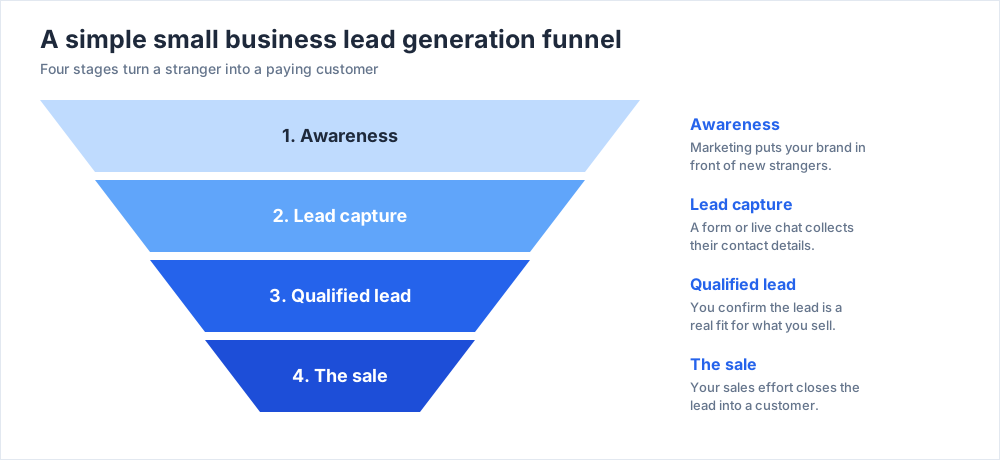
A sales funnel is the path a stranger takes to becoming a customer. For most businesses it has four stages: awareness, lead capture, a qualified lead, and the sale.
At the top, marketing creates awareness and captures contact details. Lower down, the sales side qualifies which leads are a real fit, and your sales effort turns qualified prospects into paying customers.
You do not need a complex sales pipeline to start. A clear, four-stage funnel that everyone understands beats an elaborate one that nobody maintains.
Set clear goals
Decide what you want before you spend a cent. Do you want more enquiries, better-fit leads, or entry into a new market? Each goal points to a different set of strategies.
Write the goal as a number, such as 30 new leads a month, so you can tell at a glance whether your lead generation is on track.
Focus on quality leads, not just volume
A hundred random sign-ups are worth less than ten quality leads who fit your ideal customer. The right leads convert faster, cost less to serve, and stay longer.
Define your target audience early: the industry, the size, and the problem you serve best. Then aim your effort at that target audience rather than at everyone.
10 lead generation strategies for small businesses
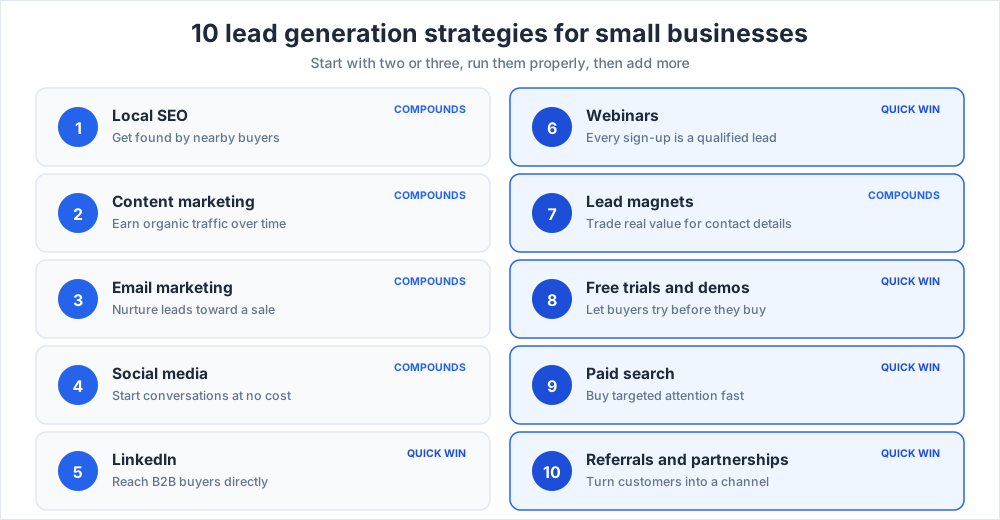
No two businesses are identical, but the lead generation techniques below work for almost any small business. Start with two or three, run them properly, and add more once they produce results.
1. Local SEO
Local SEO helps nearby customers find you the moment they search. Claim your Google Business Profile, keep your name and address consistent everywhere, and collect customer reviews.
For a business that serves a town or region, local SEO is one of the highest-return lead generation strategies, because the people who find you already have intent and are close enough to buy.
2. Content marketing
Content marketing means publishing helpful articles, guides, and videos that answer the questions your customers ask. Each blog post is a new entry in search results and another way to be found.
A simple content strategy is to write one useful post a week aimed at a real customer question. Over time this content earns organic traffic that becomes a steady, free source of leads.
Repurpose every piece of content. One strong article can become a social post, an email, and part of a lead magnet, so your content keeps working across more than one channel.
3. Email marketing
Email marketing is still one of the most cost-effective channels for a small team. Collect email addresses with a sign-up form, then send useful, occasional messages that move leads toward a purchase.
Well-planned email marketing campaigns nurture leads who are not ready to buy yet, so your brand stays in mind until they are.
4. Social media marketing
Social media puts your brand in front of a wide audience at no cost beyond your time. Pick the one or two platforms where your customers actually spend time, and post consistently.
Use social media to start conversations, not only to broadcast. A reply or a comment often becomes a lead faster than a polished advert.
5. LinkedIn for B2B leads
If you sell to other businesses, LinkedIn is the strongest social channel for lead generation. Your buyers are there in a professional mindset, ready to talk shop.
Use LinkedIn to share short, useful posts, comment on your prospects' updates, and send personal connection notes. Avoid hard selling, because LinkedIn rewards genuine help.
A small business can also use LinkedIn search to build a targeted list of potential customers, then reach out one by one. Done politely, that is outbound lead generation that still feels personal.
Keep your LinkedIn profile and company page current, because buyers will check them before they reply. On LinkedIn, your profile is your landing page.
6. Webinars and online events
Webinars are effective for lead generation because anyone who registers is telling you they have a problem you might solve. The sign-up itself is a qualified lead.
Pick a topic your customers genuinely struggle with, teach it honestly for thirty minutes, and answer questions live. Even a one-person business can run a webinar with free tools and a single afternoon of preparation.
7. Lead magnets and opt-in offers
A lead magnet is something useful you give away in exchange for contact details: a checklist, a template, a short guide, or a piece of premium content.
Small businesses create compelling opt-in offers by solving one specific problem fast. The narrower and more practical the offer, the better it converts. A focused checklist beats a vague free newsletter every time.
Place the opt-in offer where intent is highest, on a relevant blog post, in a landing page, or as an exit popup.
8. Free trials and demos
People want to try before they buy. A free trial or a live demo lets a lead experience the value first-hand, which removes the biggest reason they hesitate.
Many competitors do not offer this, so a trial can set you apart while it quietly captures a lead.
9. Paid search advertising
Paid advertising buys attention fast. With Google Ads you can bid on the exact searches your customers type, and you only pay when someone clicks through to your site.
Set a firm budget, because paid advertising costs add up quickly. Track what each lead costs so you know whether the campaign earns its keep.
10. Referrals and partnerships
Happy customers are your cheapest source of new leads. Ask for referrals directly, and make it easy with a simple incentive or a referral link.
Partnerships work the same way. Team up with a non-competing local business that serves the same customers, and send leads to each other.
How to nurture leads into sales
Capturing a lead is only half the job. Most leads are not ready to buy on day one, so a small business needs a simple nurturing routine that stays in touch until they are.
Nurturing is mostly content. Send each new lead a short sequence of helpful emails, share a relevant case study, and answer the questions that arise before a sale. Useful content builds trust faster than another sales pitch.
Match the content to the funnel stage. Early leads want educational content that teaches; warmer leads want proof such as reviews and demos; sales-ready leads want a clear price and an easy way to buy.
Hand warm leads to your sales process quickly. Speed matters: a lead who gets a fast, personal reply is far more likely to buy than one left waiting. For a one-person business, that sales follow-up may be handled by one person with a calendar reminder.
The best lead generation tools for small businesses
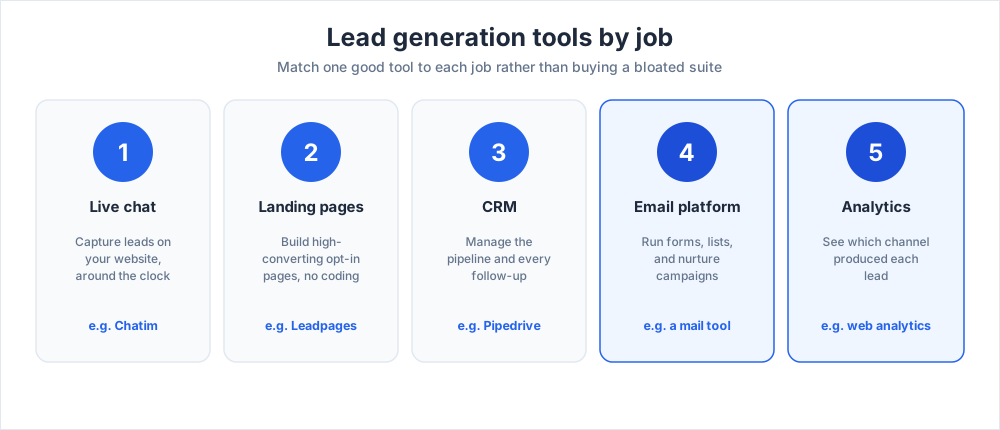
The right tools make lead generation faster and easier to track. You do not need every tool, just one good option for each job.
For capturing leads on your website, live chat is one of the most effective tools you can use. Chatim adds live chat with chatbot automation, so visitors get answers instantly and you collect their details around the clock, even outside business hours.
For landing pages, builder tools such as Leadpages let you create high-converting opt-in pages without a developer. To manage the pipeline once leads arrive, a CRM such as Pipedrive keeps every contact, conversation, and follow-up in one place, so the customer relationship stays organized.
For email, a marketing platform handles forms, lists, and email campaigns. Paid advertising platforms cover search, and Pipedrive or a similar CRM tracks what happens after the click.
These essential lead generation tools cover the basics. You can add specialist lead generation software or outsourced lead generation services later, once you know which channels produce. Whatever tools you choose, connect them to simple analytics so you can see which channel produced each lead, which turns guesswork into a repeatable lead generation campaign.
What role does AI play in lead generation?
AI now handles the slow parts of lead generation. It can score leads, draft first-version emails, answer common questions in a chatbot, and tell you which prospects to call first.
For a small team, the practical win is time. AI handles repetitive online lead generation tasks so you can focus on real conversations with potential customers.
Used well, marketing automation and AI lead scoring help you reach hot leads while their interest is fresh, without hiring extra staff. This is how a small business competes with large companies that run whole sales teams.
How to overcome common lead generation challenges
Lead generation runs into the same few obstacles for most small companies. Naming them makes each one easier to beat.
Too few leads. If the funnel is thin, you usually have too few channels. Add one new strategy from the list above and run it for ninety days before judging it.
Poor-fit leads. If leads do not convert, your targeting or your opt-in offer is too broad. Tighten the message to your ideal target audience.
No time. If lead generation keeps slipping, automate the repetitive parts with good tools and block one hour a day for the rest. Consistency beats intensity.
No tracking. If you cannot see what works, you cannot improve. Even a simple spreadsheet that records the source of every lead is enough to start.
How to measure lead generation success
You cannot improve what you do not measure. A few practical numbers tell you whether your lead generation is working for the business.
Track the number of new leads each month, the cost per lead by channel, and the rate at which leads turn into sales. Together these numbers show which strategies deserve more budget.
Watch lead quality as well as volume, using whatever analytics your tools provide. A channel that brings fewer but better-fit prospects often beats one that floods your funnel with people who never buy.
Review the numbers monthly. Small, steady adjustments are what turn a basic effort into powerful lead generation that compounds across the year and drives real growth and lasting success.
Key takeaways
Lead generation for a small business is not about doing everything. It is about choosing a few effective strategies, running them consistently, and measuring the result.
Map a simple funnel, set a clear goal, then pick two or three channels such as local SEO, social media, and referrals. Add a few good tools, review your numbers monthly, and let the pipeline compound into steady sales.
Practical tips like these beat any single clever tactic, and they give effective lead generation room to compound as the business grows.
For more ideas, see our guides to low-cost digital marketing, driving traffic to your website, and social media for business, and consider adding Chatim live chat to capture leads on your site automatically.
All product names and brands mentioned in this article are the property of their respective owners and do not imply endorsement or affiliation.
More on this from our team: form builders and lead generation through live chat.
Frequently Asked Questions
What is lead generation?
Lead generation is the process of attracting people who are interested in your product and collecting a way to contact them, usually an email address or a phone number. Those people are leads: potential customers who have shown interest but have not bought yet. The goal is a steady, predictable flow of interested prospects rather than relying on luck or word of mouth alone.
Why is lead generation important for small businesses?
For a small business, lead generation turns marketing from a cost into a growth engine. It gives you a forecastable flow of prospects, so you can plan, hire, and invest with more confidence. It also widens your market cheaply, because you reach people who already want what you sell. Each lead can be nurtured, asked for a review, and turned into a referral, so the effort keeps paying off.
What should small business lead generation look like?
Strong small business lead generation is simple, measurable, and repeatable. You do not need a large team or a complex software stack. Map a clear four-stage funnel, set a numeric goal such as 30 leads a month, pick two or three channels you can run consistently, and track which channel produces each lead. A focused setup you actually maintain beats an elaborate one you abandon.
How can local SEO help in lead generation?
Local SEO helps nearby customers find you the moment they search for what you offer. Claim and complete your Google Business Profile, keep your business name and address consistent everywhere, and collect customer reviews. For a small business that serves a town or region, local SEO is one of the highest-return strategies, because the people who find you already have intent and are close enough to buy.
What role does AI play in lead generation?
AI handles the slow, repetitive parts of lead generation. It can score leads, draft first-version emails, answer common questions in a chatbot, and rank which prospects to contact first. For a small team, the practical benefit is time: AI handles routine tasks so you can focus on real conversations. Used with marketing automation, it helps a small business reach hot leads quickly without hiring extra staff.
Why are webinars effective for lead generation?
Webinars are effective because anyone who registers is signaling they have a problem you might solve, so the sign-up itself is a qualified lead. A webinar also lets you demonstrate expertise and answer questions live, which builds trust faster than an advert. A small business can run one with free tools and a single afternoon of preparation, then reuse the recording as content afterward.
How can small businesses create compelling opt-in offers?
Small businesses create compelling opt-in offers by solving one specific problem fast. A lead magnet such as a checklist, a template, a short guide, or a discount code works because it gives the visitor immediate, practical value in exchange for their contact details. The narrower and more useful the offer, the better it converts. Place it where intent is highest, on a relevant blog post or landing page.
How do you overcome common lead generation challenges?
Small business lead generation hits the same few obstacles. If you have too few leads, add a channel and run it for ninety days. If leads do not convert, your targeting is too broad, so tighten it to your ideal audience. If lead generation keeps slipping, automate the routine parts and block an hour a day. If you cannot see what works, track the source of every lead, even in a spreadsheet.
How much should a small business spend on lead generation?
There is no single right number. Many small businesses start with mostly free channels, such as local SEO, content, and referrals, and spend only their time. When you add paid advertising, set a firm budget and track the cost of each lead by channel. Spend more on the channels that produce profitable customers and cut the ones that do not. Let the numbers, not a fixed percentage, guide the budget.
How many leads does a small business need?
The right number depends on your conversion rate and your sales goal. Work backwards: if you need 10 new customers a month and roughly one in five qualified leads buys, you need about 50 qualified leads. Track your real conversion rate for a few months, then set a monthly lead target you can measure against. Quality matters as much as volume, since better-fit leads convert at a higher rate.
What is the difference between a lead and a prospect?
The terms overlap, and definitions vary by team. A common distinction: a lead is anyone who has shown some interest, such as downloading a guide, while a prospect is a lead you have qualified as a genuine fit for what you sell. In practice, leads sit at the top of the funnel and prospects sit further down, closer to a sales conversation. The label matters less than having a clear next step for each stage.
What is a lead magnet?
A lead magnet is something useful you give away in exchange for a visitor's contact details. Common examples are a checklist, a template, a short guide, a free trial, or a discount code. A good lead magnet solves one specific problem quickly, so the visitor gets instant value and you gain a contact you can nurture toward a sale. The more focused the offer, the better it tends to convert.
Which lead generation strategy should a small business start with?
Start with the channel closest to where your customers already are. A local service business usually starts with local SEO and referrals; a business that sells to other companies often starts with LinkedIn and content; an online shop may start with email and paid search. Pick one or two, run them properly for ninety days, measure the result, and only then add another strategy.
Related articles
More in Marketing & sales → Best SaaS Affiliate Programs in 2026: 7 Verified Picks
7 SaaS affiliate programs with every rate, duration, cookie, and payout term verified on the official pages, plus the four numbers that decide value.
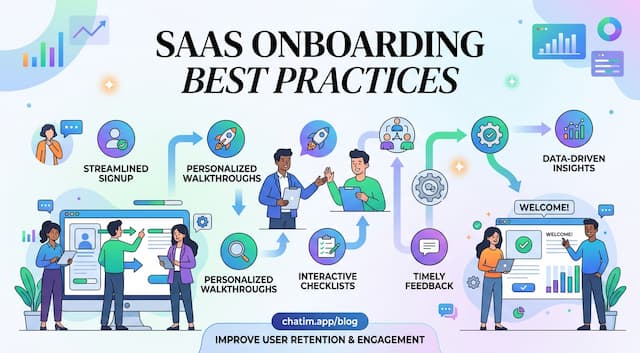 SaaS Onboarding Best Practices That Shrink Time to Value
SaaS onboarding best practices organized as a timeline: set expectations at signup, deliver value in session one, build the habit in week one, then measure.
 10 SaaS Marketing Strategies That Compound (2026)
Ten SaaS marketing strategies ranked by cost and time to results, the arithmetic that picks the right two or three for your price point, and what to skip.
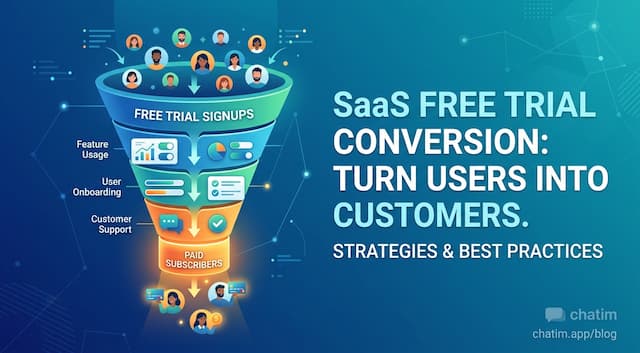 Free Trial Conversion: Fix Where Trials Actually Die
Forget trial conversion benchmarks: decompose the funnel, find which of the four deaths kills your trials, and apply the fix that matches, chat included.