Low-Cost Digital Marketing: 8 Strategies on a Budget
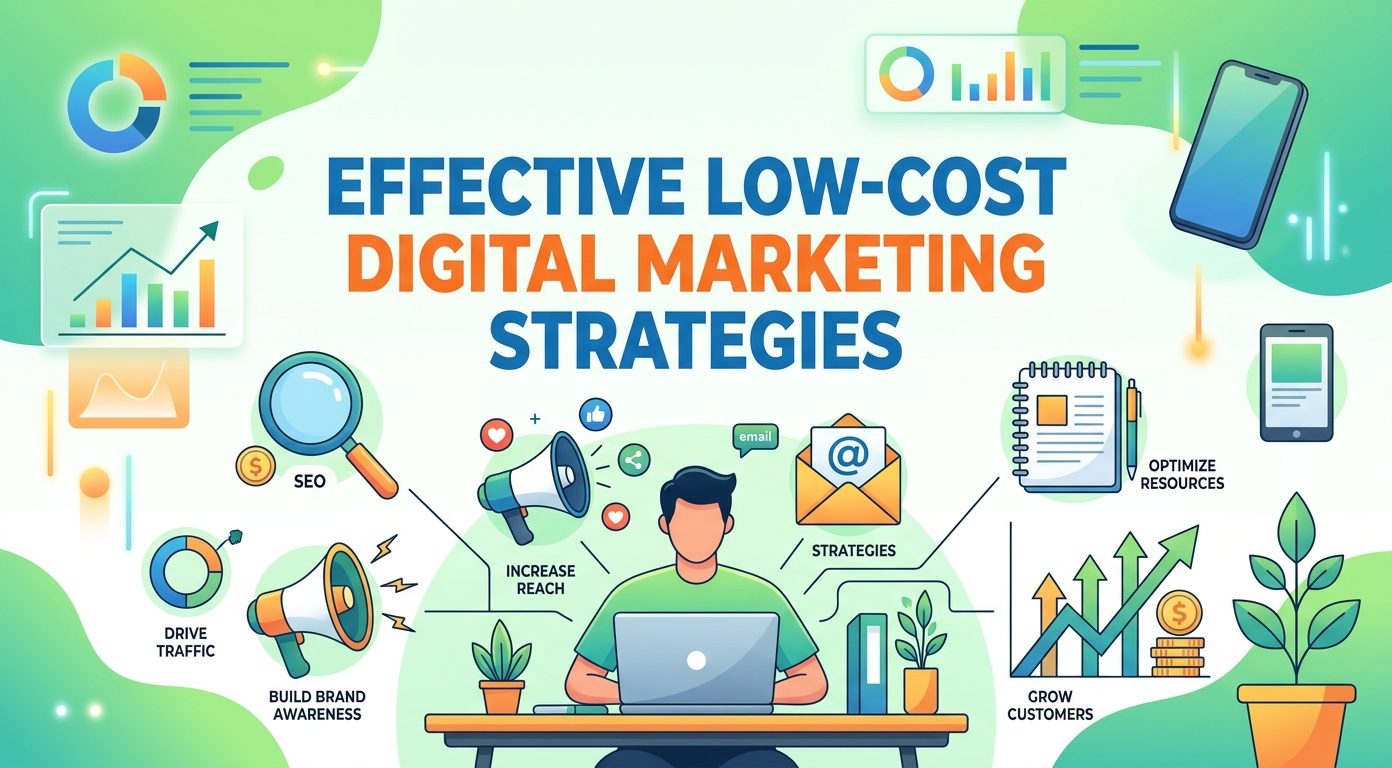
Low cost digital marketing proves that you do not need deep pockets to grow a business online. With the right tactics, a small team can reach customers, build an audience, and drive sales for very little money.
This guide covers eight low-cost digital marketing strategies that actually work, what digital marketing really costs, the common mistakes to avoid, and how to build a plan around the resources you have. None of it requires an agency, and most of it suits a small business with no marketing department at all.
Most of these channels trade money for time and consistency. Pick two or three, commit to them for a quarter, and measure what works before adding more.
What is low-cost digital marketing?
Low-cost digital marketing is any online marketing strategy that delivers real results without heavy spend. It leans on owned channels, organic reach, and free or cheap tools rather than expensive paid advertising.
It is the natural fit for small businesses and anyone just starting out. The trade-off is effort: this approach rewards consistency and patience instead of spend, and the results compound over months rather than appearing overnight.
Used well, these channels build an online presence, brand awareness, and a steady flow of customers that paid advertising alone cannot sustain. Small businesses lean on this approach because it scales with effort rather than money.
The best low-cost digital marketing strategies
The eight tactics below are the highest-return, lowest-cost ways to market a business on a tight budget. Each one is a real channel, not a vague tip, and each can start today.
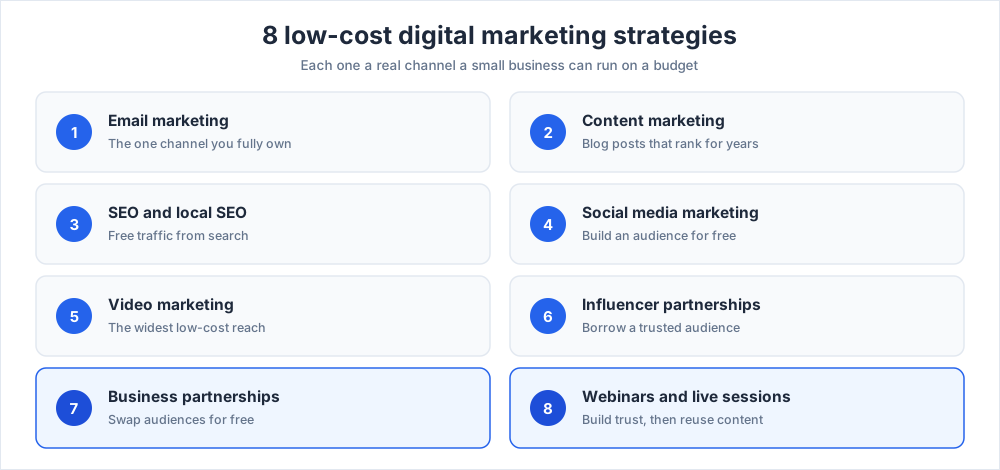
Email marketing
Email marketing is one of the most cost-effective channels in online marketing, and it is the one channel you fully own. Tools like Mailchimp let you send campaigns to thousands of people for little or no cost, and most email tools have a free tier to start on.
Build a list with a simple signup offer, then send a regular newsletter with useful content and the occasional discount. Email consistently returns more per dollar spent than almost any paid channel.
Content marketing and blogging
This tactic means publishing useful articles, guides, and posts that attract your audience over time. A consistent blog is the simplest, cheapest way to start.
Use AI to brainstorm ideas, then write content that genuinely helps your readers. Strong content ranks in search, earns shares, and keeps driving website traffic long after you publish it. See our guide to driving traffic to your website for the full playbook.
SEO and local SEO
SEO makes your website show up when people search. It can be as cheap as you want, because free SEO tools and good content do most of the work with no ad spend required. Tools such as Google Search Console show you which pages already rank and which to improve next.
For a small business with a physical location, going local is essential. Claim your free Google Business Profile, gather reviews, and you reach potential customers searching nearby at no cost.
Social media marketing
Social media marketing builds an audience where your customers already spend time. Post consistently, use relevant hashtags, and pick the platforms that fit your niche: Instagram and TikTok for visual brands, LinkedIn for B2B, Facebook for a broad reach.
Run the occasional contest to boost engagement, and use a free social media management tool to schedule posts in advance. Organic social media is slow to build but genuinely free, and plenty of tools let you queue a week of posts at once so staying consistent does not eat your whole day.
Video marketing
This channel has the widest reach of any low-cost option. A phone camera and a free editing app are enough to start producing useful clips.
Post tutorials and how-to videos on YouTube, Instagram, and TikTok. Many people will watch a short video who would never read an article, so video extends your reach to a whole new audience.
Influencer and content creator partnerships
Working with influencers and content creators puts your brand in front of an audience that already trusts them, and you do not need a celebrity to make it work.
Micro-influencers in your niche often charge little and convert well. Agree on the format and message up front, and treat the first deal as a test before you scale the spend. Track the clicks and sales each partnership brings so you know which creators are worth working with again.
Partner with other businesses
Partnering with other small businesses lets you swap audiences for free. A joint webinar, a shared guide, or a simple cross-promotion reaches new customers with no advertising spend at all. Look for businesses one step ahead of you whose customers are a natural fit for what you sell.
Pick partners who serve the same customers without competing with you. Co-marketing is one of the few growth channels that costs nothing but a little coordination.
Webinars and live sessions
Hosting a webinar or a live session online builds trust and shows your expertise. People trust a business far more once they have watched it answer real questions live.
Live sessions cost nothing but time, and every recording becomes content you can reuse across email, social media, and your blog. One hour of live video can fuel a month of marketing content across every channel.
How much does digital marketing cost?
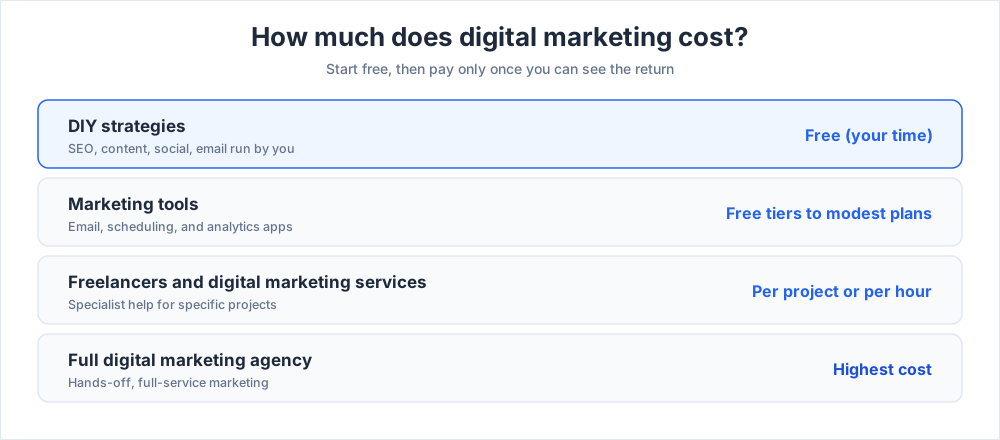
Marketing pricing ranges from almost nothing to thousands of dollars a month. The do-it-yourself tactics above cost mainly your time, while paid options, from Google Ads and social media ads to a digital marketing agency, add real spend.
Typical pricing looks like this: most marketing tools have free tiers, paid plans run a modest monthly fee, and digital marketing services or freelancers charge per project or per hour. A full-service agency sits at the top of the pricing range.
Set a digital marketing budget you can sustain, even if it is mostly time rather than money. Track results with Google Analytics so you can see which marketing efforts earn back their cost and which campaigns do not. Most small teams find that a few free tools plus one paid plan covers everything they need.
The honest answer on pricing: start with the free tactics, prove they work, and only pay for premium tools or digital marketing services once you can clearly see the return.
Common digital marketing mistakes to avoid
A few common mistakes waste a small budget faster than anything else, especially for small businesses watching every dollar. Watch for these patterns:
- Spreading effort thin across every channel instead of two or three.
- Chasing followers instead of customers and sales.
- Skipping measurement, so you cannot tell which efforts actually work.
- Copying competitors instead of knowing your own target market.
- Quitting a channel before it has had a full quarter to compound.
Most of these come from impatience. Low-cost marketing works, but it works on a timeline of months, not days, so give each channel a fair chance to prove itself before you judge it.
Build your low-cost digital marketing plan
Low-cost digital marketing is less about any single tactic and more about consistency. Pick the marketing channels that fit your business and your budget, then commit to them.
Start with one channel, measure it, and add the next once it is working. The most effective ways to grow on a small spend are simply the ones a business actually sustains, and a clear marketing strategy keeps the whole effort focused.
For more low-cost growth tactics, see our guides to running an email blast and social media for business, and consider adding Chatim live chat to turn that hard-won traffic into paying customers.
Frequently Asked Questions
What is the cheapest form of digital marketing?
The cheapest forms of digital marketing are the owned and organic channels: SEO, content marketing and blogging, organic social media, and email marketing. None of these require a media budget, only time and consistency. Email marketing in particular is one of the most cost-effective channels because the audience is yours and the per-message cost is close to zero. SEO is the cheapest long-term channel, since a single ranking page can drive free traffic for years.
What is the 3-3-3 rule in marketing?
The 3-3-3 rule is an informal content-mix guideline rather than a fixed law, and definitions vary. The most common version, used for social media and content planning, suggests that out of every batch of posts, roughly a third should promote your own business, a third should share useful content from others, and a third should engage your audience directly. The point is balance: a feed that only sells quickly loses followers. Treat it as a rough ratio, not a strict rule.
What is the 5 5 5 rule on social media?
The 5-5-5 rule on social media is an informal daily engagement habit, and the exact version varies by who is teaching it. A common form is to spend a few minutes each day commenting on 5 posts in your niche, replying to 5 comments on your own content, and sharing or reacting to 5 pieces from others. The goal is consistent, genuine engagement, which the platforms reward, rather than only broadcasting your own posts.
Can I do digital marketing without money?
Yes. Most low-cost digital marketing strategies can be run for free: SEO, content marketing, a blog, organic social media, email marketing on a free tier, online communities, and being a guest on podcasts or webinars. The trade-off is time and consistency rather than money. Free channels are slower than paid ads, but they compound, so a business with no budget can still build a real audience by committing to one or two channels for a few months.
How can a small business market with no budget?
Start with the channels you fully control. Publish useful content on a blog, optimize it for search with free SEO tools, build an email list, and post consistently on the one or two social platforms where your customers spend time. Claim a free Google Business Profile for local search. Partner with other small businesses to swap audiences. None of these need spend, only steady effort over a quarter or two.
Is SEO or social media better for low-cost marketing?
They do different jobs, so most businesses use both. SEO is slower to build but compounds: a ranking page can drive free, high-intent traffic for years. Social media is faster and better for building an audience and brand awareness, but the visits come in spikes tied to each post. If you can only pick one to start, choose SEO and content for long-term traffic, and add social media to promote what you publish.
How much should a small business spend on digital marketing?
There is no fixed number, and many small businesses start with a budget that is mostly time rather than money. A practical approach is to run the free strategies first, then add a modest paid budget, often the cost of one or two paid tools plus a small ad test, once you can see which channels work. Set a digital marketing budget you can sustain every month rather than a large one-off spend.
What digital marketing can I do myself?
Almost all of it. A non-specialist can run email marketing, write a blog, handle basic SEO, post on social media, record simple videos, host webinars, and set up partnerships, all with free or low-cost tools. You only need outside help for specialized work such as advanced technical SEO or large paid-ad campaigns, and most small businesses can grow a long way before they reach that point.
How long does low-cost digital marketing take to work?
Low-cost channels trade speed for cost, so they work on a timeline of months rather than days. Email and social media can show small results within weeks, while SEO and content marketing usually take three to six months to build real momentum. The key is consistency: pick a channel, commit to it for at least a quarter, and measure before deciding whether it is working.
Do I need a digital marketing agency?
Not to get started. A digital marketing agency adds real cost and is most useful once you have proven channels and need to scale faster than you can in-house. Most small businesses can run the strategies in this guide themselves for a long time. Consider an agency or a freelancer only when the return is clear and your own time has become the bottleneck.
What free tools should I start with?
A practical free starter kit covers each channel: a free email marketing tier (such as Mailchimp's), Google Search Console and Google Analytics for SEO and measurement, a free social media management tool to schedule posts, and a free Google Business Profile for local search. These cost nothing, cover most of a low-cost digital marketing plan, and only need upgrading once you outgrow them.
Is email marketing still effective?
Yes. Email marketing remains one of the most cost-effective digital marketing channels because it is the one audience you fully own, free from any platform's algorithm. A well-segmented list that receives genuinely useful content reliably returns more per dollar than most paid channels. It pairs especially well with content marketing, since each new article gives you a reason to email your list.
How do I measure low-cost marketing results?
Use free analytics. Google Analytics shows which channels send traffic and what visitors do on your website, and Google Search Console shows how people find you in search. Track a small number of metrics that map to your goals, such as traffic by channel, email sign-ups, and sales, and review them monthly so you can double down on the marketing efforts that work and drop the ones that do not.
Related articles
More in Marketing & sales → Best SaaS Affiliate Programs in 2026: 7 Verified Picks
7 SaaS affiliate programs with every rate, duration, cookie, and payout term verified on the official pages, plus the four numbers that decide value.
 SaaS Onboarding Best Practices That Shrink Time to Value
SaaS onboarding best practices organized as a timeline: set expectations at signup, deliver value in session one, build the habit in week one, then measure.
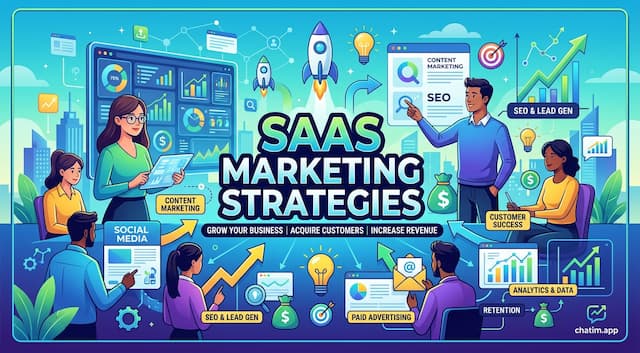 10 SaaS Marketing Strategies That Compound (2026)
Ten SaaS marketing strategies ranked by cost and time to results, the arithmetic that picks the right two or three for your price point, and what to skip.
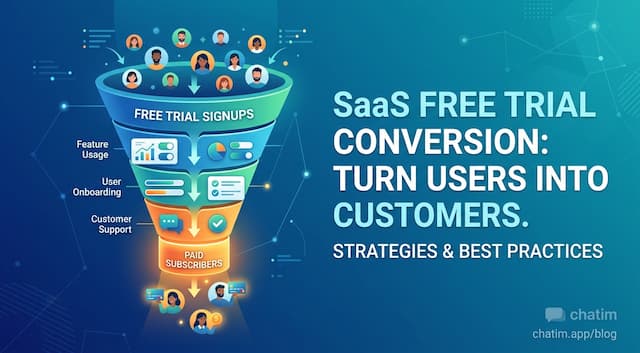 Free Trial Conversion: Fix Where Trials Actually Die
Forget trial conversion benchmarks: decompose the funnel, find which of the four deaths kills your trials, and apply the fix that matches, chat included.