What Is Customer Service? A Complete Guide
Customer service is the help and support a business gives the people who buy from it. It shapes how customers feel about a brand, and it often decides whether they ever come back. This guide answers the question in full: what is customer service, why it matters so much, and how to do it genuinely well.
We cover the definition, the main types and channels, the skills and tools behind great service, how to measure it, and real examples to learn from. Whether you run a small shop or lead a large support team, the goal is the same: turn every interaction into a reason for the customer to stay.
What is customer service?
At the simplest level, what is customer service comes down to one idea: it is every form of help a company gives its customers, before, during, and after a purchase. It is the human side of doing business.
A clear definition of customer service
The working definition is the assistance a company provides so that customers get full value from a product or service. It covers answering questions, solving problems, and following up to confirm the customer is satisfied.
A fuller definition goes beyond fixing issues. Customer service is every interaction a person has with a business, from a quick question to a serious complaint, plus the feeling each of those interactions leaves behind. Strong customer care treats every contact as a chance to build trust.
So when someone asks what is customer service, the honest answer is broad. It is the whole experience of being helped by a company, delivered by people, clear processes, and the right tools working together toward one outcome.
The difference between customer service and customer support
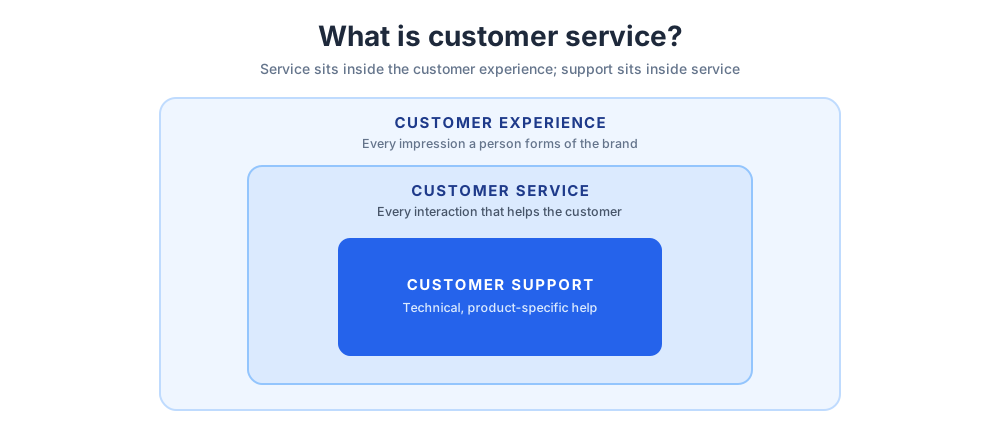
People often use customer service and customer support to mean the same thing, but there is a real difference. Customer service is the wide practice of helping customers across every stage and every kind of question.
Customer support is a narrower, more technical part of that work. A customer support team usually focuses on troubleshooting a specific product or service issue, while customer service also covers guidance, advice, and the slower work of building a relationship. Both functions fall under the broad umbrella of customer care, and in smaller companies the same people handle the two side by side.
Customer service and the customer experience
It also helps to separate customer service from the wider customer experience. The customer experience is every impression a person forms of a brand, from the website and the pricing to the packaging and the support call.
Customer service is one large part of that experience, and usually the most human part. Positive service interactions lift the whole customer experience, while poor ones drag it down no matter how good the product itself happens to be.
Why customer service matters
The importance of customer service is easy to underrate and expensive to ignore. For most businesses, service is not a cost center but one of the clearest drivers of long-term growth. The importance of strong, dependable customer care is now backed by hard numbers as much as by gut instinct.
The benefits of customer service show up in three places: customers who stay, a reputation that spreads on its own, and revenue that compounds year after year. These main benefits are worth looking at one at a time.
Customer retention and loyalty
The first benefit is customer retention. It costs far less to keep an existing customer than to win a brand-new one, and good service is the single biggest lever a business has on retention.
Service also builds customer loyalty and, over time, brand loyalty. A customer treated well once will give a brand another chance; one treated badly rarely returns. Strong service slowly turns ordinary buyers into happy customers who recommend you without being asked.
Reputation and word of mouth
The second benefit is reputation. Every great customer service moment can become a review, a referral, or a social post, and unfortunately every bad one can travel just as far.
Customers talk, and they listen. A large percent of customers read reviews before they buy anything, so the service you give today quietly shapes the customers you will win, or lose, tomorrow.
Revenue and customer lifetime value
The third benefit is revenue. Satisfied customers buy again, buy more, and stay longer, which steadily raises their lifetime value to the business.
Research consistently shows that consumers will pay more for a brand they trust to look after them. Seen this way, customer care is not really an expense at all; it is an investment with a clear and measurable return.
The main types of customer service
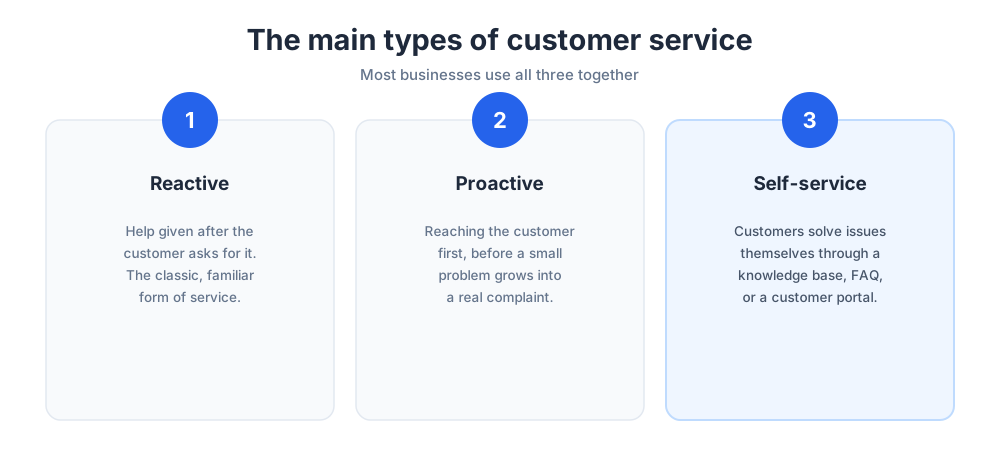
Customer service is not one single activity. These main types describe when and how help reaches the customer, and most businesses end up using all of them together.
Reactive customer service
Reactive customer service is help given after a customer asks for it. A person sends a question or reports a problem, and an agent responds. This is the classic, familiar form of service that every business runs.
Most service requests are still reactive, and handling them well, quickly and warmly, is the foundation that everything else is built on.
Proactive customer service
Proactive customer service reaches the customer first. Instead of waiting for a complaint, the business spots a likely problem and acts early, perhaps with a heads-up email or a timely in-app message.
Done well, proactive service prevents tickets, surprises customers pleasantly, and signals that a brand is genuinely paying attention to the people it serves.
Self-service support
Self-service lets customers help themselves. A knowledge base, a set of clear FAQ pages, and a customer portal give people answers without waiting in a queue at all.
Many customers now prefer this. Self-service answers simple, repeated customer questions instantly, around the clock, and frees the team for the harder cases that genuinely need a person.
Customer service channels
These channels are the routes a customer uses to reach a business. The right mix depends on who your customers are and where they already spend their time.
Traditional channels include phone and email, which stay trusted for detailed or sensitive issues. Digital channels include live chat, social media, and messaging apps, which suit quick questions and busy, mobile audiences. Our guide to the best live chat software covers that fast-growing channel in depth.
The aim is not to appear on every channel but to be reliable on the ones your customers actually choose. Match your service options to real demand, and make the handoff between channels feel seamless rather than like starting over. A customer who switches from live chat to a phone call should never have to explain the whole problem twice.
Key customer service skills
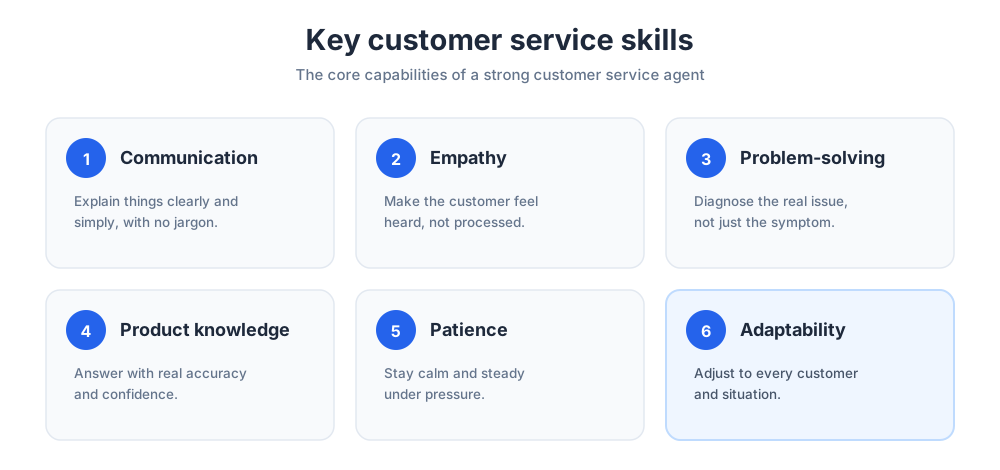
Behind every good interaction is a person with the right skills. A handful of core capabilities separate customer service representatives who merely answer from the ones who genuinely help.
Communication and empathy
Clear communication is the first skill. A good representative explains things simply, avoids jargon, and checks that the customer actually understood the answer.
Empathy comes next. Customers want to feel heard, not processed. An agent who acknowledges the frustration behind a question tends to resolve it faster and leaves a far better impression.
Problem-solving and product knowledge
Strong problem-solving turns a complaint into a fix. A skilled problem-solver diagnoses the real issue rather than the surface symptom, and knows exactly when to escalate a case.
Patience and adaptability keep support quality high under pressure, since no two customers are alike. Product knowledge ties it all together, because an agent who knows the product answers with confidence and accuracy.
What great customer service looks like
So what does great customer service actually look like in daily practice? It is less about grand gestures and more about a few qualities applied with real consistency.
It is reliable, so customers get the same standard of help every time. It is responsive, so replies arrive quickly, even when the first reply only confirms the request was received. It is personal, so the customer feels like a person rather than a case number.
Above all, great service is consistent. One brilliant interaction followed by three poor ones still leaves a customer unsure. Consistency is what builds the quiet confidence that keeps people choosing you.
Customer service software and tools
As a business grows, good intentions stop being enough and teams need the right tools. Customer service software gives a support team one organized place to receive, track, and answer every request.
What customer service software does
At its core, customer service software turns scattered messages into organized tickets, routes each ticket to the right person, and records the full history of every customer.
Most platforms add a shared knowledge base, customer service automation for routine replies, and a link to customer relationship management software so support and sales see the same customer data. A modern help desk also surfaces a customer's past questions so an agent has context at once. For a deeper look, see our guide to help desk software.
Popular customer service tools
The market is full of capable options. Widely used customer service tools include Zendesk, Freshdesk, Help Scout, and Salesforce Service Cloud, alongside live chat platforms and shared team inboxes.
There is no single best choice. Match the tool to your team size, your channels, and your budget, and start with something the customer service team will genuinely use every single day.
How to measure customer service
If you cannot measure customer service, you cannot reliably improve it. A few customer service metrics tell you honestly whether the work is paying off.
Customer satisfaction score (CSAT)
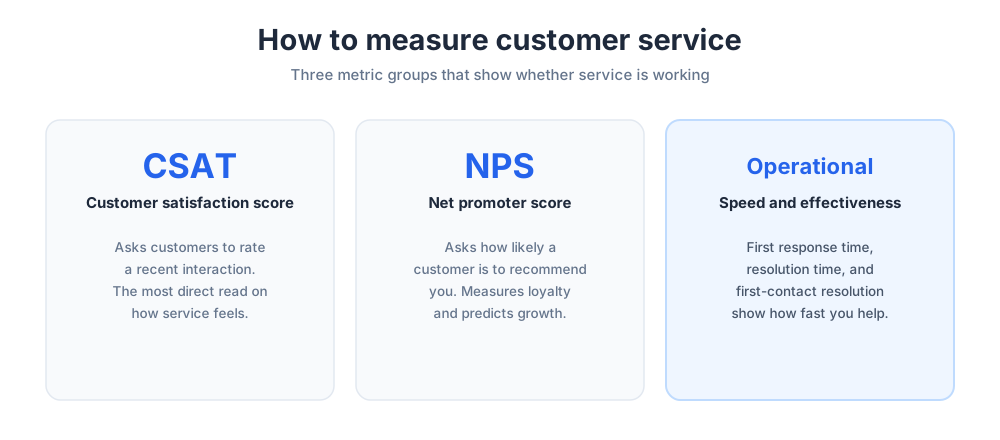
This score, known as CSAT, asks customers to rate a recent interaction, usually right after it ends. It is the most direct read available on how your service actually feels.
Net promoter score (NPS)
This metric, known as NPS, asks how likely a customer is to recommend you to someone else. It measures loyalty across the whole relationship rather than a single contact, and it tends to predict growth.
Other metrics worth tracking
Beyond those two, watch first response time, resolution time, and first-contact resolution. Service teams should review these numbers on a regular schedule and act on what they reveal.
Examples of excellent customer service
Real customer service examples make the ideas concrete. A few well-known brands have built their reputation on service, and their customer service scenarios are worth studying closely.
Zappos built a culture around the customer, famous for free returns and for support staff empowered to spend real time on a single call. The customer service agents there are trusted to do right by the customer rather than rush to the next ticket.
Amazon set a new bar for convenience, with fast shipping, easy returns, and round-the-clock customer care that customers rarely have to think twice about.
Ritz-Carlton trains every employee to solve a guest problem on the spot, without a chain of approvals. The lesson across all three brands is the same: empower the people closest to the customer. When the front line can act without waiting for permission, customers feel the difference right away.
How to improve customer service
Improving customer service is a steady habit, not a one-time project. A few practical tips make the biggest difference over time, and each one costs far less than winning back a customer lost to poor customer care.
Train the team often and well. Listen closely to customer feedback and act on it, because the customers who take the time to complain are telling you exactly what to fix. Our guide to customer feedback goes deeper on collecting and using it.
Give agents the authority to solve problems without three layers of approval. Review your results, pick the one weakest spot, and fix it before moving to the next. Small, steady tips like these compound into a reputation competitors cannot easily copy.
The future of customer service
The future of customer service is being reshaped by automation and AI. Chatbots and AI assistants now handle routine, repetitive questions instantly, at any hour, while people take on the complex and emotional cases.
The winning approach blends both. The businesses that thrive will pair efficient automation with a genuine human touch. Consumers can tell the difference between real help and a hollow script almost instantly, and customer service today is judged on speed and warmth at once.
Whatever tools arrive next, the heart of customer service will not change. It is the simple, demanding work of helping a person and leaving them glad they chose you. Get that right, consistently, and service becomes the strongest advantage a business can hold.
More on this from our team: live chat best practices.
Frequently Asked Questions
What is the meaning of customer service?
Customer service means the help and support a business gives the people who buy from it, before, during, and after a purchase. It covers answering questions, solving problems, and following up to make sure the customer is satisfied. More broadly, it is every interaction a person has with a company and the impression each one leaves behind.
What is the best definition of customer service?
The clearest definition of customer service is the assistance a company provides so customers get full value from a product or service. A fuller definition goes past fixing issues: it is the whole experience of being helped by a business, delivered by people, processes, and tools working together to leave the customer better off.
What are the 7 qualities of good customer service?
Seven qualities define good customer service: reliability, so help is consistent; responsiveness, so replies are fast; empathy, so customers feel heard; professionalism, so every contact stays courteous; personalization, so service fits the individual; patience, so pressure does not show; and consistency, so the standard holds on every single interaction.
What is customer service to you?
At its heart, customer service is the simple, demanding work of helping a person and leaving them glad they chose your business. It is less about scripts and grand gestures than about being reliable, responsive, and genuinely helpful every time. Treated that way, customer service becomes the clearest expression of how a company values its customers.
What is the difference between customer service and customer support?
Customer service is the broad practice of helping customers across every stage and every kind of question, including guidance and relationship-building. Customer support is a narrower, more technical part of that work, usually focused on troubleshooting a specific product or service issue. Both fall under the umbrella of customer care, and smaller teams often handle the two together.
What are the main types of customer service?
There are three main types. Reactive customer service is help given after a customer asks for it. Proactive customer service reaches the customer first, before a problem grows. Self-service support lets customers solve issues themselves through a knowledge base, FAQ pages, or a customer portal. Most businesses use all three together.
Why is customer service important?
Customer service is important because it drives three things that grow a business: retention, since it costs far less to keep a customer than to win one; reputation, since service moments become reviews and referrals; and revenue, since satisfied customers buy more and stay longer. Strong service is an investment with a measurable return, not just a cost.
What skills make good customer service?
The core skills are clear communication, empathy, problem-solving, and product knowledge, supported by patience and adaptability. A strong customer service agent explains things simply, makes the customer feel heard, diagnoses the real issue rather than the symptom, and stays calm under pressure. These capabilities matter more than any single tool.
What are good customer service examples?
Well-known examples include Zappos, famous for free returns and support staff trusted to spend real time on each call; Amazon, with fast shipping, easy returns, and round-the-clock help; and Ritz-Carlton, where every employee can solve a guest problem on the spot. The shared lesson is to empower the people closest to the customer.
How do you measure customer service?
Track a few key metrics. The customer satisfaction score (CSAT) rates a recent interaction. The net promoter score (NPS) measures how likely customers are to recommend you. Operational metrics like first response time, resolution time, and first-contact resolution show speed and effectiveness. Review them on a regular schedule and act on what they reveal.
What is the difference between customer service and customer experience?
The customer experience is every impression a person forms of a brand, from the website and pricing to the packaging and the support call. Customer service is one large part of that experience, and usually the most human part. Strong service interactions lift the whole customer experience, while poor ones drag it down regardless of the product.
What is customer service software?
Customer service software gives a support team one place to receive, track, and answer every request. It turns scattered messages into organized tickets, routes them to the right person, and records each customer's history. Most platforms add a knowledge base, automation, and reporting, and many connect to customer relationship management software.
How can a business improve customer service?
Improving customer service is a steady habit. Train the team often, listen to customer feedback and act on it, and give agents the authority to solve problems without layers of approval. Review your results, fix the single weakest spot, then move to the next. Small, consistent changes compound into a reputation competitors cannot easily copy.
What is proactive customer service?
Proactive customer service reaches the customer before they ask for help. Instead of waiting for a complaint, the business spots a likely problem and acts early, perhaps with a heads-up email or a timely in-app message. Done well, it prevents tickets, surprises customers pleasantly, and shows that a brand is paying attention.
Related articles
More in Customer service → SaaS Customer Support: The Stage-by-Stage Guide (2026)
How SaaS customer support actually works at each stage: the right stack from founder-led live chat to a full support operation, channels, and metrics.
 How to Reduce Customer Churn: 5 Levers in Payback Order
Reduce customer churn by pulling five levers in payback order: payment recovery, onboarding, support quality, pricing fit, and a 90-day win-back.
 10 FAQ Page Examples That Actually Help Customers (2026)
10 FAQ page examples from Shopify, Airbnb, Slack, Nike and more, with the exact pattern each gets right and a checklist to build your own FAQ page.
 12 Customer Service Email Templates for Every Scenario (2026)
12 customer service email templates for complaints, refunds, delays, bugs and saying no, plus the five-line skeleton that keeps them sounding human.