Customer Feedback: Why It Matters and How to Gather It

Customer feedback is the clearest signal a business has about what it is doing right and what it needs to fix. It turns guesswork into evidence, telling you exactly how customers feel about your product, your service, and their whole experience with your brand. Every comment, rating, and review is a small piece of guidance you would otherwise be missing.
This guide explains why customer feedback matters, the main types of customer feedback, the most effective ways to collect it, and how to turn raw feedback into action. Whether you run a small shop or a large SaaS company, a steady flow of customer feedback is one of the smartest investments you can make in your product and your customers.
Why customer feedback matters
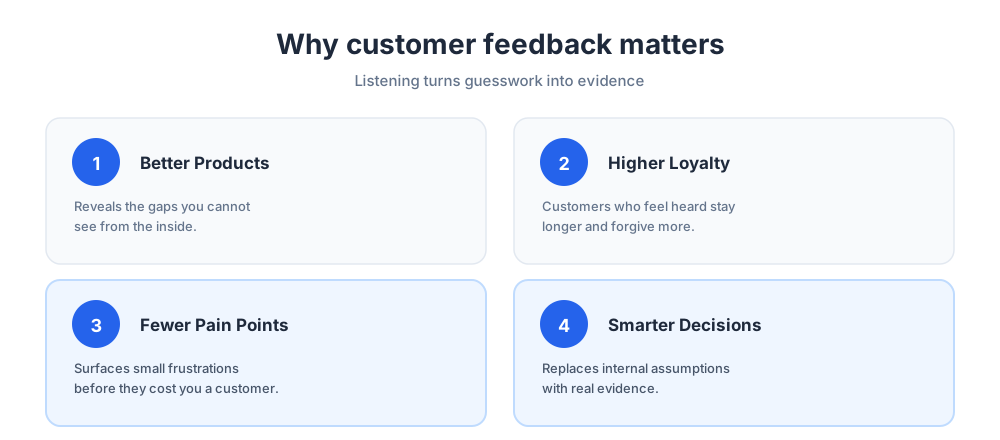
Customer feedback gives you a direct line to the people who keep your business alive. Without it, you are designing products and services in the dark, hoping your assumptions about customers are correct. With it, every decision rests on what customers actually told you.
Good customer feedback improves products and services by revealing gaps you cannot see from the inside. It lifts customer satisfaction, because customers who feel heard stay loyal and forgive the occasional mistake. It helps you adapt to market shifts before competitors do. And it surfaces pain points, the small frustrations that quietly drive customers away.
There is a retention angle too. A customer who shares feedback and sees you act on it feels invested in your product. That sense of partnership is hard to win any other way. A business that listens through customer feedback builds a stronger product, a better experience, and a reputation worth trusting, while a business that ignores feedback slowly loses touch with the customers it depends on.
Customer feedback also shapes the customer experience from end to end. Every survey answer and support rating marks a point on the customer journey, showing where the experience delights customers and where it frustrates them. Companies that treat customer feedback as a window into the customer experience, not a box to tick, steadily raise customer satisfaction over time. The connection is direct: when you listen to feedback and improve, the next customer enjoys a better experience than the last, and that rising satisfaction shows up in loyalty and repeat purchases. In a crowded market, that edge compounds quietly, because it is built from thousands of small, honest conversations with real customers rather than from a single big campaign. When feedback points to a weak spot, our guide to improving the shopping journey offers practical fixes you can apply right away.
Types of customer feedback
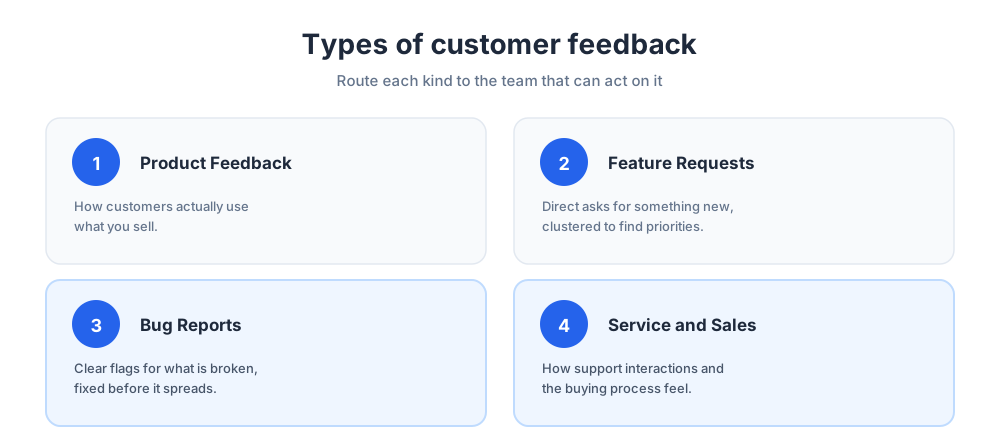
Not all feedback looks the same. Knowing the different types of customer feedback helps you route each type to the team that can act on it, so nothing useful gets lost.
Product feedback
Product feedback covers how customers actually use what you sell, including praise, complaints, and confusion. Product teams rely on this type of feedback to guide the product roadmap and decide what to build next. Strong product input often points to a problem the team did not know existed.
Feature requests
Feature requests are direct asks for something new. A steady stream of feature requests shows what customers value, and clustering similar requests reveals which idea deserves attention first. Not every request becomes a feature, but the pattern across many requests is a reliable guide.
Bug reports
Bug reports flag what is broken. Fast, clear reports help your team fix issues before they reach more customers, and a customer who files a careful report is doing you a real favor.
Service and sales feedback
Service feedback rates a support interaction, while the sales side captures what prospects think during the buying process. Both are valuable feedback that shape the wider customer experience and tell you where the journey feels smooth or rough.
Ways to collect customer feedback
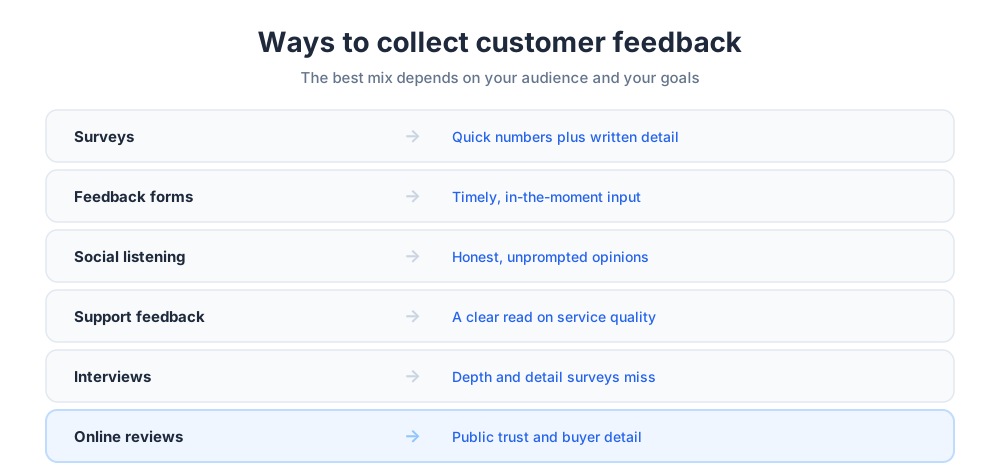
There are many customer feedback methods, and the best mix depends on your audience, your product, and your goals. Here are the most effective ways to gather feedback from customers.
Surveys
Customer surveys gather both numbers and detail, from a quick rating to an open comment. Keep every survey short and focused so response rates stay high, and send it soon after the experience you are asking about.
Feedback forms and in-app surveys
A feedback form on your website, or in-product prompts triggered after a key action, capture timely app feedback while the experience is still fresh in a customer's mind. In-product prompts often produce the most honest, spontaneous feedback of all. A live chat widget can collect quick feedback mid-visit too, and our guide to lead generation through live chat shows how the same channel supports sales.
Social listening and reviews
Monitoring social mentions surfaces honest opinions you never asked for. Online reviews do the same: positive reviews build trust with new buyers, and product reviews give shoppers the detail they need to choose. Reading them regularly keeps you close to how customers really talk about your product.
Support and interview feedback
After customer service interactions, a quick rating reveals support quality and effort. User interviews and focus groups add the depth that surveys miss, letting you explore why a customer feels the way they do. Together these methods give you both scale and nuance.
Most businesses combine several of these feedback methods rather than relying on one. A short survey tracks the trend over time, reviews and social listening catch the unprompted opinions customers share on their own, and interviews explain the reasons behind the numbers. Using a mix means no single blind spot can hide an important signal, and it gives every customer a comfortable channel to share feedback. The right combination depends on your product, your audience, and how your customers prefer to communicate. Start with one or two channels you can run well, then add more as the volume of feedback grows and your team gets comfortable acting on it.
Customer feedback metrics and scores
Some feedback is best expressed as a number you can track over time. Three scores matter most for measuring customer satisfaction.
Net Promoter Score asks how likely a customer is to recommend you, a quick read on loyalty. The customer satisfaction score measures the level of satisfaction with a specific interaction or purchase. The customer effort score rates how easy it was to get something done, since low effort strongly predicts whether a customer stays. Tracked together, these scores turn scattered feedback into a clear customer health signal that any team can read at a glance, and they make customer success easier to measure and manage, which matters most for B2B customer service teams.
Customer feedback questions to ask
The quality of your data depends on the questions you ask. Strong questions are specific, neutral, and easy to answer, and the best surveys mix a few question styles.
Ask what nearly stopped a customer from buying, what they would change about the product, and how likely they are to recommend you. Pair rating questions with one or two open questions so customers can explain in their own words. Avoid leading questions that push customers toward the answer you want. Honest answers, even negative feedback, are the most useful input you can get, so write every question to invite the truth rather than a compliment.
Customer feedback software and tools
As feedback volume grows, spreadsheets stop working. Customer feedback software collects, organizes, and reports on responses in one place, so nothing slips through the cracks.
Good software pulls surveys, reviews, and support tickets together, tags each piece of feedback, and shows trends over time. Many customer feedback tools also route product input straight to the people who need it. When you compare these tools, look for easy survey building, clear dashboards, and integrations with the tools you already use, so feedback management does not become a full-time job in itself. The right tool scales with you as the volume of customer responses climbs. Pair it with a web analytics tool and you can connect what customers say to what they actually do.
How to analyze customer feedback
Collecting feedback is only the start; customer feedback analysis is where the real value appears, because raw responses on their own change nothing.
Begin by organizing feedback data into themes such as product, support, pricing, and onboarding. This categorization makes patterns visible. Then look for recurring issues: if many customers mention the same problem, it is a clear priority. Weigh how often a theme appears and how strongly customers feel about it, so a loud minority does not outweigh a quiet majority. Solid customer feedback management treats analysis as a routine, not a one-time project, so trends are caught early and acted on quickly.
Share the results once the analysis is done. When product, support, and marketing teams all see the same customer feedback, they make decisions that point in the same direction instead of pulling apart. A short monthly summary of what customers said, what changed, and what is still open keeps everyone honest and keeps customer feedback at the center of how the business improves its product. Over a year, that simple habit turns thousands of scattered comments into a clear, shared picture of what customers actually want from your product.
Building a customer feedback loop
A customer feedback loop closes the gap between hearing feedback and acting on it. Without a loop, feedback piles up and nothing changes, which teaches customers that speaking up is pointless.
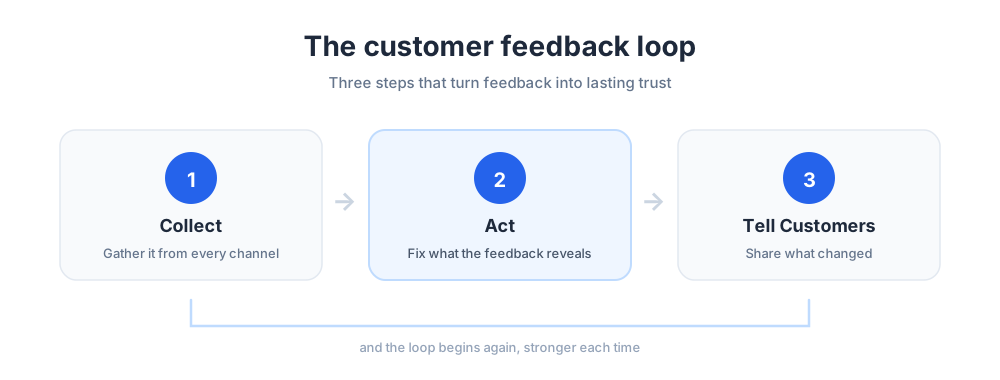
The customer feedback loop has three steps: collect feedback, act on it, and tell customers what you changed. That last step matters most. A short message, a changelog, or a note on your roadmap shows customers their voice shaped the product. When customers see a real feedback loop in action, they give more and better feedback next time, and a dependable feedback process becomes a genuine competitive advantage rather than a chore.
Examples make the value of a feedback loop concrete. Software companies often run the tightest loops: a business that ships a requested feature and emails the customers who asked for it turns those customers into advocates. A shop that fixes a checkout problem reported in a survey, then says so publicly, shows every customer that feedback leads somewhere real. These examples share one trait: the business heard the feedback, acted on it, and told customers what changed. Customers remember that, and they return with more and better feedback the next time you ask, which keeps the whole loop spinning.
Best practices for gathering feedback
A few simple practices make any customer feedback strategy more effective, whatever tools you use.
Be transparent about why you are asking and how the feedback helps customers in return. Keep every survey simple, since complexity kills completion. Follow up to thank customers and share what changed. Make feedback collection ongoing rather than a once-a-year survey, so insights arrive in real time. And keep that data secure, because customers share honestly only when they trust you. Follow these tips and effective customer feedback becomes a steady, reliable input rather than an occasional scramble. For SaaS companies especially, this rhythm of asking, listening, and improving is what keeps a product aligned with its users.
Timing matters as much as wording. Feedback gathered right after a purchase, a support chat, or another key moment in the customer experience is far more accurate than feedback requested weeks later, once the memory has faded. Send each request close to the experience you are asking about, keep it to a few questions, and customers will reward you with sharper, more honest answers. A request that respects a customer's time also signals that you respect the customer, which itself lifts the response rate and the quality of every reply.
Common feedback mistakes to avoid
Even a good plan can stumble. The most common mistake is collecting feedback and never acting on it, which quietly tells customers their input does not count.
A second mistake is asking only happy customers, which hides the problems that matter most. A third is long, complex surveys that exhaust customers before they reach the useful questions. A fourth is treating every comment as equally urgent instead of weighing the pattern. Strong examples of customer feedback handled well, from a fixed bug to a shipped feature request, all share one trait: the business listened, acted, and closed the loop. Avoid the common mistakes, listen to every kind of feedback, and customer feedback will steadily make your product and your service better.
Treat every piece of customer feedback as a small gift of information. Respond to the customer who gave it, route the feedback to the team that can act on it, and your business keeps learning from the customers who matter most. Over time, that steady habit of acting on customer feedback is what separates a product that quietly drifts from one that keeps getting better. Customer feedback, gathered with care and acted on with honesty, is simply how good businesses stay close to the customers they serve.
Keep going with our guides to customer happiness and bad customer service examples.
Frequently Asked Questions
What is an example of good customer feedback?
Good customer feedback is specific, honest, and actionable. Instead of a vague "the app is slow," it sounds like "the checkout page took about ten seconds to load on my phone, so I almost gave up." That detail tells you what to fix and why it matters. Good feedback can be positive too, such as "your support team solved my issue in one short chat," which shows what to keep doing. The best examples give a clear situation, a clear reaction, and enough context to act on.
What are the 3 C's of feedback?
The 3 C's of feedback are usually given as clear, considerate, and constructive, though the exact wording varies between frameworks. Clear means the feedback is specific and easy to understand. Considerate means it is delivered with respect for the person receiving it. Constructive means it points toward a solution rather than just a complaint. Applied to customer feedback, the same idea holds: the most useful input is specific, fair, and aimed at making something better.
What are 5 words that describe good customer service qualities?
Five words that capture good customer service are empathy, responsiveness, knowledge, patience, and clarity. Empathy means understanding how the customer feels. Responsiveness means replying quickly. Knowledge means the agent actually knows the product. Patience means staying calm through a tricky issue. Clarity means explaining the solution in plain language. Customer feedback often rates these exact qualities, which is why tracking it is one of the best ways to improve service over time.
What is the best positive feedback?
The best positive feedback is specific rather than generic. "Great service" is pleasant but tells you little; "the agent noticed my order was wrong before I did and fixed it the same day" tells you exactly what to repeat. Strong positive feedback names the person or moment, describes the impact, and feels genuine. For a business, collecting positive feedback is as valuable as collecting complaints, because it shows which strengths to protect and build on.
What is customer feedback?
Customer feedback is the information customers share about their experience with your product, service, and brand. It includes survey answers, reviews, support ratings, social media comments, feature requests, and bug reports. Customer feedback turns guesswork into evidence, telling a business exactly what is working and what needs to change. Collected and acted on consistently, it is one of the most reliable guides to improving a product and keeping customers loyal.
Why is customer feedback important?
Customer feedback is important because it shows a business what it cannot see from the inside. It improves products by revealing gaps, lifts customer satisfaction because customers who feel heard stay loyal, helps a company adapt to market shifts, and surfaces pain points before they drive customers away. A business that listens through customer feedback builds a stronger product and a better reputation, while one that ignores it slowly loses touch with its customers.
What are the best ways to collect customer feedback?
The most effective ways to collect customer feedback include surveys, feedback forms and in-app prompts, social listening, post-support ratings, user interviews and focus groups, and online reviews. Net Promoter Score, customer satisfaction score, and customer effort score turn feedback into trackable numbers. Most businesses combine several channels, since a survey shows the trend, reviews catch unprompted opinions, and interviews explain the reasons behind the numbers.
What questions should I ask in a customer feedback survey?
Ask specific, neutral questions that are easy to answer. Useful examples include what nearly stopped the customer from buying, what they would change about the product, how easy it was to get help, and how likely they are to recommend you. Mix rating questions with one or two open questions so customers can explain in their own words. Avoid leading questions that push customers toward a flattering answer, since honest responses are the most useful.
How do you analyze customer feedback?
Start by organizing feedback into themes such as product, support, and pricing, which makes patterns visible. Then look for recurring issues: if many customers mention the same problem, it is a clear priority. Weigh both how often a theme appears and how strongly customers feel about it. Customer feedback software speeds this up by tagging responses and showing trends over time. Treat analysis as a routine, not a one-time project, so issues are caught early.
What is a customer feedback loop?
A customer feedback loop is the cycle of collecting feedback, acting on it, and telling customers what changed. The final step matters most: a short message, a changelog, or a note on your roadmap shows customers their input shaped the product. When customers see a real feedback loop in action, they share more and better feedback next time. A dependable feedback loop turns customer input from a pile of comments into steady improvement.
What customer feedback metrics should I track?
Three scores cover most needs. Net Promoter Score measures how likely customers are to recommend you, a quick read on loyalty. The customer satisfaction score measures satisfaction with a specific interaction or purchase. The customer effort score rates how easy it was to get something done, since low effort strongly predicts retention. Tracked together over time, these scores turn scattered feedback into a clear customer health signal any team can read.
How often should you collect customer feedback?
Make feedback collection ongoing rather than a once-a-year survey. Trigger short requests right after key moments, such as a purchase or a support chat, when the experience is fresh and the answers are most accurate. Run periodic relationship surveys, like a quarterly Net Promoter Score check, to track the broader trend. Continuous, well-timed feedback gives you real-time insight without overwhelming customers with constant requests.
What customer feedback mistakes should I avoid?
The biggest mistake is collecting feedback and never acting on it, which tells customers their input does not count. Avoid asking only happy customers, since that hides the problems that matter most. Skip long, complex surveys that exhaust people before the useful questions. Do not treat every comment as equally urgent; weigh the pattern instead. Finally, always close the loop by telling customers what changed, or they will stop sharing feedback at all.
Related articles
More in Customer service → SaaS Customer Support: The Stage-by-Stage Guide (2026)
How SaaS customer support actually works at each stage: the right stack from founder-led live chat to a full support operation, channels, and metrics.
 How to Reduce Customer Churn: 5 Levers in Payback Order
Reduce customer churn by pulling five levers in payback order: payment recovery, onboarding, support quality, pricing fit, and a 90-day win-back.
 10 FAQ Page Examples That Actually Help Customers (2026)
10 FAQ page examples from Shopify, Airbnb, Slack, Nike and more, with the exact pattern each gets right and a checklist to build your own FAQ page.
 12 Customer Service Email Templates for Every Scenario (2026)
12 customer service email templates for complaints, refunds, delays, bugs and saying no, plus the five-line skeleton that keeps them sounding human.