What Is Customer Happiness? Definition and Key Strategies
Customer happiness is one of the clearest signals of whether a business is built to last. When people feel happy with a brand, they come back, they spend more, and they tell others. It is the quiet force behind steady revenue and a loyal customer base.
Yet it is easy to talk about and hard to pin down. Customer happiness is not the same as customer satisfaction, and it cannot be improved by guesswork. You need a clear definition, the right metrics, and a practical plan.
This guide on the Chatim blog explains what customer happiness means, how it differs from customer satisfaction, how to measure it, and the strategies that move it in the right direction.
What is customer happiness?
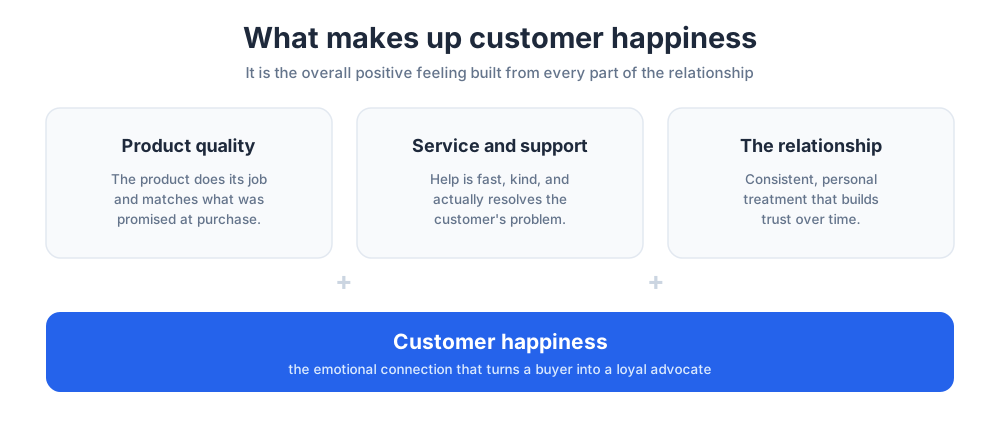
Customer happiness is the overall positive feeling a person has about a brand across every interaction with it. It reflects not one good purchase, but the full relationship: product quality, the support, and the way a company treats people over time.
A simple way to understand the importance of customer happiness is this. Satisfaction answers the question did this work. Happiness answers the warmer question do I enjoy being your customer. The second is harder to win and far more valuable.
Happy customers are not just pleased with a single transaction. They feel an emotional connection to the company, trust it with their money, and choose it again even when cheaper options exist. That feeling turns a one-time buyer into a long-term advocate.
Customer happiness vs customer satisfaction
Customer happiness and customer satisfaction are related, but not interchangeable. Knowing the difference helps a company choose the right metrics and set realistic goals.
Customer satisfaction measures how well a specific product or service met expectations. It is usually tied to one moment: a purchase, a support ticket, or a delivery. Customer satisfaction ratings tell you whether that moment went well.
Customer happiness is broader and more emotional. It looks at the whole journey rather than a single step. A person can give high customer satisfaction scores on every ticket and still not feel happy if the wider experience feels cold.
So treat customer satisfaction as an input and happiness as the outcome. Strong scores at each step build toward it, but only when the experience also feels personal and consistent. That is why customer satisfaction metrics alone are never quite enough.
Why customer happiness matters for your business
Happiness is not a soft, feel-good extra. It has a direct effect on revenue, growth, and the cost of running a business, and as consumers grow harder to win, that effect only gets larger.
It drives retention and loyalty
Happy customers stay. Customer retention costs far less than customer acquisition, because winning a new buyer costs more than keeping an existing one. When people are happy, they renew, reorder, and resist competitors.
That stickiness is the root of customer loyalty. Loyal customers also raise customer lifetime value, since the total they spend grows with every year they stay. Strong brand loyalty means your best customers help market the business for you.
Satisfied customers are also more forgiving. When something goes wrong, a happy person gives a business the chance to fix it instead of leaving quietly. That patience protects relationships that would otherwise break.
It powers steady, profitable growth
Happiness compounds. A happy customer refers friends, shares positive experiences in reviews, and mentions a brand on social media, all of which lower the cost of growth.
This is what separates a struggling company from a successful business. Companies that treat it as a core goal grow on a stable base of repeat business rather than a constant scramble for new buyers, and that is the foundation of long-term success.
It also lifts the people inside the business. When customers are happy, support work is calmer, and every employee feels the difference, which feeds back into better service.
How to measure customer happiness
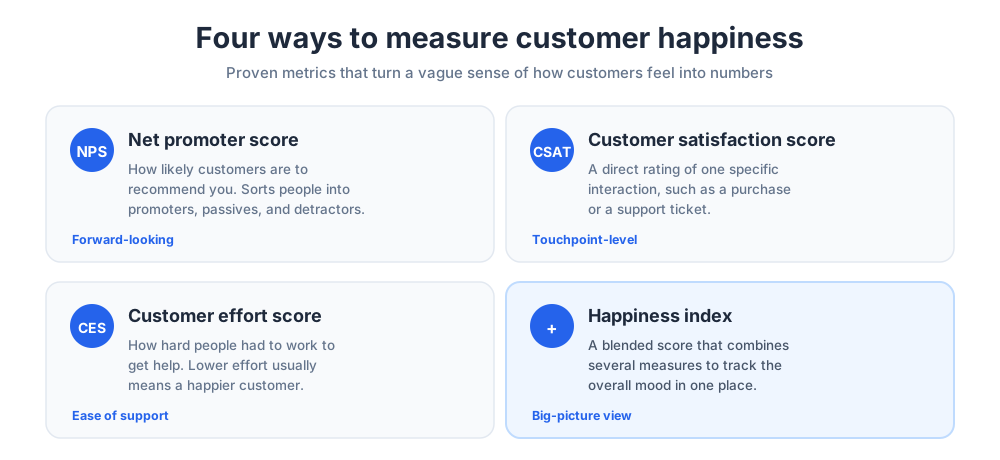
You cannot improve what you do not measure. Several proven metrics turn a vague sense of how customers feel into numbers a business can track over time, and most guides on this blog point back to them.
Net promoter score
Net promoter score asks one question: how likely are you to recommend this brand to others? It sorts people into promoters, passives, and detractors.
It is popular because it is simple and forward-looking. A rising score is a strong signal that loyalty is heading in the right direction.
Customer satisfaction score and customer effort score
The customer satisfaction score asks people to rate a specific interaction, so it is the most direct read on satisfaction at a single touchpoint.
The customer effort score measures how hard people had to work to get help. Low effort usually means a better mood, because a smooth contact center or chat experience leaves a stronger impression than a slow one.
The happiness index and customer feedback
Some teams combine several measures into a single blended score that tracks the overall mood of their customers in one place.
Numbers only go so far. Open feedback, gathered through surveys, reviews, and conversations, explains why a score moved. Reading it closely turns raw data into real insights a business can act on.
Key strategies to boost customer happiness
Measuring matters only if it leads to action. These strategies are the practical levers that raise the score, and every business can start on them today.
Deliver fast, helpful customer service
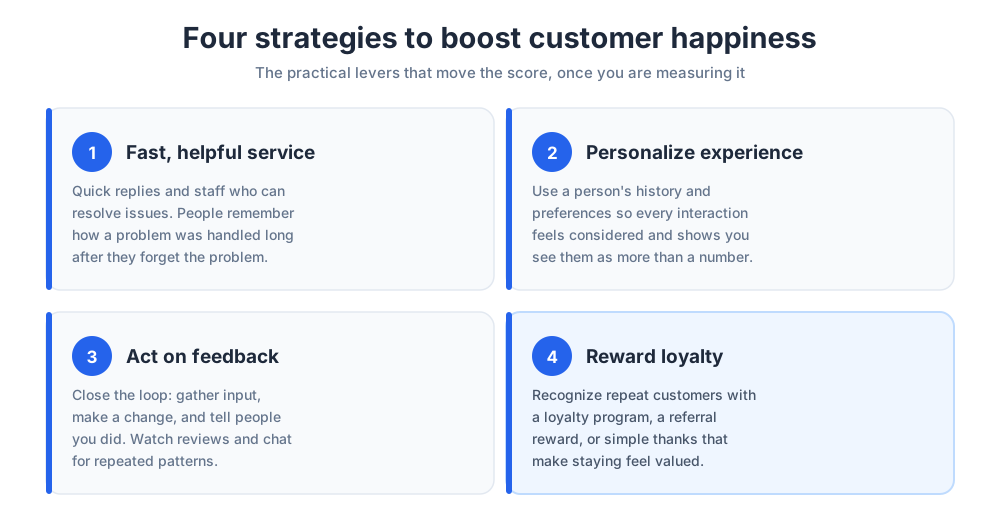
Customer service is where happiness is won or lost. People remember how quickly and kindly you solved their problem far longer than they remember the problem itself.
Fast replies, clear answers, and staff who can resolve issues add up to excellent customer service. Pair live chat for urgent questions with a knowledge base for self-service, and you address customer needs on their schedule, not yours.
A single bad ticket can undo months of goodwill. Treating each support contact as customer care, not a cost to cut, keeps a negative experience from turning into a lost account.
Personalize the customer experience
A generic experience rarely makes anyone happy. Personalizing the customer experience, using a person's history, preferences, and past purchases, shows that you see them as more than a number.
Good customer experience comes from small, consistent touches: relevant recommendations, a name used correctly, a timely follow-up. Done well, customer experience management makes every interaction feel considered.
Personalization also helps a business meet customer expectations before they are voiced. When the experience anticipates needs, people feel understood, and that feeling is the heart of a strong relationship.
Act on feedback
Collecting feedback and ignoring it is worse than not asking. The fastest way to improve is to close the loop: gather input, make a change, and tell people you did.
Watch reviews, support tickets, and social media for patterns. When several people raise the same issue, that is a roadmap, and acting on it visibly proves you are listening.
Reward loyalty and engagement
Happy customers like to feel recognized. Recognition for repeat business, whether through loyalty programs, a referral program, or a simple thank-you, deepens the relationship.
A well-run customer loyalty program turns ordinary buyers into long-term customers and gives engagement a reason to continue. The goal is not to bribe people, but to make customers feel valued for staying.
Building a customer happiness strategy
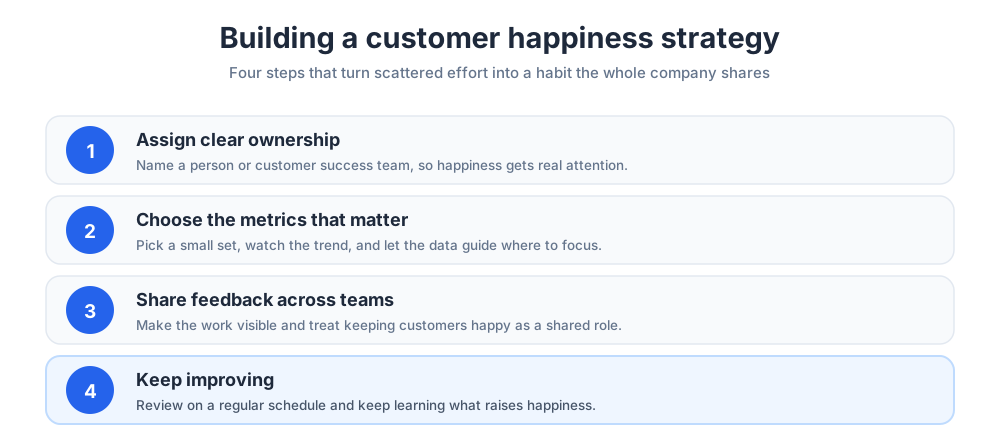
Individual tactics work best inside a clear plan. A written strategy turns scattered effort into a habit the whole company shares, and it gives the work the same standing as sales.
Start by deciding who is responsible for customer happiness. When ownership is vague, it slips; when a named person or team owns it, the work gets real attention. Many companies hand it to a customer success team. This is also a question of leadership, since the priorities leadership sets at the top shape daily work.
A customer success function works best when it can see the full picture, so give it the metrics that matter and review them on a regular schedule. Pick a small set, watch the trend, and let the data guide where to focus.
Then make the work visible across teams. Share what customers tell you widely, celebrate wins, and treat keeping customers happy as a shared role rather than one department's job. Steady leadership support keeps the habit alive.
Finally, keep learning. Research covered in outlets like the Harvard Business Review consistently links a strong customer experience to growth, and many practical guides on the Chatim blog go deeper on the skills involved.
For more on the groundwork, see our guide to customer service on the Chatim blog, the value of a fast help desk, and how a CRM keeps customer relationships organized.
Conclusion
Customer happiness is the difference between customers who simply buy a product and customers who value your brand. It grows from strong customer satisfaction, a personal experience, and dependable service.
Measure it with the right metrics, act on what customers tell you, and give the work a clear owner. A good product and a fast reply both matter, but consistency is what compounds into trust and lasting success.
The takeaway from this blog is simple: treat how customers feel as a daily priority, and a happier, more loyal set of customers will follow your business for years.
More on this from our team: collecting customer feedback.
Frequently Asked Questions
What is the meaning of customer happiness?
Customer happiness is the overall positive feeling a person has about a brand across every interaction with it. It is broader than a single good purchase: it reflects the product, the support, and the way a company treats people over time. Happy customers feel an emotional connection to the brand and choose it again, even when cheaper options exist.
What are the 3 C's of customer satisfaction?
The three C's of customer satisfaction, popularized by McKinsey research, are all forms of consistency. They are customer-journey consistency, so the experience feels even from start to finish; emotional consistency, so people feel the same trust at each step; and communication consistency, so the brand's message and tone never clash. Consistency, more than occasional highs, is what builds lasting satisfaction.
What are the 4 C's of customer loyalty?
There is no single official definition, and different marketers use different versions. A common one describes four pillars: care, showing customers they matter; communication, staying in honest contact; consistency, delivering the same quality every time; and commitment, rewarding people for staying. The exact words vary, but the idea is steady that loyalty is earned through reliable, ongoing effort.
What is the 10/5/3 rule in customer service?
The 10/5/3 rule is a service guideline adapted from hospitality. It suggests acknowledging a customer within about 10 feet, often with eye contact or a nod; greeting them warmly within about 5 feet; and starting a genuine conversation within roughly 3 feet. The exact numbers vary by business, but the point is simple: notice people early and make them feel welcome.
What is the difference between customer happiness and customer satisfaction?
Customer satisfaction measures how well a specific product or service met expectations at one moment, such as a purchase or a support ticket. Customer happiness is broader and more emotional, covering the whole relationship. A person can record high customer satisfaction scores on every ticket and still not feel happy if the wider experience feels cold. Treat satisfaction as an input and happiness as the outcome.
Why is customer happiness important for a business?
Customer happiness has a direct effect on revenue and growth. Happy customers stay longer, which lifts customer retention and customer lifetime value, and retention costs far less than winning new buyers. They also refer friends and leave positive reviews, lowering the cost of growth. In short, happiness is the foundation of a stable, profitable business.
How do you measure customer happiness?
Several proven metrics turn a vague sense of happiness into trackable numbers. Net promoter score gauges how likely people are to recommend you. The customer satisfaction score rates a specific interaction. The customer effort score measures how hard it was to get help. Some teams blend these into a single happiness index, then read open customer feedback to understand why a score moved.
What is a good way to improve customer happiness?
Start with fast, helpful customer service, since people remember how quickly and kindly a problem was solved. Personalize the experience using a customer's history and preferences. Act visibly on feedback so people know they are heard. And reward loyalty with simple recognition or a loyalty program. Consistency across these habits matters more than any single grand gesture.
What is the net promoter score?
Net promoter score is a widely used metric that asks one question: how likely are you to recommend this brand to others? Responses sort people into promoters, passives, and detractors. It is popular because it is simple and forward-looking. A rising net promoter score is a strong signal that customer happiness and loyalty are heading in the right direction.
Who is responsible for customer happiness in a company?
Customer happiness works best when someone clearly owns it. Many companies hand it to a customer success team, but support, sales, marketing, and product all shape how customers feel. When ownership is vague, happiness slips. It is also a leadership question, since the priorities set at the top decide whether the work gets real attention.
How does customer happiness affect customer loyalty?
Happiness is the root of customer loyalty. When people feel genuinely happy with a brand, they renew, reorder, and resist competitors, and they are more forgiving when something goes wrong. That stickiness raises customer lifetime value and builds brand loyalty, turning satisfied customers into long-term advocates who help market the business for you.
What is a happiness index?
A happiness index is a blended score that combines several customer happiness measures, such as net promoter score and satisfaction ratings, into one number. Instead of watching many metrics separately, a team can track the overall mood of its customers in a single place, making it easier to spot trends and report progress over time.
How is customer happiness linked to customer service?
Customer service is where customer happiness is often won or lost. Fast replies, clear answers, and staff who can actually resolve issues leave a strong impression, while a single slow or unhelpful contact can undo months of goodwill. Treating each support interaction as customer care, rather than a cost to cut, keeps a negative experience from becoming a lost account.