What is a CSAT score?
CSAT (customer satisfaction score) is a customer experience metric that measures how satisfied users are with a product, service, or specific interaction. It's the most widely used satisfaction metric in customer support, e-commerce, and SaaS because it's simple to calculate and easy to act on.
Most CSAT surveys use a 1-to-5 scale where customers rate their satisfaction. Customers who score 4 or 5 are counted as satisfied; the CSAT score is the percentage of satisfied customers out of all survey responses received. A free CSAT calculator like this one runs the standard formula automatically so you don't have to build the math in a spreadsheet.
The CSAT formula explained
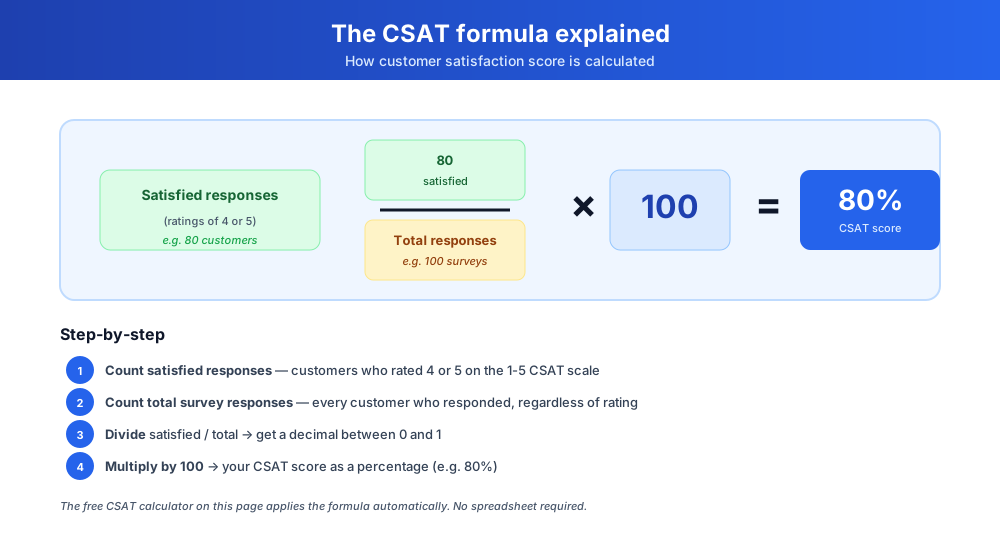
The CSAT formula is straightforward: divide the number of satisfied customers by the total number of survey responses, then multiply by 100 to get a percentage. Written out: CSAT = (satisfied responses / total responses) × 100.
Example: if 80 customers rated their experience 4 or 5 out of 100 total responses, your CSAT score is 80%. The calculator handles this automatically - paste your numbers, click calculate customer satisfaction, and the formula runs in your browser. The CSAT score calculator output is the same percentage you'd get from any survey software, but with no signup and no data sent to a server.
How to use the CSAT calculator
Calculate your customer satisfaction score in under a minute. The free CSAT calculator runs entirely in your browser with no signup or upload.
- Choose between Simple mode (quick) or Detailed mode (with rating breakdown)
- In Simple mode: enter satisfied responses and total survey responses
- In Detailed mode: enter the number of responses for each rating level on the 1-5 scale
- Optionally enable period comparison to track customer satisfaction over time
- Click 'Calculate CSAT' to apply the standard CSAT formula
- Review your CSAT score, breakdown, and interpretation
- Use 'Copy' or 'Download' to save your results for reports
The CSAT scale: 5-point rating explained
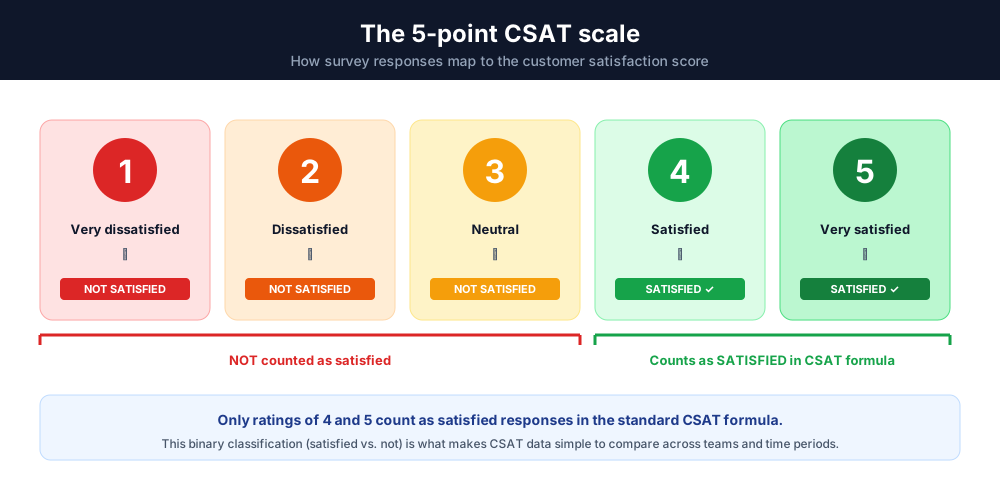
The standard CSAT scale runs from 1 (very dissatisfied) to 5 (very satisfied). Some teams use a 3-point or 7-point scale, but the 5-point version is the industry default because it gives customers enough granularity without survey fatigue.
On the 5-point scale, only ratings of 4 and 5 are counted as satisfied responses in the CSAT formula. Ratings of 1, 2, and 3 are counted as not satisfied. This binary classification (satisfied vs. not) is what makes CSAT data simple to compare across teams, time periods, or customer segments.
CSAT vs NPS vs customer effort score
CSAT is one of three common customer experience metrics. Each measures something different.
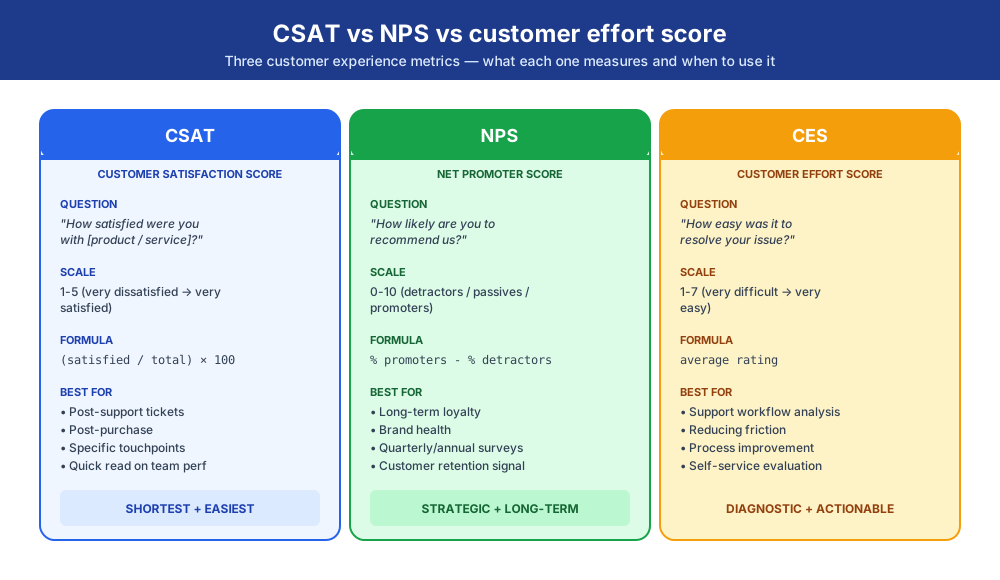
CSAT (customer satisfaction score)
Measures satisfaction with a specific interaction or transaction. Best for measuring support team performance, post-purchase satisfaction, and individual touchpoints. Short, immediate, easy to act on.
NPS (net promoter score)
Measures long-term loyalty and likelihood to recommend. The net promoter score asks: 'on a scale of 0 to 10, how likely are you to recommend this to a friend?' Best for measuring overall brand health and customer retention.
CES (customer effort score)
Measures how much effort the customer had to put in. The customer effort score asks: 'how easy was it to resolve your issue?' Best for support team workflows where reducing friction is the goal.
Many teams track all three. CSAT is the easiest to start with and the easiest to calculate without a dedicated survey software platform.
Who uses a CSAT survey
CSAT surveys appear across many functions, but five teams use them most often.
Customer support teams
Send a CSAT survey after every closed support ticket to measure how well the resolution landed. This is the highest-volume CSAT use case in SaaS.
E-commerce and retail
Send a post-purchase CSAT survey to capture experience feedback. Combined with NPS, gives a fast read on the buying journey.
Customer experience and CX leads
Run continuous CSAT measurement across the entire customer journey to identify which touchpoints drive satisfaction and which need work.
Product teams
Measure satisfaction after specific product features ship - onboarding flow, checkout, mobile app updates - to catch regressions early.
Account management and CSM teams
Use CSAT data alongside NPS to track satisfaction across the customer lifecycle and flag at-risk accounts before they churn.
CSAT score calculator features
Six features built into the free CSAT calculator that make it faster than building a spreadsheet or buying survey software.
Two calculation modes
Pick Simple mode for quick CSAT score calculations or Detailed mode for full 5-point scale rating breakdown across all survey responses.
Instant CSAT score with the standard formula
Get immediate results using the standard CSAT formula: (satisfied customers / total responses) × 100. The calculator returns your CSAT percentage, customer satisfaction metrics, and customer feedback breakdown.
Rating distribution and scale visualization
See a detailed breakdown of survey responses across the full 1-5 scale with visual percentage bars for each rating level.
Trend tracking across periods
Compare your current CSAT with previous periods to track customer satisfaction improvements, identify declining experience trends, or measure the impact of process changes.
Result interpretation and benchmarks
Get clear interpretation of your CSAT score with actionable insights and industry benchmarks (excellent / good / fair / poor / critical thresholds).
Privacy first - runs in browser
All CSAT calculations happen in your browser. No customer data, customer feedback, or survey responses are sent to any server.
What is a good CSAT score by industry?
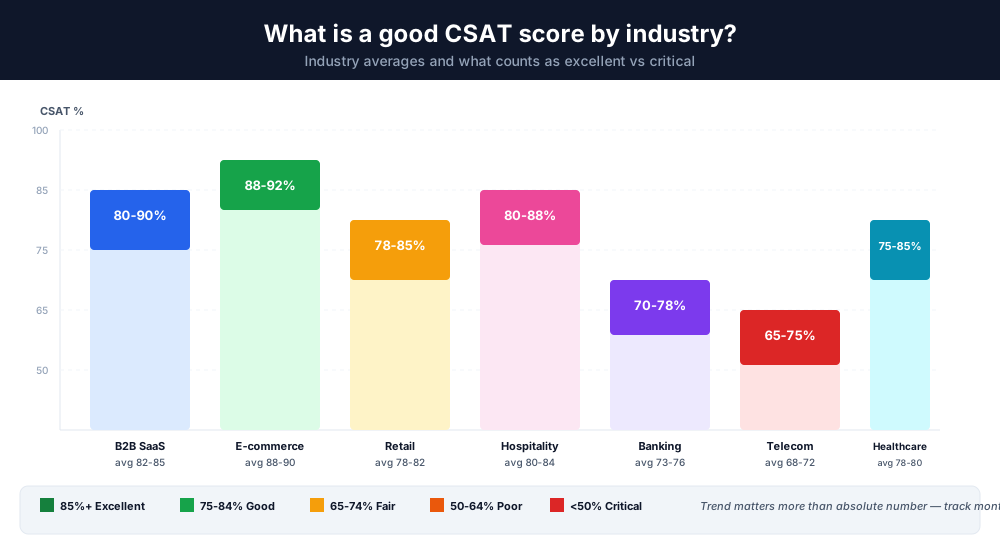
A good CSAT score depends on your industry. Across most B2B SaaS companies, an average CSAT score of 80-85% is solid; 85%+ is excellent. In retail and e-commerce, the bar is higher - top performers run 88-92%. Banking and telecom typically average lower (70-78%) because customer expectations and service complexity are higher.
Use the calculator's interpretation output as a starting benchmark: 85%+ is excellent, 75-84% is good, 65-74% is fair, 50-64% is poor, below 50% is critical. The more important measure is the trend - track CSAT month over month to see whether your customer experience is improving, holding steady, or declining. A rising score signals customer retention strength; a falling one signals churn risk.
Why measure customer satisfaction
Tracking CSAT does three things at once. First, a customer satisfaction survey gives you a direct, numerical signal of how customers feel - far more reliable than anecdotal feedback from sales calls or a few angry support tickets.
Second, regular CSAT measurement creates accountability. When the support team's score is visible, individual agents and managers can see their impact on customer experience and act on it. The CSAT formula is simple enough that anyone can calculate customer satisfaction without specialized analytics training.
Third, CSAT correlates strongly with customer retention. Satisfied customers churn less, refer more, and expand spending faster. The free CSAT calculator gives you the metric in seconds; the work that follows is acting on it - closing the feedback loop with customers, fixing the root causes, and tracking whether your fixes move the score.
Turning CSAT data into action
A CSAT score on its own is just a number. The value comes from what your team does with the data - segmenting it by team, channel, customer cohort, or product feature, and acting on the patterns it reveals.
Common cuts that surface useful insights: CSAT by support agent (training opportunities), CSAT by ticket category (product or process gaps), CSAT by customer plan tier (where to invest in customer success), and CSAT trend over time (whether changes you ship are landing). Pair the customer feedback from low-scoring responses with the quantitative score to understand WHY customers rated the way they did, not just HOW satisfied they were.
Privacy and data security
All CSAT calculations are performed entirely in your browser. No customer satisfaction data, customer feedback, or survey responses are sent to any server or stored. Your metrics remain completely private and secure - even Chatim has no access to the numbers you enter.
Results are based on the data you enter and intended for informational purposes. Industry benchmark comparisons are illustrative averages and may not reflect your specific industry, region, or business model.