Social Media for Business: Strategies, Tips, and Examples
For most companies today, social media is not optional. It is where customers discover brands, compare options, and decide who to trust. Used well, social media for business turns everyday posts into real growth: more awareness, more engagement, and more sales. Ignore it, and you hand that ground to competitors who show up every day.
This guide explains how to use social media for business the smart way. You will learn the benefits, how to choose the right platforms, how to build a social media marketing plan, what content works, which tools save time, and how to measure your results, with real examples along the way.
Why social media matters for business
The impact of social media on business has grown every year. Billions of people now use social media daily across the internet, which means your customers and your competitors are already there. A company that ignores social media is invisible in the place where buying decisions increasingly start, often before anyone touches a search engine.
Social media gives any business a direct line to its audience. It removes the gatekeepers of traditional marketing and lets a small team reach a large market. For small businesses especially, social media for business levels the playing field, letting a local brand compete for attention with much larger rivals. Many small business owners now win customers entirely through social media, with no other advertising at all.
It also changes how communication works. Instead of broadcasting one way, a business can listen, reply, and build relationships in real time. That two-way communication is the heart of why social media has reshaped modern marketing, and it is why a serious social media presence is now a baseline expectation rather than a bonus.
There is also a discovery advantage. When people look for a product or a recommendation, they increasingly scroll a social feed rather than open a browser. A business that posts useful content regularly becomes part of that discovery, appearing in front of buyers who were not even searching for it yet. That passive reach is one of the quiet reasons social media keeps growing in importance for companies of every size.
Benefits of social media for business
Social media delivers benefits to businesses of every size. Understanding them helps you focus your social media marketing on what actually drives results rather than chasing every trend.
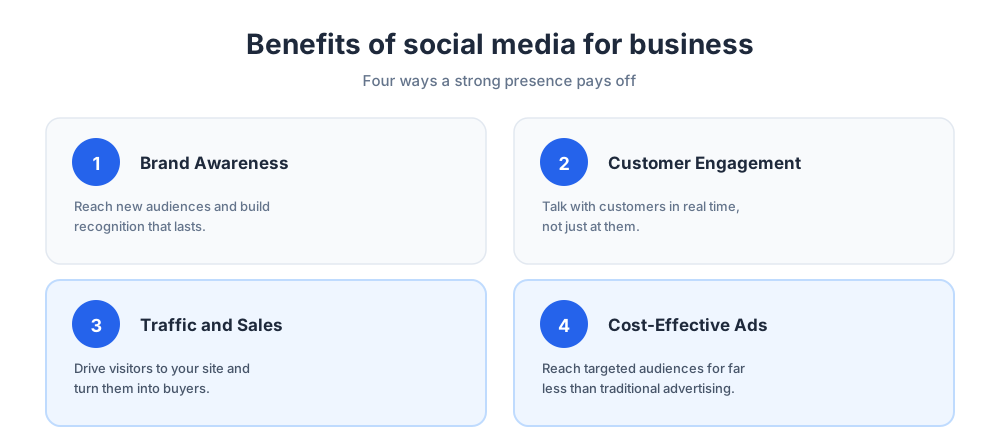
The first benefit is brand awareness. Consistent activity on social media puts your brand in front of new audiences and builds the recognition that leads to long-term trust. Every update is a small reminder that your business exists and has something useful to say.
The second benefit is engagement. Comments, messages, and interactive content let you talk with customers, not just at them, which lifts loyalty and gives you honest feedback. The third benefit is traffic and sales. Sharing a blog post, a product launch, or an offer drives visitors to your site, and strong social selling turns some of those visitors into buyers, while pairing posts with live chat lead generation helps capture others as potential customers you can nurture over time.
The fourth benefit is cost-effective marketing. Compared with traditional advertising, social ads reach large, targeted audiences at a fraction of the cost, a real advantage for small business marketing on a tight budget. Social media is especially powerful for small businesses, which can build a strong social media presence and a loyal following without a large marketing budget. Plenty of small businesses have grown almost entirely through their own social channels. Together these benefits explain why social media has become a core part of nearly every marketing strategy and business plan.
Choosing the right social media platforms
Not all social media platforms suit every business. Each has its own audience and content style, so choosing the right platforms is the first real decision in any social media strategy. Match the platform to your target audience rather than trying to be everywhere at once, because a thin presence on six platforms loses to a strong presence on two.
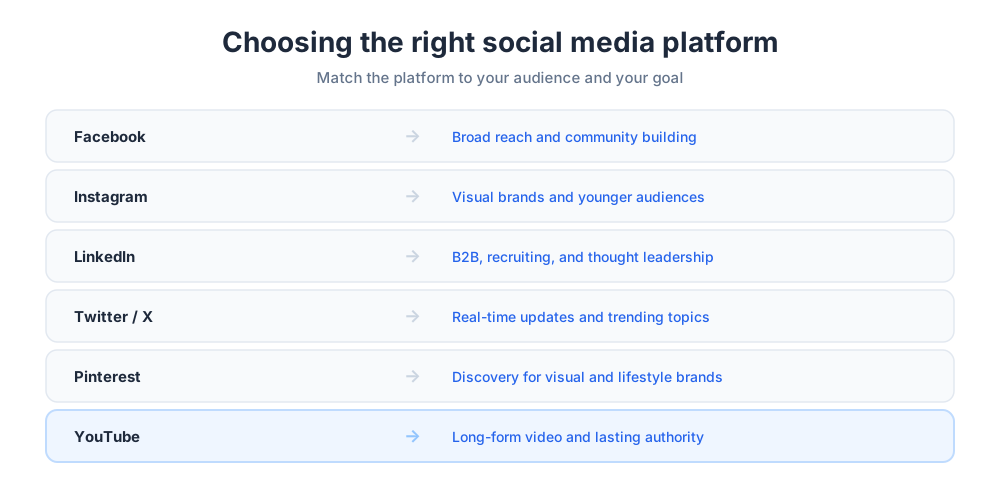
Facebook remains one of the most widely used social media platforms, with a broad user base across age groups. Facebook for business works well for brand awareness, community building, and detailed ad targeting. Its groups and events tools make Facebook strong for local social media marketing, and its advertising network is among the most precise anywhere. For many companies, a Facebook page is still the natural home base on social media. Setting up a Facebook page costs nothing, and built-in Facebook tools for scheduling and insights help a business post consistently. Many customers expect to find a company on Facebook and will check there before they buy.
Instagram is built for visual content and appeals strongly to younger social media users. It suits fashion, food, lifestyle, and product brands that can show rather than tell. Instagram features like Reels and Instagram Stories let a business mix polished and spontaneous content, and Instagram shopping turns posts into a storefront. A consistent Instagram feed can become a brand's most persuasive sales tool. Instagram works best when a business posts to its Instagram feed regularly and engages in the comments. A polished, active Instagram profile signals that a brand is trustworthy and worth following on social media.
LinkedIn is the platform for B2B companies and professional networking. It is the best place to share thought leadership, recruit talent, and reach decision-makers. For marketing aimed at other companies, LinkedIn builds professional credibility that consumer platforms cannot, which is why it anchors most B2B social media strategy.
Twitter and X
Twitter, now X, is built for real-time updates and trends. A business can use Twitter to join timely conversations, share quick news, and connect with influencers in fast-moving industries like technology and finance. Twitter rewards brands that have a clear, human voice and post often.
Pinterest, YouTube, and Snapchat
Beyond the big names, Pinterest drives discovery for visual and lifestyle brands and sends steady traffic to a blog or shop. YouTube hosts long-form video that builds deep authority and doubles as a powerful search tool in its own right. Cross-posting a single YouTube clip to your other social media profiles stretches the value of every video, and YouTube keeps surfacing that content for months. Snapchat reaches a young, highly engaged audience. These platforms each reward a specific style, so pick the social media platforms where your customers already spend time.
Building a social media marketing strategy
Posting at random rarely works. A clear plan turns scattered activity into steady growth, and a real strategy starts with two foundations that shape everything else.
Set clear social media goals
Define what success means before you post. Common goals include brand awareness, lead generation, community engagement, and direct sales. Clear goals tell you what content to create and which numbers to track, and they keep your social media strategy honest when a trend tempts you off course.
Know your target audience
Strong strategy is built on a real understanding of your audience. Use market research, competitive analysis, and audience insights to learn who your customers are, what they care about, and which platforms they use. The better you know your target audience, the more your content will land, and the less budget you waste on the wrong people. A documented strategy, reviewed each quarter, keeps a whole team aligned. A clear picture of your audience also makes every later decision easier, from the tone of a caption to the platforms you commit to and the social media marketing budget you set.
Content strategies for business social media
Content is the engine of social media. A strategic content plan keeps followers engaged and gives every update a purpose. The strongest social media content mixes several types so a feed never feels repetitive, and good content work pays back for months after it is published.
Educational and value-driven content
Tips, how-to guides, and industry insights position your brand as a helpful expert. This is the content that people save and share, and it builds the trust that turns followers into customers. A short clip or a single useful graphic can outperform a week of promotional posts. Repurpose your best blog content into social content, and a single blog post can fuel a dozen marketing updates across your social media.
Behind-the-scenes and human content
Showing the people and process behind the brand makes a business relatable. Team moments, office tours, and customer stories humanize your content and deepen connection. People follow brands that feel like people.
The 5-3-2 content mix
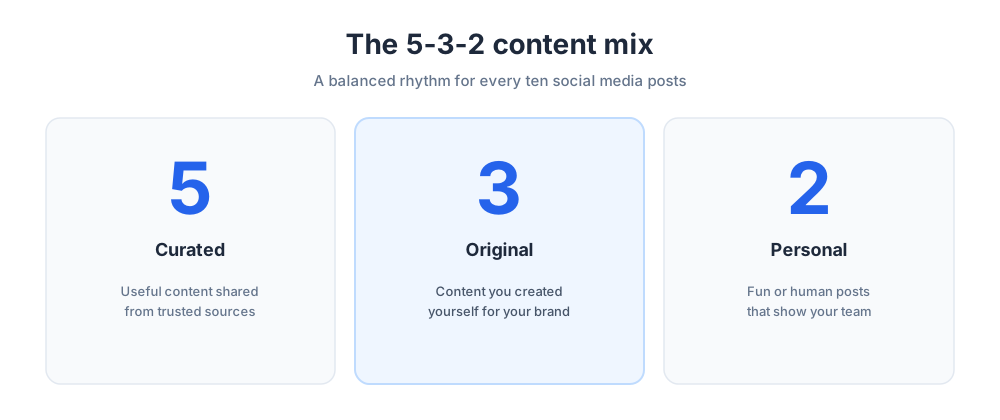
A simple rule keeps a feed balanced: of every ten social media posts, five should be useful content from others, three should be your own content, and two should be personal or fun. This 5-3-2 approach stops a feed from feeling like an advertising channel and keeps people coming back for more. Plan content in batches, and a steady rhythm becomes far easier to sustain.
Social media marketing tools
Managing several platforms by hand quickly becomes unmanageable. These tools save time and bring order to your social media marketing efforts, so a small team can perform like a much larger one.
A scheduling tool lets you plan and queue posts in advance, so your social media accounts stay active without daily scrambling. Sprout Social is one well-known platform that combines scheduling, social listening, and reporting in one place; Sprout Social and similar tools let you watch every channel from a single dashboard. Other tools focus on design, analytics, or community management. Social listening, which tracks what people say about your brand, helps you join conversations and catch problems early. Pick a social media tool that fits your team size and budget, and Sprout Social or whichever option you choose will pay for itself in saved hours and sharper content. For a wider view of automation, see our roundup of the best marketing automation tools.
Social media for B2B connections
Social media is not only for consumer brands. For B2B companies, it opens doors to partners, clients, and industry peers. LinkedIn leads here, but the principles apply across every platform a business uses.
Thought leadership comes first: sharing insights and trends positions a company as an expert worth following. Networking is second, because social media lets a business reach decision-makers directly, without waiting for a conference. Employee advocacy is third; when staff share company content, both reach and credibility grow. Influencer marketing has a place too, since a respected voice can introduce your brand to an audience that already trusts them. Strong digital marketing for B2B treats social media as a relationship channel, not a billboard, and partnering with the right influencers extends that reach further. Done consistently, social media marketing for B2B builds a pipeline of relationships long before a formal sales conversation begins, and it keeps your company visible to buyers who research quietly for months before they reach out. Pair that reach with strong B2B customer service, and social media becomes a genuine growth channel.
Measuring social media success
You cannot improve what you do not measure. Tracking the right numbers shows whether your social media for business is working and where to adjust your social media marketing.
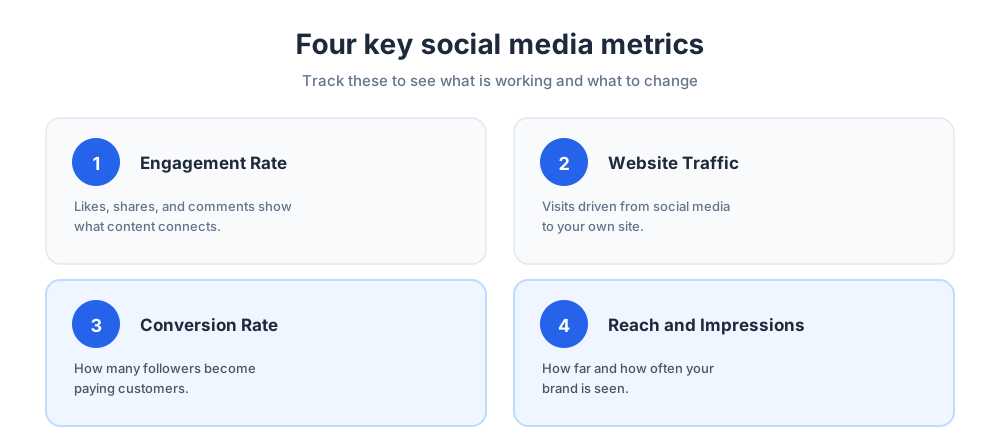
Engagement rate, which counts likes, shares, and comments, shows how well content connects. Website traffic from social media shows whether posts drive real visits. Conversion rate shows how many followers become customers, linking social media to revenue. Reach and impressions show how far your brand travels. Most social media platforms include built-in analytics, and our guide to web analytics tools covers dedicated options that add deeper audience data and clearer trends. Watch these numbers over time, and let real business outcomes, not vanity metrics, guide your next move. Good analytics turns guesswork into a repeatable process. Reviewing these numbers each month keeps your social media marketing honest, shows which platforms deserve more of your time, and turns raw data into a sharper plan for the months ahead.
Examples of successful businesses on social media
Real examples show what good social media for business looks like in practice, and they make the strategies above concrete.
GoPro built its presence on user-generated content, encouraging customers to share footage shot on its cameras, which creates an endless stream of authentic content. Starbucks connects through highly personalized, community-focused campaigns that make followers feel seen, strengthening loyalty across every platform. Microsoft uses LinkedIn to share industry insights and thought leadership, reinforcing its authority well beyond recruiting. Each brand, large or small, proves that consistent, audience-first content beats occasional big advertising pushes. What these examples share is patience. None of these brands built their social media audience overnight; they posted steadily, learned from what worked, and treated every comment as a chance to deepen a relationship. The same playbook works for small businesses willing to show up regularly, because consistency and genuine engagement cost nothing but attention.
Common social media mistakes to avoid
Even a solid plan can stumble. The most common mistake is inconsistency: a business posts daily for a month, then goes quiet, and the audience drifts away. Set a realistic schedule and keep to it, even if that means one strong post a week.
A second mistake is selling in every post. Followers tune out a feed that only pushes products, which is exactly what the 5-3-2 mix prevents. A third is ignoring comments and online reviews; social media is a conversation, and silence reads as indifference. The same customer service standards you hold elsewhere apply here too. Following a few practical social media tips, responding with good social customer care, and treating each platform with respect will steadily compound a modest start into real, lasting growth. Most of all, stay patient. Social media rewards businesses that treat it as a long-term habit rather than a quick campaign, and the brands that keep showing up, month after month, are the ones customers remember, recommend, and come back to when they are ready to buy.
Frequently Asked Questions
Which social media is best for a business?
There is no single best platform, only the best fit for your audience and goals. Facebook suits broad reach and community building, Instagram works for visual and lifestyle brands, LinkedIn is the leader for B2B and professional content, and Twitter or X is built for real-time conversation. Pinterest, YouTube, and Snapchat each serve specific niches. Choose the social media platforms where your target customers already spend time rather than trying to be everywhere at once.
What is the 5 5 5 rule for social media?
The 5-5-5 rule is a simple engagement habit, and it appears in a few versions. A common one is to spend five minutes a day commenting on other posts, five minutes sharing useful content, and five minutes replying to your own followers. The point is consistency: a short, daily routine of genuine engagement builds a social media presence faster than occasional bursts of activity. Adapt the exact minutes to fit your schedule.
What is the 5 3 2 rule for social media?
The 5-3-2 rule is a content-mix guideline. For every ten social media posts, five should be useful content curated from other trusted sources, three should be original content you created, and two should be personal or fun posts that humanize your brand. The mix keeps a feed varied and stops it from feeling like a constant advertisement, which keeps followers engaged and coming back.
What is the 3-3-3 rule in sales?
The 3-3-3 rule in sales is a focus technique with several versions. One common interpretation is to spend three minutes researching a prospect, three minutes planning your approach, and three minutes on the outreach itself, keeping each touchpoint short and deliberate. Another version splits the day into three blocks of prospecting, follow-up, and closing. There is no single official definition, so treat it as a prompt to work in focused, time-boxed bursts.
What is social media for business?
Social media for business is the use of platforms like Facebook, Instagram, LinkedIn, and others to build brand awareness, engage customers, drive website traffic, and generate sales. It turns everyday posts into a marketing channel that reaches customers where they already spend time. Used consistently, it lets even a small business compete for attention with much larger rivals at a fraction of the cost of traditional advertising.
How do I create a social media marketing strategy?
Start by setting clear social media goals, such as brand awareness, lead generation, or sales. Next, research your target audience to learn who they are and which platforms they use. Then choose the right platforms, plan a content mix that balances useful, original, and personal posts, and set a realistic posting schedule. Finally, track results and adjust. A documented strategy, reviewed each quarter, keeps the whole effort focused.
How often should a business post on social media?
Consistency matters more than raw frequency. Many businesses do well posting three to five times a week per platform, but one strong post a week, sustained for a year, beats daily posting that fizzles out after a month. Set a schedule you can realistically keep, batch your content in advance, and use a scheduling tool so your accounts stay active even during busy weeks.
What type of content works best on social media?
The strongest social media content mixes several types: educational posts like tips and how-to guides that build authority, behind-the-scenes content that humanizes the brand, customer stories that prove value, and interactive posts like polls and questions. Visual content and short video tend to perform especially well. The 5-3-2 mix is a good rule: balance curated, original, and personal posts so the feed never feels like a sales channel.
What social media marketing tools should a business use?
Most businesses need a scheduling tool to plan posts in advance, an analytics tool to measure results, and a social listening tool to track brand mentions. Sprout Social is a well-known all-in-one option that combines scheduling, listening, and reporting. Other tools focus on design or community management. Pick a tool that matches your team size and budget, since the right one pays for itself in saved hours.
How do I measure social media success?
Track a few metrics that connect to real goals: engagement rate (likes, shares, comments), website traffic from social media, conversion rate (followers who become customers), and reach and impressions. Most platforms include built-in analytics, and a dedicated analytics tool adds deeper audience data. Watch trends over time rather than single posts, and let real business outcomes, not vanity metrics, guide your next move.
Is social media worth it for small businesses?
Yes. Social media levels the playing field, letting a small business reach a large, targeted audience without a big advertising budget. Many small business owners win customers entirely through one well-run platform. The key is to choose the right platform for your audience, post consistently, and engage genuinely. Patience matters, since social media rewards businesses that treat it as a long-term habit rather than a quick campaign.
How can businesses use social media for B2B marketing?
For B2B, social media is a relationship channel. LinkedIn leads the way: share thought leadership and industry insights to position your company as an expert, network directly with decision-makers, and encourage employees to share company content for wider reach. Influencer marketing and consistent, helpful posting build a pipeline of relationships long before a formal sales conversation begins. Treat B2B social media as networking, not a billboard.
What are common social media mistakes to avoid?
The most common mistake is inconsistency: posting heavily for a while, then going quiet. Set a schedule you can sustain. A second mistake is selling in every post, which the 5-3-2 content mix prevents. A third is ignoring comments and online reviews, since social media is a conversation and silence reads as indifference. Avoid these, respond with good social customer care, and a modest start compounds into real growth.
Related articles
More in Marketing & sales → Best SaaS Affiliate Programs in 2026: 7 Verified Picks
7 SaaS affiliate programs with every rate, duration, cookie, and payout term verified on the official pages, plus the four numbers that decide value.
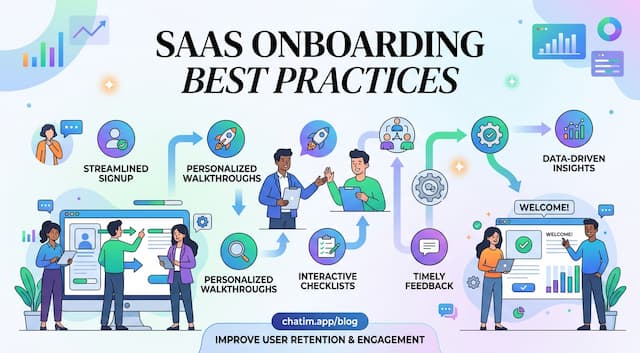 SaaS Onboarding Best Practices That Shrink Time to Value
SaaS onboarding best practices organized as a timeline: set expectations at signup, deliver value in session one, build the habit in week one, then measure.
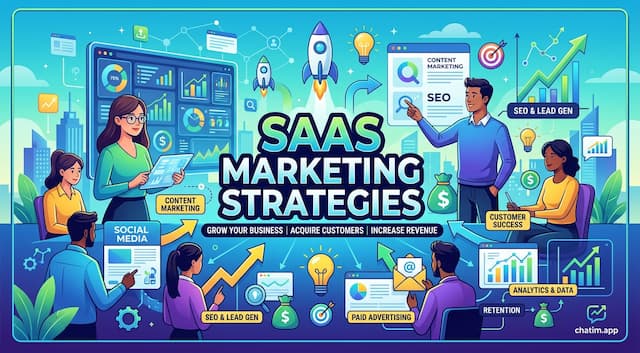 10 SaaS Marketing Strategies That Compound (2026)
Ten SaaS marketing strategies ranked by cost and time to results, the arithmetic that picks the right two or three for your price point, and what to skip.
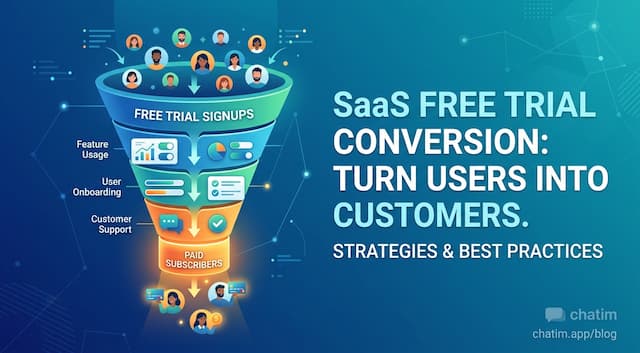 Free Trial Conversion: Fix Where Trials Actually Die
Forget trial conversion benchmarks: decompose the funnel, find which of the four deaths kills your trials, and apply the fix that matches, chat included.