B2B Cold Email Templates: 15 Examples for 2026
Breaking through a crowded inbox is harder than ever, which is why good B2B cold email templates are worth their weight in pipeline. The right message opens doors, books a meeting, and turns a stranger into a prospect. This guide gives you 15 B2B cold email templates you can copy today, plus a follow-up sequence, subject line tips, and the placement basics that keep your outreach out of spam. It is about a 15 min read, so use the table of contents to jump straight to the cold outreach email templates if you are short on time. Pressed for a five min read, start with the template list and the follow-up sequence.
Every template below is built from the same idea: respect the reader's time, lead with value, and ask for one small next step. Use them as a starting point, then personalize each cold email template for the prospect company in front of you. A working cold email strategy is built from small, repeatable habits, not one clever trick.
What is a B2B cold email?
A B2B cold email is a first message sent to a business contact who has not heard from you before, with no prior relationship and no opt-in. The goal is not to close a deal in one email; it is to earn a response and start a conversation. Most B2B sales teams treat that first reply as the real win, because a single answer can open a whole sales cycle.
A cold email is different from spam. Spam is mass, generic, and irrelevant. A good message is targeted, personal, and genuinely useful to the reader. The difference shows up in your results, because relevant outreach earns a reply while generic blasts get reported.
The approach works for almost every B2B model: a SaaS company booking demos, an agency pitching new accounts, a service business filling its calendar. SaaS founders lean on it heavily because it reaches potential customers directly, and the same playbook scales to consultants and outbound sales reps alike. It is cheaper than ads, more scalable than a phone-only motion, and it reaches decision-makers in their email.
Why cold email still works for B2B sales
Some people declare the channel dead every year, and every year B2B teams keep booking a meeting with it. It still works because email is where business actually happens. Decision-makers live in their email, and for many B2B sales reps it remains the most reliable way to start a conversation.
The channel also scales in a way few others do. One sales rep can reach hundreds of carefully chosen buyers in a week and follow up with the warm ones. That mix of reach and precision is why cold outreach remains a core motion for B2B teams, and why it still fills the sales pipeline when other channels stall.
What has changed is the bar. Prospects get more email than ever, so generic templates fail fast. The teams winning in 2026 treat each message as a small, well-researched pitch. The templates in this guide reward sellers who pair good copy with sharp targeting, and used well these examples shorten the path from a cold name to a booked call.
Anatomy of a cold email that gets replies
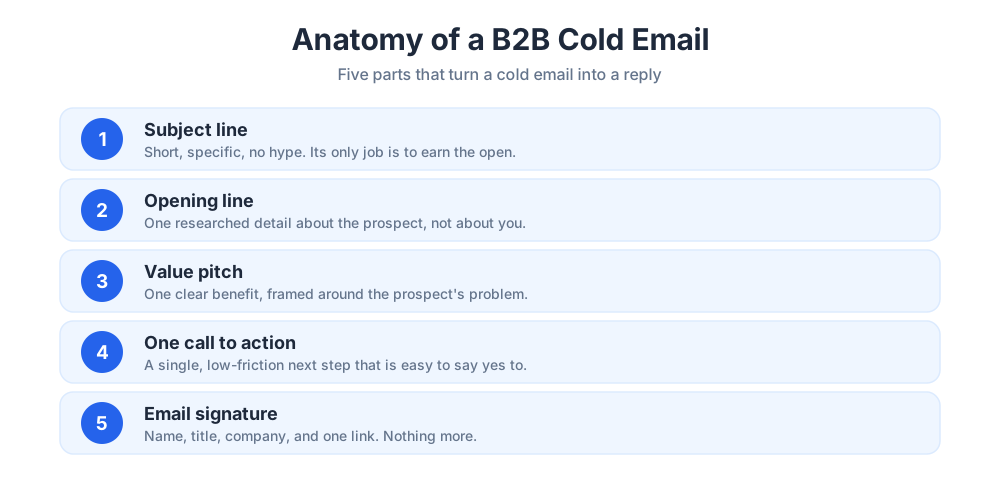
Before the templates, it helps to know the parts. Almost every message that works follows the same framework, and once you see the structure you can adapt any template to your own offer. Think of this framework as a checklist you run before you write.
The five parts below work together as one system. Skip any of them and the whole message weakens, so treat the framework as a unit. Sellers who internalize it stop guessing and start writing with intent, and that consistency compounds into real success.
A subject line that earns the open
Nothing else matters if the email is never opened. A strong subject line is short, specific, and free of hype, hinting at value without sounding like an ad.
Avoid all caps, exclamation marks, and words like "free" or "guarantee" that trip a spam filter. Aim for something a busy person would click, such as a clear outcome or a reference to their company. A few simple tips, like writing in plain sentence case, lift open rates more than any gimmick.
An opening line that holds attention
The first sentence decides whether the rest gets read. Open with something about the prospect, not about you, so you earn their attention in the first line.
A specific observation about their company, a recent announcement, or a shared connection all work far better than "I hope this email finds you well." Make the opening feel researched. This is the highest-return habit in outbound sales, and it costs only a few extra minutes.
A value pitch built around the prospect
The body is where you make your case. Keep it to a few sentences and frame everything around the prospect, not your feature list: what problem do they have, and how do you help?
One concrete, believable benefit beats a list of ten. If you can point to a similar customer or a relevant result, do it briefly. Buyers reward an honest, narrow claim, and that trust eventually turns a skeptical prospect into a paying customer.
One clear call to action
Every message needs exactly one call to action. Two asks split attention and lower your response rate. Decide on the single next step you want, then make it easy to say yes to.
A low-friction ask ("Open to a quick 15-minute call next week?") converts better than a big one ("Can we schedule a full demo?"). The smaller the request, the more responses you get, and the faster a quiet thread turns into a real sales conversation.
A clean email signature
Your email signature does quiet work: it proves you are a real person at a real company. Keep it simple, with your name, title, company, and one link, so the email signature builds trust without clutter.
Skip the banners, quotes, and six social icons. A heavy signature looks like marketing, and marketing is exactly what the message should not look like.
15 B2B cold email templates to copy
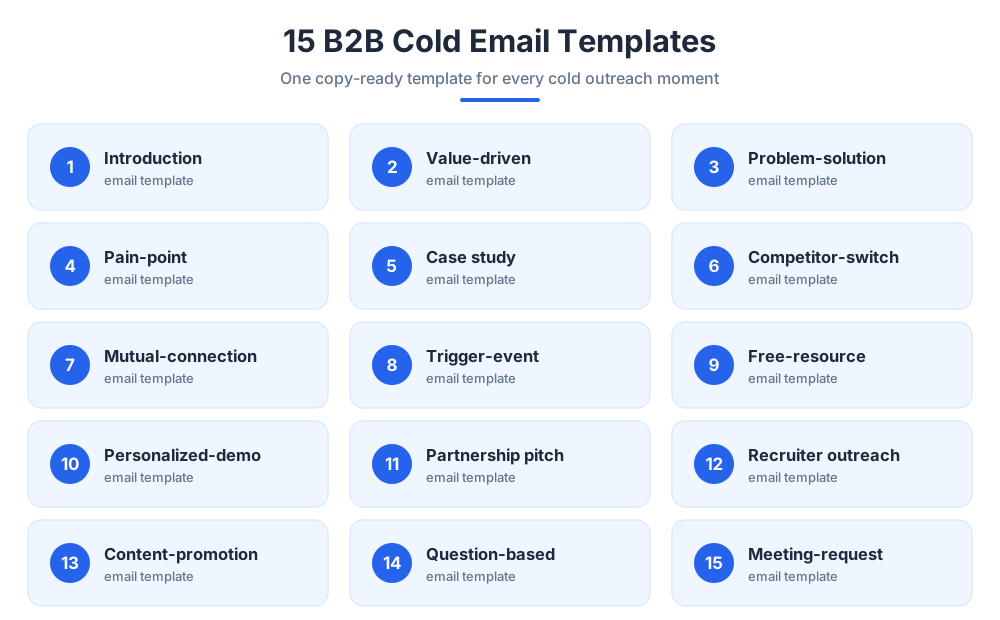
Here are 15 B2B cold email templates, each built for a specific cold outreach situation. Copy the one that fits, swap the bracketed details for real research, and keep it short. These cold email templates are starting points, not scripts to send word for word. Read these templates as proven examples of structure, then make each one yours with a researched detail.
The set covers a full range of situations, from a first introduction to a final break-up note, so you can match the right cold email template to wherever a buyer sits in the sales pipeline. Mixed and matched well, these cold email templates can carry a whole quarter of outreach, so skim all 15 and bookmark the ones that fit your offer.
1. Introduction email template
The introduction email is the first touch in most cold email campaigns. It says who you are, why you are reaching out, and how you might help. Of all the templates here, keep this one lightest; its only job is to earn a reply.
Best for: a first contact with a brand-new prospect.
Subject: Helping [Company] with [specific outcome]
Hi [First Name],
I am [Your Name] from [Your Company]. We help [type of business] teams [achieve a specific outcome], and after reading about [something specific at their company], I thought it was worth reaching out.
Companies like [similar customer] use us to [clear benefit]. I would love to share whether the same idea could work for [Company].
Open to a quick 15-minute call next week?
Best,
[Your Name], [Title], [Your Company]
2. Value-driven sales email template
This template leads with the outcome you create. It is a strong cold email template for B2B buyers who do not know they have a problem yet but will recognize the upside. Lead with the result and let the value pitch carry the message.
Best for: prospects who respond to results more than to pain.
Subject: A faster way to [desired outcome] at [Company]
Hi [First Name],
Most [role] leaders I talk to want [desired outcome] without adding headcount. That is exactly what we built [Your Company] to do.
For [similar customer], we helped [describe the result in plain terms]. I think [Company] could see a comparable lift.
Would a short call next week be worth 15 minutes of your time?
Best,
[Your Name], [Title]
3. Problem-solution email template
This B2B email template names a problem the prospect already feels, then positions your solution as the fix. It works best when the pain is obvious and widely shared, and because the problem does the framing, the body can stay short.
Best for: prospects who already know they have a problem.
Subject: Fixing [specific problem] at [Company]
Hello [First Name],
Many [industry] teams struggle with [specific problem], and it quietly costs them [consequence].
At [Your Company] we solve this by [short description of how]. Teams like [reference customer] now [positive result].
Worth a quick conversation to see if it fits [Company]?
Thanks,
[Your Name], [Title]
4. Pain-point email template
The pain-point template goes one level deeper than the problem-solution email. It opens with a sharp, specific frustration the prospect lives with day to day, so the buyer feels understood before you have pitched a thing.
Best for: prospects in a role with a clear, recurring frustration.
Subject: Tired of [specific frustration]?
Hi [First Name],
If your week still includes [specific frustration, e.g. "chasing updates across five tools"], you are not alone, and it does not have to stay that way.
[Your Company] removes that step entirely by [short solution]. Most teams feel the difference in the first week.
Can I send a two-minute overview, or would a quick call be easier?
Best,
[Your Name], [Title]
5. Customer-proof email template
A case study email borrows credibility from customers who already trust you. Real proof does the persuading, so this template stays short and lets the result speak. Pick a reference customer that mirrors the prospect, because relevance makes the proof land. It is one of the most reliable templates for buyers who want evidence before a call.
Best for: prospects who want evidence before a conversation.
Subject: How [reference customer] solved [problem]
Hi [First Name],
I thought this might be relevant: [reference customer], a [similar type of business], came to us with [problem]. Within [time frame] they [specific outcome].
I wrote up the details in a short case study. Want me to send it over? If it looks useful, we can talk through how it applies to [Company].
Best,
[Your Name], [Title]
6. Competitor-switch email template
Use this template when the prospect already uses a rival tool. The goal is not to attack the competitor but to offer a low-risk reason to compare.
Best for: prospects already using a known alternative.
Subject: A second option for [category] at [Company]
Hi [First Name],
I know [Company] already uses [competitor], so this is not a hard pitch. Teams switch to [Your Company] mainly for [one clear difference].
If [category] is on your roadmap to review this year, I am happy to share an honest side-by-side. No pressure either way.
Worth a look?
Best,
[Your Name], [Title]
7. Mutual-connection email template
A shared contact is the warmest start the message can have. This email template puts the connection front and center so it never feels truly cold. Lead with the name your buyer already trusts.
Best for: prospects who share a contact, group, or alumni network with you.
Subject: [Mutual contact] suggested I reach out
Hi [First Name],
[Mutual contact] mentioned you are the right person to talk to about [topic], and that we should connect.
At [Your Company] we help [type of business] with [benefit]. Given what [Mutual contact] shared about [Company], there may be a real fit.
Open to a short call to find out?
Best,
[Your Name], [Title]
8. Trigger-event email template
A trigger event, like a funding round, a new hire, or a product launch, gives you a genuine reason to reach out. Of all the templates here, this one is easiest to time well, because it ties your offer to a moment that matters to the buyer.
Best for: prospects who recently had a public, relevant change.
Subject: Congrats on [trigger event]
Hi [First Name],
Congratulations on [trigger event]. Moments like this usually mean [related challenge] moves up the priority list.
That is where [Your Company] helps. We work with [similar companies] to [benefit] during exactly this kind of growth.
Happy to share ideas on a quick call if the timing works.
Best,
[Your Name], [Title]
9. Free-resource email template
Instead of asking for time, this template gives something first. A practical guide or checklist makes you a valuable resource before you ever pitch. Giving value up front works especially well with cold prospects who are not ready to buy.
Best for: top-of-funnel prospects not ready for a sales call.
Subject: A [resource] for [Company]'s [goal]
Hi [First Name],
We put together a [checklist or short report] on [topic relevant to their role], and teams at [type of business] have found it genuinely useful.
No strings attached, I just thought it might help with [goal]. Want me to send the link?
If it sparks questions, we can always talk later.
Best,
[Your Name], [Title]
10. Personalized-demo email template
When a prospect is clearly a strong fit, offer to show, not tell. A personalized demo built around their use case is far more compelling than a generic walkthrough. Tie it to a problem you already know they have.
Best for: high-fit prospects who are close to ready.
Subject: A 15-minute demo built for [Company]
Hi [First Name],
Rather than send a generic overview, I would rather show you [Your Company] set up around [Company]'s actual use case.
It takes about 15 minutes, and you will leave knowing whether this is worth pursuing or not.
Would [day] or [day] next week suit you for a personalized demo?
Best,
[Your Name], [Title]
11. Partnership pitch email template
Not every message sells a product. This email template opens a partnership conversation, framing it as a mutual opportunity rather than a one-way ask. A partnership pitch lands best when both sides clearly gain.
Best for: companies that serve the same customers without competing.
Subject: A partnership idea for [Your Company] and [Company]
Hi [First Name],
[Your Company] and [Company] both work with [shared audience], and I think there is a natural partnership here.
A simple referral partnership, or a co-hosted [event or resource], could send real value both ways. I would love to explore it.
Open to a quick call to see if a partnership makes sense?
Best,
[Your Name], [Title]
12. Recruiter outreach email template
Recruiters run their own version of this work, and the rules are the same. This template reaches a passive candidate with respect and a clear pitch. A recruiter who leads with the candidate's strengths earns far better answers.
Best for: a recruiter contacting passive candidates.
Subject: A [role] opening that fits your background
Hi [First Name],
I came across your work on [where], and your experience with [skill] lined up closely with a [role] we are hiring for at [Company].
It offers [one or two genuine highlights]. Even if you are happy where you are, it may be worth a look.
Open to a brief, no-pressure chat?
Best,
[Your Name], [Title]
13. Content-promotion email template
This template promotes a piece of content, like a report or a blog, to people who would genuinely value it. It builds awareness without a hard sell. Choose a piece that maps to the buyer's current priority.
Best for: building relationships with a useful report or article.
Subject: Thought this [topic] piece was worth a read
Hi [First Name],
We just published a blog post on [topic], and given your work at [Company] I thought it might actually be worth your time.
It covers [one specific takeaway]. Here is the link: [link].
If it raises questions, I am always happy to talk shop.
Best,
[Your Name], [Title]
14. Question-based email template
A single, well-aimed question can earn a reply faster than any pitch. This template keeps the email tiny and makes responding effortless. Ask about something specific to their workflow.
Best for: busy prospects who ignore longer messages.
Subject: Quick question about [Company]'s [area]
Hi [First Name],
Quick question: how is [Company] handling [specific process] today?
I ask because we help [similar teams] make that part far simpler, and your answer tells me whether it is even relevant for you.
No pitch, just curious.
Best,
[Your Name], [Title]
15. Meeting-request email template
When a prospect has shown some interest, this template makes the meeting request itself frictionless. Specific times beat an open-ended "let me know," because offering two concrete windows removes the decision work.
Best for: prospects who are warm and ready to talk.
Subject: 15 minutes this week, [First Name]?
Hi [First Name],
Following up on [prior context]: I would love to walk you through how [Your Company] could help [Company] with [goal].
Would [day] at [time] or [day] at [time] work? I will keep it to 15 minutes and come prepared.
If neither suits, just send a window that does.
Best,
[Your Name], [Title]
A B2B cold email follow-up sequence
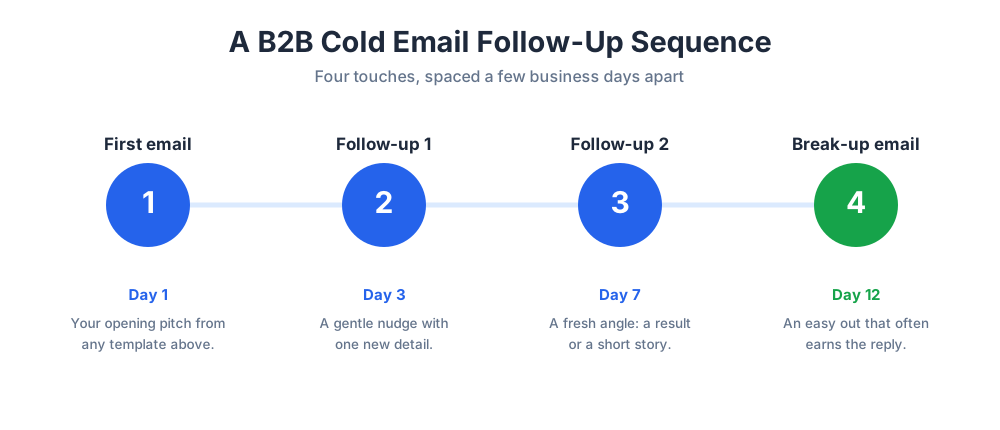
Most replies come after the first email, not from it. A cold email sequence of two or three follow-ups can lift your total reply rate dramatically, as long as each one adds something new. Never just "bump" the thread; give the prospect a fresh reason to respond. This is one of the highest-return strategies in B2B sales, and most senders quit before it pays off.
Space the messages out, usually three to five business days apart, and stop after the third. Persistence is good; pestering is not. Here is a simple follow-up sequence you can run after any template above.
Follow-up 1: the gentle nudge
Sent three days after the first email, this message simply resurfaces your offer with one extra detail and zero guilt-tripping. Keep it shorter than the original.
Subject: Re: [original subject]
Hi [First Name],
Floating this back to the top of your email. Since I wrote, [one new, relevant detail or proof point].
Still happy to keep it to 15 minutes if it is useful. Worth a quick look?
Best,
[Your Name]
Follow-up 2: a new angle
Sent a few days later, this email changes the angle. If the original led with a problem, lead this one with a result or a quick customer story instead. A fresh angle gives a busy buyer a genuine second reason to reply.
Subject: One more idea for [Company]
Hi [First Name],
I will keep this short. [Reference customer], similar to [Company], used us to [specific outcome].
If that is the kind of result you are after, a quick call is the fastest way to find out if it applies.
Best,
[Your Name]
Follow-up 3: the break-up email
The final message gives the prospect an easy out. Counterintuitively, the break-up email often earns the strongest response rates of the whole sequence, because losing the option finally prompts a decision.
Subject: Should I close the loop?
Hi [First Name],
I have reached out a couple of times, so I do not want to crowd your week. I will assume the timing is not right and leave it here.
If that changes, my door is open, just reply and we will pick it up.
Best,
[Your Name]
How to write cold email subject lines
The subject line is the single highest-leverage part of any cold email. A weak one sinks even a brilliant message, so it deserves real attention before you hit send.
Subject line rules that work
Keep the subject short, ideally under about six words, so it survives on a phone screen. Make it specific to the prospect, lead with a benefit or an insight, and use sentence case rather than title case so it reads like a real person wrote it. A few small tips, like dropping your company name and any salesy adjectives, sharpen almost any line.
Avoid anything that smells like marketing: no all caps, no exclamation marks, no "free," "act now," or "guaranteed." Those phrases hurt your open rates and feed straight into a spam filter. The same habits that make any professional email clear and easy to scan work for your subject too.
B2B cold email subject line examples
Useful patterns include a clear outcome ("A faster path to [outcome]"), a direct question ("Quick question about [area]"), a trigger event ("Congrats on [event]"), or a mutual connection ("[Name] suggested I reach out"). These patterns cover most situations you will face.
Whatever angle you pick, the subject should promise something the email actually delivers. A clickbait subject earns the open and loses the reply, the worst possible trade.
Personalization and prospect research
Personalization is what separates the message that works from the one that gets deleted. It is also the part most senders skip, which is why doing it well stands out.
Research the prospect company
Before you write anything, spend a few minutes researching the account. Check their website, recent news, job postings, and the contact's own posts. You are looking for one specific, true detail you can reference naturally, and this is also where you learn whether the buyer is even a fit for what you sell.
That single researched line, dropped into the opening, signals that a human chose to write to them. It is the difference between a real message and noise, and it lifts your response rate more than any clever phrasing.
Personalization that scales across campaigns
You cannot hand-write 300 emails a week, and you do not need to. The smart approach is tiered personalization: deep research for your best-fit accounts, and lighter, segment-level personalization for the rest.
Group prospects by industry, role, or pain point, then write one strong template per segment. Each buyer still gets a relevant message, and your sales reps keep their volume without sending generic mush. Done consistently, this approach turns personalization into a repeatable system and one of the most durable strategies for scaling.
Cold email and staying out of spam
The best cold email templates in the world do nothing if they land in the spam folder. Strong email deliverability is the unglamorous foundation that makes every other tip work, so treat it as step one of your process. Get this part wrong and even your sharpest copy never reaches a human.
Technical setup and domain warm-up
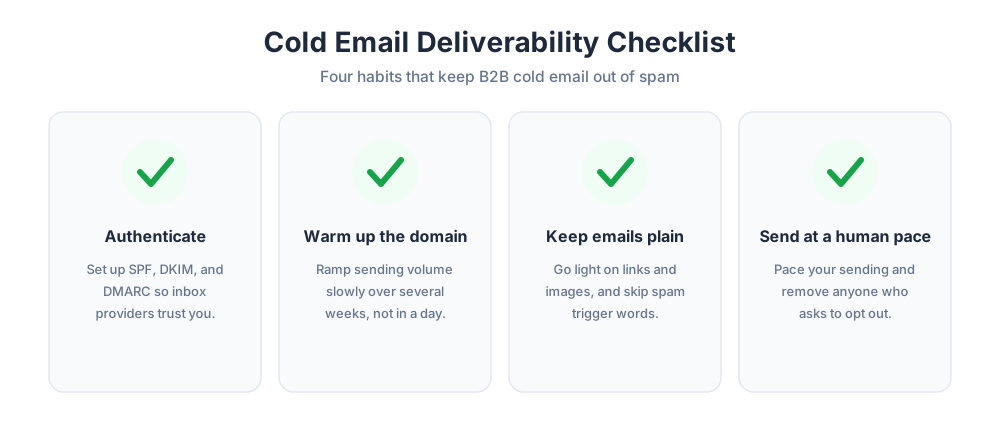
Start with the technical basics. Authenticate your domain with SPF, DKIM, and DMARC records so mailbox providers trust your mail. Many teams also send from a separate domain to protect their primary one. This setup is a one-time job that protects every campaign you run afterward.
Then warm up that domain. Ramp volume gradually over several weeks rather than blasting hundreds of emails on day one. A slow, steady start tells mailbox providers you are a legitimate sender.
Words and habits that trip spam filters
A spam filter reacts to both content and behavior. Heavy use of links, images, attachments, and trigger words like "free" can flag a message before anyone reads it.
Keep your emails plain and text-like, pace your sending like a human, and remove anyone who asks. Low complaint rates and real engagement keep you out of spam more reliably than any single trick. Good deliverability, in short, is mostly good manners applied at scale.
Common cold email mistakes to avoid
Most failures come down to a short list of avoidable errors. Fix these and your results improve before you touch a single template.
Mistakes in the message
The most common mistake is making the email about you. Long company history, feature lists, and "we are excited to" openings all lose the reader. Talk about the prospect instead.
Other message-level mistakes include writing a wall of text, stuffing in multiple calls to action, and using fake personalization that anyone can spot. One clear ask and one real detail beat all of it.
Mistakes in the campaign
At the campaign level, the big errors are poor targeting, no follow-up, and giving up after one touch. A great email to the wrong list still fails, and a single message rarely lands.
Moving too fast, ignoring placement, and never testing your subject lines also quietly drain results. Treat your cold email outreach campaign as a system you improve, not a batch you fire and forget.
How to measure cold email results
You cannot improve what you do not track. A few core metrics tell you exactly where a campaign is winning or breaking. Measurement is what separates a real outreach program from guesswork.
Open rate and reply rate
Open rate measures your subject line and sender reputation. If opens are low, the problem is the subject or your domain health, not the body.
Your reply rate measures the message itself. Track both positive and negative answers, because even a "no" tells you your targeting and offer are landing with real people. Healthy reply rates come from relevance, not volume.
Meetings and pipeline
Opens and replies are leading indicators, but a booked meeting and real pipeline are what actually matter. Judge every template by the calls it creates, not the opens it collects.
Tie your results back to revenue. When you can see which templates and segments move the sales pipeline, you know where to invest more effort, and that feedback loop is how a decent campaign compounds into lasting success.
Cold email and the rest of your outreach
Cold email is powerful, but it is strongest as part of a wider outreach motion. The teams that win pair it with calls and live chat into one coherent approach.
Cold email vs cold calling
A phone call interrupts; an email invites. A call can create urgency and a fast yes, but it is hard to scale and easy to ignore. Email scales, respects the prospect's time, and leaves a written trail.
The best B2B sales reps use both in one sales process. Email opens the door and earns awareness, and a well-timed call follows up with the buyers who showed interest. Combined, they shorten the sales cycle and lift overall success.
Cold email and live chat together
Your outreach often sends a prospect straight to your website, and what happens next decides whether the lead converts. If they land on a quiet page with no way to ask a question, the momentum is lost.
Live chat catches that visitor at the exact moment of interest. The buyer who clicked your email link can ask one quick question and book a call on the spot, turning a cold email open into a real conversation. It is a simple way to turn more of those leads into customers.
Turn cold email clicks into conversations with live chat
Cold email and live chat are a natural pair. Your outreach earns the click; live chat makes sure that click does not go to waste. A buyer who opened your email, got curious, and visited your site is as warm as a cold lead ever gets, and that is the moment to be available.
Chatim adds a free live chat widget and chatbot to your website, so the traffic your campaigns drive can start a conversation instead of bouncing. The chatbot answers common questions instantly, and a real person can step in to book the meeting your email was chasing all along. It is a low-effort way to capture more leads from outreach you are already doing, and it works just as well for a busy SaaS team as it does for a lean agency.
Put these B2B cold email templates to work
B2B cold email is not dead; lazy outreach is. The reps still booking calls are the ones who research the prospect, lead with value, keep it short, and follow up with patience and a fresh angle.
Start with two or three of the cold email templates above that match your next campaign. Personalize each one for the prospect company, run a short follow-up sequence, watch your reply rate, and refine from there. Do that consistently and cold email becomes one of the most reliable sources of new sales conversations and qualified leads you have, the kind of steady result that compounds into lasting success.
Related reading: customer service email templates, following up with potential clients, and email blasts.
Frequently Asked Questions
Is B2B cold email legal?
In most places, yes, B2B cold email is legal when you follow the rules. In the United States, the CAN-SPAM Act allows cold outreach as long as you use truthful headers and subject lines, identify the message honestly, include a real physical address, and honor opt-out requests promptly. In the EU and UK, GDPR and PECR are stricter and usually expect a lawful basis such as legitimate interest, plus an easy way to opt out. This is general information, not legal advice, so check the rules for the countries you send to and talk to a qualified professional if you are unsure.
What is the 30/30/50 rule for cold emails?
The 30/30/50 rule is not a single official standard, and you will see the phrase used in a few different ways. The most useful reading treats it as a reminder to balance your effort: roughly a third on choosing and researching the right prospects, a third on the offer and copy, and the rest on follow-up and testing. Rather than memorize a formula, focus on the principle behind it. A cold email campaign succeeds when targeting, message, and follow-up are all strong, because a great email sent to the wrong list still fails.
What is a good cold email response rate for B2B?
A good cold email response rate for B2B varies widely by industry, list quality, offer, and how senior the contact is, so chasing one universal number is misleading. A tightly targeted, well-personalized campaign to a small, relevant list will out-perform a large generic blast every time. Instead of fixating on a percentage, track your own reply rate over time and work to improve it: better targeting, a sharper subject line, and a short follow-up sequence usually move the number more than anything else.
Is cold email illegal?
No, cold email itself is not illegal. The confusion comes from mixing up cold email with spam. Spam is mass, deceptive, and ignores opt-out requests, and that behavior does break anti-spam laws. A legitimate cold email is targeted, honest about who sent it, and easy to unsubscribe from. Follow the email laws in your region, such as CAN-SPAM in the US and GDPR and PECR in Europe, keep your outreach relevant, and respect every opt-out. This is general guidance rather than legal advice.
What is a B2B cold email?
A B2B cold email is a first message sent to a business contact who has not heard from you before and has not opted in. There is no prior relationship. The goal is not to close a deal in one email; it is to earn a reply and start a conversation that a salesperson can carry forward. A good cold email is targeted, personal, and genuinely useful, which is exactly what separates it from spam.
How long should a B2B cold email be?
Short. Most effective B2B cold emails run somewhere between 50 and 125 words, which fits on a phone screen without scrolling. The reader should be able to grasp who you are, why you wrote, and what you want in a few seconds. If your draft is longer, cut the company history and the feature list, keep one clear benefit and one call to action, and the email will perform better.
How many follow-up emails should you send?
A sequence of two or three follow-ups after the first email is a sensible range for B2B cold outreach. Most replies come from the follow-ups rather than the first message, so stopping after one send leaves results on the table. Space each message three to five business days apart, give every follow-up a fresh angle or detail instead of just bumping the thread, and stop after the final break-up email so persistence never tips into pestering.
When is the best time to send a cold email?
Mid-morning on a weekday, in the recipient's time zone, is a reliable default, since that is when many people clear their inbox. Tuesday through Thursday tends to be safer than Monday or Friday. That said, send time matters far less than relevance and targeting. A well-researched email to the right person lands whenever it arrives, so test a couple of windows with your own audience rather than trusting a universal best time.
How do you write a cold email subject line that gets opened?
Keep the subject line short, ideally under about six words, and make it specific to the recipient. Lead with a clear benefit, an insight, or a reference to their company, and write in plain sentence case so it reads like a real person rather than an ad. Avoid all caps, exclamation marks, and trigger words like free or guaranteed, which hurt open rates and feed spam filters. Most importantly, make sure the subject promises something the email actually delivers.
How do you keep cold emails out of spam?
Deliverability starts with technical setup: authenticate your sending domain with SPF, DKIM, and DMARC, and many teams send cold outreach from a separate domain to protect their main one. Warm that domain up by ramping volume slowly over several weeks. Then keep each email plain and text-like, go easy on links and images, avoid spammy trigger words, send at a human pace, and remove anyone who asks. Low complaint rates and real engagement keep you in the inbox.
How do you personalize cold emails at scale?
Use tiered personalization. Reserve deep, hand-written research for your highest-value accounts, and use lighter, segment-level personalization for the rest. Group prospects by industry, role, or shared pain point, then write one strong template per segment so every contact still gets a relevant message. Even a single specific, true detail in the opening line, drawn from a quick look at the company, signals that a human chose to write to them.
Is cold email better than cold calling?
Neither is strictly better; they do different jobs. Cold calling interrupts and can create urgency and a fast yes, but it is hard to scale and easy to ignore. Cold email scales, respects the prospect's time, and leaves a written trail they can revisit. The strongest sales teams use both: email opens the door and earns awareness, and a well-timed call follows up with the prospects who showed interest.
How do you measure cold email success?
Track a small set of metrics. Open rate reflects your subject line and sender reputation. Reply rate reflects the message and the targeting. Beyond those leading indicators, the numbers that matter most are meetings booked and pipeline created, because a campaign with modest opens that books real calls beats a high-open campaign that books none. Tie your cold email results back to revenue so you can see which templates and segments deserve more effort.
Related articles
More in Tools & productivity →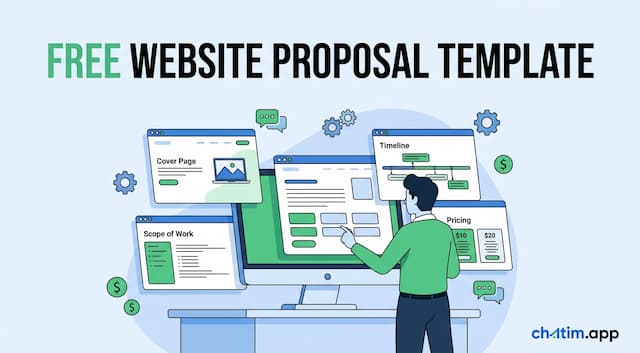 Website Proposal Template: 8 Sections That Win (2026)
A free website proposal template with all 8 sections copy-paste ready, plus the walkthrough: scoping, three-tier pricing, follow-up, and the expiry date.
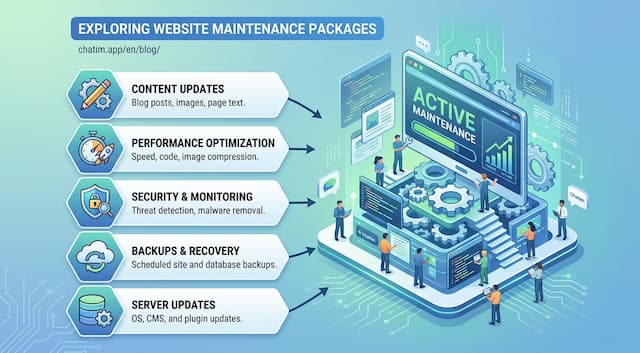 Website Maintenance Packages: What to Include & Charge (2026)
What goes into a website maintenance package, how providers price three tiers, the full maintenance checklist, and the recurring line items clients notice.
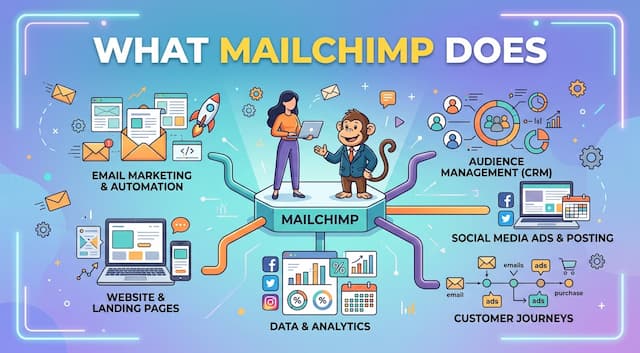 What Is Mailchimp? A Complete Guide to What It Does
Mailchimp is a leading email marketing platform. Learn what it is, what it does, its features and plans, and top alternatives.
 20 Best Email Tracking Software Tools to Use in 2026
20 email tracking tools compared: Mailtrack, HubSpot, Mixmax, Mailchimp, ZeroBounce. Pricing, free tiers, Gmail and Outlook picks for sales teams.