B2B Sales: Meaning, Strategies, and Lead Generation Tactics
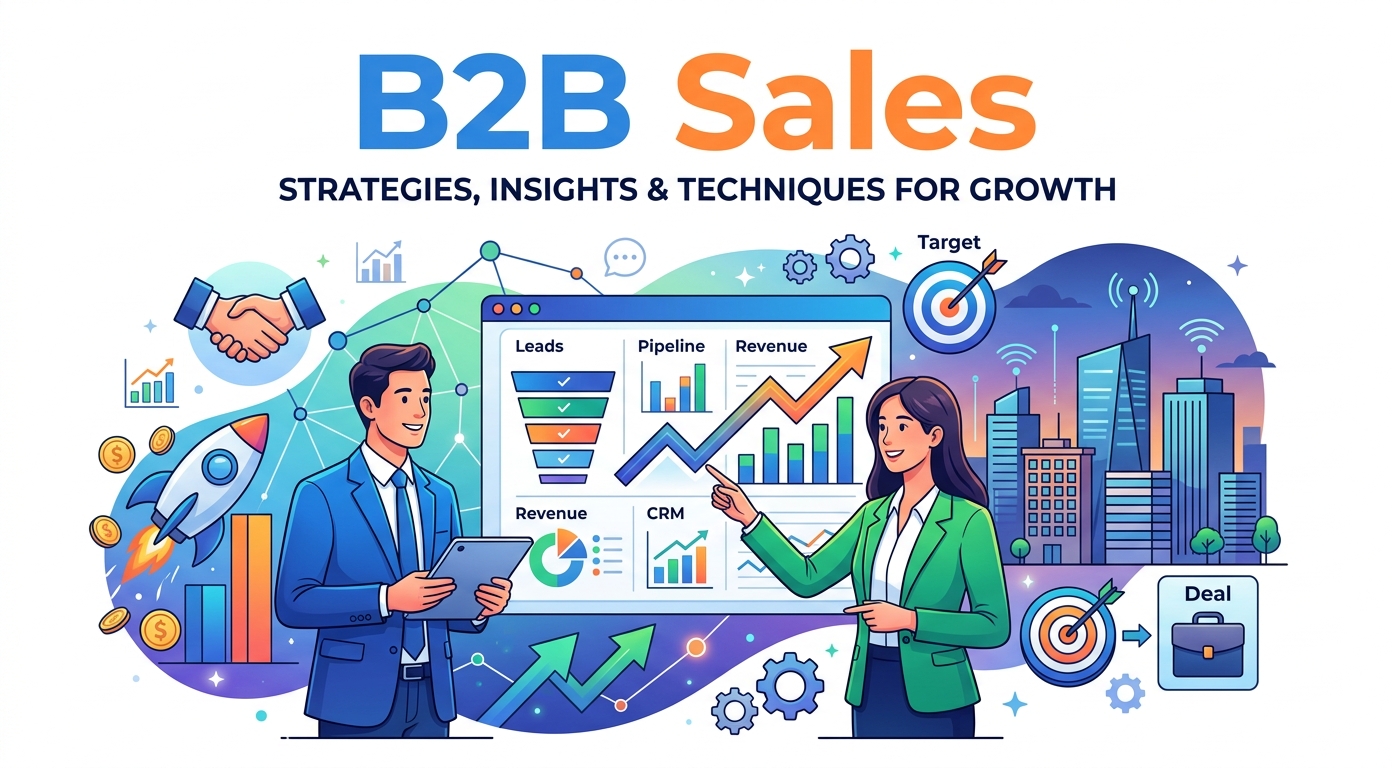
B2B sales is the engine behind most of the economy you never see. Every tool, service, and component a business uses was sold to it by another business. This guide explains what B2B sales is, how it works, the main strategies and techniques, and how to generate the leads that fill a healthy pipeline.
B2B sales matters because it funds nearly every other part of a business. The marketing budget, the product roadmap, and the hiring plan all depend on a steady stream of closed business. When a sales team performs, the whole business can plan with confidence; when B2B sales stall, every department feels the strain.
What is B2B sales
B2B sales, or business-to-business sales, is the process of one business selling products or services to another business. It differs from B2C sales, where companies sell to individual consumers. B2B sales usually involves larger orders, customized solutions, and longer relationships. A single contract can represent months of work and a meaningful share of the yearly target, so the discipline rewards patience, preparation, and genuine expertise far more than charm alone.
The B2B sales meaning centers on solving another company's problem. Deals are more complex, with several decision-makers and higher stakes, so trust and relationships matter more than a quick pitch. A buyer is rarely spending personal money; they are spending the budget of a business and answering to colleagues, finance teams, and executives. That changes everything about how you sell. Your job is to make the buyer look smart to their peers, reduce their perceived risk, and give them the internal ammunition to win approval.
Most B2B sales also involve a buying committee rather than a single decision-maker. A technical evaluator, an economic buyer, an end user, and a procurement specialist often weigh in. Strong B2B salespeople map that group early and tailor the conversation to each person's priorities, because an agreement can stall the moment one unaddressed concern surfaces late in the cycle.
B2B sales vs B2C sales
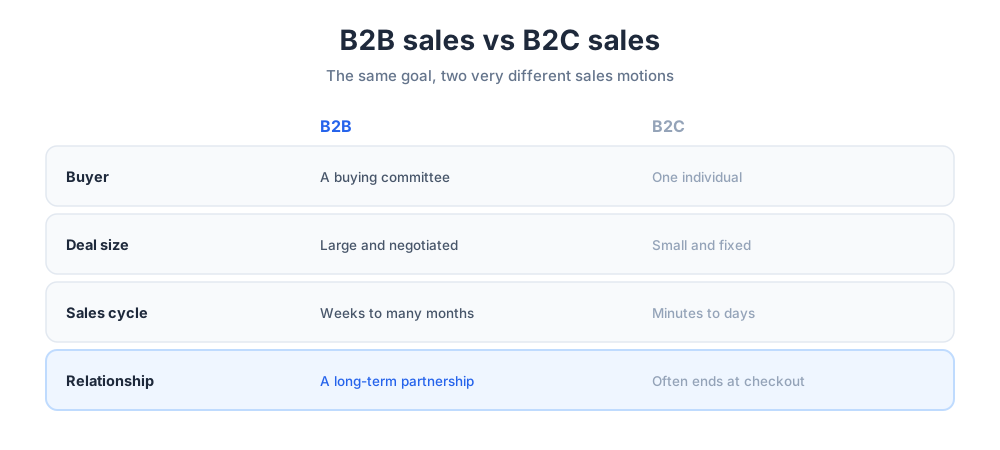
B2B sales and B2C sales share a goal but work very differently. B2C sales are fast and emotional, while B2B sales are slower, more rational, and involve several decision-makers. Consumer sales close in minutes; B2B deals can take months. Because the buying journey runs long, B2B sales teams set realistic expectations and design a process to match. Understanding the contrast keeps a sales team from forcing a quick close on a buyer who needs more time.
Deal size and complexity
In consumer selling, the average order is small and the buyer acts alone. In B2B sales, order values run far higher and the solution is often configured to fit the customer. That complexity is why a structured selling process matters so much.
Relationship and timeline
A consumer relationship may end at checkout. A B2B relationship often begins there. Renewals, expansions, and support all depend on long-term trust, so the work of a B2B sales team continues well after the contract is signed. Reps who treat the close as the finish line tend to lose accounts that a relationship-focused competitor will happily take.
Examples of B2B sales
Real examples make B2B selling concrete. A cloud provider selling data storage to other companies, a packaging supplier selling to a manufacturer, an HR software company selling recruitment platforms, and a marketing agency selling lead generation services are all B2B sales. None of these transactions reach a consumer directly, yet together they keep entire industries running.
Consider a software company that sells project management tools to mid-sized firms. Its reps do not chase impulse purchases; they run demos, build business cases, and help buyers justify the spend internally. Compare that to a logistics firm selling freight services to retailers: different product, same pattern of multiple stakeholders, negotiated pricing, and a relationship measured in years. The shared thread across every example is that one organization is solving a real operational problem for another, and the seller who frames the conversation around that problem usually wins.
Types of B2B sales
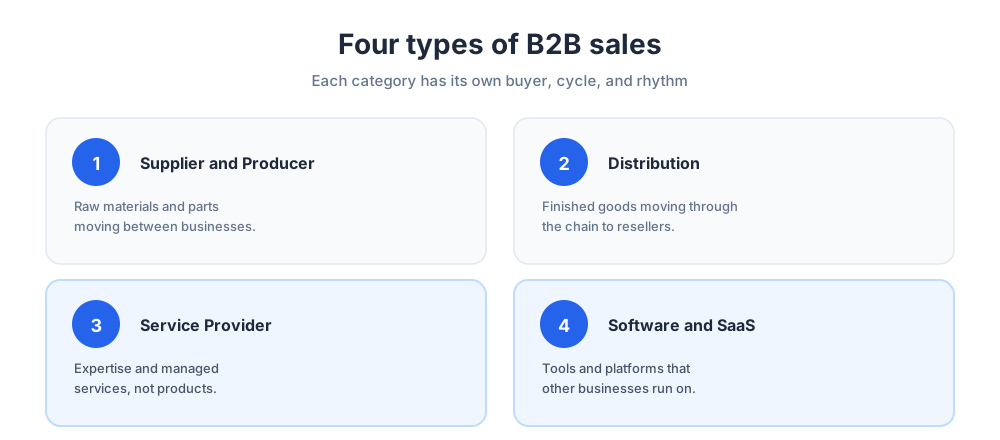
B2B sales takes several forms, and recognizing the main categories helps you choose the right approach for your market. Each sales model has its own buyer, sales cycle, and rhythm.
Supplier and producer sales
This first category moves raw materials and parts between businesses. A steel mill selling to an equipment maker is a classic case. These relationships reward reliability, consistent quality, and competitive pricing, because the buyer is building the seller's output into their own product.
Distribution sales
This category and supply sales move finished goods through the chain to resellers, retailers, and other businesses. A distributor adds value through inventory, logistics, and local reach, so the seller's pitch focuses on availability, margin, and partnership rather than raw product features.
Service provider sales
This category, a form of B2B service sales, offers expertise rather than products. Consultancies, agencies, and managed-service firms all sit here. Because the buyer cannot inspect a service before purchase, credibility, case studies, and references carry the agreement forward.
Software and SaaS sales
Software sales and the closely related subscription model offer tools that other businesses run on. Enterprise sales of large platforms can take many months and many meetings, while smaller subscription contracts move faster. In every case the seller is asking the buyer to change how their company works, which makes onboarding and proof of value central to closing.
The B2B sales process
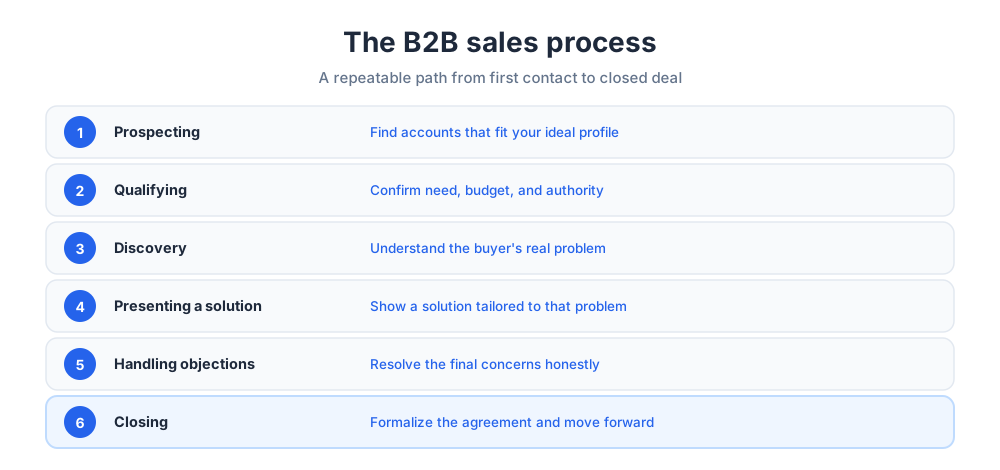
The B2B sales process is a structured path from first contact to closed deal. A clear sales process keeps every rep consistent, makes forecasting reliable, and turns scattered effort into a repeatable system. New hires ramp faster, managers can coach with data, and the whole B2B sales process becomes something you improve rather than something you guess at. Most sales teams build their B2B sales process around six stages and revisit it often as the market shifts.
A documented process also protects against turnover. When a senior rep leaves, the knowledge stays with the team rather than walking out the door, because the steps, the qualifying questions, and the typical objections are all written down. That is why fast-growing sales teams treat their process as a living asset rather than a one-time exercise.
Every sales representative on the team should know exactly which stage each opportunity sits in and what has to happen next. When a sales representative can see the process clearly, coaching becomes specific and sales efforts stay focused on the activities that actually move a deal forward. A shared process is also what lets one sales rep cover for another without dropping the ball, and it gives a new sales rep a map to follow from day one.
Prospecting
The first stage is finding potential customers who fit your ideal profile. Reps and sales development representatives research accounts, identify likely fits, and open conversations through email, calls, and social channels.
Qualifying
Not every lead deserves the same attention. Qualifying confirms the prospect has a real need, a budget, and the authority to act, so a sales rep invests time where it can actually produce results.
Discovery
Discovery is where good selling happens. The rep asks questions, listens, and builds a precise picture of the buyer's problem before proposing anything. The quality of discovery often decides the deal.
Presenting a solution
With the problem understood, the rep presents a tailored solution and connects every feature to a benefit the buyer named earlier. Generic demos lose; specific ones win.
Handling objections
Objections about price, timing, or risk are signals of engagement, not rejection. A skilled rep welcomes them, answers honestly, and removes the barriers standing between the buyer and a yes.
Closing
Closing formalizes the agreement. When the earlier stages were done well, the close is a natural next step rather than a high-pressure event, and both sides move forward with confidence.
B2B sales cycles and the sales funnel
Buying journeys in this market are long. Long sales cycles mean a rep nurtures a buyer for weeks or months, staying useful and present without becoming a nuisance. The B2B sales funnel maps that journey from first awareness to signed contract, and a healthy sales funnel keeps the pipeline full of qualified opportunities at every stage.
The funnel narrows as potential customers progress. Many enter at the top; fewer reach evaluation, and fewer still reach a decision. Because sales cycles vary, tracking how many move from each stage to the next shows where deals stall and where coaching would help.
Smart sales teams treat the funnel as a forecasting tool. By measuring conversion between stages, a sales manager can predict revenue weeks ahead and spot risk early. A pipeline that looks full but moves slowly is a warning sign, and reading it correctly is a core skill for any sales manager.
B2B sales strategies
Winning B2B sales strategies focus on the buyer rather than the product. Understand the buyer's journey, personalize the pitch, build long-term relationships, and align sales and marketing so prospects get a consistent story from first ad to signed contract. The strategies below give a team a durable plan instead of a scramble.
A B2B sales strategy works only if it matches how B2B buyers decide. Today these business buyers research independently and expect a seller to add insight, so the best B2B sales strategies help the buyer think. Strong salespeople study the market and bring a point of view to every sales conversation. Experienced salespeople also know which sales opportunities to chase, because focused work on the right accounts beats thin effort spread across many.
Account-based selling
Account-based marketing targets a short list of high-value accounts and treats each as a market of one. Reps and marketers coordinate on tailored content and outreach, which raises win rates on the accounts that matter most.
Build long-term relationships
The most reliable revenue comes from accounts that stay and grow. Investing in customer success after the sale turns one contract into renewals, expansions, and referrals, and it lowers the cost of future revenue generation.
Sell on value, not price
Competing on price alone is a race to the bottom. A value-based approach quantifies the outcome the buyer will gain, so the conversation centers on return rather than cost and the seller protects healthy margins.
B2B sales techniques
Strong selling skills turn strategy into action. Where a strategy sets direction, a technique is the concrete behavior a rep uses in a live conversation. The best teams practice these methods deliberately until they feel natural.
Consultative and solution selling
Consultative selling diagnoses the problem before proposing anything, and the rep then frames the offer as the answer to what you found. The rep acts as an advisor, which builds the trust that a complex purchase requires.
Social selling
Social selling builds relationships on LinkedIn and other channels before the first call. By sharing useful insight and engaging genuinely, a rep becomes a familiar, credible name long before any pitch. Treating social media for business as a relationship channel rather than a broadcast channel is what makes it work.
Inside vs field selling
Inside sales works remotely by phone, email, and video, while field reps who handle outside sales meet buyers face to face. Many teams blend both, using remote calls for efficiency and on-site meetings for the largest, most strategic accounts.
B2B lead generation tactics
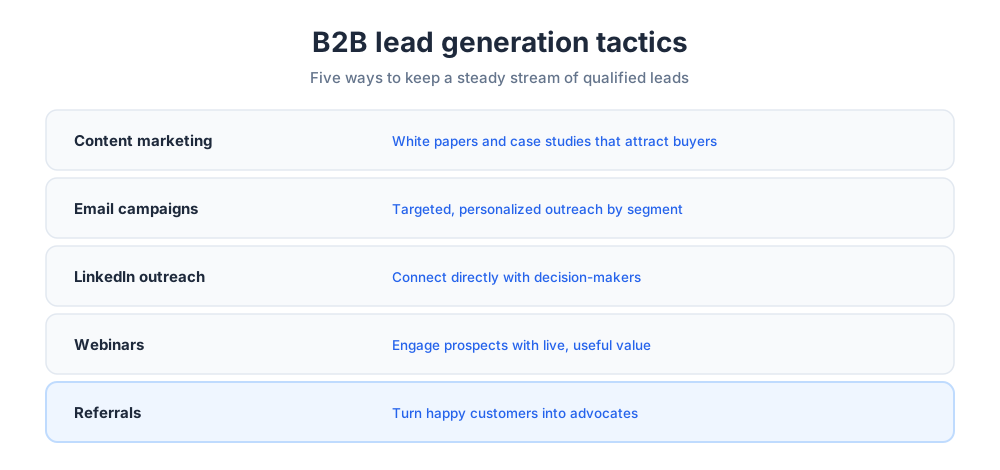
Lead generation fills the pipeline, and without a steady flow of new prospects even a great team will eventually stall. Content marketing, email campaigns, LinkedIn outreach, webinars, and referrals all generate B2B sales leads, and the strongest programs combine several so a slow month in one channel does not empty the funnel.
Content marketing earns attention by answering the questions B2B buyers ask while researching. Helpful articles, comparison guides, and case studies pull qualified prospects toward you instead of interrupting them. Live chat on your site can capture interest at the exact moment it peaks; many teams treat lead generation through live chat as one of the fastest ways to turn an anonymous visitor into a named contact. Pair that with strong B2B customer service and even early conversations build the trust that later closes deals.
Once a lead enters the system, a CRM tracks every interaction so nothing slips. Good customer relationship management gives sales reps a full history of each business account, helps managers spot stalled deals, and ensures follow-up actually happens. Capturing structured customer feedback from prospects and lost business also sharpens targeting over time, because it shows which segments convert and which sales messages land.
Measuring B2B sales performance
The health of a team is measured with metrics like win rate, average deal size, and cycle length. Tracking the right numbers shows what to improve and prevents a team from mistaking activity for progress. Without measurement, coaching becomes guesswork and forecasts become wishful thinking.
Key metrics to track
Win rate reveals how effectively the team converts opportunities. Average deal size shows whether reps are reaching the right buyers. Cycle length flags friction in the process, and pipeline coverage indicates whether there is enough volume to hit the target. Read together, these numbers tell a clear story about how the team is doing.
Coaching toward results
Numbers are only useful if they change behavior. Reviewing metrics with each rep, setting one or two focused goals, and following up consistently turns data into measurable progress. The aim is steady improvement: small gains in conversion at each stage compound into real sales success across a quarter.
Common B2B sales challenges
The most frequent obstacles include long cycles, several decision-makers, and price pressure. Knowing them in advance helps a sales team plan ahead. The hurdles below are common in B2B sales across nearly every industry.
Long cycles and stalled deals
Extended timelines let momentum fade and competitors slip in. The fix is disciplined sales follow-up, a clear sales next step, and content that keeps buyers moving between sales conversations.
Aligning multiple stakeholders
When several people must agree, any one of them can stall the deal. Mapping the group of decision-makers early, understanding each person's priorities, and equipping an internal champion to sell on your behalf keeps the group moving together.
Price pressure and onboarding
Buyers push hard on price, and a weak handoff after the sale can undo a hard-won win. Selling on value protects margin, while a smooth customer onboarding process proves value quickly. Both protect the revenue a sale was meant to deliver and keep the buyer's business for the long term.
The future of B2B sales
What comes next for B2B sales is more digital, more data-driven, and more buyer-led. Modern buyers complete much of their research before they contact a rep, so B2B sales reps add the most value later, as advisors who clarify trade-offs rather than gatekeepers of basic facts.
Digital sales tools and AI will keep reshaping how teams sell. Automation handles routine follow-up, analytics surface the deals most likely to close, and AI assistants help reps personalize at scale. The current state of sales shows the human role shifting toward judgment and relationships. A team that pairs smart tools with strong B2B sales fundamentals will drive lasting business growth.
B2B sales FAQs
What skills make a great B2B salesperson?
Curiosity, listening, business acumen, and persistence. The best sales reps know their buyer's business well enough to talk like a peer, and a disciplined sales process keeps them organized.
How long is a typical B2B sales cycle?
It varies widely. Small subscriptions close in weeks, while large platform sales run a year or more. The right length is whatever your sales data shows; the goal is to remove friction, not to rush the buyer.
Is B2B sales a good career?
For many people, yes. B2B sales rewards skill with strong pay and clear progression, and it suits anyone who enjoys building relationships and solving real business problems.
How do sales and marketing work together?
Marketing builds awareness and generates leads while the sales team converts them, and shared definitions and feedback keep both functions pointed at the same ideal customer. Tight coordination is one of the clearest markers of a healthy B2B sales experience for the buyer.
Keep going with our guides to B2B cold email templates.
Frequently Asked Questions
What is the 3 3 3 rule in sales?
The 3-3-3 rule is an informal sales focus technique, and it appears in a few versions. A common one is to spend three minutes researching a prospect, three minutes planning the approach, and three minutes on the actual outreach, keeping each touchpoint short and deliberate. Another version splits the day into three blocks for prospecting, follow-up, and closing. There is no single official definition, so treat it as a prompt to work in focused, time-boxed bursts rather than a fixed law.
Is B2B sales difficult?
B2B sales is challenging but learnable. The difficulty comes from long sales cycles, multiple stakeholders, higher stakes, and well-informed buyers, so a quick pitch rarely works. What makes it manageable is structure: a clear sales process, genuine product knowledge, and patient relationship-building. Reps who treat B2B sales as problem-solving rather than persuasion tend to find it demanding but rewarding, and the larger deal sizes make the effort worthwhile.
What is an example of a B2B sale?
A B2B sale is any sale between two businesses. Examples include a cloud provider selling data storage to other companies, a packaging supplier selling materials to a manufacturer, an HR software company selling a recruitment platform to employers, and a marketing agency selling lead generation services to other firms. In each case the product or service is bought to run or improve a business, not for personal use by an individual consumer.
What does B2B sales mean?
B2B sales, short for business-to-business sales, means the process of one business selling products or services to another business. It differs from B2C sales, where companies sell directly to individual consumers. B2B sales typically involves larger orders, customized solutions, longer sales cycles, and several decision-makers, so it centers on solving the buyer's business problem and building a trusted, long-term relationship rather than closing a fast transaction.
What is the difference between B2B and B2C sales?
B2B sales sells to other businesses; B2C sales sells to individual consumers. B2C purchases are usually fast, low-cost, emotional, and made by one person. B2B deals are larger, more rational, span weeks or months, and involve a buying committee. B2B sales also continues after the close through renewals and expansions, while a B2C relationship often ends at checkout. The contrast shapes how teams prospect, pitch, and measure success.
What are the stages of the B2B sales process?
A typical B2B sales process has six stages: prospecting to find good-fit accounts, qualifying to confirm need, budget, and authority, discovery to understand the buyer's problem, presenting a tailored solution, handling objections, and closing the deal. Many teams add a follow-up or onboarding stage after the close. A documented process keeps every sales rep consistent and makes forecasting far more reliable.
What are the best B2B sales strategies?
Strong B2B sales strategies focus on the buyer. Map the buyer's journey and meet them with the right content at each stage. Use consultative, personalized selling that addresses each prospect's specific pain points. Invest in long-term relationships rather than one-off deals. And use account-based marketing to target high-value accounts with tailored campaigns, aligning sales and marketing around the same priority accounts.
How do you generate B2B sales leads?
Effective B2B lead generation combines several tactics: content marketing such as white papers and case studies to attract interested buyers, targeted and personalized email campaigns, LinkedIn networking and outreach to reach decision-makers, webinars and virtual events, and referrals from satisfied customers. A CRM tracks and nurtures every lead. The goal is a steady pipeline of qualified prospects rather than a burst of low-quality contacts.
What B2B sales techniques work best?
The most effective B2B sales techniques include consultative selling, where you diagnose the problem before proposing anything, and solution selling, which frames your offer around the buyer's specific outcome. Social selling builds relationships on platforms like LinkedIn before the first call. Choosing between inside sales and outside sales depends on deal size and buyer preference. All of them work best on a foundation of genuine product expertise.
How is B2B sales performance measured?
B2B sales performance is tracked with metrics such as win rate, average deal size, sales cycle length, pipeline coverage, and quota attainment. Activity metrics like calls, meetings, and proposals show effort, while conversion rates between pipeline stages reveal where deals stall. Watching these numbers over time, rather than in isolation, shows a sales team exactly where to coach and which part of the process to improve.
What are common B2B sales challenges?
Common B2B sales challenges include long sales cycles that test patience, decisions made by multiple stakeholders who each have different priorities, price pressure and procurement negotiation, and buyers who research thoroughly before they ever talk to a rep. Misalignment between sales and marketing is another frequent issue. Teams that anticipate these challenges, and build a process around them, close more deals with less friction.
How long is a typical B2B sales cycle?
There is no fixed length; a B2B sales cycle depends on deal size and complexity. A small subscription sale might close in days, while a large enterprise deal can take six months or longer because it involves many meetings and stakeholders. Rather than chasing a calendar number, strong teams focus on moving each deal cleanly through every stage of the sales process and removing friction wherever a buyer tends to stall.
What is the future of B2B sales?
The future of B2B sales is more digital, more data-driven, and more buyer-led. Buyers now do most of their research before contacting a seller, so sellers add value by guiding rather than informing. Digital sales tools, automation, and AI handle routine work and surface insight, while the human rep focuses on trust, complex problem-solving, and relationships. The fundamentals, solving real problems and building trust, do not change.
Related articles
More in Marketing & sales → Best SaaS Affiliate Programs in 2026: 7 Verified Picks
7 SaaS affiliate programs with every rate, duration, cookie, and payout term verified on the official pages, plus the four numbers that decide value.
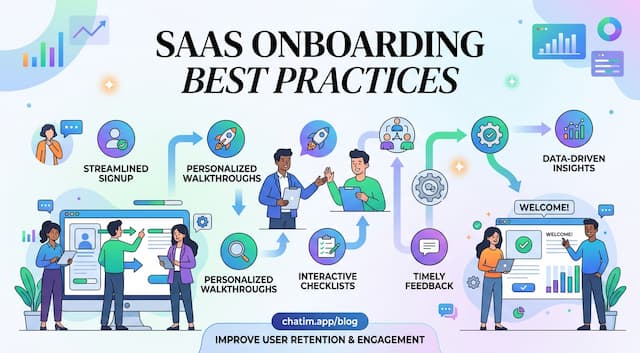 SaaS Onboarding Best Practices That Shrink Time to Value
SaaS onboarding best practices organized as a timeline: set expectations at signup, deliver value in session one, build the habit in week one, then measure.
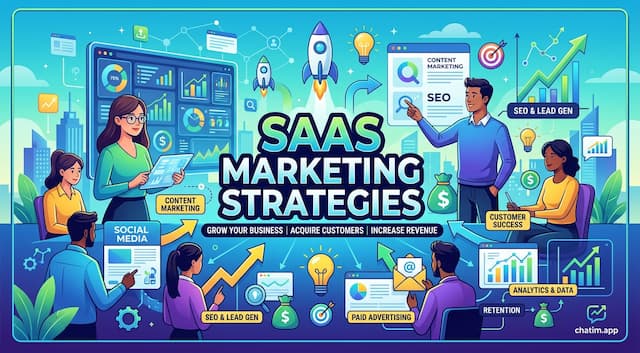 10 SaaS Marketing Strategies That Compound (2026)
Ten SaaS marketing strategies ranked by cost and time to results, the arithmetic that picks the right two or three for your price point, and what to skip.
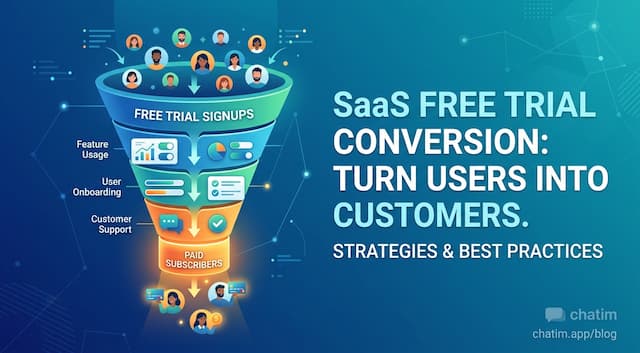 Free Trial Conversion: Fix Where Trials Actually Die
Forget trial conversion benchmarks: decompose the funnel, find which of the four deaths kills your trials, and apply the fix that matches, chat included.