Facebook Messenger Chatbot: The 2026 Guide + 5 Platforms

A Facebook Messenger chatbot is still one of the highest-leverage automations a business can run on Meta's platforms, but the reasons have shifted. The 2026 story is not "build a bot because chat is the future"; it is that Messenger sits at the end of some of the best-converting funnels Meta sells (comment automation on organic posts, click-to-Messenger ads, story replies) and a bot is the only way to answer those conversations at the speed and volume they arrive. This guide covers what a Messenger chatbot can actually do today, the 5 platforms genuinely built for it with pricing verified in July 2026, how to launch one without overbuilding, and the case where you need a Messenger presence rather than a Messenger bot.
It pairs with our Instagram chatbot guide: same Meta plumbing, same vendors mostly, different audience behavior. Most businesses running one end up running both from the same flow builder.
What a Messenger chatbot can do in 2026
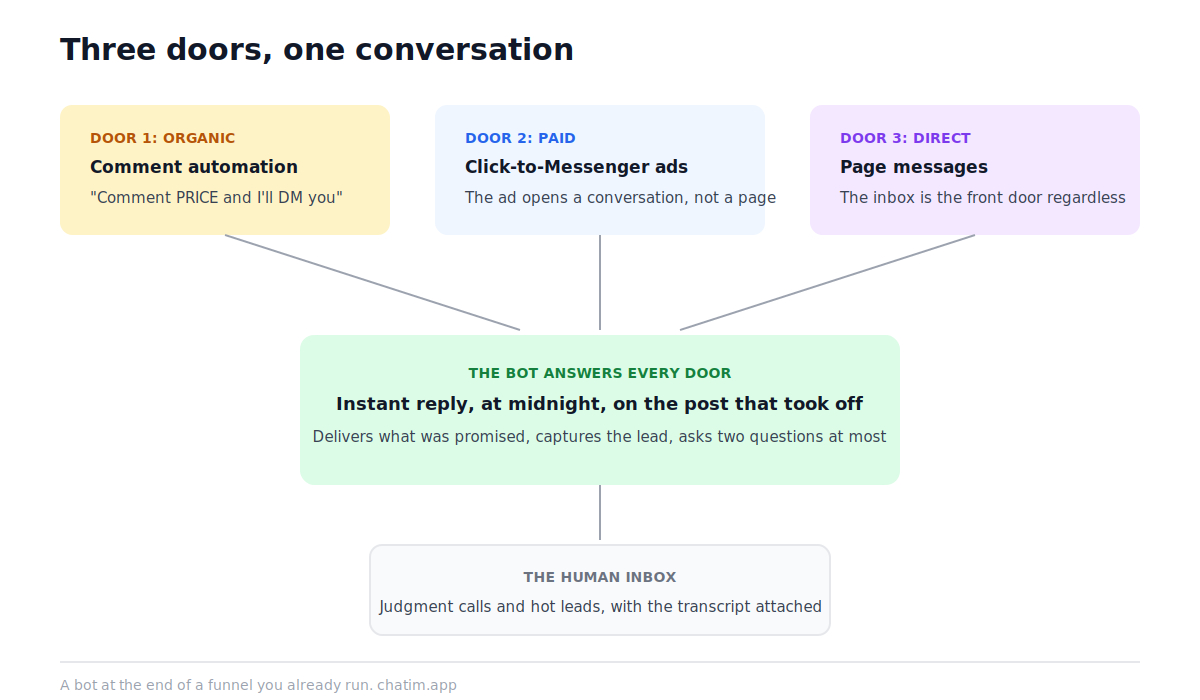
A Facebook chatbot rides the Messenger Platform, Meta's API for business messaging, through approved platform vendors, and the mechanics shape what works. Anyone who messages your page opens a conversation your bot can answer instantly and a human can join later. Comment automation is the signature move: a bot watches a post, replies to commenters, and continues the conversation in DMs, turning an organic post into a lead machine. Click-to-Messenger ads skip the landing page entirely and drop the prospect into a conversation. And after the initial contact, messaging rules apply: replies inside the service window are open, while later outreach uses Meta-approved message types and opt-ins, which is why serious broadcast marketing on the channel runs through a platform that manages those rules for you rather than around them.
Where Messenger bots earn their keep
Lead capture from content is the flagship: "comment PRICE and I'll DM you the details" only works if something answers every commenter within seconds, at midnight, on a post that unexpectedly takes off. Ad response is the same job with a budget behind it, since a click-to-Messenger ad that lands on a slow reply burns money in a way a slow landing page never quite does. Support deflection fits businesses whose customers already live on Facebook (local services, community-driven brands, marketplaces), where the page inbox is the front door whether you staff it or not. And event and offer flows (registrations, reminders, promo codes) use the channel's strength: the conversation persists, so a follow-up lands in the same thread the customer already trusts. What does not work is treating the channel as a free broadcast list; the rules above make that a short story with a blocked ending.
5 Messenger chatbot platforms compared
Annual-billing rates where vendors publish both; all five connect to the same Messenger Platform underneath.
| Platform | Free plan | Paid entry | Best for |
|---|---|---|---|
| ManyChat | 25 contacts, 2 channels | From $14/mo | Comment-to-DM and drip marketing |
| Chatfuel | Light plan, permanent | AI PRO $49/mo | Free entry, small pages |
| Respond.io | None (trial) | From $79/mo | Multi-channel team inboxes |
| Botpress | Capped free tier | See vendor pricing page | Developer-grade custom bots |
| ChatBot.com | None (trial) | See vendor pricing page | LiveChat-ecosystem teams |
1. ManyChat: the Messenger marketing default
ManyChat built its whole category on this channel, and it shows: comment automation, keyword triggers, drip sequences, and growth tools are first-class features, with Instagram sharing the same flow builder. The free plan covers 25 active contacts on 2 channels, Essential starts at $14/month, and Pro at $29/month; the meter is active contacts, which rewards subscriber-style marketing and punishes one-off traffic. For most marketing-led Messenger bots it is the default answer, and our ManyChat alternative guide exists for when the meter or the marketing focus stops fitting.
2. Chatfuel: the free plan that includes the whole channel
Chatfuel Light is permanently free across Facebook, Instagram, and WhatsApp with a shared inbox and flow builder, which makes it the lowest-risk way to put a real bot on a page today; AI PRO at $49/month is the single upgrade above it. A Meta partner since the platform's earliest days, it suits small pages automating replies and simple funnels without a subscription, with the two-plan ceiling as the trade. The field around it is in our Chatfuel alternatives guide.
3. Respond.io: Messenger inside a multi-channel inbox
Respond.io is the pick when Messenger is one lane of a support operation that also runs WhatsApp, Instagram, and Telegram: one inbox, one contact record per person across channels, priced from $79/month billed annually on a monthly-active-contact meter with AI features from the mid tier. It costs more at entry than the marketing tools and earns it only for teams genuinely working several channels; a Messenger-only page is overpaying here.
4. Botpress: custom logic that speaks Messenger
Botpress serves teams whose bot outgrows flow builders: custom code, custom LLM integrations, and self-hosting of its open-source core, with Messenger among its advertised channels. Its hosted pricing moved to conversation-based plans in 2026 and has shifted since, so check the vendor's page directly rather than third-party roundups. The trade is engineering time for control, and it is the platform you graduate to rather than start on.
5. ChatBot.com: the LiveChat ecosystem's bot
ChatBot.com (from the LiveChat family) advertises an AI-first bot builder with Messenger integration, and it makes the most sense for teams already inside the LiveChat ecosystem who want the bot, the inbox, and the widget from one vendor family. It publishes its plan tiers on its own site, which is where to check them, since we have not independently verified its pricing.
Launching one without overbuilding
The failure mode on this channel is scope: page owners build twelve-branch trees for conversations that never come. The sequence that works: pick one job (usually comment automation on your best-performing post type, or answering the page's three most repeated questions), connect the page through your chosen platform, and build the single flow that does that job, with an opener that delivers value before asking for anything. Wire the handoff so a human can take over in the platform's inbox, because Messenger conversations are real customers, not leads in a spreadsheet. Then read two weeks of transcripts before building flow number two; the transcripts, not the template gallery, tell you what your audience actually asks. The division of labor from our customer service chatbot guide applies unchanged: predictable questions to the bot, judgment to humans, visible path between them.
Which platform fits
Take ManyChat when marketing is the job: comment automation, sequences, and growth tools with Instagram in the same builder. Take Chatfuel when free matters more than ceiling. Take Respond.io when the page inbox is one lane of a real multi-channel support operation, Botpress when engineers are building conversation logic the flow builders cannot express, and ChatBot.com when you live in the LiveChat ecosystem already. All five sit on the same Meta plumbing; you are choosing the tooling and the meter, not the channel's capabilities.
Do you need a Messenger bot, or a Messenger button?
Plenty of businesses shopping this category actually want something simpler: website visitors who prefer Messenger should be able to open it with one click and reach a human. That takes minutes, not a platform subscription: a Messenger button on your website routes visitors into your page inbox, no bot required. Full disclosure on where we stand: Chatim, the product behind this blog, is not a Messenger chatbot platform and does not belong in the list above; what it does is put chat on your website, with a contact button that includes Messenger among its channels, and rule-based flows plus AI answering for the conversations that happen on your own site. The honest sequencing for most small businesses: staff the website first, add the Messenger button for the audience that prefers it, and buy a Messenger bot platform when comment volume or ad spend makes instant automated replies pay for themselves, at which point the five platforms above are the real shortlist.
More on this from our team: the Instagram chatbot guide, live chat vs chatbot, and auto-reply message samples.
Frequently Asked Questions
What is a Facebook Messenger chatbot?
Software that automatically answers conversations on a Facebook page: page messages, comment replies continued in DMs, and conversations started from click-to-Messenger ads. Bots run on Meta's Messenger Platform through approved vendor platforms, answer instantly at any hour, and hand conversations to a human inbox when needed.
Are Messenger chatbots still worth it in 2026?
For businesses using Meta's funnels, yes, and that is the honest framing: comment automation and click-to-Messenger ads produce conversations at a speed and volume only automation can answer. A bot for its own sake is not the point; a bot at the end of a funnel you already run is.
What is the best Messenger chatbot platform?
ManyChat is the default for marketing-led bots: comment automation, sequences, and growth tools with Instagram in the same builder. Chatfuel is the strongest free entry, Respond.io fits multi-channel support inboxes, Botpress serves developer teams, and ChatBot.com suits teams already in the LiveChat ecosystem.
Is there a free Messenger chatbot?
Chatfuel's Light plan is permanently free across Facebook, Instagram, and WhatsApp with usage limits, and ManyChat's free tier covers 25 active contacts, enough to test a flow before paying. Between them, a small page can run a real bot at no cost and upgrade when volume justifies it.
How does comment-to-DM automation work?
The bot watches a post for comments, optionally filters by keyword, replies publicly, and opens a direct-message conversation with the commenter, where the flow delivers whatever the post promised and captures the lead. It is the signature Messenger play because it converts organic reach into conversations automatically.
What are click-to-Messenger ads?
Meta ad formats whose call to action opens a Messenger conversation instead of a landing page. The bot answers instantly, qualifies the prospect, and hands hot leads to a human. They reward automation heavily, because ad spend landing on a slow reply is money burned in real time.
Can I message people on Messenger any time after they contact my page?
No. Replies inside the service window after a customer's message are open, and later outreach uses Meta-approved message types and opt-ins. The platforms in this guide manage those rules for you, which is one of the main reasons to use one rather than improvising against the policy.
Do Messenger chatbots work for customer support?
Well, for audiences that already live on Facebook: the bot answers the page's repeated questions and collects details, then hands to a human with the transcript. The standard division of labor applies: predictable questions to the bot, judgment calls to people, with a visible path between them.
Can the same bot run on Instagram and Messenger?
On most platforms, yes: ManyChat and Chatfuel run both channels from the same flow builder, and multi-channel inboxes like Respond.io unify the conversations. The plumbing is shared Meta infrastructure; audience behavior differs, so the flows usually deserve channel-specific wording even when the logic is shared.
How much does a Messenger chatbot cost?
As of July 2026: genuinely free at small scale through Chatfuel Light or ManyChat's trial-sized tier, then roughly $14 to $49 per month for the marketing platforms, and $79 and up for multi-channel support inboxes. Developer platforms price by conversation volume. Verify on each vendor's page before committing.
Do I need a developer to build a Messenger bot?
Not for the mainstream platforms: ManyChat and Chatfuel are visual builders with templates, and connecting a page is a permissions flow, not code. Development becomes relevant at the Botpress end, when the bot needs custom logic, custom AI models, or integration depth the flow builders cannot express.
What should my first Messenger bot flow do?
One job, chosen from evidence: either comment automation on your best-performing post type or instant answers to the three questions your page inbox sees most. Build that single flow, wire the human handoff, and read two weeks of transcripts before building the second flow.
Do I need a Messenger chatbot or just a Messenger button on my website?
If the goal is letting website visitors reach a human on Messenger, a website button that opens your page inbox does it in minutes with no subscription. A bot platform earns its cost when comment volume or ad spend demands instant automated replies at scale.
Related articles
More in Chatbots & AI → Chatbot Templates: 26 Free, Ready-to-Use Flows (2026)
26 free chatbot templates organized by goal and industry, what a good template contains, and the five edits that turn a ready-made flow into your own bot.
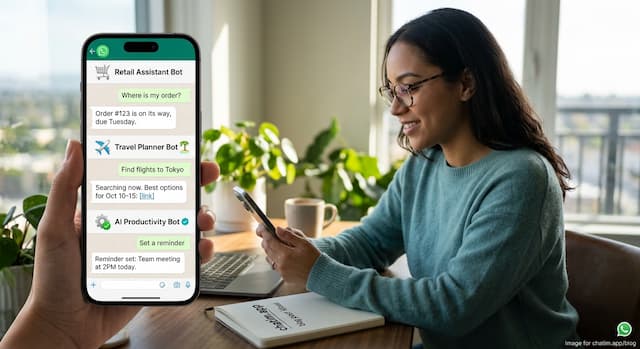 Best WhatsApp Chatbots in 2026: 7 Platforms Compared
7 WhatsApp chatbot platforms compared, with both bills modeled: subscriptions and Meta fees. Plus the free path if you only need a WhatsApp button.
 Best Chatbot Platforms in 2026: 10 Builders Compared
10 chatbot platforms compared by what their pricing actually meters, with free plans, AI features, and a pick for each use case
 How to Build an AI Chatbot Without Writing Code (2026)
How to build an AI chatbot step by step: pick an approach, prepare your content, train the bot, set guardrails, test it, and launch it in a day.