How to Promote a Shopify Store: The Right Order (2026)
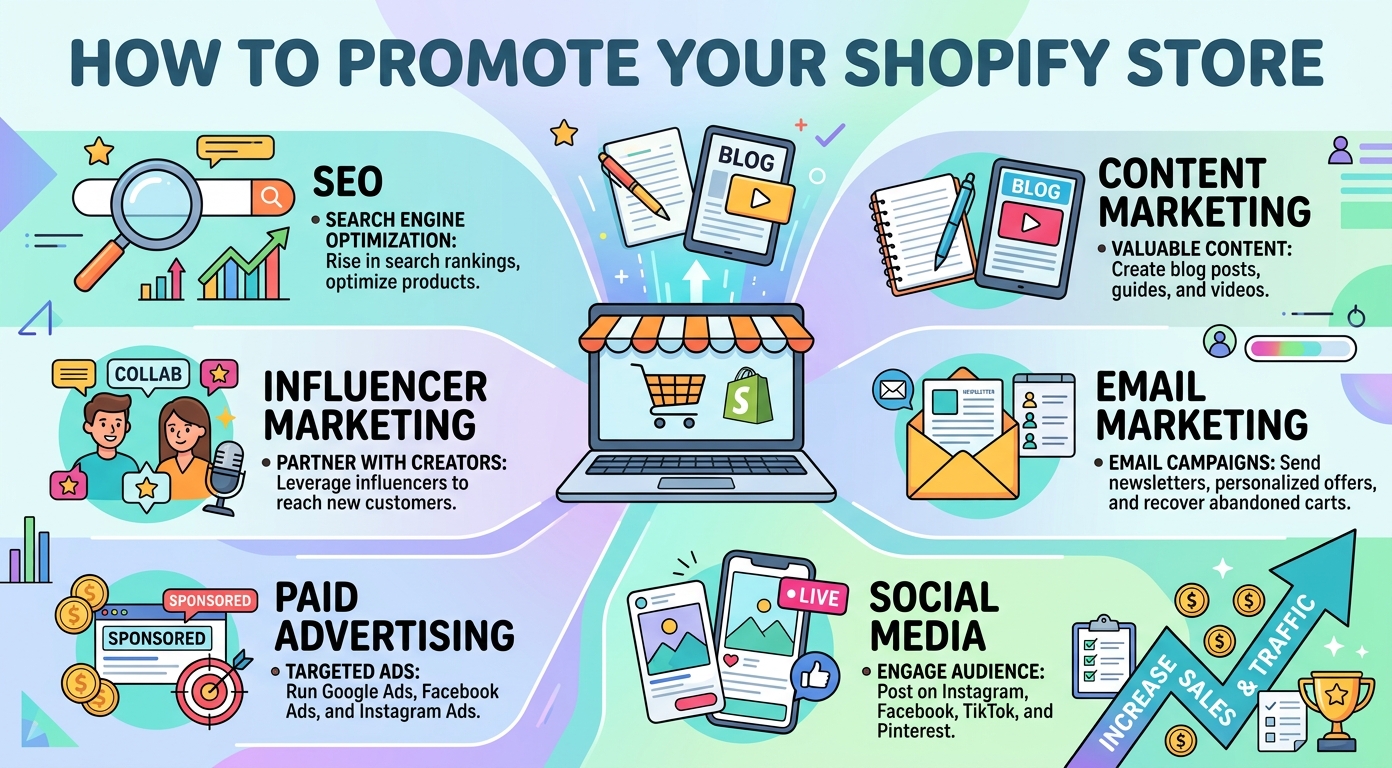
Learning how to promote a Shopify store usually starts in the wrong place: buying traffic for a store that does not convert the traffic it already gets. Promotion has an order of operations. First make the store convert, then build the owned channels that compound (search, email, SMS), then amplify with paid and partnerships once every visitor is worth more. This guide walks that order end to end: the free channels, the paid ones, the tactics that raise sales without any new traffic at all, and a weekly marketing rhythm that a one-person store can actually sustain.
Everything below works on a standard Shopify setup without custom development, and none of it requires a big ad budget to start.
Step zero: fix conversion before buying traffic
Every promotion channel gets cheaper when your store converts better, because the same visitor is worth more. Before spending on reach, spend an afternoon on the basics: product photos that answer "what am I actually getting", prices and shipping costs visible before checkout (surprise shipping is the classic checkout killer), reviews near the buy button, a returns policy a human can read, and a way for a hesitating buyer to ask the one question blocking them. Stores that skip this step pay for traffic twice: once to acquire it, once more to replace the visitors who left over an answerable doubt. Our ecommerce customer experience guide covers this layer in depth.
Shopify SEO: the channel that compounds
Search traffic is the closest thing to free recurring revenue a store has, and Shopify gives you the structural pieces: collection pages, product pages, and a blog. The work that moves rankings is unglamorous. Write collection descriptions that read like a knowledgeable clerk, not a keyword salad. Give every product a name buyers actually search (material, use, audience) rather than an internal SKU poem. Answer the questions buyers type into search (sizing, care, compatibility, "vs" comparisons) as blog posts and FAQ blocks, because those queries arrive with intent and convert. And keep your images compressed and named descriptively; product image search is an underrated door into a store. Expect months, not weeks; that delay is why the channel stays uncrowded. The broader playbook lives in our guide to driving website traffic.
Organic social and short video: show the product working
For product businesses, social content that sells is rarely clever; it is the product doing its job on camera. Short video (packing orders, before-and-after, honest demos, answers to real customer questions) outperforms polished brand content for small stores because it is believable and cheap to repeat. Post where your buyers scroll, reuse the same clip across platforms, and put the store link where the platform lets you. The goal is not virality; it is a steady drip of people who saw the product work and arrived curious. User-generated content multiplies this: ask happy customers for a photo or clip, with permission to repost, and feature them; buyers trust customers more than brands on principle.
Email and SMS: the channels you own
Email is the highest-leverage promotion channel a Shopify store controls, because you are not renting the audience. Four automated flows do most of the work: a welcome series for new subscribers (with a first-order incentive; our discount code ideas guide has options that do not train discount-waiting), an abandoned checkout series that answers doubts instead of only nagging, a post-purchase flow that asks for the review and the second order, and a win-back note for lapsed customers. SMS earns its keep for time-sensitive messages (back in stock, order updates, launch windows) and punishes overuse faster than email. Grow the list on-site with an offer worth an email address, not a popup that begs.
How to increase Shopify sales with the traffic you already have
Four levers raise revenue with zero new visitors. Raise average order value: bundles, "complete the look" suggestions, and free-shipping thresholds set just above your current average order. Recover abandoned checkouts: Shopify's own recovery emails plus your abandoned-cart flow catch buyers who were interrupted, and answering their doubt catches the ones who hesitated on purpose. Add proof where doubt peaks: reviews and UGC on product pages, near the price, not on a separate page nobody visits. And answer pre-purchase questions in real time: a live chat app for Shopify catches the "does this fit / when does it ship / does it work with X" questions in the moment they block a purchase, and a chatbot answers the same five questions at 2 a.m. when you are asleep and your traffic is not. This is our own product category, so weigh the enthusiasm; the pattern stands regardless of whose widget you install: unanswered pre-purchase questions are the quietest leak in a store's funnel, and the Shopify integration exists because of it.
Paid ads without burning the budget
Paid works for stores in a specific order. Retargeting first: people who visited, carted, or bought are the cheapest conversions available, and the creative writes itself (the product they looked at). Search shopping placements second, because the shopper typed the product name and intent is highest. Broad cold-audience prospecting last, only after the first two prove your numbers, and only with margin room to survive the learning phase. Two disciplines keep budgets alive: know your rough profit per order before setting a daily budget, and judge campaigns on orders and revenue, never on clicks and reach. If retargeting cannot pay for itself on your store, the problem is the store, not the channel; go back to step zero.
Sell where buyers already shop
Beyond your storefront, Shopify can push your catalog into the surfaces where buyers already browse: the Shop app, search-engine shopping listings, and social storefronts. Each listing is a free or low-cost second door into the same inventory. Offline counts too: if you sell at markets, pop-ups, or a physical location, a QR code on packaging and signage (a free QR code generator takes minutes) turns offline attention into store visits you can measure. The rule for every extra channel: it must feed the store you own, not replace it; marketplaces rent you customers, your list keeps them.
Creators, affiliates, and partnerships
For small stores, small creators beat celebrities: a creator with a few thousand engaged followers in your exact niche sends buyers, not impressions, and often works on product-plus-commission rather than flat fees that dwarf your margin. Give creators a unique code (which doubles as tracking) and creative freedom; scripted endorsements read as ads and perform like them. Adjacent-brand partnerships are the sleeper tactic: a store selling coffee gear and a local roaster cross-promoting reach each other's exact audience for free. Start with one creator and one partner, measure, then repeat what paid.
Turning tactics into a Shopify marketing strategy
A pile of tactics becomes a strategy when it fits a calendar you can keep. A sustainable weekly rhythm for a one-person store: one SEO task (a collection description, a buyer-question blog post), two or three short videos or posts made in one batch, one email to the list, and fifteen minutes reviewing chat transcripts and search terms for what buyers asked this week, because those questions are next week's content. Monthly: check the four flows still fire, refresh the offer if performance sagged, and review which channel actually produced orders. Quarterly: cut the channel that keeps not working and double the one that does. Boring on purpose; compounding usually is.
Measure what actually produced orders
Attribution for a small store does not need enterprise tooling; it needs tagged links and honest reading. Tag every campaign, bio link, email, and creator code destination with UTMs (our free UTM builder exists for this) so orders trace back to channels. Then read the only three numbers that matter weekly: sessions, conversion rate, and average order value, because every tactic in this guide moves exactly one of them and pretending otherwise is how budgets vanish. When a channel's orders stall for a full quarter despite honest effort, cut it without ceremony; the calendar slot it frees is worth more than the sunk cost it represents.
More on this from our team: Shopify chatbots and Shopify competitors.
Frequently Asked Questions
How do I promote my Shopify store?
In order of leverage: first make the store convert (clear photos, visible shipping costs, reviews, a way to ask questions), then build owned channels that compound (Shopify SEO, email and SMS flows, organic short video), then amplify with retargeting ads, extra sales channels like the Shop app and shopping listings, and creator partnerships. Buying traffic before the store converts pays for the same visitor twice.
How do I promote my Shopify store for free?
The free stack: SEO on collection and product pages plus blog posts answering buyer questions, short product videos posted where your buyers scroll, user-generated content from happy customers, an email list with automated welcome and abandoned-checkout flows, free shopping listings and the Shop app, and QR codes turning offline attention into store visits. All cost time instead of money and compound with consistency.
How do I increase sales on Shopify without more traffic?
Four levers: raise average order value with bundles and a free-shipping threshold set just above your current average; recover abandoned checkouts with a flow that answers doubts, not just reminders; add reviews and customer photos next to the price where hesitation peaks; and answer pre-purchase questions in real time with live chat and a chatbot, because unanswered questions are the quietest leak in the funnel.
Does SEO work for Shopify stores?
Yes, and it is usually the most underbuilt channel. The work: collection descriptions written like a knowledgeable clerk, product names buyers actually search, blog posts and FAQ blocks answering sizing, care, compatibility, and comparison questions, and compressed, descriptively named images. Results take months, which is exactly why the channel stays uncrowded and keeps compounding.
What emails should a Shopify store send automatically?
Four flows do most of the work: a welcome series with a first-order incentive, an abandoned checkout series that answers common doubts, a post-purchase flow asking for the review and the second order, and a win-back note for lapsed customers. Broadcast sends fill the gaps; the automated flows are where the revenue is.
Are paid ads worth it for a small Shopify store?
In a specific order: retargeting first (visitors, carters, past buyers convert cheapest), shopping placements on search second (highest intent), and cold prospecting only after those prove the numbers. Know your profit per order before setting budgets and judge campaigns on orders, not clicks. If retargeting cannot pay for itself, fix the store before blaming the channel.
How does live chat increase Shopify sales?
It catches the question blocking a purchase (fit, shipping time, compatibility) in the moment it forms, when the buyer is still on the page. A chatbot extends that to nights and weekends, answering the same recurring questions and capturing the order context. The mechanism is simple: fewer buyers leave over answerable doubts.
How do I promote my Shopify store on social media?
Show the product working rather than talking about the brand: short honest demos, packing videos, before-and-after clips, and answers to real customer questions. Batch a few clips weekly, reuse them across platforms, keep the store link visible, and repost customer content with permission. Steady and believable beats polished and occasional for small stores.
Should I use influencers to promote my Shopify store?
Small niche creators usually outperform big names for small stores: their audiences buy rather than scroll, and product-plus-commission deals fit small margins. Give each creator a unique discount code (it doubles as attribution) and creative freedom. Start with one creator, measure orders against cost, and scale what worked.
What is a good marketing strategy for a new Shopify store?
A calendar you can sustain: weekly, one SEO task, a batch of short videos, one email to the list, and a review of the questions buyers asked (they become next week's content); monthly, verify your automated flows and review which channel produced orders; quarterly, cut the underperforming channel and reinvest in the winner. Strategy for a small store is mostly consistency with a feedback loop.
How do I track which promotion channel drives Shopify sales?
Tag every campaign link, bio link, email, and creator destination with UTM parameters so orders trace back to sources, give creators unique discount codes, and read three numbers weekly: sessions, conversion rate, and average order value. Every tactic moves exactly one of the three; if a channel's orders stall for a quarter, cut it.
How long does it take to see results from promoting a Shopify store?
By channel: retargeting ads and email flows show results within weeks; social video builds over one to three months of consistency; SEO typically needs a quarter or more before compounding becomes visible. The honest planning assumption is a quarter per channel before judging, with conversion fixes paying back immediately.
What are the biggest mistakes when promoting a Shopify store?
Buying cold traffic before the store converts, hiding shipping costs until checkout, running five channels at a fraction of effort so none compounds, judging ads on clicks instead of orders, discounting so often that buyers learn to wait, and leaving pre-purchase questions unanswered outside business hours. Each is cheaper to fix than to out-spend.
Related articles
More in Ecommerce & platforms →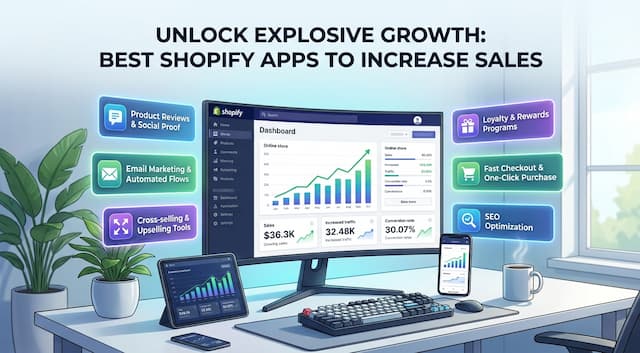 Best Shopify Apps to Increase Sales & Conversions (2026)
12 Shopify apps to increase sales and conversions, sorted by the lever each one pulls: AOV, hesitant visitors, lost carts, trust, repeat buyers.
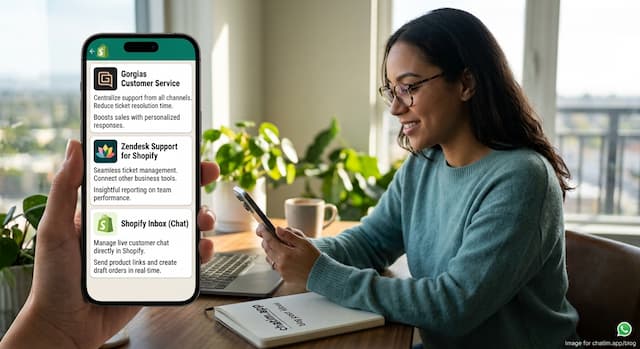 Best Shopify Apps for Customer Service in 2026: 9 Compared
9 customer service apps for Shopify stores compared: the free native option, chat widgets, and ecommerce helpdesks, with verified pricing.
 WooCommerce Chatbot: What It Does and How to Add One (2026)
What a WooCommerce chatbot does for a store: product and order questions answered from your own pages, plus how to add one without plugin bloat.
 Wix Chatbot: How to Add One and What It Can Do (2026)
What a Wix chatbot can do for your site: answer service questions, capture leads politely, help with bookings and store orders, and cover after-hours.