Tidio vs Intercom in 2026: Can Lyro Stand In for Fin?
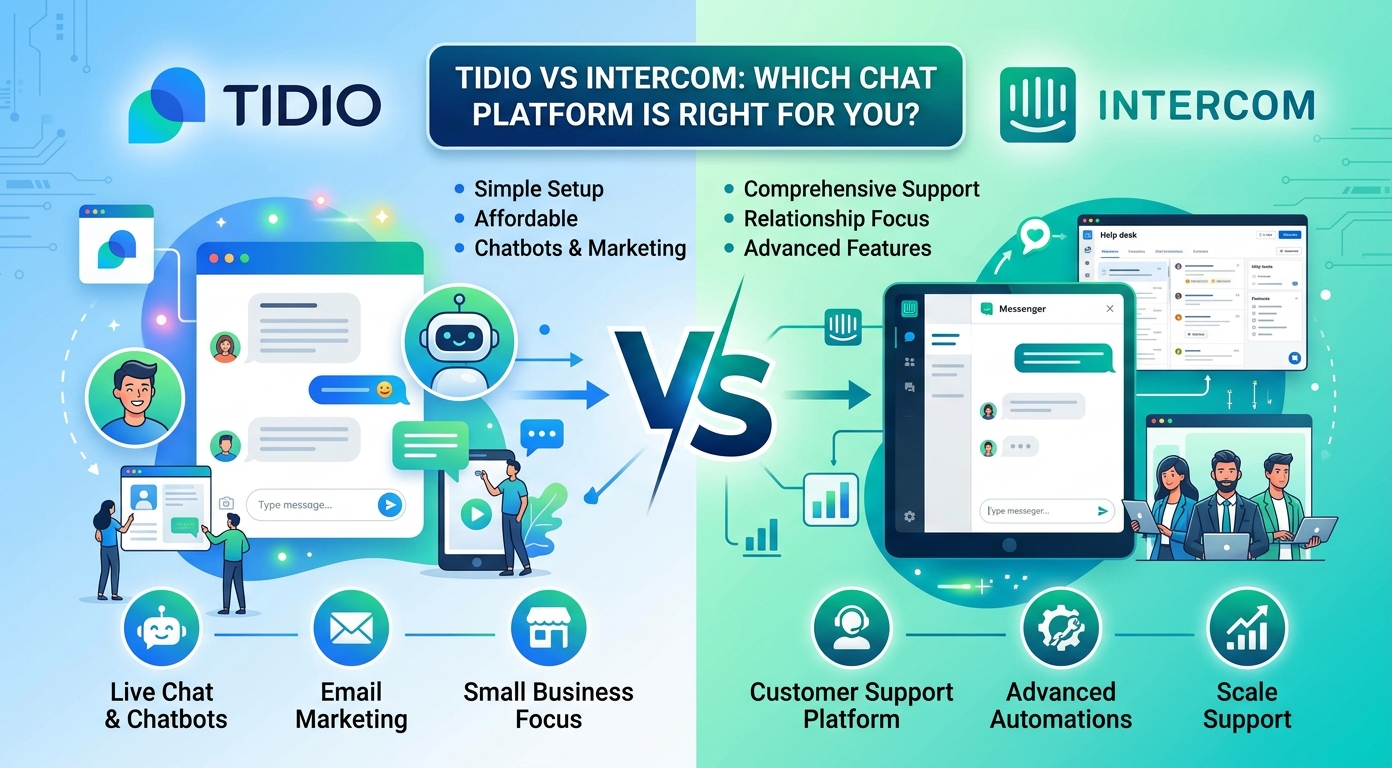
Ask what stage your support operation is at, and the Tidio vs Intercom answer usually falls out on its own. Both platforms now lead with an AI agent (Tidio's Lyro, Intercom's Fin), both sell that AI standalone for other helpdesks, and both wrap it in messaging, an inbox, and automation. The difference is the design center: Tidio is a workspace priced for SMBs and ecommerce stores (free plan, 10 seats included, Starter at $24.17 per month billed annually, Lyro from $32.50), while Intercom is a per-seat platform priced for scaling support teams (Essential $29, Advanced $85, Expert $132 per seat, with Fin at $0.99 per outcome). All figures are July 2026 published tiers. Intercom rebranded as Fin in May 2026, and Salesforce signed a definitive agreement to acquire the company in June 2026 (the deal has not yet closed); this post keeps the Intercom name most buyers still search for.
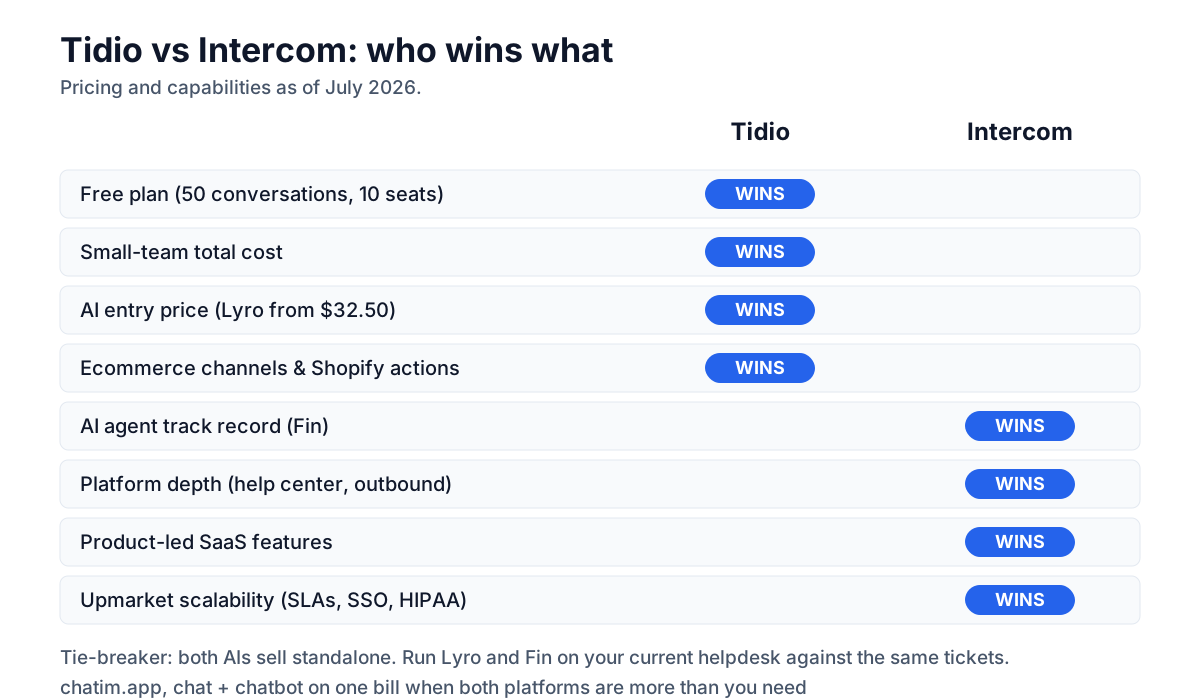
Short verdict: pick Tidio if you are an SMB or online store that wants chat, channels, and AI on one predictable bill. Pick Intercom if support is a core function you are scaling, AI deflection at volume is the KPI, and per-seat plus per-outcome economics fit your budget. Startups that qualify for Intercom's Early Stage program (93 percent off) should run that math first.
The 60-second comparison
| Tidio | Intercom | |
|---|---|---|
| Pricing model | Per workspace: 10 seats included, billed by conversation volume | Per seat, plus AI billed per outcome |
| Free plan | Yes: 50 billable conversations/month, 10 seats | No: 14-day trial (Early Stage program: 93% off) |
| Entry paid (annual) | Starter $24.17/month, 100 conversations | Essential $29 per seat/month |
| AI agent | Lyro, add-on from $32.50/month for 50 AI conversations | Fin, included on all plans, $0.99 per outcome |
| AI standalone on other helpdesks | Yes (Zendesk, Salesforce, and more) | Yes (Zendesk, Salesforce, and more) |
| Agent AI assistant | Copilot features by tier | Copilot from $29 per agent/month, unlimited |
| Channels | Messenger, Instagram, WhatsApp, email native | Chat, email, in-app included; SMS, WhatsApp, phone pay-as-you-go |
| Design center | SMB and ecommerce, one predictable bill | Scaling support teams, AI-first platform |
Pricing as listed on the vendors' pricing pages in July 2026, annual billing shown. Verify current pricing with both vendors before purchase.
The two platforms, briefly
Tidio in 2026: SMB workspace, conversation-based pricing
Tidio bundles live chat, ticketing, and native channel integrations (Messenger, Instagram, WhatsApp, email) into one workspace with up to 10 seats on every self-serve plan. The Free plan covers 50 billable conversations per month; Starter ($24.17 per month billed annually) covers 100, Growth (from $49.17) scales to 2,000, and Plus (from $300 plus usage) and Premium (custom) serve bigger operations, with Premium adding a guaranteed 50 percent Lyro resolution rate on pay-per-resolution billing. Only human-agent replies count as billable conversations: spam, unanswered messages, and everything Lyro or Flows automation handles is free. Lyro learns from your support content and prices from $32.50 per month for 50 AI conversations (Tidio claims it resolves up to 67 percent of questions); Flows handles scripted automation from a free 100-visitor tier. Shopify actions are native, and branding removal is a $16.67 add-on.
Intercom in 2026: the AI-first support platform
Intercom rebuilt itself around Fin, the most battle-tested AI agent in the market, billed at $0.99 per outcome on every plan and backed by performance-guarantee marketing. Seats run Essential $29, Advanced $85 (with 20 free Lite seats and the Workflows automation builder), and Expert $132 (50 Lite seats, SSO, HIPAA, SLAs), billed annually. The platform is broader than a chat tool: shared inbox and ticketing, help center (multilingual on Advanced), outbound messaging, and reporting, with Copilot (from $29 per agent, unlimited) as the agent-assist layer, a Pro analytics add-on at $99 per month, and Proactive Support Plus (tours, surveys, checklists) at $99. Live chat, email, and in-app messaging are included; SMS, WhatsApp, phone, and email campaigns bill as usage. Early-stage startups can get 93 percent off, which makes Intercom briefly the cheapest serious platform if you qualify.
Pricing: one bill vs seats plus outcomes
Worked examples with July 2026 published prices, annual billing.
A solo founder or 2-person store: Tidio Starter plus Lyro is $24.17 + $32.50, about $57 per month for chat, channels, and 50 AI conversations, and the Free plan may cover you entirely before that. Intercom Essential for one seat plus 50 Fin outcomes is $29 + $49.50, about $79. Tidio is cheaper, and Intercom's published plans list no free-tier equivalent as of July 2026 (unless you qualify for Early Stage).
A 5-person support team: all five fit inside Tidio's included 10 seats; the bill scales with conversation volume instead (Growth from $49.17, plus your Lyro quota). Intercom bills 5 Advanced seats at $425 before any Fin usage, at July 2026 prices. Intercom's counterweights: 20 free Lite seats for viewers on Advanced, the Workflows builder, and a deeper platform around the inbox.
At AI volume: the models converge in an interesting way. Fin bills $0.99 per outcome, always. Lyro prices by conversation quota, and on Tidio's Premium tier flips to pay-per-resolution with a guaranteed 50 percent resolution rate, a feature Tidio lists on its published plan. High-deflection operations should price both against a real month of tickets; the vendor definitions differ (an outcome vs a resolution vs an AI conversation) and that definition, not the sticker price, decides the bill.
AI: Lyro vs Fin
Fin has the track record: it answers from help content and past conversations, takes actions on external systems, hands off with context, and Intercom publishes customer results in the 50 to 70 percent resolution range, with a money-back performance guarantee in its marketing. At $0.99 per outcome on every plan (and standalone on other helpdesks with no seats), it is the reference point every other AI agent gets compared against.
Lyro is the SMB translation of the same idea: it trains on your FAQ, website, and imported help articles (including Zendesk article import), answers in a human register, executes Actions, and hands off cleanly. Tidio claims up to 67 percent resolution and advertises a guaranteed 50 percent rate on Premium, and prices by AI-conversation quota from $32.50, with the crucial detail that Lyro conversations never consume your human-conversation quota. Like Fin, Lyro sells standalone for Zendesk, Salesforce, and other helpdesks.
Net: Fin is deeper (actions, multilingual breadth, phone answering in its standalone form) and carries the stronger public evidence; Lyro is cheaper to start, simpler to run, and generous in how it meters. For a store deflecting product FAQs, Lyro usually covers the job at half the cost; for a SaaS support org automating thousands of tickets across channels, Fin's maturity earns its price. Both trials will tell you in two weeks; run them on the same question set.
The third option: Chatim when both are more than you need
Disclosure: Chatim is our own product. If you are comparing these two because you need chat plus a bot that answers common questions, and the quota ladders and per-outcome meters feel like overkill, Chatim bundles live chat and chatbot automation at predictable per-plan pricing with a free tier and native Shopify and WordPress integrations. Start there; graduate to a platform when volume forces the question.
Try Chatim free at chatim.app →
Inbox, help center, and platform depth
Intercom is a genuinely bigger product: ticketing with SLAs (Expert), a real help center with multilingual support, outbound campaigns, product tours and surveys via Proactive Support Plus, and reporting that scales into the Pro analytics add-on. Tidio covers the SMB core: a clean inbox, ticketing, macros, automatic assignment, a live visitors list, and unified analytics across chat, Lyro, and Flows, with departments and OpenAPI arriving at Plus. If support is a department with processes, Intercom's platform earns its seats; if support is three people and a bot, Tidio's surface area is exactly right and nothing you pay for sits unused.
Channels, ecommerce, and platform fit
Tidio includes Messenger, Instagram, WhatsApp, and email on its plans and ships native Shopify actions (cart data, order lookups) plus first-class WordPress and WooCommerce plugins; it is one of the default recommendations in ecommerce chat. Intercom includes chat, email, and in-app messaging, with SMS, WhatsApp, and phone as usage-billed channels; its in-app messaging and product-led features (tours, checklists) are unmatched for SaaS but matter less to a storefront. Ecommerce SMBs lean Tidio; product-led SaaS leans Intercom, and that split rarely needs a second look.
Scaling up and moving upmarket
Intercom's ladder runs further: Lite seats for collaborators, Workflows automation, SSO and HIPAA at Expert, and Fin standalone as an exit ramp that keeps the AI even if you change helpdesks. Tidio's Plus and Premium tiers (custom seats, departments, managed Lyro, pay-per-resolution) stretch surprisingly far for a tool with SMB roots, but its ecosystem and admin depth remain lighter than Intercom's. Teams planning to double headcount should also model Intercom's bill doubling with them, versus Tidio's bill tracking conversation growth instead; which curve is kinder depends entirely on whether your growth adds agents or volume.
Match the platform to your stage
Choose Tidio when...
- You want a free start and a bill that tracks conversations, not headcount: 10 seats are included on every plan.
- Ecommerce is the job: native Shopify actions, WooCommerce and WordPress plugins, cart-aware automation.
- You want AI answering this week at the lowest entry price: Lyro from $32.50, and its conversations do not touch your human quota.
- You want Messenger, Instagram, WhatsApp, and email handled on a single bill.
- Nobody owns support tooling full-time; Tidio's defaults need no admin.
Choose Intercom when...
- AI deflection at volume is the KPI and you want the agent with the strongest public track record at $0.99 per outcome.
- Support is a scaling department: Workflows, Lite seats, SLAs, SSO, and HIPAA are on the ladder when you need them.
- You are product-led SaaS: in-app messaging, tours, surveys, and outbound live where your users are.
- You qualify for Early Stage: 93 percent off makes Intercom the cheapest serious platform for two years.
- You may switch helpdesks later: Fin standalone keeps the AI investment portable.
Moving from one to the other
Both directions are routine: install the other widget or plugin, port canned responses and operating hours, reconnect channels, and archive chat history exports (history does not migrate cleanly in either direction). The interesting middle path: both vendors sell their AI standalone, so you can test Lyro or Fin on your current stack before moving anything. Run Tidio's 7-day and Intercom's 14-day trials on the same traffic and compare real resolution rates on identical questions, then commit. For the broader field, see our guides to Tidio alternatives and Intercom alternatives, the full ranking of the best live chat software, and the platform guides for Shopify and WordPress.
Still building the shortlist? Our other head-to-head guides cover Tidio vs LiveChat, Intercom vs Zendesk, Crisp vs Tidio, and Intercom vs Drift.
Frequently Asked Questions
Is Tidio or Intercom better in 2026?
They serve different stages. Tidio is the SMB and ecommerce pick: a free plan, 10 seats included on every tier, native Shopify and WordPress integrations, and Lyro AI from $32.50 per month. Intercom is the scaling-team pick: Fin, the most battle-tested AI agent ($0.99 per outcome), a genuinely deeper platform (help center, outbound, Workflows, SLAs), and per-seat pricing from $29 to $132. If support is three people and a bot, Tidio; if support is a scaling department, Intercom. Note: Intercom rebranded as Fin in May 2026, and Salesforce agreed to acquire the company in June 2026 (the deal has not yet closed); this guide keeps the Intercom name most buyers still search for.
Which is cheaper, Tidio or Intercom?
For small teams, Tidio, decisively: a solo operator pays about $57 per month for Starter plus Lyro ($24.17 + $32.50, as of July 2026) versus about $79 for one Intercom Essential seat plus 50 Fin outcomes, and Intercom's published plans include no free-plan equivalent. A 5-person team fits inside Tidio's included 10 seats while Intercom bills 5 Advanced seats at $425 before Fin usage. The exception: startups accepted into Intercom's Early Stage program get 93 percent off, which flips the math for up to two years.
How do Lyro and Fin compare?
Both are AI agents that learn from your support content, answer open questions, take actions, and hand off to humans, and both sell standalone for other helpdesks like Zendesk and Salesforce. Fin has the stronger public track record (Intercom publishes customer results claiming 50 to 70 percent resolution) and bills a flat $0.99 per outcome. Lyro is cheaper to start (from $32.50 per month for 50 AI conversations), never consumes Tidio's human-conversation quota, and Tidio publishes a guaranteed 50 percent resolution rate on its Premium tier. Test both on the same question set during trials.
How much does Tidio cost in 2026?
As listed on the vendor’s pricing page in July 2026, billed annually: Free $0 (50 billable conversations per month, 10 seats), Starter $24.17 per month (100 conversations), Growth from $49.17 (250 to 2,000), Plus from $300 plus monthly usage, Premium by quote with pay-per-resolution billing and the guaranteed 50 percent Lyro resolution rate Tidio publishes for the plan. Lyro AI is an add-on from $32.50 per month, Flows from $24.17, branding removal $16.67. Only human-agent replies count toward billable conversations.
How much does Intercom cost in 2026?
As listed on the vendor’s pricing page in July 2026, billed annually: Essential $29 per seat per month, Advanced $85 (includes 20 free Lite seats), Expert $132 (50 Lite seats, SSO, HIPAA, SLAs). Fin AI Agent is included on every plan at $0.99 per outcome and sells standalone for other helpdesks. Add-ons: Copilot from $29 per agent (unlimited), Pro analytics $99 per month, Proactive Support Plus $99 per month. SMS, WhatsApp, phone, and email campaigns bill as usage. No free plan; Early Stage startups can get 93 percent off.
Does Tidio have a free plan, and does Intercom?
Tidio yes: 50 billable conversations per month with 10 seats, plus 50 lifetime Lyro conversations and 100 Flows visitors, free forever. Intercom, as of July 2026, lists no free plan: 14-day trial only, though its Early Stage program gives qualifying startups 93 percent off paid plans. For very small teams this structural difference often settles the choice before any feature comparison.
Which is better for ecommerce, Tidio or Intercom?
Tidio, for most stores. Native Shopify actions (cart data, order lookups), first-class WooCommerce and WordPress plugins, bundled Messenger, Instagram, and WhatsApp channels, and pricing that fits store economics. Intercom serves large ecommerce operations well (Fin handles order FAQs at scale), but its center of gravity is product-led SaaS: in-app messaging, product tours, and onboarding flows. See our Shopify and WordPress live chat guides for the full platform rankings.
Which is better for SaaS, Tidio or Intercom?
Intercom, usually. In-app messaging, product tours and checklists (Proactive Support Plus), outbound campaigns, a multilingual help center, and Workflows automation map directly onto product-led growth motions, and Fin resolves technical questions against docs. Tidio works fine as a SaaS chat widget at early stage, and its price makes it a sensible first tool, but teams typically outgrow it into Intercom (or a helpdesk) once onboarding, retention messaging, and support process become distinct jobs.
Can I use Lyro or Fin with my existing helpdesk instead of switching?
Yes, both. Intercom sells Fin standalone (no Intercom seats, $0.99 per outcome, setup marketed at under an hour) on helpdesks including Zendesk and Salesforce. Tidio sells Lyro standalone for Zendesk, Salesforce, and other tools, priced by AI-conversation quota from $32.50 per month. This is the lowest-risk way to compare them: keep your stack, run each AI on real tickets, and measure resolution before considering any migration.
What do Tidio and Intercom count as billable AI usage?
The definitions differ and they decide your bill. Intercom bills Fin per outcome at $0.99. Tidio meters Lyro by AI conversation (one customer interaction with at least one Lyro reply counts once, however many messages follow), and on the Premium tier switches to pay-per-resolution with a guaranteed 50 percent rate. Tidio's human-conversation quota is separately generous: only human-agent replies count, so Lyro traffic never eats it. Reconstruct last month's volume under both definitions before comparing prices.
Is it easy to switch between Tidio and Intercom?
Mechanically yes: install the other widget or plugin, port canned responses and operating hours, reconnect Messenger, Instagram, WhatsApp, and email channels, and archive conversation exports since history does not migrate cleanly either way. The deeper work is automation: Flows rebuild as Intercom Workflows and vice versa, and your AI retrains from the same help content quickly. Run both trials in parallel on the same traffic for a week each and compare missed chats, response times, and AI resolution on identical questions.
Do I need either Tidio or Intercom at all?
Count conversations first. Under roughly 50 human conversations per month, free tools cover the workload: Tidio's own free plan, or free-forever options like Chatim's free tier and Tawk.to. Both platforms earn their price when volume, channels, or AI deflection at scale become real problems. Our guides to Tidio alternatives and Intercom alternatives map the cheaper and adjacent options if the honest answer is that a lighter tool fits today.
Related articles
More in Comparisons → Live Chat vs Chatbot: Which One Does Your Website Need?
Live chat vs chatbot in plain terms: what each does best, where each fails, and the bot-first, human-close handoff pattern that beats running either alone.
 Help Desk vs Service Desk: The Real Difference (2026)
Help desk vs service desk in one line: issue-fixing vs service lifecycle. The five differences that matter, why the terms blur, and which one you need.
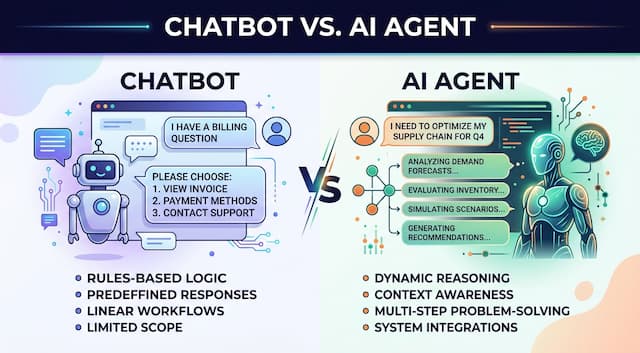 Chatbot vs AI Agent: Where the Line Actually Sits (2026)
Chatbot vs AI agent in plain terms: what each one does, where the line blurs, and how to add autonomy to support and sales without losing control.
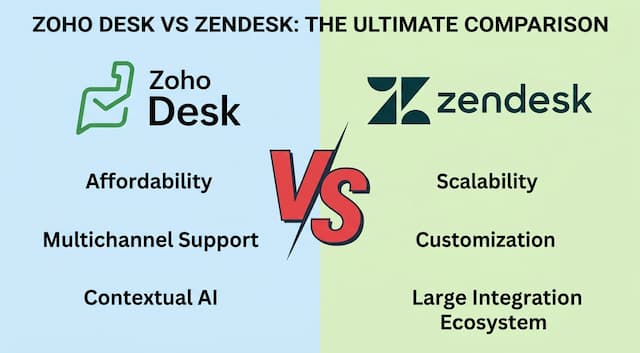 Zoho Desk vs Zendesk in 2026: The Price Gap, Examined
Zoho Desk vs Zendesk in 2026: included AI vs a quiet meter, and where Zendesk earns it