Intercom vs Drift in 2026: One No Longer Exists
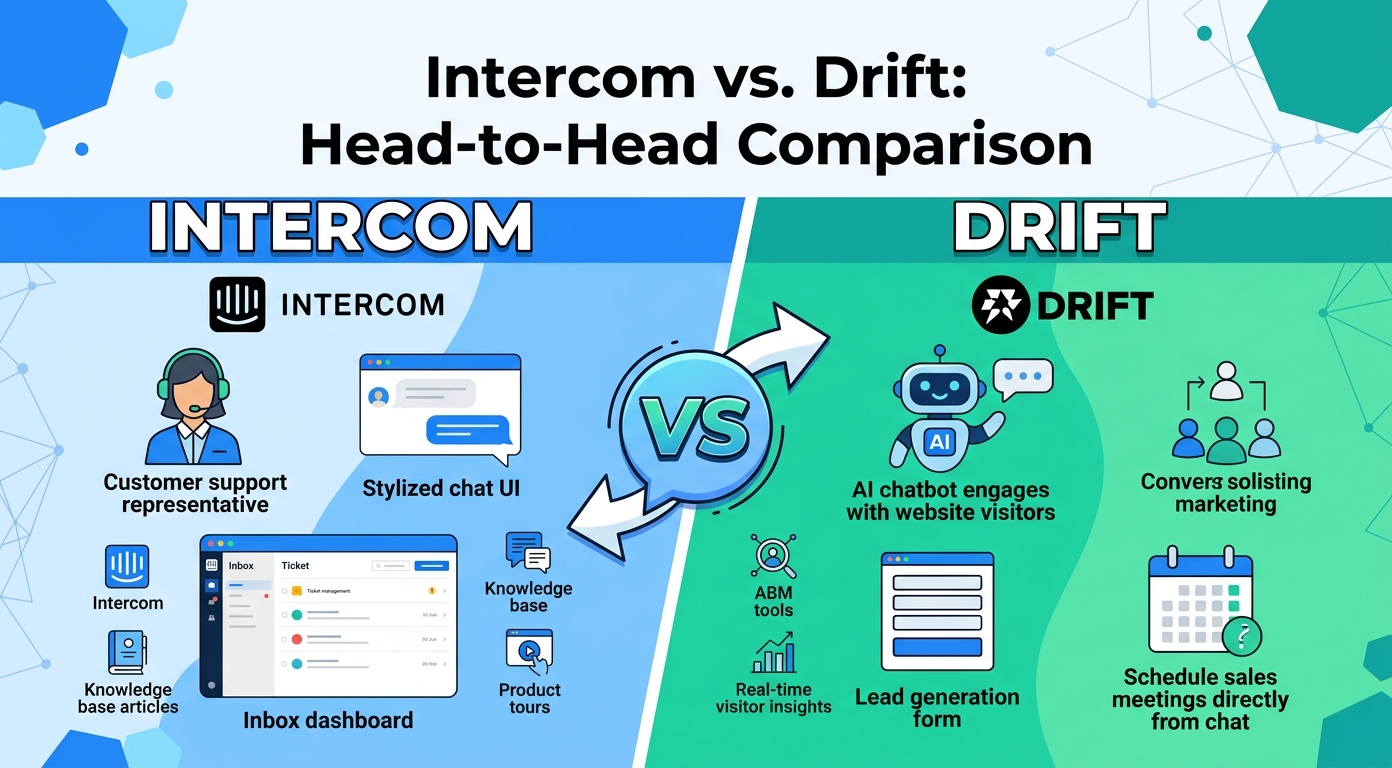
Anyone comparing Intercom vs Drift in 2026 deserves the headline before the table: this matchup is over, because Drift no longer exists as a product you can buy. Salesloft acquired Drift in 2024, folded it into its revenue platform, and as of July 2026 the old drift.com pricing page redirects to Salesloft's Chat Agents page, which states plainly that the company has transitioned from Drift to 1Mind, the conversational AI now wired into Salesloft's Predictive Revenue System. There is no self-serve Drift, no Drift price list, and no Drift roadmap; there is Intercom, publishing every number from $29 seats to Fin's $0.99 outcomes, and there is Salesloft, selling AI chat agents inside a sales platform by quote. So this guide does the useful version of the comparison: what actually happened, what each survivor is for, and where a team that typed "Intercom vs Drift" into a search box should actually land.
The short version: this matchup is over
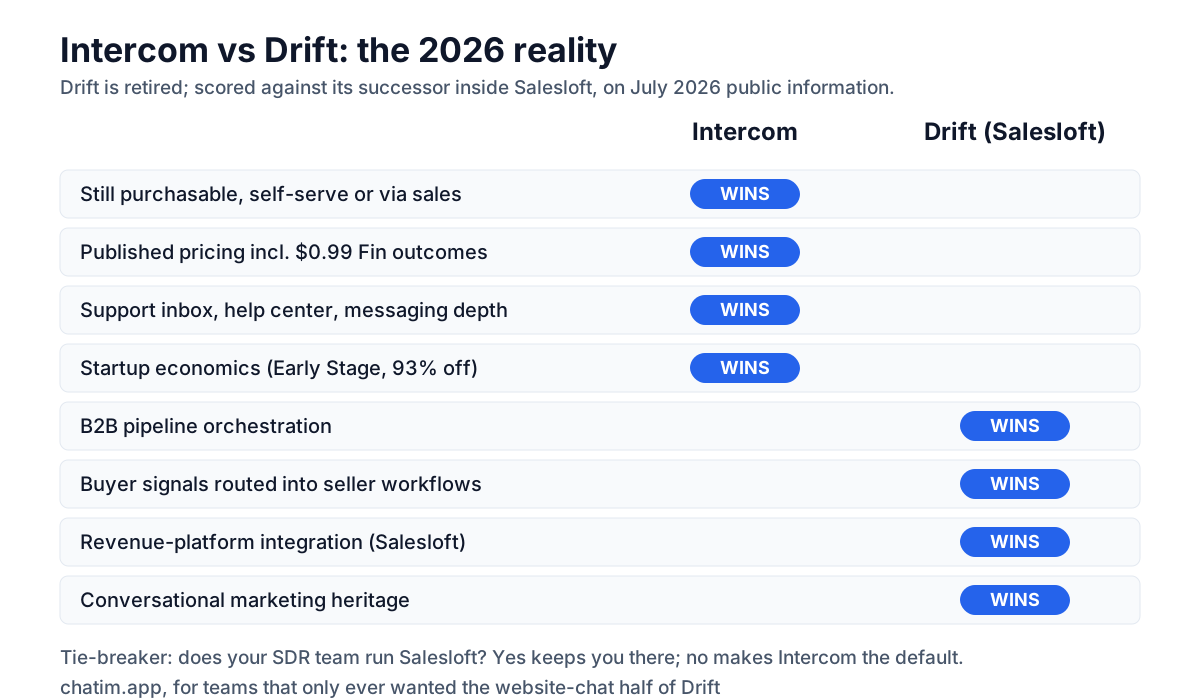
| Intercom | Drift (now Salesloft Chat Agents) | |
|---|---|---|
| Status in 2026 | Active, AI-first, sold self-serve and via sales | Retired brand; chat agents live inside Salesloft's platform |
| Pricing | Published: $29, $85, $132 seats plus $0.99 Fin outcomes | Not published; Talk to Sales only |
| Conversational AI | Fin, included on every plan | 1Mind, per Salesloft's transition notice |
| Center of gravity | Customer support and messaging | B2B sales pipeline and buyer signals |
| Free entry | No free plan; Early Stage startups get 93 percent off | None advertised |
| Website chat for support | Core product | Not the pitch anymore; pitch is pipeline |
| Conversational marketing | Via Proactive Support Plus add-on ($99) | The heritage, now sold as buyer-signal capture |
| Who should look | Support and product-led growth teams | Salesloft customers and B2B revenue orgs |
If you wanted Drift for what made Drift famous, website conversations that turn visitors into pipeline, you are now choosing between Intercom with its marketing add-ons, Salesloft's platform if your sales org already lives there, or a lighter chat tool that does the website job without a platform attached.
Intercom prices are its published annual rates as of July 2026; the Drift status reflects drift.com and salesloft.com as of the same date, including Salesloft's own transition statement. Both companies can change course; check the live pages.
What happened to Drift
Drift: from category creator to Salesloft feature
Drift invented the conversational-marketing category: the bot that qualified your website visitors, booked the meeting, and turned anonymous traffic into pipeline. Salesloft bought the company in 2024, and the absorption is now complete. The former pricing page redirects to a Salesloft platform page for Chat Agents, whose message is aimed at revenue teams (capture the buyer signal, trigger the right seller action), whose conversational AI is credited to 1Mind under a banner reading that Salesloft has transitioned from Drift to 1Mind, and whose only route to a price is a sales conversation. For buyers this means Drift's old product decisions, widget, playbooks, pricing tiers, are historical trivia; what Salesloft sells today is a platform capability, evaluated the way you evaluate platforms: by quote, by integration fit, and by whether your sales team runs Salesloft.
Intercom: the one still standing, AI-first
Intercom spent the same two years rebuilding around Fin instead of getting acquired. Every plan, Essential at $29, Advanced at $85 with 20 free Lite seats, Expert at $132 with 50, includes the messenger, inbox, help center and Fin itself, with outcomes billed at a printed $0.99. Copilot for agents runs $29, Pro analytics and Proactive Support Plus $99 each, and the Early Stage program gives qualifying startups 93 percent off. The conversational-marketing job Drift owned, proactive messages, tours, targeted outbound, lives mostly in that Proactive Support Plus add-on plus Workflows, which is real coverage even if pipeline generation was never Intercom's native religion. Intercom publishes customer results claiming 50 to 70 percent Fin resolution rates; the numbers are the vendor's, but the habit of publishing numbers at all is the relevant contrast here.
Intercom's published stack vs a sales conversation
One side of this comparison can be budgeted from a blog post; the other requires a discovery call. A 5-seat support-plus-marketing setup on Intercom prices out in the open at July 2026 rates: five Advanced seats at $425, Proactive Support Plus at $99, and Fin at $0.99 per outcome on whatever volume it deflects, call it $600 to $900 a month at moderate AI usage, before negotiation. The Salesloft route has no equivalent arithmetic: chat agents come with the platform conversation, priced with your Rhythm, cadence and forecast seats, and the number depends on the deal. That is not automatically worse, platform pricing rewards platform buyers, but it defines who each product is for. If you need a number this quarter without a procurement cycle, one of these two vendors will give you one.
AI: Fin's printed meter vs post-Drift chat agents
Fin is the most publicly benchmarked AI agent in customer service: printed price ($0.99 per outcome), published customer results, sold standalone on competitors' helpdesks, backed by money-back performance marketing. The AI on the other side is 1Mind, presented by Salesloft as the new engine for its chat agents; its job description differs from Fin's, qualifying buyers, answering product questions mid-funnel, and routing signals into seller workflows rather than resolving support tickets. There is no published per-conversation or per-outcome rate to compare, and the evaluation is correspondingly different: you demo it inside Salesloft's platform and price it in the bundle. Teams whose AI use case is support deflection have a measurable, meterable option in Fin; teams whose AI use case is pipeline capture are evaluating a platform feature, and should demand deal-specific success metrics in the contract, since no public meter will do it for them.
The third option: Chatim for what Drift did on your site
Disclosure: Chatim is our own product. Strip away the platform economics and Drift's original job was simple: greet website visitors, answer their questions, capture the lead before it bounces. Chatim does that job with live chat plus chatbot automation at predictable per-plan pricing, free tier included, native on Shopify and WordPress; it will not orchestrate your sales cadences, and for a lot of ex-Drift shortlists that is exactly the point.
Try Chatim free at chatim.app →
Support platform or pipeline machine
The clean way to choose between the survivors is by which meeting the tool belongs in. Intercom belongs in the support and product meeting: inbox depth, help center, in-app messaging, Fin deflecting the FAQ layer, Lite seats for everyone who hovers around the queue. Its marketing features exist to help support and growth teams message proactively, not to replace a sales stack. Salesloft's chat agents belong in the revenue meeting: they exist to catch buyer signals on the website and feed them into cadences, forecasts and seller actions inside the same platform your SDRs already work in. The old Drift sat awkwardly between those two meetings, which is part of why it made sense as an acquisition; its successors have picked sides, and so should you.
If you are still running Drift today
Legacy Drift customers are on borrowed time by the vendor's own messaging, so treat this as a planned migration rather than an emergency. Practical order of operations: confirm with your Salesloft account team what happens to your contract, widget and data on their timeline, and get it in writing; export what is exportable, playbook logic, conversation history, routing rules, while access is guaranteed; inventory which Drift jobs you actually used (support answers, meeting booking, lead capture, ABM alerts), because they now map to different products; and run replacement trials against real traffic before your renewal date, not after. Teams already on Salesloft's sales platform will likely find staying put the path of least resistance; teams that used Drift primarily as website chat owe themselves a look at simpler, cheaper tools before signing a platform quote.
Choosing the replacement
Land on Intercom when...
- The job is support plus growth: messenger, help center and Fin cover it with published math.
- You want AI you can meter and audit: $0.99 per outcome beats a bundled unknown.
- Product-led motion: in-app messages, tours and checklists sit next to the inbox.
- You are a startup: Early Stage pricing makes year one nearly free.
Stay in the Salesloft orbit when...
- Your SDR team already runs Salesloft: the chat agents feed the workflows you own.
- Pipeline capture is the entire point, and support chat is somebody else's problem.
- Platform procurement suits you: one negotiated contract over published tiers.
- You were a Drift ABM shop: the successor capability lives here, not at Intercom.
Migration notes and the wider field
Whichever direction you go, the move is a rebuild, not a port: Drift playbooks translate conceptually but not mechanically into Intercom Workflows or Salesloft agent configurations, and history matters less than the routing logic you re-author. Intercom's importers and partner ecosystem make the support-side landing straightforward; the Salesloft path runs through your account team. Before committing anywhere, test the AI on your fifty most common website conversations and compare measured answers, not demo reels. For the broader field of options, see our guides to Intercom alternatives, HubSpot alternatives, Landbot alternatives, ManyChat alternatives, and the full ranking of the best live chat software.
For more head-to-head comparisons, see Intercom vs Zendesk, Intercom vs HubSpot, Tidio vs Intercom, and Crisp vs Intercom.
Frequently Asked Questions
What happened to Drift?
Salesloft acquired Drift in 2024 and has since retired it as a standalone product. As of July 2026, drift.com's pricing page redirects to Salesloft's Drift platform page, which presents Drift as the AI chat agent within Salesloft's Revenue Orchestration Platform. There is no self-serve Drift product, no published Drift pricing, and the capability is sold as part of the Salesloft platform through its sales team.
Can I still buy Drift in 2026?
Not as Drift. The brand's website routes buyers to Salesloft, where AI chat agents are a platform capability rather than a standalone tool, priced by quote alongside Salesloft's sales engagement products. Teams that specifically wanted Drift's old form, a website chat product with conversational marketing playbooks you could buy off the shelf, are effectively choosing among successors now: Intercom for support-led use, Salesloft's platform for pipeline-led use, or lighter website chat tools.
Is Intercom or Drift better now?
The comparison resolved itself: Intercom is the one you can actually evaluate and buy. It publishes seat prices ($29 to $132 per seat per month billed annually), includes Fin on every plan at a printed $0.99 per outcome, and covers the proactive-messaging territory through its Workflows and the $99 Proactive Support Plus add-on. Drift's successor capability inside Salesloft is only better in one specific situation: your revenue team already runs Salesloft and wants buyer signals wired into it.
How much does Intercom cost in 2026?
Intercom's published annual rates are Essential at $29 per seat per month, Advanced at $85 (with the Workflows builder and 20 free Lite seats), and Expert at $132 (50 Lite seats). Fin is included everywhere and bills $0.99 per outcome. Add-ons: Copilot $29 per agent, Pro analytics $99, Proactive Support Plus $99. Qualifying startups get 93 percent off year one via Early Stage. Note: Intercom rebranded as Fin in May 2026, and Salesforce signed a definitive agreement to acquire the company in June 2026 (the deal has not yet closed); this guide keeps the Intercom name most buyers still search for. As of July 2026; confirm on intercom.com.
What does Salesloft's chat agent product cost?
Salesloft does not publish pricing for its Chat Agents or the surrounding platform; every path on the page leads to a sales conversation, and the cost depends on the platform bundle you negotiate. Budgeting therefore works like any platform deal: scope the seats and modules with their team and get usage terms for the AI in writing. If you need a self-serve number for a budget document this week, that fact alone usually shortlists Intercom or a lighter chat tool instead.
What is 1Mind?
1Mind is a conversational AI company in Salesloft's orbit; earlier 2026 versions of Salesloft's chat pages described a transition from Drift to 1Mind, though as of July 2026 the page is again branded Drift and 1Mind appears as a Salesloft marketplace partner. Details beyond Salesloft's own description, including pricing, are not published, so evaluate it in a demo against your real website traffic.
I am a Drift customer. What should I do before renewal?
Four things, in order. Get your transition terms in writing from your Salesloft account team: contract, widget continuity, and data timeline. Export everything exportable while access is guaranteed, especially conversation history and the routing logic of your playbooks. Inventory which Drift jobs you truly used, support answers, meeting booking, lead capture, ABM alerts, since they now map to different products. Then trial replacements against live traffic before the renewal date, not after it.
Does Intercom do conversational marketing like Drift did?
Partially, and deliberately so. Intercom's Workflows, targeted outbound messages, product tours and the $99 Proactive Support Plus add-on cover proactive visitor engagement, and Fin answers mid-funnel product questions well. What Intercom does not try to be is a pipeline orchestration system: no cadences, no seller-signal routing, no ABM-alerting machinery. Marketing-adjacent support teams will find Intercom sufficient; SDR-driven ABM programs are the case where Salesloft's platform, not Intercom, inherits Drift's old job.
Which is better for booking sales meetings from the website?
Both survivors handle the mechanics: Intercom through Workflows, Fin and calendar integrations on published pricing; Salesloft through chat agents wired into its scheduling and cadence machinery, priced in the platform quote. The difference is what happens after the meeting is booked. If the booking should trigger seller workflows inside a sales platform, Salesloft's version is built for exactly that; if booking is one of several website jobs alongside support, Intercom or a lighter chat tool does it without platform procurement.
What was Drift's pricing before it was retired?
Historical Drift tiers are no longer meaningful and quoting them would only mislead: the product's final public pricing predates the Salesloft absorption, and nothing sold today matches those SKUs. Any comparison article still listing Drift dollar figures as current is describing a product that cannot be purchased. Treat the Salesloft quote process as the only real price, and treat Intercom's published sheet as the benchmark it gets compared against.
Is it hard to migrate off Drift?
The data is the easy half: conversation history and contacts export, and Intercom's importers plus partner tooling land them cleanly on the support side. The hard half is logic: Drift playbooks do not port mechanically into Intercom Workflows or Salesloft agent configurations, so the routing, qualification and booking flows get re-authored on the destination. Budget the rebuild, run the new AI against your fifty most common website conversations first, and keep Drift read-only until the replacement measurably matches it.
Do I need a platform at all to replace Drift?
Often not. If your Drift usage was really website chat, answering visitors, capturing leads, booking the occasional call, a platform replacement is overkill in both directions. A chat-first tool covers that job at a fraction of either quote: our own Chatim pairs live chat with chatbot automation on a free tier with native Shopify and WordPress integrations (disclosure: Chatim is our product). Replace the platform ambition only if you actually had one.
Related articles
More in Comparisons → Live Chat vs Chatbot: Which One Does Your Website Need?
Live chat vs chatbot in plain terms: what each does best, where each fails, and the bot-first, human-close handoff pattern that beats running either alone.
 Help Desk vs Service Desk: The Real Difference (2026)
Help desk vs service desk in one line: issue-fixing vs service lifecycle. The five differences that matter, why the terms blur, and which one you need.
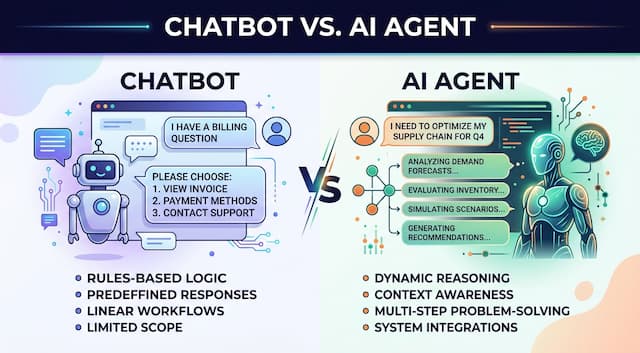 Chatbot vs AI Agent: Where the Line Actually Sits (2026)
Chatbot vs AI agent in plain terms: what each one does, where the line blurs, and how to add autonomy to support and sales without losing control.
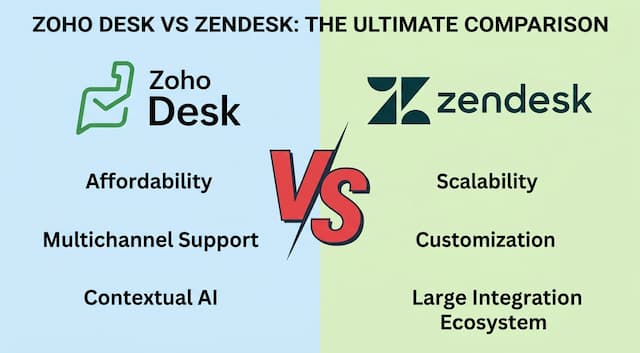 Zoho Desk vs Zendesk in 2026: The Price Gap, Examined
Zoho Desk vs Zendesk in 2026: included AI vs a quiet meter, and where Zendesk earns it