Empathy Statements for Customer Service: 15 Examples
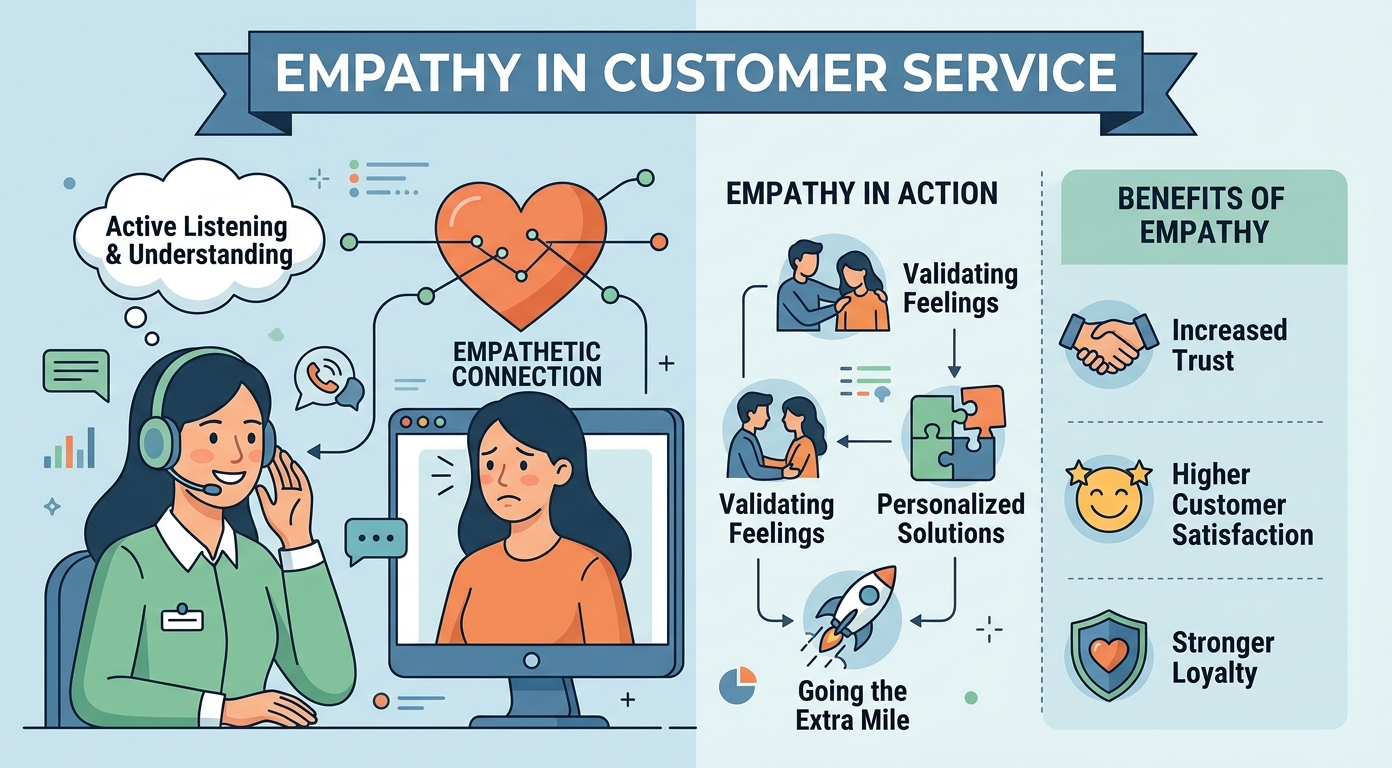
The right words at the right moment can turn a frustrated customer into a loyal one. That is the quiet power of empathy statements for customer service: brief, sincere lines that tell a customer they have been heard. This guide collects 15 empathy statements for customer service that you can use today, grouped by the moment they fit, plus the angry-customer lines and delivery tips that make them land. Every customer service team can put these short phrases to work right away.
Empathy is not a script. It is a genuine effort to see a problem from the customer's side and to show it. But having a set of trusted empathy statements ready means your customer service team never freezes in a hard moment, and every customer gets the same warm, human response. A warm support style is a skill any team can build, and the phrases below give you a practical place to start. They work whether you run a busy contact center or a small support desk.
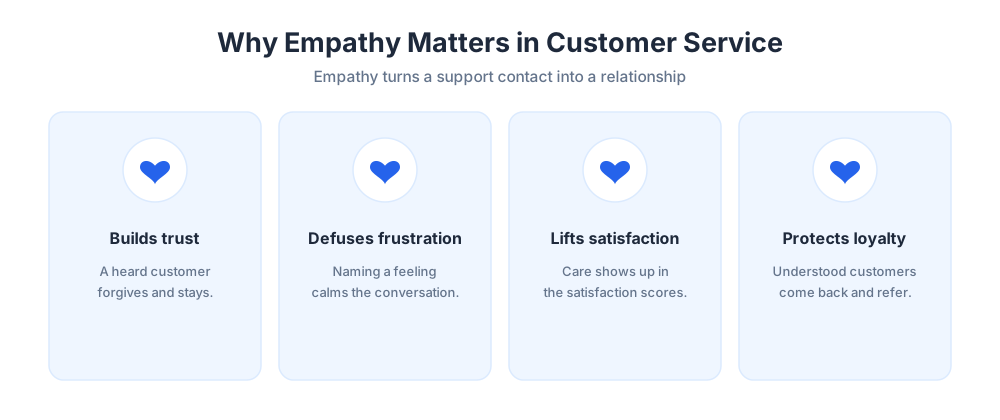
Why empathy matters in customer service
Every customer who contacts a support team arrives with a problem and a feeling about that problem. Solving the problem is only half the job; acknowledging the feeling is the other half, and it is the half most customer service teams skip. The teams who close that gap consistently are the ones who turn ordinary support into something customers remember.
Empathy works because it builds trust. A customer who feels understood forgives a delay, stays loyal, and tells others, while a customer who feels processed by a machine leaves. Real empathy is what separates great customer service from merely correct customer service, and it shows up directly in customer satisfaction and long-term loyalty. That link between care and customer experience is why empathetic customer service is worth treating as a core skill rather than a nice extra.
It also defuses tension. When an agent names what a customer feels, the customer's frustration drops, the exchange calms, and the real problem-solving can begin. Empathy is not soft; it is one of the most practical skills a customer service team can build. Strong customer service depends on a team that can read emotion as quickly as it reads a ticket.
Empathy vs sympathy in customer service
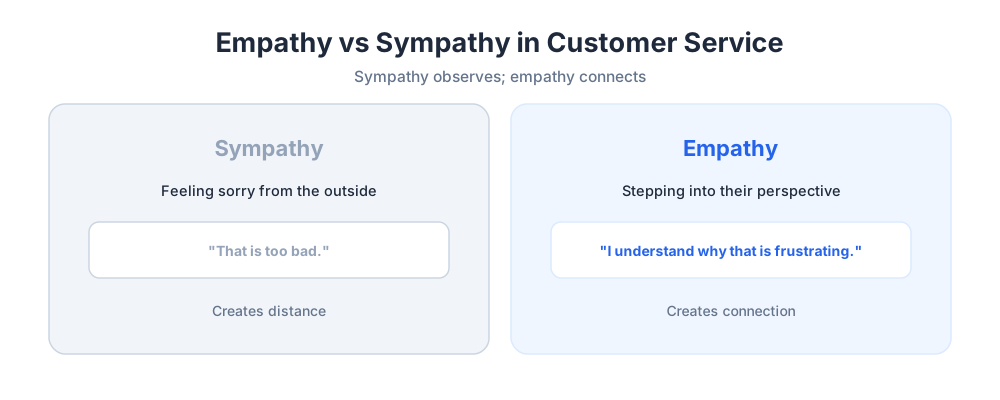
People often use the words interchangeably, but the difference between empathy and sympathy matters in a support exchange.
Feeling sorry for someone from the outside is the first of the two: "That is too bad." Empathy is stepping into their perspective: "I understand why that is frustrating, and I would feel the same." The first creates distance; the second creates connection. In customer service, that contrast is the difference between a customer who feels pitied and a customer who feels genuinely understood. That distinction is not academic, because it changes how every customer service interaction lands.
The empathy statements below are built on real empathy. They do not just observe a customer's feelings from afar; they signal that the agent is on the customer's side and ready to help. Both empathy and a quick fix matter, yet the feelings come first, and the customer service agents who remember that order tend to resolve issues faster.
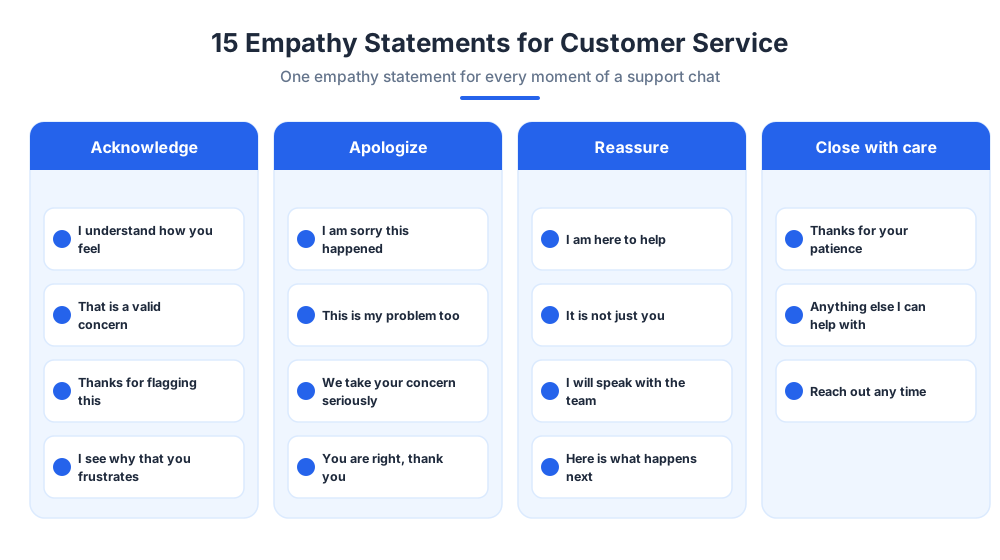
Empathy statements to acknowledge the problem
The first job of any empathy statement is to show that you heard them. Use these examples to acknowledge the problem before you move to a fix. In common customer service scenarios, this acknowledgment is the moment that decides whether the rest of the interaction feels warm or cold.
1. "I understand how you feel."
A direct, honest acknowledgment. It tells them their reaction is reasonable. Say it only when you mean it, and follow it with a sign that you have actually grasped the situation. Real care starts with showing the customer that their feelings have registered.
2. "That is a completely valid concern."
This empathy statement validates the customer instead of defending the company. It removes the need to argue that their concern matters, so the interaction can move straight to solving it.
3. "Thank you for flagging this with us."
Reframing a complaint as helpful feedback changes the tone instantly. The customer stops feeling like a nuisance and starts feeling like a partner, which makes the rest of the chat easier. Handled this way, complaints become a source of real insights into how customers feel about your product.
4. "I can see why that would be frustrating."
Naming the emotion, frustration, shows that you are paying attention to how they feel, not just to the technical issue. It is one of the most reliable ways to lower frustration early in a customer service exchange.
Empathy statements to apologize and take ownership
When something has gone wrong, a sincere apology paired with ownership rebuilds confidence fast. These empathy statement examples do both, and they keep the customer service experience honest even when the news is not good.
5. "I am sorry this happened."
A clean, direct apology with no excuses attached. Customers can tell the difference between a genuine sorry and a defensive one, so keep this statement simple and mean it.
6. "This is my problem to solve now too."
Ownership is empathy in action. By making the issue yours, you tell them they are not alone with it, which is exactly the reassurance an upset customer needs to hear.
7. "We take your concern seriously."
This empathy statement signals that the customer's issue will not be brushed aside. Back it up by actually doing something next, since the words only build trust when an action follows.
8. "You are right, and I appreciate your patience."
Admitting the customer is right, when they are, is disarming. Pairing it with thanks for their patience turns a tense moment into a respectful one. Small moments like this one build stronger customer relationships over time, because the customer remembers being treated as a partner rather than an opponent.
Empathy statements to reassure the customer
Once the customer feels heard, reassurance keeps them calm while you work. These empathy statements promise help and progress, and they give customer service agents a clear way to keep the customer focused on the solution.
9. "I am here to help, and I will stay with you until this is fixed."
This statement removes the customer's biggest fear: being passed around or abandoned. A promise to stay with them through the whole situation is deeply reassuring.
10. "I am able to reproduce this, so it is not just you."
Confirming you can see the same issue tells them they are not imagining it and not at fault. That validation builds confidence that the problem is real and will be fixed.
11. "I will speak with the team and get this sorted quickly."
When you cannot solve something alone, naming the next step keeps them in the loop. Promise an update from the customer support team and the customer relaxes, because the path forward is clear.
12. "Here is exactly what happens next."
Uncertainty fuels anxiety. A clear, specific outline of the next steps replaces worry with a plan, and it shows the customer that the situation is under control. Reassurance like this is a quiet driver of satisfaction, since people relax once they can see the road ahead.
Empathy statements to close the customer service interaction with care
How an interaction ends shapes what the customer remembers. These empathy statements close on a warm, human note, and they help customer service agents leave a strong final impression.
13. "Thank you for your patience while we sorted this out."
A final thank-you acknowledges the effort the customer spent waiting. It leaves them feeling respected rather than merely processed, which protects loyalty after a hard issue. This is how excellent customer service ends, on a note of genuine thanks.
14. "Is there anything else I can help you with today?"
This simple question signals that the customer's time and needs still matter. It also catches any second issue before it becomes a separate, frustrating contact later in the day.
15. "Please reach out any time, we are always happy to help."
Ending with an open door tells the customer the relationship continues beyond this one interaction. It turns a resolved ticket into a reason to trust the brand next time, and it is a small habit that creates a loyal customer over the long run.
Empathy statements for angry customers
Angry customers need empathy most, and they need it before anything else. When a customer arrives upset, lead with the feeling, not the fix. The three lines below are written for exactly those high-tension moments, and they give agents a calm place to begin.
"I hear you, and you have every right to be upset."
Permission to be upset is powerful. Instead of telling an angry customer to calm down, this empathy statement accepts the anger, which is what actually lowers it. Customers can tell when their emotions are being met rather than managed.
"Let me make this right for you."
Upset customers want action, not analysis. A clear promise to fix the problem, made early, gives them a reason to stop fighting and start working with you.
"I am going to personally see this through."
For a customer who has been let down before, a personal commitment rebuilds trust. It tells them one named person now owns their problem, which calms even the tensest interaction and protects the customer experience when it is most at risk.
How to deliver empathy statements so they sound real
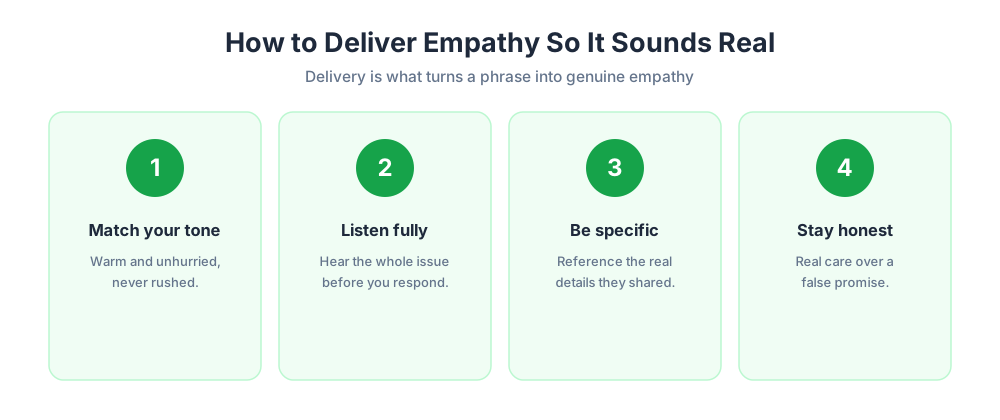
An empathy statement only works if it sounds real. Delivered flatly, the best phrase becomes a hollow script, so how you say it matters as much as what you say. Strong empathetic communication depends as much on delivery as on the words themselves.
Match your tone to the customer's emotions. A warm, unhurried tone tells the customer you are present; a rushed one undoes the words. Slow down, listen fully before you respond, and reference the specific details the customer shared so the empathy feels personal rather than generic. Give the customer your full attention, because real care is hard to fake and easy to sense.
Be honest. If you cannot fix something immediately, say so with empathy rather than a false promise, because honesty is part of real care. And use these examples as a starting point, not a rule: adapt the wording to your own voice and the person in front of you, since true empathy never sounds the same twice. It also helps to keep brief notes on what worked, so the team can compare which phrasing felt most natural in real customer service exchanges.
Empathy is also a team habit, not just an individual one. The strongest support teams talk openly about hard exchanges, share the lines that landed well, and review a tricky conversation together rather than leaving each person to figure it out alone. When support work is treated as a shared craft, new hires pick up the right instincts faster, and the quality of help stays steady even as the team grows. Make space in regular meetings to walk through a recent conversation, name what went well, and agree on one small thing to try next time.
Empathy statements to avoid
Some phrases sound empathetic but quietly damage trust. For every customer service representative, knowing what to avoid is as useful as knowing what to say.
Avoid "Calm down," which dismisses the customer's feelings and almost always increases anger. Skip "There is nothing I can do," which abandons the customer; offer the closest thing you can do instead. Drop robotic, overused lines delivered with no feeling, since a customer can hear an empty script. And never follow an apology with "but," because the word erases the apology before it lands. Empathy that is not genuine is worse than no empathy at all, and customers carry that bad impression into their next contact with your team.
How live chat helps agents show empathy
Empathy is easiest when an agent has time to read, think, and respond with care. That is exactly what live chat gives a customer service team. Unlike a rushed phone queue, chat lets an agent take a breath, choose the right empathy statement, and personalize it to the customer in front of them. That extra breathing room raises the quality of every customer service interaction.
Chatim adds a free live chat widget and chatbot to your website, so your team can meet customers in the moment with calm, considered support. The chatbot clears routine questions, which frees agents to give the harder cases the care and empathy they need. Paired with the empathy statements above, live chat helps every customer leave the chat feeling heard, and it gives your team a steady way to practice empathy every day.
Make empathy a habit, not a script
Empathy statements for customer service are not magic words; they are a reliable way to make sure every customer feels understood, even on your team's busiest day. Acknowledge the problem, apologize and own it, reassure the customer, and close with care. Done well, this is what good customer service feels like from the other side of the screen.
Pick a few statements from each group above, adapt them to your own voice, and practice them until they feel natural. Share the examples with new agents, review them as a team, and treat them as a living habit rather than a fixed rule. Do that, and empathy stops being a phrase you reach for and becomes the way your whole customer service team treats every customer.
Keep going with our guides to positive language in customer service and collecting customer feedback.
Frequently Asked Questions
What are empathy statements in customer service?
Empathy statements in customer service are short, sincere phrases that show a customer they have been heard and understood. Lines like 'I understand how you feel,' 'That is a completely valid concern,' or 'I am sorry this happened' acknowledge the customer's emotion before the conversation moves to a fix. They are not a script; they are a reliable way to make sure every customer feels respected, even on a busy day.
What is the difference between empathy and sympathy in customer service?
Sympathy is feeling sorry for someone from the outside, such as saying 'That is too bad.' Empathy is stepping into the customer's perspective: 'I understand why that is frustrating, and I would feel the same.' Sympathy creates distance, while empathy creates connection. In customer service, empathy is what makes a customer feel genuinely understood rather than merely pitied, and it does far more to defuse tension and build trust.
What are good empathy statements for angry customers?
Angry customers need empathy before any fix. Strong lines include 'I hear you, and you have every right to be upset,' which accepts the anger instead of fighting it; 'Let me make this right for you,' which promises action; and 'I am going to personally see this through,' which gives the customer one named person to trust. Lead with the feeling, stay calm, and never tell an angry customer to calm down.
How do you show empathy in customer service?
Show empathy by acknowledging the customer's feeling, not just their technical issue. Listen fully before you respond, name the emotion you hear, validate their concern, and use a warm, unhurried tone. Reference the specific details they shared so the empathy feels personal. Then take ownership of the problem and keep them informed. Empathy is a genuine effort to see the issue from the customer's side, and the words only work when the delivery is sincere.
Why is empathy important in customer service?
Empathy is important because every customer arrives with a feeling about their problem, and acknowledging that feeling is half the job. A customer who feels understood forgives delays, stays loyal, and recommends you, while one who feels processed by a machine leaves. Empathy also defuses tension, calming a conversation so real problem-solving can begin. It shows up directly in customer satisfaction and loyalty, which makes it one of the most practical skills a support team can build.
What is a good empathy statement to acknowledge a problem?
To acknowledge a problem, a strong empathy statement is specific and validating. 'That is a completely valid concern,' validates the customer instead of defending the company. 'I can see why that would be frustrating,' names the emotion directly. 'Thank you for flagging this with us,' reframes a complaint as helpful feedback. Any of these tells the customer you heard them before you move to a fix.
What empathy statements should you avoid?
Avoid phrases that sound empathetic but damage trust. 'Calm down' dismisses the customer's feelings and almost always increases anger. 'There is nothing I can do' abandons the customer; offer the closest thing you can do instead. Skip robotic, overused lines delivered with no feeling, and never follow an apology with 'but,' because it erases the apology. Empathy that is not genuine is worse than no empathy at all.
How do you sound empathetic without sounding scripted?
Use empathy statements as a starting point, not a rule. Adapt the wording to your own voice and to the specific customer in front of you, since genuine empathy never sounds the same twice. Match your tone to the customer's emotion, slow down, and reference the real details they shared. Most importantly, mean what you say; customers can hear an empty script, and a sincere line in your own words always lands better than a perfect one delivered flatly.
What is an example of an empathy statement for a frustrated customer?
For a frustrated customer, 'I can see why that would be frustrating,' works well because it names the emotion directly and shows you are paying attention to how they feel, not just to the technical issue. Pair it with ownership, such as 'This is my problem to solve now too,' so the customer knows they are not alone with the problem. Naming the feeling early is one of the most reliable ways to lower frustration.
How do you start a customer service conversation with empathy?
Open by acknowledging the customer and their situation before anything else. A line like 'Thank you for reaching out, I can help with this,' followed by an acknowledgment of their concern, sets a warm tone. If the customer is upset, lead with the feeling: 'I hear you, and I want to get this sorted for you.' Starting with empathy calms the conversation and makes the rest of the exchange easier for both sides.
Can empathy statements be used in live chat and email?
Yes. Empathy statements work across every channel: phone, live chat, and email. In writing they are especially valuable, because tone is harder to read in text, so a clear, sincere empathy statement removes any doubt that the customer was heard. Live chat in particular gives an agent a moment to choose the right phrase and personalize it, which often makes written empathy feel even more deliberate and genuine.
How do you teach empathy to a customer service team?
Empathy is a team habit, not just an individual trait. Share a set of trusted empathy statements so no one freezes in a hard moment, then practice them in training with realistic scenarios. Review tricky conversations together, name the lines that landed well, and treat support as a shared craft. When a team talks openly about hard exchanges, new agents pick up the right instincts faster and the quality of care stays steady as the team grows.
Do empathy statements really improve customer satisfaction?
Yes. A customer who feels genuinely understood is calmer, more patient, and more likely to stay loyal and recommend you. Empathy statements make that feeling reliable, so every customer gets a warm, human response rather than a cold one. No single phrase transforms a support team, but a consistent habit of real empathy compounds into higher customer satisfaction and stronger relationships over time.
Related articles
More in Customer service → SaaS Customer Support: The Stage-by-Stage Guide (2026)
How SaaS customer support actually works at each stage: the right stack from founder-led live chat to a full support operation, channels, and metrics.
 How to Reduce Customer Churn: 5 Levers in Payback Order
Reduce customer churn by pulling five levers in payback order: payment recovery, onboarding, support quality, pricing fit, and a 90-day win-back.
 10 FAQ Page Examples That Actually Help Customers (2026)
10 FAQ page examples from Shopify, Airbnb, Slack, Nike and more, with the exact pattern each gets right and a checklist to build your own FAQ page.
 12 Customer Service Email Templates for Every Scenario (2026)
12 customer service email templates for complaints, refunds, delays, bugs and saying no, plus the five-line skeleton that keeps them sounding human.