Positive Language in Customer Service: 15+ Phrases
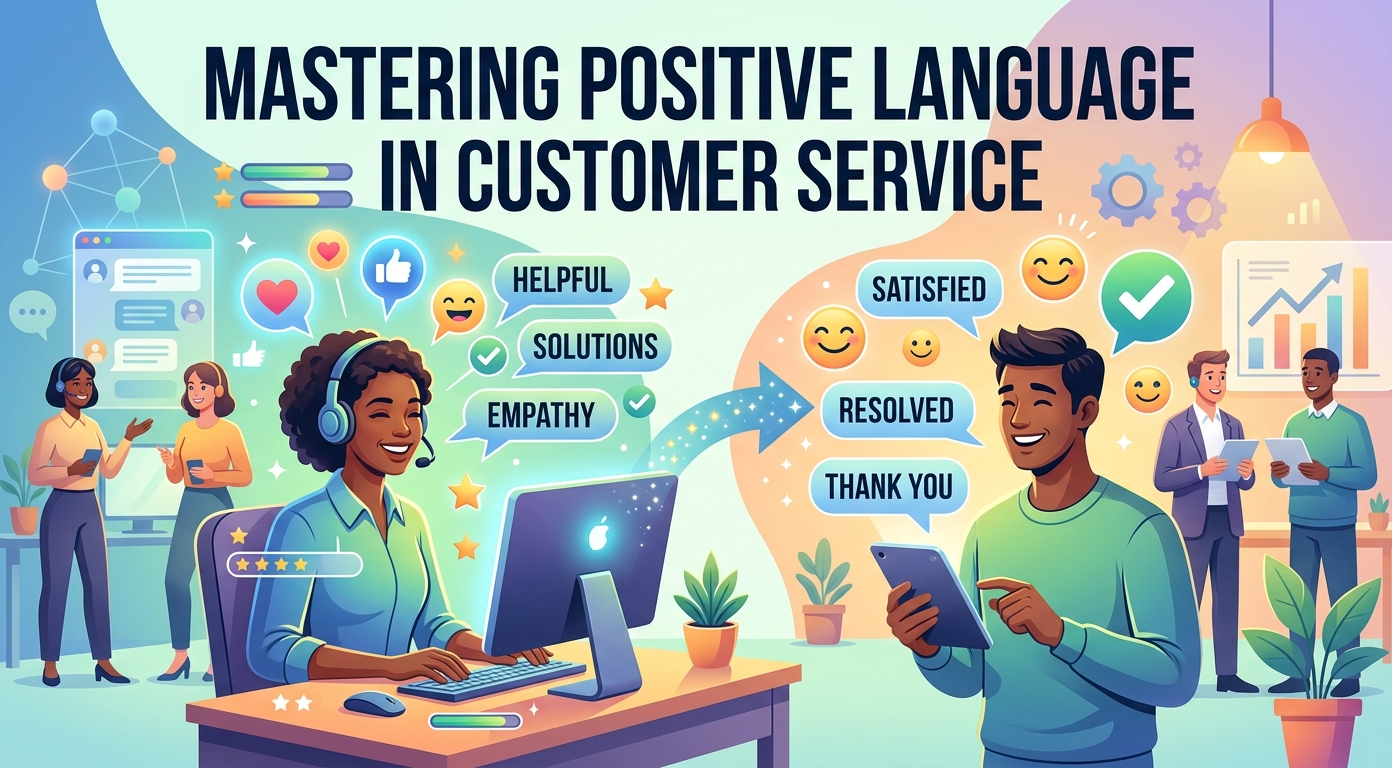
Positive language in customer service is the simple discipline of choosing words and phrases that point a customer toward a solution instead of a dead end. One version of a reply leaves a customer feeling stuck. The other leaves the same customer feeling helped.
That gap matters because a customer rarely remembers the exact words an agent used. They remember how the conversation felt.
This article breaks down what positive language in customer service really is, why it changes the customer experience, and the exact customer service phrases you can use in every common moment, on a call, in live chat, and in email.
Get this right and a single phone call can build real rapport. Get it wrong and the same customer service interaction leaves the customer cold. The good news is that positive phrasing is a learnable skill, and you can start today.
What Is Positive Language in Customer Service?
Positive language is a way of communicating that keeps the focus on what is possible. It is not forced cheerfulness, and it is not a script of happy words pasted over a bad answer. It is a deliberate choice in every customer service conversation to describe the path forward rather than the obstacle in the way.
A negative phrase tells the customer what cannot happen. A positive phrase tells the same customer what can.
Both can be completely honest. The positive version simply leads with the part the customer can act on, which keeps the interaction moving instead of stalling it.
Think of positive language as a lens, not a vocabulary list. Once an agent learns to look for the helpful angle, the right phrasing tends to follow. The goal is communication that feels warm and useful, even when the news is not what the customer hoped to hear.
Why Positive Language Matters in Customer Service
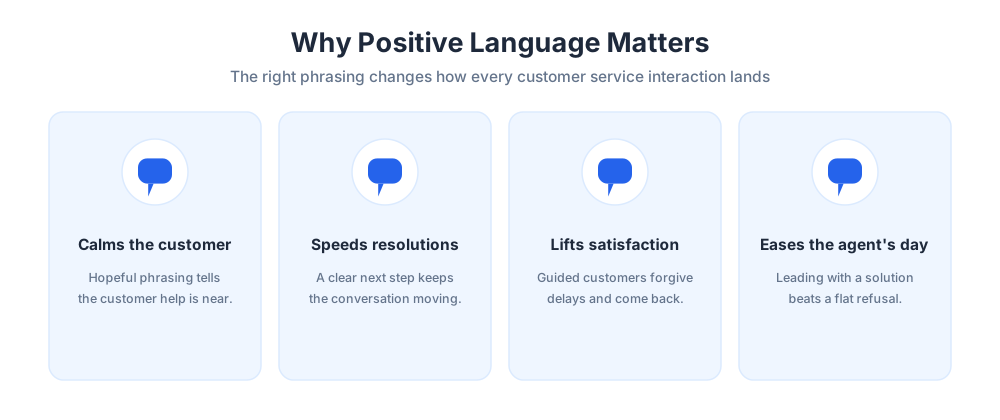
Every customer arrives with a feeling about their problem, and the language an agent uses either calms that feeling or feeds it. Positive language calms it. It signals that the customer is in capable hands and that real help is on the way.
This shows up directly in customer satisfaction. A customer who feels guided through an issue is more patient, more forgiving of a delay, and far more likely to come back. A customer who feels blocked at every turn remembers the friction long after the issue is closed.
There is a business case too. Positive communication lowers the temperature of hard conversations, which means faster resolutions and less escalation.
It protects the customer experience that a company works so hard to build, one interaction at a time.
Strong phrasing also lifts customer engagement. When a customer feels genuinely helped, they answer follow-up questions, share honest feedback, and stay open to the next step.
That engagement is the foundation of healthy customer relations and a good experience overall.
Positive language also helps the agent. Framing a reply around a solution is easier to deliver than a flat refusal, and that small shift makes a long day of customer support far less draining.
Over time it builds the kind of experience that turns a one-time buyer into a loyal one, which is good business.
Positive Words vs Negative Language
The clearest way to understand positive language is to put it next to its opposite. Consider a customer asking when an order will be ready.
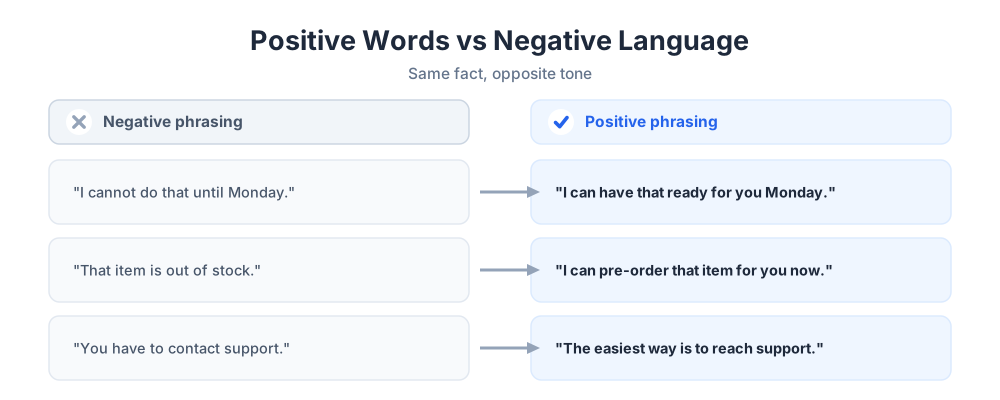
An unhelpful reply: "I cannot get that to you until Monday." A positive reply: "I can have that ready for you on Monday." Same fact, opposite tone.
Negative phrasing is not always rude. Often it is just lazy wording built from terms like "cannot," "unfortunately," "you have to," and "that is not possible." That kind of language quietly tells the customer that the company is the obstacle.
Positive words and phrases do the reverse. They put the company on the customer's side.
"Here is what I can do," "the fastest way to solve this," and "I will take care of that for you" all describe action. They turn a complaint into a shared task, and that is what excellent customer service sounds like.
None of this means hiding the truth. It means telling the truth in a way that respects the customer and keeps a clear next step in view. A positive tone is the heart of this approach, and it works for any product or service you support.
Positive Customer Service Phrases for Every Moment
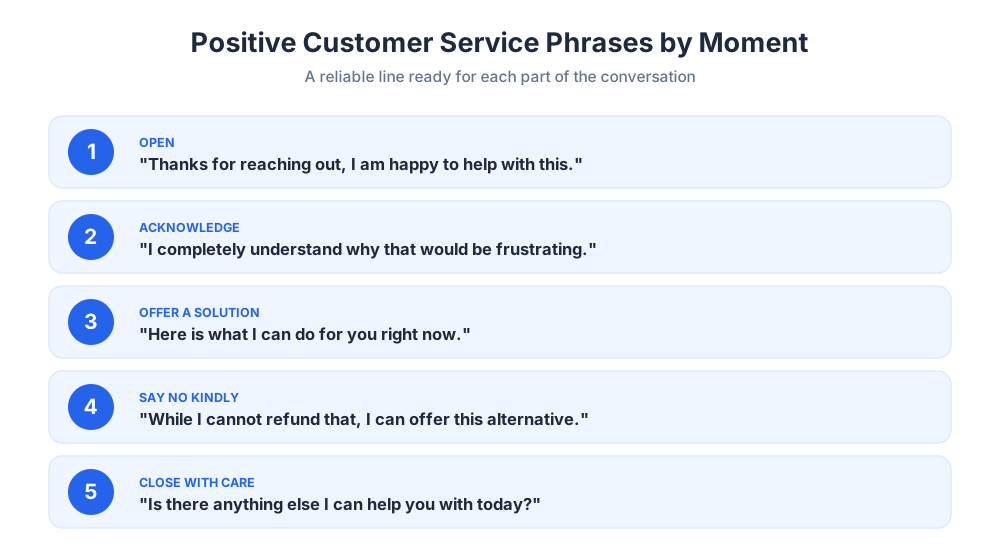
The fastest way to build the habit is to keep a short set of customer service phrases ready for the moments that repeat every day. You need a few reliable lines for opening, acknowledging, solving, saying no, and closing.
The positive customer service phrases below are example lines, not a rigid script. Adapt the wording to your own voice and to the customer in front of you, because positive language only works when it sounds genuine.
Positive Phrases to Open the Conversation
The first interaction sets the tone for everything that follows. A warm opening tells the customer they reached the right person.
Try "Thanks for reaching out, I am happy to help with this," or "Great question, let me look into that for you right now." Both lines are short, both promise attention, and both move things forward.
Positive Phrases to Acknowledge the Issue
Before any fix, the customer needs to know they were heard. Acknowledgement is where positive language and empathy meet.
"I completely understand why that would be frustrating," names the feeling without argument.
"Thank you for letting us know about this," reframes a complaint as useful feedback. "I would like to learn more so I can get this right," shows the agent is paying attention.
Positive Phrases to Offer a Solution
This is the moment positive language earns its keep. The customer wants to hear a clear next step.
"Here is what I can do for you right now," puts a solution on the table.
"The quickest way to sort this out is," gives the customer a path. "I will personally see this through for you," gives them one named person to trust.
Positive Phrases to Say No Without the Negative
Sometimes the honest answer is no. Positive language does not erase the no, it surrounds it with what is still possible. Saying no well is what separates great customer service from the rest.
Instead of "we cannot do that," try "while I cannot offer a refund, I can offer this alternative." Instead of "that item is out of stock," try "that item is not in stock right now, and I can pre-order it for you."
The customer still hears the limit, but they also hear a way through it.
Positive Phrases to Close With Care
A strong close leaves the customer feeling fully looked after. It is a small moment that shapes the whole memory of the service.
"Is there anything else I can help you with today?" invites the customer to raise any loose end or ask any additional questions before the chat ends. "I am glad we could sort this out, reach out any time," leaves the door open and ends the conversation on a confident, friendly note.
Positive Language for Difficult Customers and Hard Moments
Positive language is easy when a customer is calm. It is most valuable when they are not. Angry customers and upset customers test an agent's phrasing more than any routine question.
With a difficult customer, the rule is to lead with the feeling and never argue with it. "I hear you, and I want to make this right," accepts the frustration.
Telling an upset customer to "calm down" almost always does the opposite.
In genuinely difficult situations, positive language buys time and lowers the temperature. A line like "let me take ownership of this and find the best option for you" tells the customer they are no longer alone with the problem.
The aim is not to win the exchange. It is to move a tense interaction toward a calm resolution while keeping the customer's dignity, and the agent's, intact.
Positive Language on Calls, Live Chat, and Email
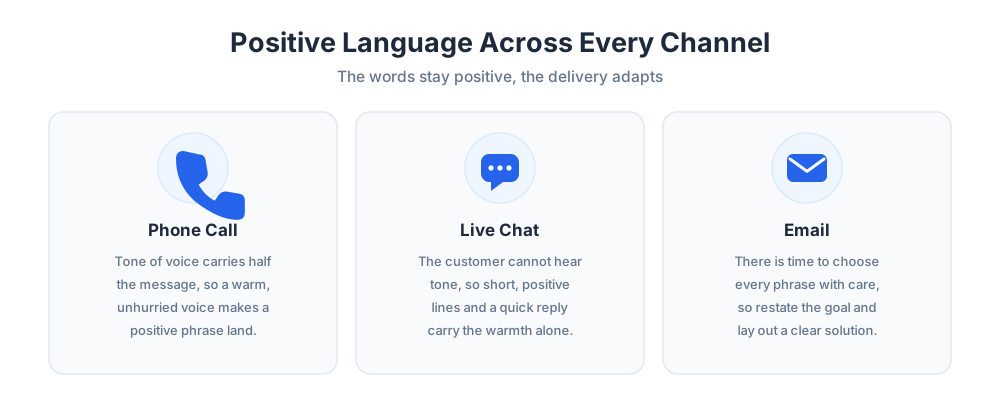
Positive language belongs in every channel, but each one needs a slightly different touch. The words stay positive, the delivery adapts.
On a Phone Call
On a call, tone of voice carries half the message. A warm, unhurried voice makes a positive phrase land, while the same words said flatly can fall apart.
Positive scripting for a customer service call should always sound like a real person, not a recording, so an agent has room to adapt each line to the customer on the other end.
A support call also moves fast, so an agent cannot pause to rewrite a sentence. Practising a few positive openers before the call helps the right words arrive on time. In a busy contact center, that habit keeps every call consistent.
In Live Chat and Text
In live chat, the customer cannot hear a friendly tone, so the words and phrases have to carry it alone. Short, positive sentences and a quick acknowledgement keep a chat feeling human. A clear "I am on this for you" removes any doubt that the customer was heard.
In Email and Written Responses
Email gives an agent time to choose every phrase with care. Open by restating the customer's goal in a positive way, lay out the solution in plain steps, and close with an invitation to reply. Well written professional email phrases turn a slow channel into a reassuring one.
Positive Words to Keep in Your Customer Service Vocabulary
Beyond full phrases, a handful of positive words can lift almost any reply. Words like "happy," "absolutely," "right away," "solution," "sorted," and "glad" signal energy and progress. Build them into your everyday customer service vocabulary.
These lines work the same whether you sell a product or run a service business. A customer who hears them feels supported, and that warmth shapes the wider customer experience long after the chat ends. Clear, upbeat communication is the thread that ties every channel together.
It helps just as much to know the negative words to retire. Swap "problem" for "issue we can solve," swap "unfortunately" for "here is the good news," and swap "you have to" for "the easiest way is."
These small swaps keep a reply in a positive light without changing a single fact.
A short, shared word bank is worth keeping in a team blog so every new agent starts with the same positive customer service language from day one. An internal help center is a natural place to store it, alongside example replies the whole team can search.
Negative Phrases and Mistakes to Avoid
Positive language can backfire when it is used carelessly. The most common mistake is sounding scripted. A positive phrase delivered with no feeling reads as fake, and customers notice.
Avoid blaming phrases that quietly fault the customer, such as "you should have" or "as I already said." Avoid the word "but" right after an apology, because it erases the apology.
And never use a cheerful tone to brush past a real problem, since forced positivity feels worse than a plain answer.
Positive language is a genuine effort to help, expressed in hopeful words. When the effort is real, the phrasing follows. When it is not, no phrase can hide it.
How Live Chat Helps Your Team Use Positive Language
Positive language is a shared habit, and the right tools make that habit easier to keep. Live chat is one of the most practical. It gives an agent a beat to read the customer, pick the right phrase, and personalize it before sending.
Live chat also makes effective customer service communication consistent across a whole customer service team. Saved replies and shared phrase sets mean no agent freezes in a hard moment, and a manager can review real customer conversations to coach phrasing that lands well.
That steady quality protects satisfaction and builds stronger customer engagement as the group grows.
It helps support agents most of all. With the right context, every agent can give the same calm service, so a customer gets a consistent experience.
A platform like Chatim brings calls, chat, and customer feedback into one place, so an agent has the context to choose a genuinely helpful response every time, not a generic one.
Make Positive Language a Daily Habit
Positive language in customer service is not a trick. It is a habit any agent can build, one phrase at a time, until the helpful angle becomes the natural one to reach for.
Start small. Pick a few customer service phrases from this guide, use them in your next conversations, and notice how the customer responds. Keep the lines that feel right, adapt the ones that do not, and share what works with the rest of your team.
Do that consistently and positive language stops being something you think about. It simply becomes part of how a company delivers good customer service, every interaction, every customer, every day.
Frequently Asked Questions
What are positive words for customer service?
Positive words for customer service are the small, upbeat words that signal energy and progress, such as 'happy,' 'absolutely,' 'glad,' 'right away,' 'sorted,' and 'solution.' They work because they point a customer toward action instead of an obstacle. Build a short, shared list of these words so every agent reaches for the same hopeful vocabulary, and pair them with full phrases for the best result.
What are examples of positive language?
Positive language reframes a reply around what you can do. Instead of 'I cannot get that to you until Monday,' say 'I can have that ready for you on Monday.' Instead of 'that is out of stock,' say 'I can pre-order that for you right now.' Instead of 'you have to,' say 'the easiest way is.' Each example states the same fact, but leads with the part the customer can act on.
What are the 5 C's of customer service?
The 5 C's of customer service are a popular framework for the qualities good support shares. One common version is communication, consistency, caring, competence, and commitment. Lists vary slightly between sources, but the idea is steady: clear, reliable, warm, skilled, and dependable service. Positive language supports every C, since the words an agent chooses are how communication, caring, and consistency actually reach the customer.
Why is positive language important in customer service?
Positive language is important because a customer rarely remembers the exact words an agent used, but they always remember how the conversation felt. Positive phrasing calms a worried customer, signals that help is on the way, and keeps the interaction moving toward a solution. It lifts customer satisfaction, lowers the temperature of hard conversations, and protects the customer experience a company works hard to build.
What is positive language in customer service?
Positive language in customer service is the deliberate practice of choosing words and phrases that describe what is possible rather than what is not. It is not forced cheerfulness or a script of happy words. It is a way of communicating that leads with the helpful angle, so even difficult news lands in a way that respects the customer and keeps a clear next step in view.
What is the difference between positive and negative language?
Negative language tells the customer what cannot happen, often through lazy wording like 'cannot,' 'unfortunately,' or 'that is not possible.' Positive language tells the same customer what can happen. Both can be completely honest. The difference is that positive phrasing leads with the part the customer can act on, which keeps the conversation moving instead of stalling it on the obstacle.
What are good positive phrases for angry customers?
Angry customers need positive language most of all. Lines like 'I hear you, and I want to make this right,' accept the frustration instead of fighting it. 'Let me take ownership of this and find the best option for you,' tells the customer they are no longer alone with the problem. Lead with the feeling, stay calm, and never tell an upset customer to calm down.
How do you say no to a customer in a positive way?
Positive language does not erase a no, it surrounds it with what is still possible. Instead of 'we cannot do that,' try 'while I cannot offer a refund, I can offer this alternative.' Instead of 'that is out of stock,' try 'that is not in stock right now, and I can pre-order it for you.' The customer still hears the limit, but they also hear a clear way through it.
How do you use positive language on a phone call?
On a phone call, tone of voice carries half the message, so a warm, unhurried voice is what makes a positive phrase land. Practise a few positive openers before the call so the right words arrive on time, since a support call moves fast and leaves no room to rewrite a sentence. Keep the scripting flexible enough to sound like a real person, not a recording.
How do you use positive language in live chat and email?
In live chat, the customer cannot hear a friendly tone, so the words have to carry it alone: use short, positive sentences and a quick acknowledgement that they were heard. In email, you have time to choose every phrase with care, so restate the customer's goal positively, lay out the solution in plain steps, and close with an invitation to reply.
What positive language mistakes should you avoid?
The most common mistake is sounding scripted, because a positive phrase delivered with no feeling reads as fake. Avoid blaming phrases like 'you should have' or 'as I already said.' Avoid the word 'but' right after an apology, since it erases the apology. And never use a cheerful tone to brush past a real problem, because forced positivity feels worse than a plain, honest answer.
How do you teach positive language to a customer service team?
Positive language is a team habit, not just an individual trait. Share a set of trusted customer service phrases and a short word bank so no agent freezes in a hard moment, and store them in a team blog or help center. Practise the lines in training with realistic scenarios, review real customer conversations together, and name the phrasing that lands well so new agents pick up the right instincts faster.
Does positive language really improve customer satisfaction?
Yes. A customer who feels guided through an issue is more patient, more forgiving of a delay, and far more likely to come back, while a customer who feels blocked remembers the friction long after. Positive language makes the helpful feeling reliable across every interaction. No single phrase transforms a support team, but a consistent habit of positive phrasing compounds into higher customer satisfaction over time.
Related articles
More in Customer service → SaaS Customer Support: The Stage-by-Stage Guide (2026)
How SaaS customer support actually works at each stage: the right stack from founder-led live chat to a full support operation, channels, and metrics.
 How to Reduce Customer Churn: 5 Levers in Payback Order
Reduce customer churn by pulling five levers in payback order: payment recovery, onboarding, support quality, pricing fit, and a 90-day win-back.
 10 FAQ Page Examples That Actually Help Customers (2026)
10 FAQ page examples from Shopify, Airbnb, Slack, Nike and more, with the exact pattern each gets right and a checklist to build your own FAQ page.
 12 Customer Service Email Templates for Every Scenario (2026)
12 customer service email templates for complaints, refunds, delays, bugs and saying no, plus the five-line skeleton that keeps them sounding human.