How to Motivate Your Customer Service Team: 10 Ways

Knowing how to motivate customer service team members is one of the highest-return skills a manager can build. Support is hard work: agents absorb frustration all day and rarely hear when things go right. When that work goes unrecognized, the customer feels the difference within a single conversation, whether your group runs a busy call center or a small chat queue.
The good news is that motivation is not a mystery. It comes from the right tools, fair treatment, clear goals, honest feedback, and a culture that notices good work. This guide covers why a motivated team matters, the warning signs of low morale, and 10 proven strategies. These tips work for large support organizations and for small businesses alike, because the principles behind employee motivation do not change with headcount.
None of these ideas need a big budget. Most are small habits of leadership, and together they turn a tired group of agents into one that genuinely wants to help. When you invest in your employees, every customer who reaches your service desk feels the result.
Why a motivated customer service team matters
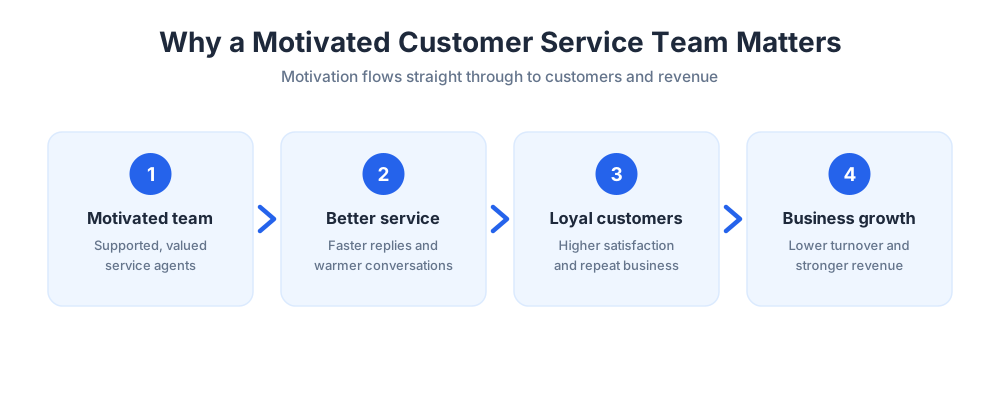
Your customer service team is the human face of the company. Every customer call, chat, and email shapes how a customer feels about your brand, so the energy of your employees is not a soft concern. It is a business issue that touches revenue, reputation, and growth.
Motivation drives the customer experience
A motivated agent listens harder, solves problems faster, and brings warmth to the customer experience. That lifts the customer experience, raises customer satisfaction, and protects customer loyalty. A burned-out agent does the opposite. Strong customer service is not luck; it is the visible output of agents who feel valued and supported.
The link runs straight to revenue. Happy customers stay longer and spend more, and customer success depends on a team that still cares at 4pm on a Friday. Motivation is the quiet input behind every good customer experience. When a customer ends a conversation feeling genuinely helped, that moment of customer service excellence does more for the business than most marketing campaigns, and it builds the kind of customer relationship that survives the occasional mistake.
The cost of low morale and turnover
Low morale is expensive. It shows up as slow replies, short tempers, and unhappy customers, and eventually as turnover. Every agent who quits takes hard-won product knowledge with them, and replacing that costs the business real money and time. A demotivated call center has higher absenteeism, longer wait times, and a client base that slowly drifts away.
Strong employee retention is cheaper than constant rehiring, and it is built on motivation. A team that feels supported stays, grows, and gets better at the job, which is exactly what good customer service needs. Employees who trust their manager and see a future with the company become your most reliable performers. Protecting people from burnout is therefore one of the most direct routes to lasting business success.
Signs your support team needs a boost
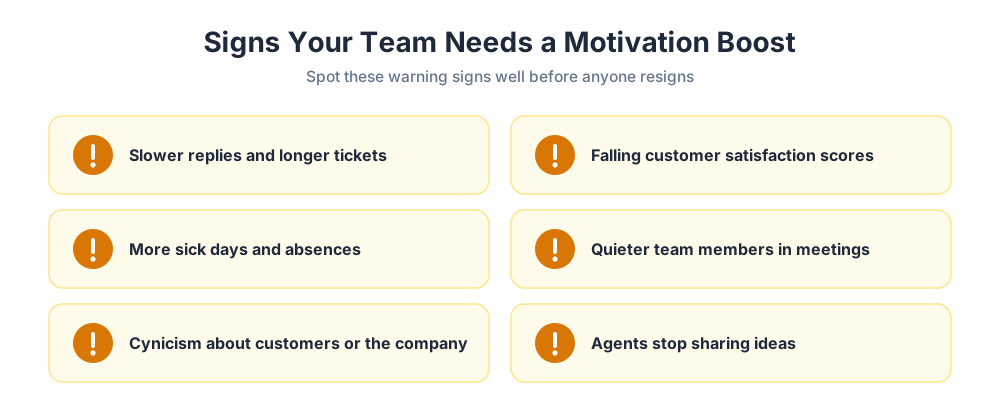
Before you fix motivation, learn to spot when it is slipping. The signs are usually visible well before anyone resigns.
Watch for rising ticket times, falling satisfaction scores, more sick days, and quieter team members in meetings. Listen for cynicism about callers or about the company. When agents stop offering ideas and simply process tickets, motivation has already dropped. On the call center floor, you may hear it as flat greetings and rushed closes.
None of these signs is fatal on its own, but a cluster of them is a clear signal to act. Pay attention, too, when employees stop talking about the customer as a person. The 10 strategies below give you practical and effective ways to respond before low motivation turns into lost employees and damaged customer trust.
10 proven strategies to motivate your customer service team
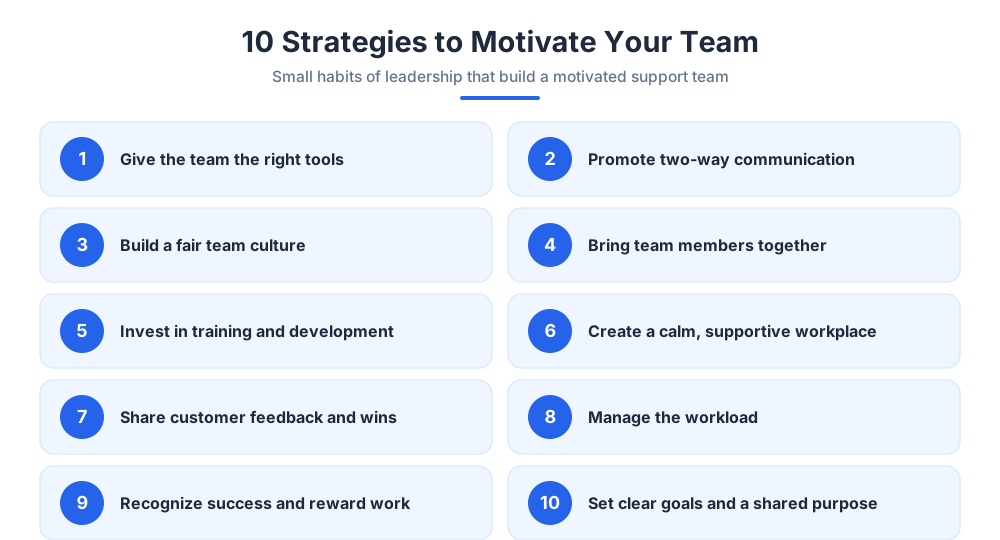
Here are 10 proven strategies, drawn from what consistently works in real customer service organizations. Start with the two or three that fit your situation today. Each one is a practical way to raise employee motivation without a large budget.
1. Give your team the right tools and software
Nothing drains motivation faster than fighting bad tools. Agents who switch between ten tabs to answer one customer service question feel set up to fail, and the customer waiting on the other end of the call feels it too. Give the team a clear view of the whole account and the systems to deliver fast service.
Solid customer service software, a shared knowledge base, and a tidy ticketing system remove daily friction. A customer relationship management platform keeps every customer history and past ticket in one place, so an agent never has to ask the customer to repeat themselves. When the tools do their job, agents spend their energy on real service, not on workarounds.
2. Promote open, two-way communication
Agents on the front line see customer service problems before anyone else. If they have no safe way to raise them, motivation fades and good ideas die quietly. Build real two-way communication into how the group works, and treat employee feedback as a resource rather than a complaint.
Hold regular one-on-one meetings, run short team meetings, and offer a channel for anonymous feedback. Then act on what you hear. Communication that changes nothing teaches employees to stop talking. When a manager explains why a suggestion was or was not adopted, that constructive feedback builds a culture of feedback that lasts.
3. Build a fair, healthy team culture
A little friendly competition can lift a team, but only inside a fair culture. Rewards tied to performance work well when the rules are transparent and every employee has a genuine chance to do well. In a call center, a visible leaderboard can energize the floor, but only if its metrics are honest.
Unfair contests do real damage. If the same person always wins, the rest disengage. Keep the culture supportive first and competitive second, and make sure recognition reaches quiet, steady performers too. A healthy team celebrates the agent who calmly handles the hardest customer as much as the one with the fastest numbers, because patient customer service with a difficult customer is just as valuable as speed.
4. Bring team members together
Support work can be isolating. Agents sit heads-down in their own queues and may rarely speak to the team members one desk over. Deliberate team building closes that gap.
Group events, shared lunches, and small projects let people connect as humans. Team members who know each other cover for each other, and that mutual support is motivation you cannot buy. Strong collaboration also means a tough customer service issue gets a second opinion fast and a better answer.
5. Invest in training and development
Few things motivate like growth. Agents want to get better and see a path forward, and training is how you give them both. Start with a thorough onboarding program so no new hire feels lost on the customer support line.
Then keep investing. Ongoing training, development workshops, and clear routes into senior or leadership roles tell employees the business is betting on them. Practical training also raises confidence: an agent who knows the product answers the customer with certainty. Strong development planning is one of the clearest signals that a manager takes job satisfaction seriously, and steady training keeps service quality climbing. In a call center especially, this training pays off in shorter handle times and a calmer floor.
6. Create a calm, supportive workplace
Customer service is demanding, so the work environment around it matters. A positive work environment is calm, respectful, and realistic about what one person can do in a day.
Protect work-life balance, keep overtime rare, and make it normal to take real breaks. An employee who is rested and not dreading their shift brings far more patience to every conversation. Where back-to-back calls leave little room to breathe, even a short, protected pause between difficult conversations can reset an agent for the next customer.
7. Share customer feedback and wins
Agents hear complaints all day and praise almost never. Fix that imbalance. When a customer sends positive feedback, share it with team members and name the person who earned it. A single line of thanks from a real customer can carry an agent through a long shift.
Sharing customer feedback shows employees their work matters and connects a hard day to a real result. It also reinforces what excellent customer service looks like, turning one happy customer into a lesson the whole team can learn from.
8. Manage the workload and protect productivity
Even a motivated agent breaks under an endless queue. Unmanaged workload is one of the fastest ways to kill team spirits, so treat balanced staffing as a motivation strategy.
Use workload tools, route tickets sensibly, and let a chatbot handle routine questions before they reach a human. When the workload is realistic, agents can do their best work, and productivity stays high without burning anyone out. A well-staffed call center also means shorter hold times, which lowers the number of frustrated people an agent has to calm down before the real customer experience can begin.
9. Recognize success and reward great work
Recognition is the cheapest, strongest motivator there is. Notice good work out loud, often, and specifically. A quick public thank-you gives an employee a real sense of accomplishment after a hard customer service issue.
Back that up with real rewards: bonuses, extra time off, small unique gifts, or a clear path to advancement. Tie rewards to fair, transparent metrics so every employee trusts the system, and celebrate steady effort, not just headline numbers. The same recognition ideas that marketing teams use to energize their own employees apply just as well in customer service.
10. Set clear goals and a shared purpose
People work harder when they know what they are aiming at and why it matters. Vague expectations create anxiety; clear goals create focus. Set specific, reachable targets with each employee so progress feels achievable rather than abstract.
Smart goals work best: specific, measurable, and time-bound, so each small success is easy to celebrate. Then connect those goals to a larger mission, the simple aim of helping the customer succeed. An agent who understands the customer needs behind each ticket, and who sees the point of the work, brings far more to it. That sense of meaning is what turns a customer service job into a contribution.
How to measure team motivation
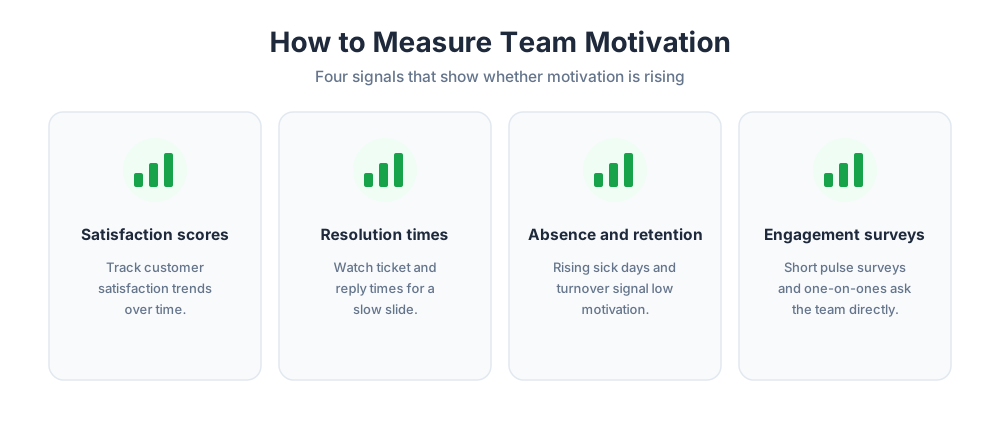
Motivation feels intangible, but you can track it. Measuring it turns a vague worry into something you can manage, and shows whether your efforts are paying off.
Metrics that reveal motivation
Watch a small set of signals: customer satisfaction scores, ticket resolution times, absenteeism, and staff turnover. Trends matter more than any single number. A slow, steady slide in customer satisfaction often points to a motivation problem under the surface, so do not wait for a crisis to look closer. The volume of repeat contacts from the same customer is another quiet clue, because a tired team tends to close tickets fast rather than fully.
Pair the customer service metrics with employee engagement surveys. Together they show whether your strategies are working and which part of the group needs attention next. The goal is steady improvement in both customer outcomes and team motivation. Rising customer satisfaction and a falling customer effort score usually point to a more motivated team and lasting success in customer service.
Ask your employees directly
The simplest method is the most underused: ask. Talk to your employees, run short pulse surveys, and ask what is helping and what is in the way. Honest answers, including hard ones, are the most useful feedback you can get, and acting on them is what builds trust.
Then test changes and watch the result. Motivation work is a loop of continuous improvement, not a one-time fix, and your people will tell you what to try next if you make it safe to speak. Track these efforts over a full quarter. Measuring this way also proves to the wider business that investment in customer service and the support team delivers a clear return.
Motivational quotes to share with your team
Words can give a tired team a small lift, which is why many leaders share inspirational quotes about service and teamwork. Some managers keep a running list of favorite quotes on the company blog so the whole organization can draw from it.
Rotate a fresh quote each week, and mix in customer service quotes that reflect your own values. One simple favorite captures the whole idea: "Take care of your people, and they will take care of your customer." Pair quotes with real recognition, though, because words alone wear thin without action. A quote can open a conversation about customer service, but it is the daily habits in this guide that keep employees genuinely motivated.
How the right software supports a motivated team
Strategy and culture do the heavy lifting, but the right tools make motivation easier to sustain. When agents have fast, friendly tools, the daily job feels lighter, and that shows up in every customer service conversation. The best support platform fades into the background and lets the agent focus fully on the customer.
Chatim gives your service team a free live chat widget and chatbot for your website. The chatbot handles repetitive questions automatically, which trims the workload and lets employees focus on the conversations that actually need a human. Live chat also keeps each customer's history in one place, so an agent looks prepared instead of scrambling, and a team that feels equipped is a team that stays motivated. For a lean support operation without a large call center, tools like this make professional, exceptional service possible on a modest budget. When the systems support your employees, satisfied customers tend to follow.
Build a customer service team that wants to deliver
Motivating a support team is not about grand gestures. It is the steady practice of giving employees good tools, fair treatment, real feedback, clear goals, and honest recognition. Each of these tips is simple on its own, and the power comes from doing them consistently.
Pick two or three of the strategies above and start now. As motivation climbs, you will see it in faster replies, happier customers, and employees who stay. A motivated team shapes every customer experience with more care, and that care compounds into repeat business, stronger customer success, and steady growth for the company. Used together, these tips are how you motivate a team for the long run, and they are one of the smartest investments a business can make in its people.
Frequently Asked Questions
What are the 5 C's of motivation?
There is no single official 5 C's of motivation, and you will see slightly different lists depending on the source. A common version used in customer service leadership is care, connect, coach, contribute, and celebrate: care about your people as individuals, connect them to a clear purpose, coach them to grow, give them work that lets them contribute, and celebrate their wins. Treat it as a memory aid rather than a fixed rule, and focus on the underlying idea that motivation grows from genuine support, clear meaning, and real recognition.
How to motivate your customer service team?
You motivate a customer service team with steady habits rather than one-off perks. Give agents the right tools, promote open two-way communication, keep the culture fair, invest in training and development, protect a calm work environment, share customer feedback, manage the workload, recognize and reward great work, and set clear goals tied to a real purpose. None of these need a big budget. Pick the two or three that fit your team today, apply them consistently, and motivation builds week by week.
What is the 10/5/3 rule in customer service?
The 10/5/3 rule is a retail and hospitality guideline for greeting customers on the floor. The common version says a staff member should acknowledge a customer within ten feet, offer a warm greeting within five feet, and then offer direct help once they are within about three feet. The exact wording varies between companies, and some use a simpler 10 and 5 rule, so treat it as a principle about noticing and welcoming people early rather than a fixed script. For a customer service team, the same idea applies to digital channels: respond fast and acknowledge the customer before they have to ask twice.
What are the 5 C's of customer service?
The 5 C's of customer service are usually given as communication, competence, courtesy, consistency, and caring, though the exact list varies between frameworks. Communication means clear, honest updates. Competence means actually knowing the product. Courtesy means a respectful tone even under pressure. Consistency means every customer gets the same standard. Caring means treating the person as a person. A motivated team delivers all five naturally, which is why motivation work and service quality are so closely linked.
Why is it important to motivate a customer service team?
A customer service team is the human face of your company, and its energy reaches the customer in every conversation. A motivated team listens harder, solves problems faster, and protects customer loyalty, while a demotivated one produces slow replies, unhappy customers, and high turnover. Because replacing an experienced agent is costly and slow, motivation is not a soft concern. It is a direct driver of customer satisfaction, retention, and revenue.
What are the signs of low morale in a customer service team?
Watch for rising ticket and resolution times, falling customer satisfaction scores, more sick days, and team members who have gone quiet in meetings. Listen for cynicism about customers or about the company, and notice when agents stop offering ideas and simply process tickets. On a call center floor it can sound like flat greetings and rushed closes. No single sign is conclusive, but a cluster of them is a clear signal to act before low morale turns into resignations.
How do you motivate a call center team?
A call center team responds to the same fundamentals as any support team, with a few extras. Manage the workload so agents are not stuck on back-to-back calls with no breathing room, since pacing is a major morale factor on a busy floor. Use fair, transparent metrics rather than pure speed targets, recognize the agent who calmly handles a hard caller as much as the fastest one, and give the team good tools so calls go smoothly. Training, breaks, and genuine recognition do the rest.
How do you measure customer service team motivation?
Track a small set of signals: customer satisfaction scores, ticket resolution times, absenteeism, and employee retention, watching trends rather than single numbers. Pair those service metrics with regular employee engagement surveys, and most importantly, ask your team directly through short pulse surveys and one-on-one conversations. Together, the numbers and the honest answers show whether your motivation efforts are working and which part of the team needs attention next.
What rewards motivate customer service agents?
A mix works best. Recognition is the cheapest and strongest reward: a specific, public thank-you often means as much as anything formal. Back it with tangible rewards such as bonuses, extra time off, small unique gifts, or a clear path to advancement. The key is fairness: tie rewards to transparent metrics every agent trusts, and make sure quiet, steady performers are recognized alongside the headline numbers, not just the fastest workers.
How does training motivate a support team?
Training motivates because people want to grow and to feel competent. A thorough onboarding program means new hires are not left struggling, and ongoing development workshops plus clear routes into senior or leadership roles tell agents the company is investing in their future. Confident, well-trained agents handle customers with more certainty and less stress, so training lifts both motivation and service quality at the same time.
How do you keep remote customer service agents motivated?
Remote agents need extra attention to connection and communication. Hold regular one-on-one and team meetings so no one feels isolated, create informal channels for the team to talk as people, and be deliberate about sharing customer feedback and wins where everyone can see them. Set clear goals so remote work feels structured rather than vague, recognize good work publicly, and check in often on workload and well-being, since burnout is harder to spot from a distance.
How does customer feedback motivate a team?
Agents hear complaints all day and praise almost never, so sharing positive customer feedback corrects a real imbalance. When you pass along a customer's kind words and name the agent who earned them, you connect a hard shift to a concrete result and show that the work matters. It also teaches the whole team what good service looks like, turning one happy customer into a lesson everyone can learn from.
How often should you recognize your customer service team?
Recognition works best when it is frequent and specific rather than saved for an annual review. Aim to notice good work out loud as it happens, ideally several times a week across the team, with quick public thank-yous in your team channel or meetings. Pair that steady stream of small recognition with occasional larger rewards. Frequent, genuine acknowledgment keeps motivation topped up, while rare recognition lets it quietly drain away.
Related articles
More in Customer service → SaaS Customer Support: The Stage-by-Stage Guide (2026)
How SaaS customer support actually works at each stage: the right stack from founder-led live chat to a full support operation, channels, and metrics.
 How to Reduce Customer Churn: 5 Levers in Payback Order
Reduce customer churn by pulling five levers in payback order: payment recovery, onboarding, support quality, pricing fit, and a 90-day win-back.
 10 FAQ Page Examples That Actually Help Customers (2026)
10 FAQ page examples from Shopify, Airbnb, Slack, Nike and more, with the exact pattern each gets right and a checklist to build your own FAQ page.
 12 Customer Service Email Templates for Every Scenario (2026)
12 customer service email templates for complaints, refunds, delays, bugs and saying no, plus the five-line skeleton that keeps them sounding human.