How to Attract Advertisers to Your Website (2026)

Learning how to attract advertisers to your website turns an audience you already have into a steady revenue stream. Advertisers do not pay for pages, they pay for access to engaged readers, so the work splits in two: build a website worth advertising on, then package and sell that attention well.
This guide is a practical playbook for how to attract advertisers to your website. It covers the monetization strategies that work in 2026: Google AdSense and ad networks, affiliate marketing, direct ad sales, and the content and promotion that grow the website traffic behind all of it.
Whether you run a blog, a niche site, or a small business website, the same principles apply. Grow the site and its readers first, then layer on the right ad formats, a media kit, and a direct pitch that makes advertisers say yes.
What advertisers look for in a website
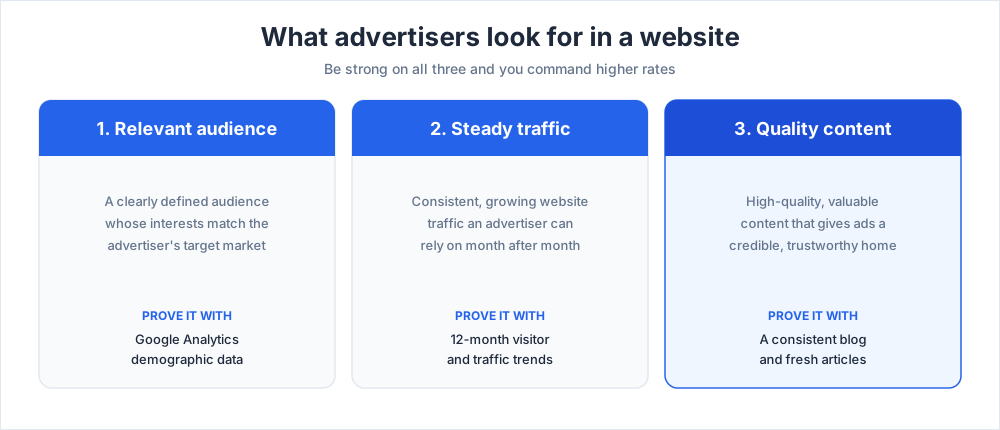
Before you chase advertisers, look at your website the way they do. Advertisers and every ad network judge a site on three things, and a website that is strong on all three earns higher rates and easier deals.
Score your own website honestly against the three tests below. The gaps you find become the road map for the rest of this guide.
A relevant, engaged audience
Advertisers want their products in front of the right people. A clearly defined audience, one whose interests match an advertiser's target market, is worth far more to them than a large but random crowd.
Use Google Analytics to document who your readers are: demographics, location, interests, and on-site behaviour. When you can describe your audience in specifics, the website stops being a guess for a brand and becomes an easy yes.
Steady website traffic
Traffic volume is the second test. You do not need millions of visitors, but you do need steady, growing traffic that an advertiser can rely on month after month.
Document your monthly visitors and the trend over the past year. Consistency reassures publishers and brands far more than one viral spike, because advertisers are buying predictable reach for their products, not a lucky week.
High-quality, valuable content
The third test is content. High-quality content keeps readers on the site, signals a trustworthy brand, and gives any ad a credible home. Advertisers screen for it, because thin or outdated material drives buyers away no matter how busy a site is.
Content is also what advertisers borrow credibility from. A brand placed beside a well-researched article looks better by association, so the quality of your writing directly sets the price of your ad space.
Grow the traffic advertisers want
If traffic is thin, fix that before anything else. The methods below are the most reliable ways to grow a website, and each one also builds the content and online presence that make a site easier to monetize.
You do not need every channel at once. Pick two of these strategies, run them consistently for a quarter, and add the next one when the first two are working.
Content marketing and blogging
Content marketing is the foundation. A consistent blog gives search engines something to rank, gives readers a reason to return, and gives advertisers context for their ads.
Publish a useful blog post on a steady schedule and the audience compounds over time, because every article keeps working long after you hit publish. See our guide to driving traffic to your website for the full playbook on turning a blog into a growth engine.
SEO and search engine ranking
Search engine optimization turns that content into durable traffic. Target the keywords your readers actually search, then use SEO tools to track your Google rankings and improve the pages that already sit close to the top.
Organic visits from Google are the cheapest, most advertiser-friendly readers a website can build, because they arrive without an ongoing ad spend. Strong rankings on Google also make a site look like an authority, which advertisers pay a premium to sit next to.
Social media promotion
Social platforms give every new post an immediate readership. Share your work on the social media platforms where your readers spend time, mainly Facebook and LinkedIn for most niches, and treat each channel as deliberate website promotion.
Active social media accounts also build brand awareness, and a recognizable brand makes direct advertiser outreach far easier. A business with a visible Facebook and LinkedIn presence simply looks more credible to a potential sponsor.
Guest blogging and influencer marketing
Publishing guest articles on respected sites in your niche earns backlinks, referral readers, and credibility with a new readership. Pitch a useful article to a larger blog and you borrow its readership for the price of writing one piece.
Influencer collaborations work on the same logic. A mention from a trusted voice sends their readers straight to your website, and one honest partnership can do more for a small site than a month of paid ads.
Email marketing and newsletters
Email marketing keeps readers coming back without paying for them twice. Invite visitors to subscribe to your newsletter, then send a regular email newsletter built around your best content.
Use email campaigns to promote each new article and bring readers back to the website. An engaged newsletter list is an audience you own outright, and our guide to running an email blast covers the mechanics. Email marketing is also a channel advertisers will pay to appear in.
Choose how to monetize your website
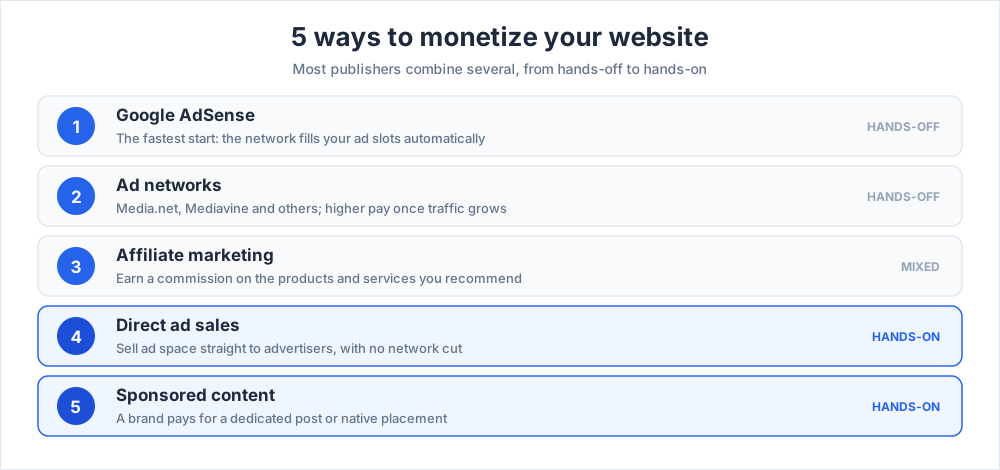
With traffic in place, decide how to monetize your website. Most publishers combine several income and marketing strategies, because a mix is far steadier than depending on one ad platform or one buyer.
The main monetization methods sit on a spectrum from hands-off to hands-on. The hands-off options are easier to start; the hands-on options pay more per visitor.
Google AdSense and ad networks
Google AdSense is the fastest way to start. Sign up, place the code on your website, and Google fills the ad slots automatically based on each reader and page.
Other networks, such as Media.net and Mediavine, work in a similar way and often pay more once your site grows. An ad network handles the advertiser relationships for you, which is why most websites begin with Google AdSense before moving to direct sales.
Affiliate marketing
This performance marketing model pays you a commission when a reader buys a product you recommend. It pairs naturally with reviews and how-to guides: a genuinely useful product review earns affiliate revenue and ad revenue from the same blog post, so one article does two jobs at once.
This model rewards trust, so recommend only the products or services you would use yourself. Done with care, it is one of the highest-margin tactics a site owner can run, and it scales with reader trust rather than ad inventory.
Direct ad sales and sponsored posts
Direct ad sales mean selling ad space straight to advertisers, with no network taking a cut. This is where the real money is once your traffic is solid and your audience is well documented.
A sponsored post, where a brand pays for a dedicated article on your blog, is the most popular direct format. A marketplace such as BuySellAds can also connect your website with buyers who want to advertise on a site like yours.
Ad formats that attract advertisers
Advertisers think in ad formats. Offering a clear menu of ad options, with standard sizes and published rates, makes your website easy to buy from. The three formats below cover almost every direct deal.
Set a rate for each one and put the list in your media kit so a buyer can choose in minutes rather than emails.
Display and banner ads
Display and banner ads are the classic choice: leaderboard, sidebar, and in-article units. They are easy to sell, and every major network supports them, so they are the natural starting point for a website.
Keep relevant ads matched to your topics so they feel like part of the page rather than an interruption. Well-matched display ads protect the reader experience while still earning for the site.
Native ads and sponsored content
Native ads and sponsored content blend into the page and tend to earn higher engagement than banners. A sponsored post and a paid editorial collaboration both sit in this category.
Ad quality matters most here. Native ads only work when the underlying content is genuinely good, so hold sponsored content to the same standard as the rest of your website.
Video ads
These units command the highest rates of any ad type. If you publish video at all, even occasionally, offer it to advertisers as a premium option on your website.
Video also opens pre-roll and in-stream placements that an ad network can fill, which means video earns through both direct deals and automated demand.
Build a media kit that wins deals
A media kit is your website's resume. Before you approach advertisers directly, build a one-page media kit with monthly traffic, audience demographics, engagement numbers, your ad options, and rates.
Keep the media kit current. Advertisers and publishers judge each other on clear, honest numbers, so refresh the figures every quarter and lead with the metrics that prove real value to a business.
How to approach advertisers directly
Automated networks are passive. Direct outreach is where your website promotion strategies actually pay off. Identify small businesses and brands whose products match your audience, then send a short, personalized message with your media kit attached.
Personalize every pitch. Explain how your audience and content help the advertiser reach potential customers, and offer flexible packages so a small business can start small. Networking at industry events and in online communities builds the relationships that become long-term deals, and a clear marketing strategy keeps your outreach consistent.
Smart ad placement and ad load
Ad placement decides how much your ads earn without wrecking the reader experience. Put ads in high-visibility spots, the top of the page, the sidebar, and within content, where advertisers get exposure and readers still get a clean site.
Watch how many ads you run. Too many slow the website, hurt your search rankings, and push readers away. A lighter page with fewer, well-placed ads usually beats a cluttered one on both revenue and reader trust, so test placements and keep adjusting.
Track results and ad performance
Tracking results keeps advertisers happy and your revenue growing. Use analytics to measure impressions, clicks, and conversion rates for every advertiser and every ad slot on your website.
Share those results with advertisers. A brand that sees clear value renews, refers others, and spends more, which is how a modest website grows into a profitable one.
Reinvest part of the revenue into more articles and outreach, so the site keeps getting better as it earns. The website that tracks honestly and reinvests steadily is the one that keeps its advertisers for years.
Key takeaways: ways to attract advertisers
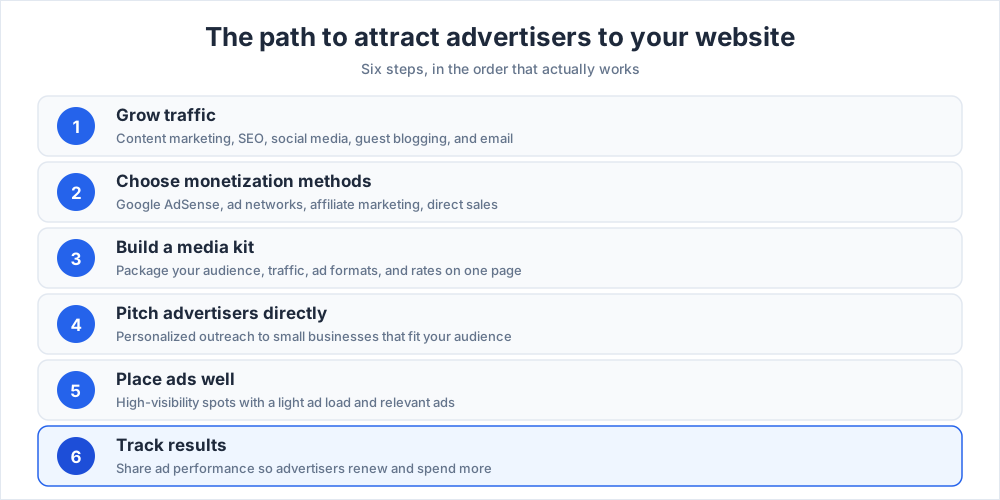
Knowing how to attract advertisers to your website comes down to a clear sequence: grow your traffic with content, SEO, social media, and email, choose monetization strategies that fit, package your audience in a media kit, and pitch advertisers directly.
The ways to attract advertisers all reward patience. Start with one traffic channel and one monetization method, prove the results with real numbers, then expand. A website with a genuine readership and honest reporting will always find a business that wants to reach its readers.
For more on growing the readership behind your ad revenue, see our guides to low-cost digital marketing and social media for business, and consider adding Chatim live chat to turn more of that traffic into engaged, repeat visitors.
Frequently Asked Questions
What are the 7 C's of a website?
The 7 C's of a website are a design and marketing framework for evaluating an online presence: Context (layout and visual design), Content (the text, images, and video on the site), Community (how visitors interact with each other), Customization (how well the site tailors itself to the user), Communication (how the site talks with visitors), Connection (how it links to other sites), and Commerce (its ability to enable transactions). A website that scores well across the 7 C's is easier to grow and more attractive to advertisers.
Is $20 a day good for Google ads?
For a small business buying Google Ads, $20 a day (about $600 a month) is a reasonable starting test budget. Whether it is enough depends on the cost per click in your industry: in low-competition niches it can buy meaningful traffic, while in expensive niches it may only cover a handful of clicks. As a publisher learning how to attract advertisers to your website, it helps to know advertisers think in daily budgets, so offering flexible packages that fit a $20-a-day buyer keeps your inventory accessible to small businesses.
How to get 1000 visitors a day to your website?
Reaching 1,000 visitors a day usually takes consistent work across several channels: publish search-optimized content on a regular schedule, build search engine rankings with SEO, promote every post on social media, and grow an email newsletter that brings readers back. Most websites reach this level over 6 to 12 months of steady publishing rather than overnight. Focus on one or two traffic channels first, prove they work, then add the next.
How do I make $100 per day with AdSense?
Making $100 a day with Google AdSense depends on your traffic and your RPM (revenue per thousand pageviews). At a typical RPM of $5 to $15, you would need roughly 7,000 to 20,000 pageviews a day to reach $100. That is a high bar for AdSense alone, which is why most publishers combine AdSense with direct ad sales, sponsored posts, and affiliate marketing. Growing traffic and diversifying revenue is more reliable than relying on AdSense by itself.
How much traffic do you need to attract advertisers?
There is no single number. Ad networks like Google AdSense accept new websites with very little traffic, while premium networks such as Mediavine set monthly session minimums. Direct advertisers care less about raw traffic and more about a relevant, engaged audience: a niche site with 10,000 well-targeted monthly visitors can out-earn a general site with far more. Document steady, growing website traffic and a clearly defined audience, and you can attract advertisers at almost any size.
How do I find advertisers for my website?
You have four main routes. Ad networks (Google AdSense, Media.net, Mediavine) connect you with advertisers automatically. Marketplaces such as BuySellAds let advertisers find and book your ad space. Direct outreach means pitching small businesses and brands whose products match your audience, with your media kit attached. Networking at industry events and in online communities builds the relationships that turn into long-term direct deals. Most publishers use a combination of all four.
What is a media kit and what should it include?
A media kit is a one-page document that works as your website's resume for advertisers. It should include your monthly traffic and visitor numbers, audience demographics and interests, engagement metrics, the ad formats you offer with their sizes, your rates, and a short note on your niche and tone. Keep it current, refresh the numbers every quarter, and lead with the metrics that show real value to a brand.
Which is better, ad networks or direct ad sales?
They serve different stages. Ad networks like Google AdSense are passive and easy to start, so they are the right first step for a newer website, but they take a cut and pay modest rates. Direct ad sales mean selling ad space straight to advertisers with no middleman, which pays far more once your website traffic is solid and your audience is well documented. Most successful publishers run both: networks fill unsold inventory while direct deals earn the premium revenue.
How much money can a website make from ads?
Ad revenue varies widely with traffic, niche, and monetization method. A small blog might earn a few dollars a day from AdSense, while a high-traffic site in a valuable niche can earn thousands a month through a mix of display ads, sponsored posts, and affiliate marketing. The most reliable way to grow ad revenue is to grow qualified traffic, diversify across several monetization methods, and move from ad networks toward direct ad sales over time.
Do I need a lot of traffic to use Google AdSense?
No. Google AdSense has no minimum traffic requirement, so it is the easiest way for a new website to start earning ad revenue. You do need original, high-quality content, a finished site, and compliance with AdSense program policies. Earnings will be small until your traffic grows, but AdSense is a practical on-ramp while you build the audience that attracts higher-paying direct advertisers.
What types of ad formats can I sell on my website?
The common ad formats are display and banner ads (leaderboard, sidebar, and in-article units), native ads and sponsored content that blend into the page, and video ads, which command the highest rates. Many publishers also sell sponsored posts, newsletter placements, and affiliate partnerships. Offer a clear menu of ad formats with sizes and rates in your media kit so advertisers can choose quickly.
How do I set ad rates for my website?
Ad rates depend on your traffic, niche, audience quality, and the ad format. A practical approach is to check what ad networks pay you per thousand impressions, then price direct deals above that, since direct buyers get a more relevant placement. Sponsored posts are usually priced as a flat fee based on traffic and audience value. Start with rates you can defend with real numbers, and raise them as your website traffic and results grow.
How long does it take to start earning ad revenue?
If you use Google AdSense or another ad network, you can start earning within days of being approved, though early amounts are small. Meaningful ad revenue follows traffic, so it typically takes 6 to 12 months of consistent content and promotion before the numbers become significant. Direct ad sales and sponsored posts come later, once you have steady website traffic and a media kit to show advertisers.
Related articles
More in Marketing & sales → Best SaaS Affiliate Programs in 2026: 7 Verified Picks
7 SaaS affiliate programs with every rate, duration, cookie, and payout term verified on the official pages, plus the four numbers that decide value.
 SaaS Onboarding Best Practices That Shrink Time to Value
SaaS onboarding best practices organized as a timeline: set expectations at signup, deliver value in session one, build the habit in week one, then measure.
 10 SaaS Marketing Strategies That Compound (2026)
Ten SaaS marketing strategies ranked by cost and time to results, the arithmetic that picks the right two or three for your price point, and what to skip.
 Free Trial Conversion: Fix Where Trials Actually Die
Forget trial conversion benchmarks: decompose the funnel, find which of the four deaths kills your trials, and apply the fix that matches, chat included.