Types of Advertising: The Complete Guide for 2026
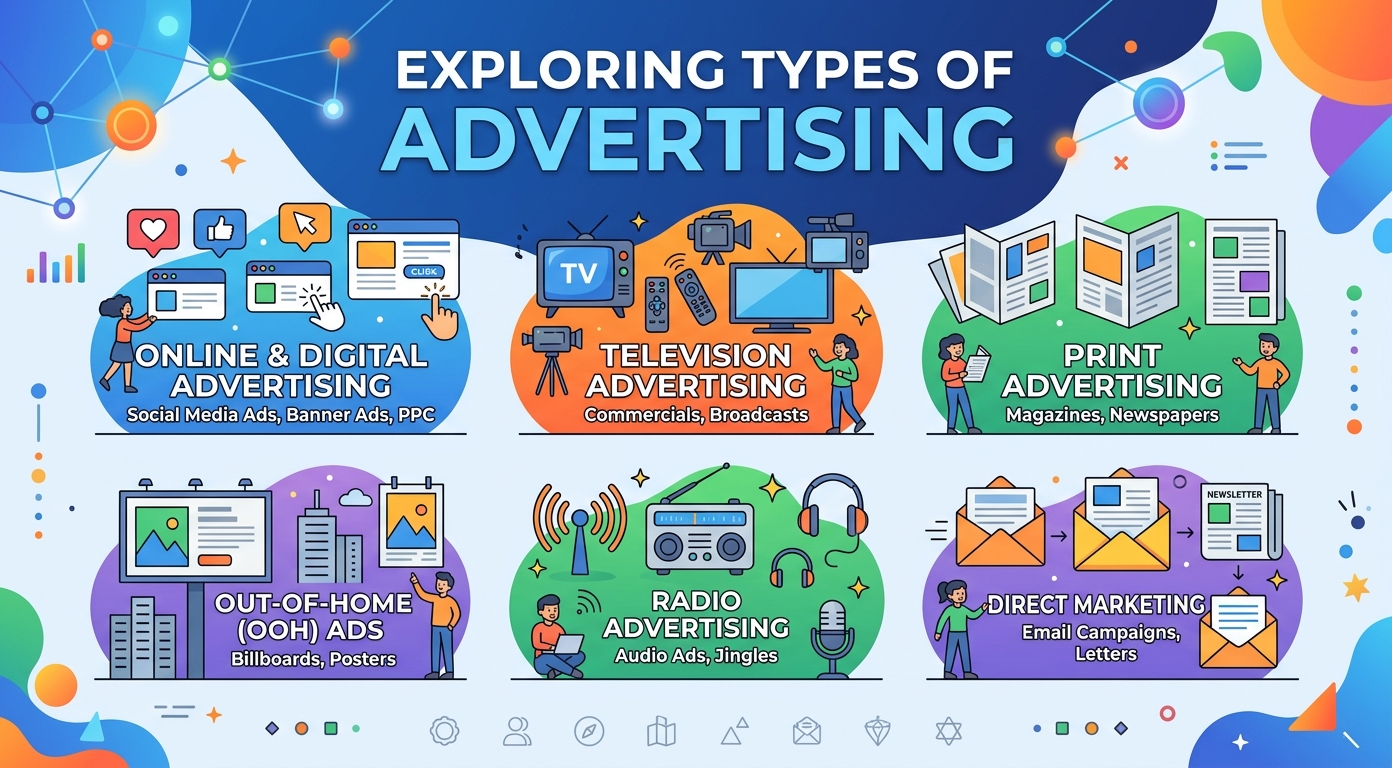
Advertising is how a business puts its message in front of the right people, and there is no single way to do it. The types of advertising available today range from a painted billboard on a highway to a few lines of text on a search results page, and each one reaches buyers in a completely different way and at a different moment in their day.
This guide breaks down the main formats in plain language, explains how digital and traditional channels differ, and shows how to use each one well. Whether you run a small shop or a fast-growing brand, knowing the common types of advertising helps you put a budget where it actually works, instead of spreading it thin across channels that were never built for your customers in the first place.
Why the different types of advertising matter
The purpose of advertising is simple to state: connect a product or service with the consumers most likely to buy it. How well you manage that connection depends almost entirely on picking the right channel for the right audience. A brilliant message on the wrong channel is wasted money, which is why the format you choose is never a small or casual decision.
Each format also reaches people in a different moment. A search ad meets someone who is already actively looking for an answer. A billboard catches a commuter who was not looking for anything at all. A social post lands while a person relaxes between tasks. Choosing well means matching the format to where your consumers actually spend their attention, not where you wish they did.
Cost is the other reason the choice matters so much. A national television slot and a small online campaign can both succeed, yet they suit wildly different budgets. Modern advertising gives even a tiny business affordable, measurable options that did not exist twenty years ago, so a careful marketing plan can now compete with the reach of a far bigger spender.
Finally, the goal itself shapes the format. Product advertising, which promotes one specific item with a clear offer, looks nothing like brand advertising, which builds slow, long-term recognition over years. Get the match between goal, format, and audience right, and every dollar works harder, because the message lands with consumers who are genuinely ready to act on it.
The main types of advertising: digital and traditional
Most types of advertising fall into two broad families: digital advertising and traditional advertising. Knowing which family a given format belongs to makes the whole landscape far easier to navigate, because the two groups behave differently on cost, targeting, speed, and the way you measure success.
Traditional advertising methods are the older, offline channels: print, television, radio, and outdoor displays. They reach a wide, general audience and stay strong for local trust and mass awareness. Their weakness is precision, since it is hard to know exactly who saw the ad, but their strength is a credibility that screens still struggle to match.
Digital advertising covers every channel that runs on the internet: search, social media, display, video, and email. Digital marketing platforms add precise targeting and clear measurement down to the individual click, which is why online advertising now takes the largest single share of global marketing budgets and keeps growing year after year.
The line between the two families keeps blurring. A television commercial can be served inside a streaming app with digital targeting, and a print magazine can carry a scannable code that opens a website. Even so, the digital and traditional split is still the simplest and most useful way to organize the common formats before you spend.
The sections below walk through each format in turn. Each of these types of advertising methods suits a different goal and budget, so we start with digital advertising types, then move on to traditional advertising types, because that order matches the way most businesses actually build a plan today.
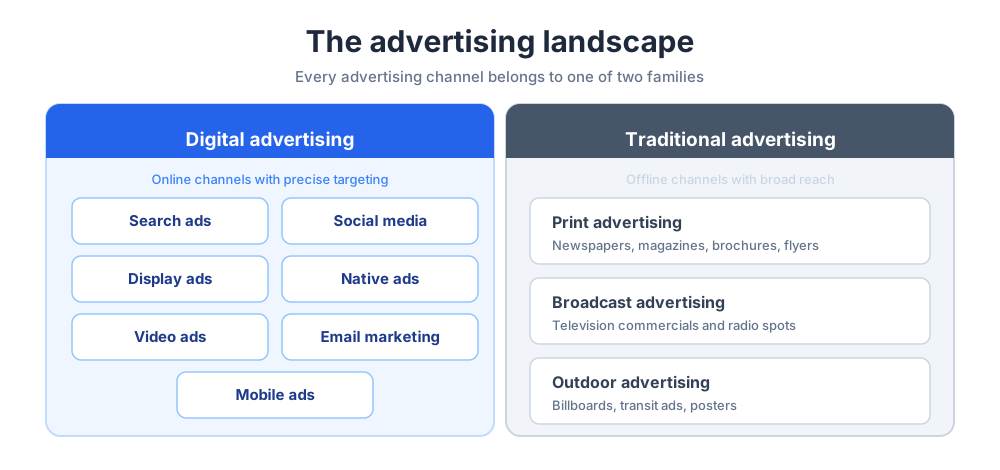
Digital advertising types
Digital advertising types are the channels that run on the internet, and they now form the core of most plans. They share three big strengths: sharp audience targeting, fast feedback you can read within hours rather than months, and the freedom to start with a small budget and scale up only the parts that clearly work. Every online advertising channel in this group can be tested cheaply before you commit.
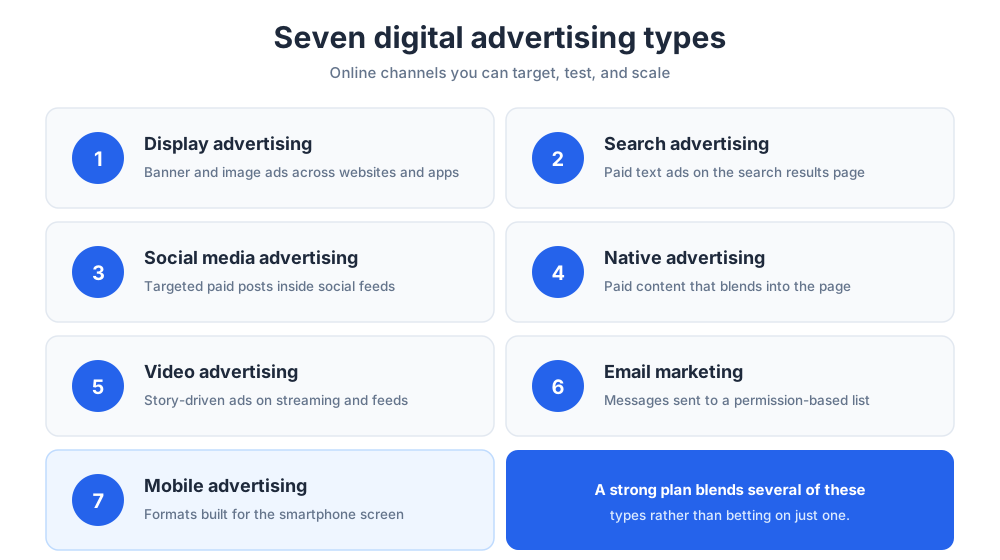
Below are the seven digital formats most businesses rely on. These online advertising methods overlap heavily in practice, and a strong plan usually blends several of them rather than betting everything on one. Content marketing and influencer marketing often sit alongside these paid formats too, and digital ads make every result easy to see, which keeps each channel honest about what it delivers.
Display advertising
Display advertising is the visual side of the open web. It covers the banner ads, image blocks, and rich media units that appear on websites and apps, wrapped around the article or video a person actually came to read. It is one of the oldest digital formats and still one of the most widely used, because it is cheap to run and easy to scale.
The classic unit is the banner: a graphic that sits in a fixed slot on a page. Today these display ads can be static images, short looping animations, or interactive units that expand on a tap. Most of the online ads in this family are now bought and placed through automated systems rather than through direct deals with individual publishers.
That automated buying is called programmatic advertising. Instead of negotiating with one website at a time, you set a budget and a list of targeting rules, and advertising platforms place your display ads across thousands of sites in real time, adjusting the bid for every single impression based on who is about to see it.
Display works best for awareness and retargeting rather than the immediate hard sell. It keeps a brand visible while people browse, and it quietly reminds shoppers of a product they viewed once but did not buy, nudging them gently back toward the site when they are finally ready to make the decision.
Search advertising
Search advertising puts your message on the results page at the exact moment someone searches for a related term. It is often called pay-per-click, because you are charged only when a user actually clicks through, not simply when the ad is shown. That pricing model makes it one of the most accountable formats a business can buy.
The standard unit is a short block of text ads placed above or beside the organic results. Because the searcher has just typed exactly what they want into the box, this is one of the highest-intent formats in all of advertising. The person is already looking to solve a problem, and a relevant ad simply offers them the fastest route to an answer.
It sits inside the wider practice of search engine marketing, which also covers shopping ads with product images and listings on map results. For any business that sells something people deliberately search for, whether a plumber or a software tool, this is very hard to beat as a steady source of ready-to-buy traffic.
Social media advertising
Social media advertising places paid messages directly inside the feeds of platforms like Facebook, Instagram, LinkedIn, TikTok, and X. It is one of the fastest-growing parts of digital advertising and now a default channel for almost every brand, from a one-person shop to a global retailer.
The single biggest draw is targeting. Social media platforms know a great deal about how their users behave, so your campaigns can reach a very precise audience by age, location, interest, job title, and even recent buying behavior. That precision lets a small budget land in front of exactly the right people.
Formats are flexible and constantly evolving. A single image, a swipeable carousel, a short vertical video, or a full-screen story can all run as paid social posts. The best social media ads do not feel like ads at all; they blend naturally into the content that people are already scrolling past.
Done well, social media campaigns achieve far more than a single sale. They build a loyal following, gather honest feedback in the comments, and turn ordinary customers into a community that recommends you to others, which is why social media now sits close to the center of most marketing plans. For more on building that presence, see our guide to social media for business.
Native advertising
Native advertising is paid content deliberately designed to match the look and feel of the page it sits on. Instead of interrupting the experience the way a flashing banner does, it blends straight into it, so the reader meets it as part of the normal flow of the page.
A sponsored article on a news site, a recommended-story unit at the foot of a page, or a promoted post inside a feed are all native advertising. Each one is clearly labeled as paid, in line with advertising rules, yet it is written and formatted to read like the surrounding editorial content rather than a sales pitch.
Native ads work precisely because they feel less like a hard pitch. Readers who instinctively scroll past obvious banner ads will often stop for sponsored content that genuinely informs or entertains them, which makes the format a strong choice for storytelling, education, and products with a long, considered buying cycle.
Video advertising
Few formats can tell a story the way video does, using moving pictures and sound to create something no static unit can match. It runs on streaming services, social feeds, and dedicated platforms like YouTube, and it has become one of the most engaging ways to reach an audience that increasingly prefers to watch rather than read.
Common video ads include the short clips that play before or during other content, plus the longer branded videos a company posts to its own channels. Length ranges from a six-second hook designed for pure recall to a two-minute mini-film that can carry real emotion and a full narrative arc.
This format is powerful for both emotion and demonstration. It shows a product working in real life, answers questions a photo cannot, and builds a genuine feeling around a brand. The cost of production has also fallen sharply, which puts a polished clip well within reach of small teams and tight budgets.
Email marketing
Email marketing sends commercial messages straight to people who have already chosen to hear from you. Because the audience has actively opted in, email advertising reaches a warm, permission-based list instead of a cold crowd, and that single fact makes it one of the most efficient channels available.
Typical email campaigns include regular newsletters, new-product announcements, abandoned-cart reminders, and seasonal offers tied to a holiday. Each message can be personalized with the reader's name, location, and past purchase behavior, which lifts open and response rates well above anything a generic, untargeted mailing could ever achieve.
The real strength of email is ownership and return. You own the list outright, you are not renting attention from a platform that can change its rules overnight, and a well-run program consistently delivers one of the highest returns of any channel. To send a single message to your whole list at once, see our guide to the email blast.
Mobile advertising
Mobile advertising targets people on smartphones and tablets, the screens where the large majority of browsing now happens. It is less a separate channel than a layer that runs across all the others, shaping how every format is built, sized, and timed for a small touchscreen.
It includes ads placed inside apps, messages tied to a person's real-world location, and creative designed specifically for a phone. Search, social media, display, and video can each be delivered to a handset, optimized for a quick tap and a vertical screen rather than a mouse and a wide monitor.
Because a phone travels everywhere with its owner, this format can reach a shopper standing right outside a store or relaxing on the sofa late at night. Any modern plan has to treat the small screen as the default surface for an ad, rather than an afterthought added once the desktop version is finished.
Traditional advertising types
Traditional advertising types are the offline channels that built the entire industry long before the internet existed. They are less precise than digital and harder to measure exactly, but they still deliver real scale, hard-won credibility, and a physical presence that a screen simply cannot copy.
Three traditional formats still matter most for businesses today: print, broadcast, and outdoor. Used thoughtfully alongside digital channels, they round out a plan and reach people in the places and moments where no online ad can realistically follow them through the day.
Print advertising
Print advertising places a message on a physical page that a reader can hold. Newspaper advertising, glossy magazine spreads, printed brochures, and mailed flyers all belong squarely to this long-established category of media.
Print ads carry a real sense of permanence and trust. A reader can hold the page, set it down and return to it later, and physically tear out an offer to keep. A specialist magazine also reaches a tightly defined readership with very little wasted spend, since everyone holding it shares a known interest.
It is not cheap, and results are harder to measure than online formats, so traditional print ads work best for local reach, high-trust industries, and audiences that still genuinely prefer paper. Many advertisers now pair printed pieces with a digital call to action, such as a QR code or a short custom URL, to finally close that long-standing measurement gap.
Broadcast advertising
This family covers the paid messages carried over television and radio. It is the classic route to a genuinely mass audience, all reached in a single shared moment, and for decades it was the most powerful tool a large advertiser could buy.
Television commercials combine sight, sound, and motion for maximum emotional impact, and a well-placed spot during a popular show still reaches millions of viewers at once. The trade-off is cost, since producing and airing commercials at national scale remains genuinely expensive and well out of reach for many smaller businesses.
Radio is the audio advertising side of this family. It is far cheaper to produce than television, reaches commuters and loyal local listeners very effectively, and works through steady repetition rather than visual spectacle, which suits a simple, memorable message.
Podcast advertising has grown directly out of that same audio tradition. A trusted host reading a short, personal sponsor message reaches a loyal and highly engaged niche audience, and it brings broadcast-style influence within reach of advertisers working with a much more modest budget.
Outdoor advertising
Outdoor advertising, also widely called out-of-home, reaches people as they move through the physical world. Billboards are the best-known example by far, but the category is much wider than the boards along a highway.
Alongside billboards, it includes transit ads wrapped on buses and trains, posters at stations and bus stops, signs on street furniture, and the bright digital screens now common in malls and airports. All of it targets a location and a flow of foot traffic rather than a single named person.
The strength of outdoor advertising is sheer scale and stubborn repetition. A roadside board is seen by the same commuters every single day, and it cannot be skipped, blocked, or closed with a click the way an online ad can. Digital billboards push this further still, letting advertisers rotate several timed messages on one high-traffic site.
Marketing vs advertising: what is the difference?
The two terms are often used as if they mean exactly the same thing, but the difference between them is genuinely worth understanding before you commit a budget to either one. Confusing them leads to plans that spend on ads while ignoring the strategy that should guide them.
Marketing is the whole process of understanding customers and bringing a product to them successfully. It covers research, pricing, positioning, the product itself, and every channel used to communicate with buyers over time. A clear marketing strategy is the long-term plan that ties all of those moving parts together into one direction.
Advertising is one specific part of marketing: the paid messages a business places to promote what it sells. Every advertising campaign you run is a tool that sits inside that larger marketing plan, supporting its goals, and it is never a replacement for the thinking behind the plan itself.
In short, advertising is a subset of marketing. The types of advertising in this guide are the channels you use to deliver a message; the research, positioning, and strategy behind that message all belong to marketing. Strong marketing decides exactly what to say and to whom, and the right advertising then decides where and how to say it.
How to choose the right types of advertising
With so many options on the table, the real skill is choosing well rather than chasing every channel at once. The right mix depends on four practical questions, and answering each of them honestly prevents most of the wasted spend that sinks weaker marketing plans.
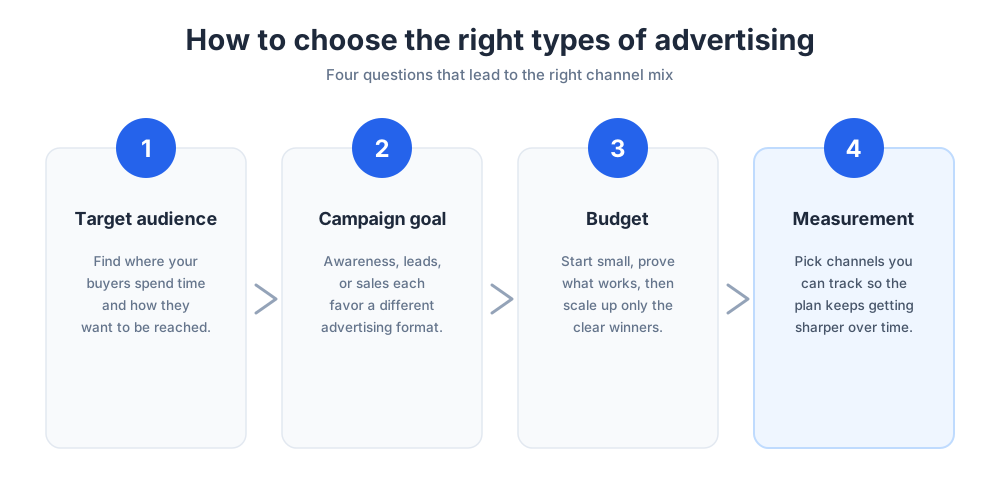
Start with the target audience. Find out where your buyers actually spend their time and how they prefer to be reached. Younger consumers tend to lean toward social and video, while other groups still trust print and broadcast. Build a clear, honest picture of that target audience first, because the channel always has to follow the people.
Next, define the goal clearly. Awareness, clicks, leads, and direct sales each favor different formats, and no single channel does everything. Display and outdoor build broad awareness; search and email drive immediate action. Match the format to the marketing goals you genuinely need to hit this quarter, not to a channel you simply find familiar.
Then look honestly at the budget. A small business can win with focused search and social media spend, while broadcast and large outdoor buys suit a bigger budget. The best advertising strategies start small, prove what works on real consumers with real money, and only then scale up the clear winners.
Finally, plan for measurement from the very first day. Choose channels you can genuinely track, so your marketing strategy improves across campaigns instead of repeating expensive guesses. A target audience that is truly well understood, paired with channels you can measure, is the core of every smart and durable plan. To picture your buyers more sharply, see our guide to the types of customers.
How to plan a successful advertising campaign
Choosing the right channels is only the start of the work. Strong, repeatable results come from running each campaign with a clear process rather than a fresh improvisation every time, and that process is the same whether the marketing budget is small or large.
Begin with one specific objective and one primary audience. An advertising campaign that tries to reach absolutely everyone usually ends up reaching no one with any force, so a tight, almost uncomfortable focus is the foundation that every later result is quietly built on.
Next, craft the message and the creative with care. The best advertising techniques speak to a real and recognized need, lead with a single clear benefit rather than a list, and end with one obvious next step. The same core offer can then be reshaped to fit each channel without ever losing that central idea.
Then set the budget and the schedule. Spread the spend across a few complementary channels rather than a single one, and give each ad campaign enough time and enough money to produce honest data before you judge it. Treat campaigns as a cycle: the strongest advertising campaigns are reviewed, adjusted, and run again, so every fresh round performs measurably better than the last.
How to measure advertising results
If you cannot measure a campaign, you cannot reliably improve it. A small, focused set of numbers shows clearly whether your advertising campaigns are earning their place in the marketing plan, and which channels deserve more of next quarter's budget.
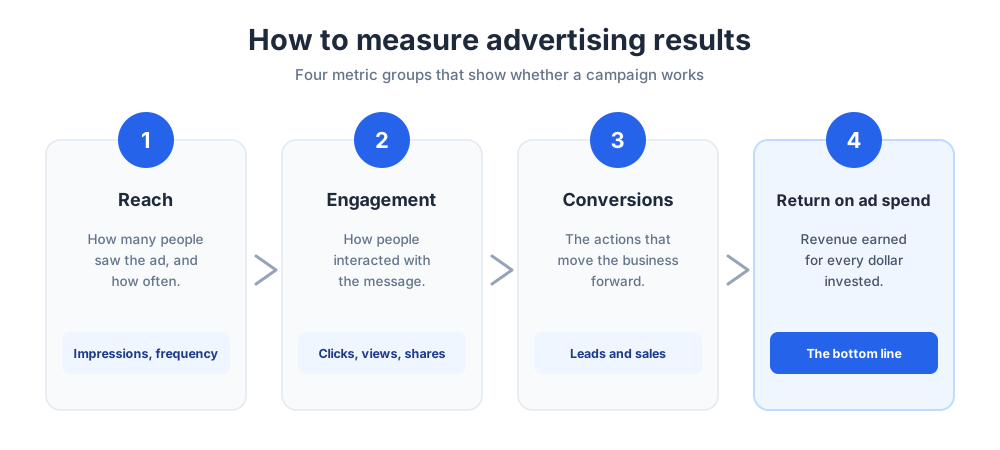
Reach comes first: how many people saw the ad, and how often they saw it. This basic figure shows whether a channel is genuinely delivering the size and shape of audience it promised you when the buy was first agreed.
Engagement comes next: clicks, video views, shares, saves, and time spent with the message. Digital channels make all of this easy to see almost instantly, and consistently weak engagement usually points to creative that is simply not landing with the consumers you targeted.
Conversions are the real test of the work: sign-ups, qualified leads, bookings, and sales. Tie each conversion carefully back to its source so you know which types of advertising actually move the business forward, not just which ones generate traffic figures that look busy.
Finally, track return on ad spend, the revenue earned for every dollar invested in a channel. Watching these numbers steadily over months also reveals trends, and spotting those trends early lets you shift budget toward the channels and campaigns that are clearly pulling ahead of the rest.
Review the figures on a fixed schedule and change only one thing at a time, so you can see what each adjustment really did. Steady, measured improvement always beats a dramatic, hopeful overhaul, and over time that discipline turns advertising from a guess into a reliable, repeatable engine for real growth.
Frequently Asked Questions
What are the main types of advertising?
Advertising splits into two broad families. Digital advertising runs online and includes display, search, social media, native, video, email, and mobile formats. Traditional advertising runs offline and includes print, broadcast (television and radio), and outdoor formats such as billboards. Most businesses combine several of these channels rather than relying on a single one.
What is the difference between digital and traditional advertising?
Digital advertising runs on the internet and offers precise targeting, fast feedback, and measurement down to the individual click, which suits small and flexible budgets. Traditional advertising runs offline through print, television, radio, and outdoor displays. It is harder to measure, but it delivers wide reach and a sense of credibility that screens still struggle to match.
What is the most effective type of advertising?
There is no single most effective type. The best channel depends on your audience, your goal, and your budget. Search advertising tends to convert well because it reaches people who are already looking, while display and outdoor advertising are stronger for awareness. The most effective plan usually blends a few channels and measures which ones actually drive results.
What are the types of digital advertising?
The main digital advertising types are display advertising (banner and image ads), search advertising (paid results), social media advertising, native advertising, video advertising, email marketing, and mobile advertising. They overlap in practice, and many ads, such as search or video, can also be served specifically to phones as mobile advertising.
What are the types of traditional advertising?
Traditional advertising covers print (newspapers, magazines, brochures, and flyers), broadcast (television commercials and radio), and outdoor advertising such as billboards, transit ads, and posters. These offline channels reach a broad audience and build trust, though they are harder to track precisely than online formats.
What is the difference between marketing and advertising?
Marketing is the whole process of researching customers, shaping a product, setting a price, and communicating value. Advertising is one part of marketing: the paid messages a business places to promote what it sells. In short, advertising is a subset of marketing. Marketing decides what to say and to whom, and advertising decides where to say it.
What are the three types of advertisements?
Advertisements are often grouped by purpose into three types. Informational ads explain what a product is and what it does. Persuasive ads build desire and push the audience toward a choice, often against competitors. Reminder ads keep an established brand top of mind so customers return. Many campaigns blend all three in one message.
What type of advertising does Facebook use?
Facebook, part of Meta, runs social media advertising. Its ads appear inside the feed, stories, and other placements as image, video, carousel, and native in-feed formats. The platform's main strength is targeting, since advertisers can reach a precise audience based on age, location, interests, and behavior.
What type of advertising is a billboard?
A billboard is a form of outdoor advertising, also called out-of-home advertising. It targets a location and a flow of traffic rather than a specific person, and it works through scale and repetition. Billboards build broad awareness in a defined area, and they cannot be skipped or blocked the way an online ad can.
What is native advertising?
Native advertising is paid content designed to match the look and feel of the page around it. A sponsored article, a recommended-story unit, or a promoted post in a feed are all native ads. Each is labeled as paid, but it reads like the surrounding content, which makes it less intrusive than a standard banner.
What is programmatic advertising?
Programmatic advertising is the automated buying and placing of ads, most often display ads. Instead of negotiating with one website at a time, an advertiser sets a budget and targeting rules, and software places the ads across many sites in real time, adjusting the bid for each individual impression.
How do I choose the right type of advertising for my business?
Start with your target audience and where they spend their time. Then define your goal, whether that is awareness, leads, or sales, since different formats suit different goals. Check your budget honestly, start small, and pick channels you can measure. Prove what works on a small scale, then scale up the clear winners.
How do I know if my advertising is working?
Track four groups of numbers: reach (how many people saw the ad), engagement (clicks, views, and shares), conversions (sign-ups, leads, and sales), and return on ad spend. Tie each conversion back to its channel, review the figures on a fixed schedule, and change one thing at a time so you can see what moved results.
What is the purpose of advertising?
The purpose of advertising is to connect a product or service with the people most likely to buy it. Beyond an immediate sale, advertising builds awareness, shapes how people see a brand, and reminds existing customers to return. The right format carries that message to the right audience at the right moment.