Retail Customer Service: 10 Strategies to Build Loyalty
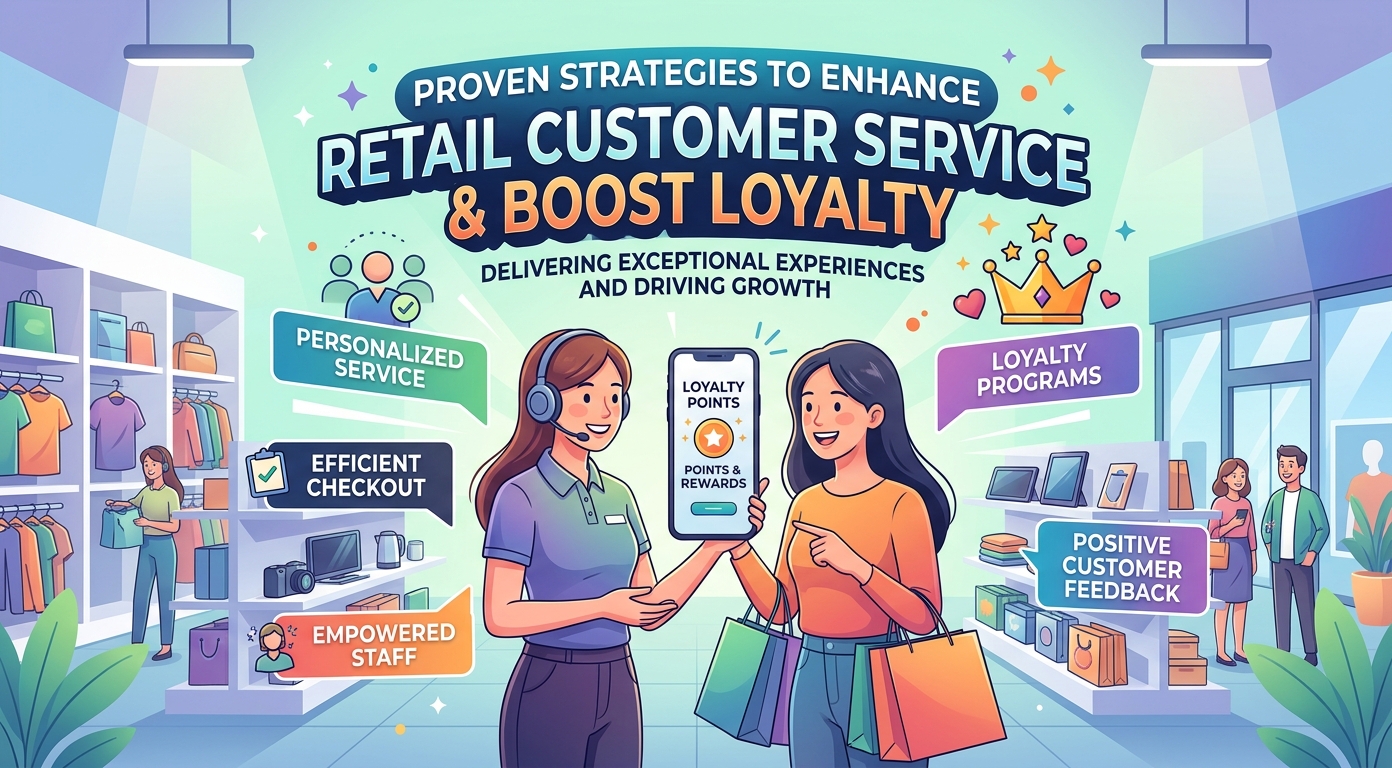
Strong retail customer service is what turns a one-time shopper into a loyal customer. In a crowded retail industry, the products on your shelves matter, but the service around them is what people remember and talk about.
This guide explains what retail customer service is, why it matters for any retail business, and ten proven strategies to improve it. It also covers the skills, roles, and job descriptions behind a great retail operation, so you can build service that drives loyalty and sales.
What Is Retail Customer Service?
Retail customer service is the support a store gives customers before, during, and after a purchase. It covers everything from a friendly greeting at the door to expert product advice on the floor, a smooth checkout, and help with returns. Done well, it feels effortless to the customer, even though a lot of preparation sits behind it.
Good retail customer service happens across every channel. It includes the in-person experience, phone and email support, live chat, and the way your retail staff handle questions and complaints. Online shopping has raised the bar, because consumers now expect the same fast, helpful service everywhere they buy.
At its core, retail customer service is about making each customer feel valued. When customers feel looked after, they spend more, return more often, and recommend the business to others. For a broader view of the discipline, see our guide to customer service.
Why Retail Customer Service Matters
The importance of customer service in retail is hard to overstate. Consumers have endless options, so service is often the only thing that sets one store apart from another in a competitive retail sector.
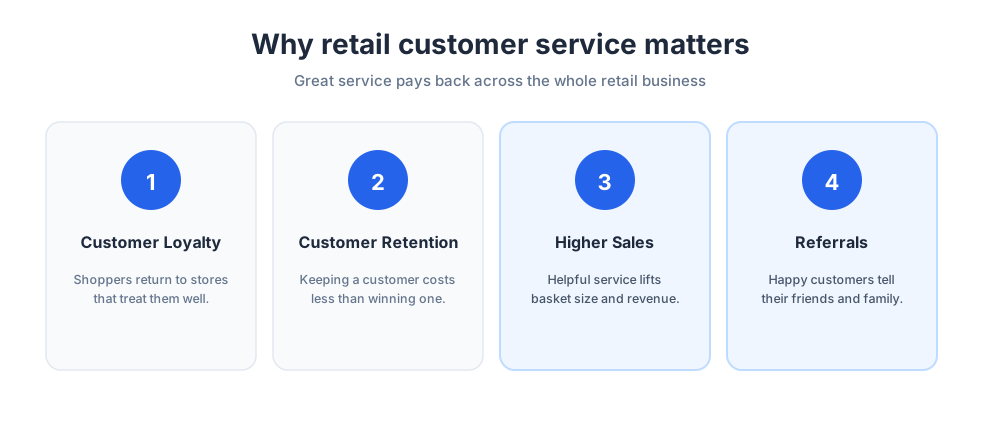
Great service builds customer loyalty and customer retention. A customer who has a positive customer service experience comes back, while one bad visit can send a shopper to a competitor for good. That is why effective customer service is a core business priority, not a nice-to-have.
Service also drives revenue directly. Helpful team members answer questions, suggest the right products, and remove friction, which lifts sales and the average basket size. Strong retail customer service is one of the most reliable ways for a retail business to grow, and it protects the marketing efforts that brought shoppers to the store. Higher sales and steady repeat sales both flow from service customers can count on, and that reliable customer experience is what compounds into growth.
Excellent customer service also lowers costs over time. Loyal customers need less convincing, return fewer products, and generate referrals, so good service pays back across the whole retail business.
10 Strategies to Improve Retail Customer Service
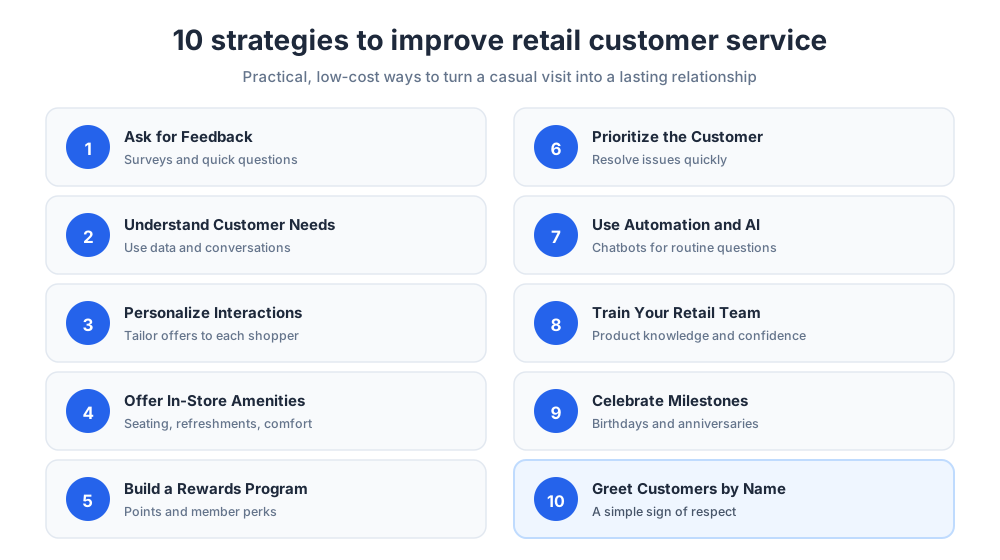
These ten retail customer service tips work for a single shop or a national chain. Each one is practical, low-cost, and proven to improve the buying experience and turn a casual visit into a lasting relationship. Use them as a practical customer service checklist: choose the tips that suit your shop, apply them consistently, and measure the difference they make.
Ask Customers for Feedback
Customers always have something to share, so ask for it. Short surveys, quick in-person questions, and follow-up emails all gather customer feedback that shows you where service falls short.
Acting on that feedback matters more than collecting it. When customers see their suggestions change the store, they trust the business and feel like partners rather than just consumers. Feedback also fuels customer engagement, because people return to a store that listens.
Understand What Customers Need
Great service starts with understanding customer needs and customer preferences. Use sales data, membership records, and simple conversations to learn what your customers actually want.
When your team understands customer expectations, they recommend the right products and solve problems before they grow. That insight is the foundation of every other strategy on this list and the start of any retail customer service strategy.
Personalize Every Interaction
Most retail customer service feels generic, which is exactly why personalization stands out. Use customer data and purchase history to tailor recommendations and offers to each customer.
Personal touches do not need technology. A team member who remembers a regular shopper by their usual order delivers an exceptional customer experience that no discount can match.
Offer In-Store Amenities
Small comforts make a store somewhere people want to linger. Seating areas, refreshments, clean restrooms, phone charging, and play areas for children all improve the in-person experience.
Amenities signal that the business values its customers as guests. The longer customers stay comfortable, the more they browse, and the stronger their connection to the retail brand and its products.
Build a Customer Rewards Program
A customer rewards program recognizes the customers who matter most. Points, members-only discounts, and early access to products give shoppers a clear reason to keep coming back.
These rewards programs also generate valuable insight. They show what current customers buy and how often, which sharpens both your service and your wider marketing.
Prioritize the Customer Every Time
Issues will always come up, so put the customer first when they do. Resolve customer complaints quickly, own mistakes honestly, and never make a customer feel like a problem.
When customers see that the store prioritizes them, they forgive the occasional slip. Consistent, customer-first service is the heart of good customer service in any retail company.
Use Automation and AI Support
Staff cannot be everywhere at once, so use automation to support the team. AI chatbots and live chat answer routine questions instantly, online and on in-store tablets.
Automation handles the simple questions so your team can focus on complex, high-value help. A well-placed chatbot can also tag a sales specialist when a customer needs a human, which keeps support fast without extra staff.
Train and Empower Your Retail Team
Service is only as good as the people delivering it. Invest in retail customer service training so every team member has the product knowledge and confidence to help customers well.
Empowered staff solve problems faster. When a customer service representative can offer a refund or a fix without escalating, customers get quick answers and the whole team feels trusted. Ongoing retail training keeps service standards high as products and seasons change.
Celebrate Customer Milestones
Birthdays, anniversaries, and loyalty milestones are easy wins. Flag them in your customer database and surprise customers with a small bonus or discount when the date arrives.
These gestures cost little but feel personal. A customer who gets a birthday reward remembers the business warmly and is far more likely to return.
Greet Customers and Staff by Name
Using names is a simple sign of respect. A common retail guideline, the 10 and 5 rule, asks staff to acknowledge a customer within ten feet and greet them within five.
Introduce team members by name too. When customers know who helped them, service feels human, accountable, and far more memorable than a nameless transaction. Small habits like this lift the overall customer experience at no cost.
Essential Retail Customer Service Skills
Behind every strategy are people, and certain customer service skills separate an average store from a great one.
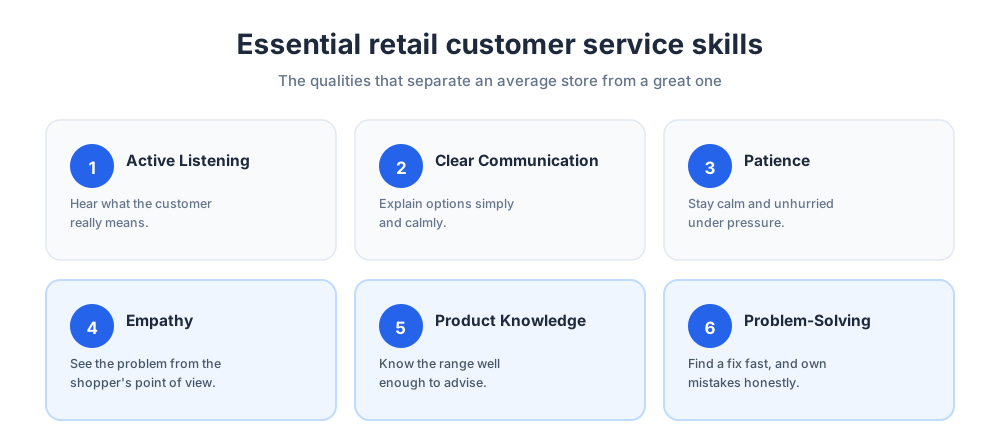
The core skills include active listening, clear communication, patience, empathy, and product knowledge. A strong team member reads a customer's mood, explains options simply, and stays calm under pressure to deliver excellent service.
Problem-solving and teamwork matter just as much. Customer service agents who think on their feet and support each other keep the shopping experience smooth even on the busiest days, and these skills can be built through customer service training. Hiring for attitude and training for skill is a reliable way to build a team that genuinely cares.
Retail Customer Service Roles and Job Descriptions
Retail customer service is delivered by a range of jobs, and a clear job description helps each person succeed. Most stores rely on a mix of frontline and supervisory roles.
A retail sales associate, also called a sales associate or store associate, handles day-to-day customer support: greeting shoppers, answering questions, and processing sales. A retail customer service representative focuses on returns, complaints, and post-purchase help.
The assistant store manager and the wider management team set service standards and handle escalations. When a job post is written clearly, candidates for these jobs know what the role demands, and the right hires raise the whole team's performance. Well-defined jobs make retail customer service jobs easier to fill with people who genuinely enjoy helping customers, and they give new staff a fair shot at success.
How to Measure Retail Customer Service
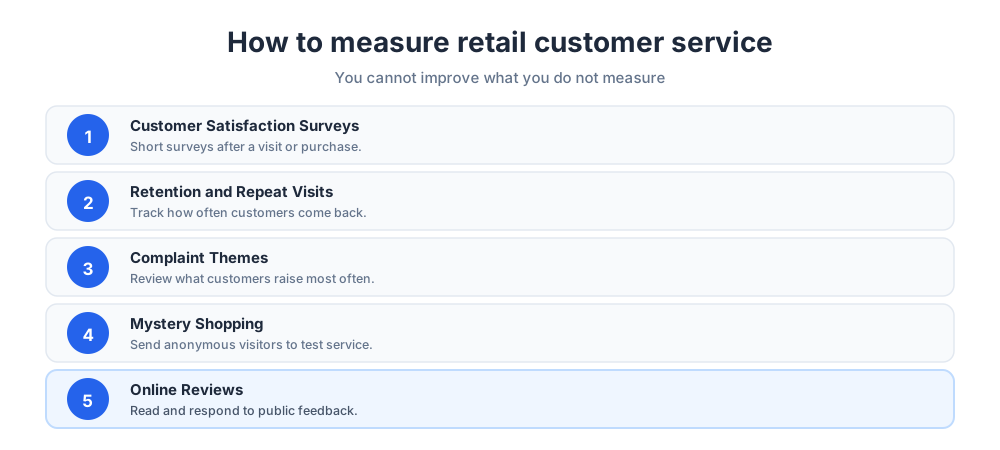
You cannot improve what you do not measure. Track customer satisfaction with short surveys, watch repeat-visit and retention rates, and review the themes inside complaints.
Mystery shopping and online reviews add another layer of insight. Together these signals show whether your service options are working and where the next round of training should focus. Share the results with the whole team so everyone understands what good service looks like and where to improve next.
Watch customer satisfaction over time, not just once. A steady trend tells you far more than a single score, and it shows how the business compares to others in the retail industry. These simple tips keep measurement honest and useful.
Common Retail Customer Service Mistakes
A few mistakes quietly undo good work. The first is understaffing busy periods, which leaves customers waiting and the team stretched thin.
The second is treating service as a script. Customers can tell when a greeting is robotic, and rigid rules stop staff from solving real problems. The third is ignoring feedback, which signals that customer opinions do not matter. Our guide to bad customer service examples covers more pitfalls to avoid. Fixing these mistakes rarely costs money; it just takes attention, honest feedback, and a willingness to put the customer first every single day.
Retail Customer Service and Customer Loyalty
Every strategy here leads back to loyalty. Customers stay with stores that treat them well, and loyalty is far cheaper to keep than to win back. It is also more profitable, since serving a familiar customer takes less time than earning a brand-new one.
Loyal customers spend more, forgive small mistakes, and refer friends. In a competitive market, that word-of-mouth is marketing your rivals cannot buy. Exceptional customer service, repeated on every visit, is what builds that loyalty and keeps many customers coming back for years. The best shopping experiences are the ones customers want to repeat. A strong overall shopping experience, built on consistent customer service, is what keeps a shopper choosing one brand over another.
The Future of Retail Customer Service
The future of retail customer service blends the digital and the physical. Online shoppers expect the same warmth they get in store, and stores increasingly draw on what they know about customers to make every visit feel personal. The retailers that adapt will treat data and human warmth as partners, not opposites.
AI will keep handling routine questions, freeing staff for the human moments that build real connection. As online retail and physical stores merge into one shopping journey, the retailers that win will be the ones that treat service, not price alone, as their advantage.
Frequently Asked Questions
What are the duties of customer service in retail?
Retail customer service duties include greeting and assisting shoppers, answering product questions, processing sales and returns, resolving complaints, and keeping the store experience smooth. Frontline staff also gather customer feedback and pass it on, while supervisors set service standards and handle escalations. The shared goal across every role is to make each customer feel valued so they come back.
What is the 10/5/3 rule in customer service?
The 10/5/3 rule is a retail floor guideline for acknowledging customers. The widely used version asks staff to make eye contact and acknowledge a shopper within ten feet, offer a verbal greeting within five feet, and some retailers add a three-second or three-foot step for a warm, personal welcome. Exact distances vary by store, but the idea is consistent: never let a customer feel ignored.
What is the best customer service in retail?
The best retail customer service is fast, friendly, knowledgeable, and consistent. It combines well-trained staff, genuine personalization, easy returns, and quick problem-solving, both in store and online. There is no single perfect formula, but the strongest retailers treat service as their main advantage, listen to customer feedback, and make every shopper feel like the priority.
What is an example of customer service in retail?
A simple example is a sales associate who greets a shopper, asks what they need, walks them to the right product, explains the options clearly, and offers a quick, friendly checkout. Other examples include resolving a return without friction, remembering a regular customer's preferences, or using live chat to answer an online shopper's question in seconds.
What is retail customer service?
Retail customer service is the support a store gives customers before, during, and after a purchase. It spans the in-person experience, phone and email support, and live chat, and it covers everything from product advice and checkout to returns and complaints. Good retail customer service makes shoppers feel valued and turns one-time buyers into loyal customers.
Why is customer service important in retail?
Customer service is important in retail because shoppers have endless options, so service is often the only thing that sets one store apart. Great service builds customer loyalty and retention, lifts sales and basket size, and generates word-of-mouth referrals. One poor experience, by contrast, can send a customer to a competitor for good.
How can I improve retail customer service?
Start by asking customers for feedback and acting on it. Then personalize interactions, train and empower your team, build a rewards program, use automation for routine questions, and greet customers by name. Measure customer satisfaction regularly so you know which changes are working and where to focus next.
What skills do retail customer service staff need?
Core retail customer service skills include active listening, clear communication, patience, empathy, and product knowledge. Problem-solving and teamwork matter just as much, since staff need to think on their feet and support each other on busy days. Many of these skills can be strengthened through structured customer service training.
How do you measure retail customer service?
Measure retail customer service with short satisfaction surveys, repeat-visit and retention rates, and the themes inside customer complaints. Mystery shopping and online reviews add more insight. Watch the trend over time rather than a single score, and share the results with the whole team so everyone knows what to improve.
How does retail customer service build loyalty?
Loyalty grows when customers consistently feel valued. Helpful, personal service, quick problem resolution, and small gestures like birthday rewards give shoppers a reason to return. Loyal customers also spend more, forgive small mistakes, and refer friends, which makes good service one of the most cost-effective ways to grow a retail business.
What are common retail customer service mistakes?
Common mistakes include understaffing busy periods, treating service as a rigid script, ignoring customer feedback, and failing to train staff properly. Each one leaves shoppers feeling unimportant. Most of these problems are inexpensive to fix; they simply take attention, honest feedback, and a consistent commitment to put the customer first.
How is technology changing retail customer service?
Technology lets stores serve customers faster and more personally. AI chatbots and live chat answer routine questions instantly, in-store tablets provide self-service, and customer data helps staff tailor recommendations. The goal is not to replace people but to free them for the human moments that build real connection.
What is the difference between retail customer service and customer experience?
Retail customer service is the direct support and interactions a store provides, such as answering questions or handling returns. Customer experience is broader: it is the customer's overall impression of the brand across every touchpoint, including store design, pricing, and marketing. Strong customer service is one of the biggest drivers of a positive overall customer experience.
Related articles
More in Customer service → SaaS Customer Support: The Stage-by-Stage Guide (2026)
How SaaS customer support actually works at each stage: the right stack from founder-led live chat to a full support operation, channels, and metrics.
 How to Reduce Customer Churn: 5 Levers in Payback Order
Reduce customer churn by pulling five levers in payback order: payment recovery, onboarding, support quality, pricing fit, and a 90-day win-back.
 10 FAQ Page Examples That Actually Help Customers (2026)
10 FAQ page examples from Shopify, Airbnb, Slack, Nike and more, with the exact pattern each gets right and a checklist to build your own FAQ page.
 12 Customer Service Email Templates for Every Scenario (2026)
12 customer service email templates for complaints, refunds, delays, bugs and saying no, plus the five-line skeleton that keeps them sounding human.