13 Customer Service Interview Questions and Answers
Customer service interview questions are designed to reveal one thing: whether you can stay calm, helpful, and clear when a real customer needs you. Hiring managers are not just checking your resume. They are testing communication skills, empathy, problem-solving, and patience, because those qualities decide how every customer is treated once you have the job.
This guide walks through the questions you are most likely to hear, plus behavioral questions, smart questions to ask the interviewer, and practical advice. Whether you are applying to be a customer service representative, a support agent, or a customer care advisor, preparing real answers in advance is what turns a nervous conversation into a confident one. Use the guide to build the communication skills and customer service skills the role demands.
Use the sample answers as a starting point, not a script. The strongest candidate always sounds like themselves, with specific examples from their own experience that connect to the skills the team needs day to day.
How to prepare for a customer service interview
Good preparation is what separates a forgettable conversation from a memorable one. A confident candidate spends time getting ready well before the meeting, so nothing catches them off guard.
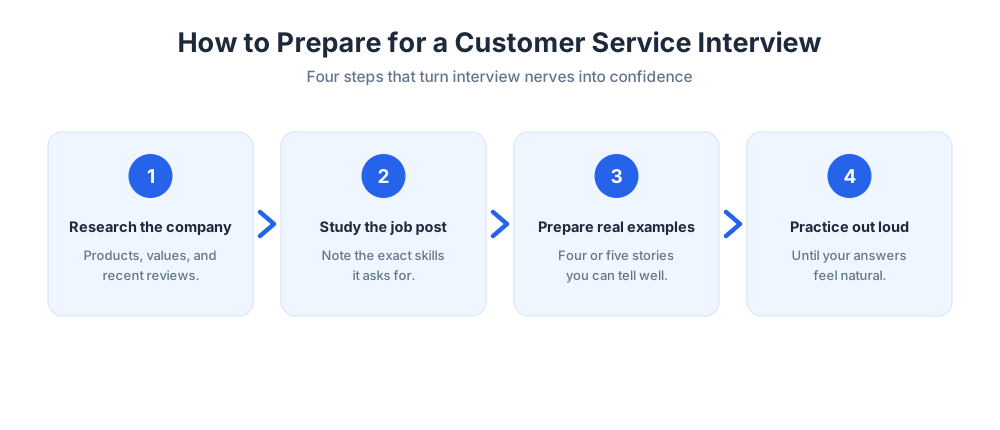
Start by researching the company. Read about its products, its values, and its customer service philosophy, and check recent reviews to learn how the company treats people. Read the job description closely and note the exact skills it asks for, especially the soft skills, because most interview questions map straight back to them.
Then prepare your stories. Most of these questions ask for a real example, so have four or five situations ready that show you solving a problem, calming an upset customer, or going the extra mile. A strong candidate practices them out loud until they feel natural, matching each story to a specific skill the team will value.
Common customer service interview questions and answers
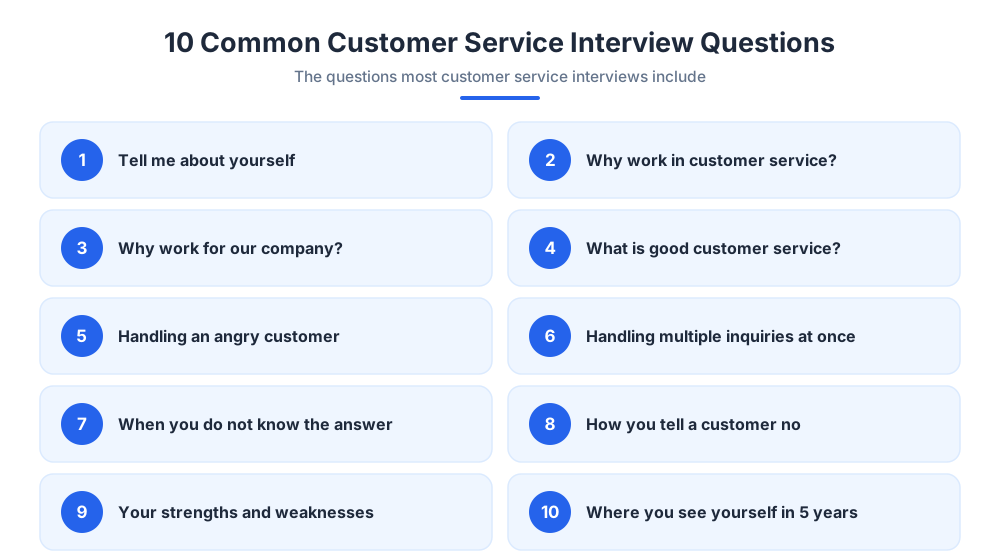
Here are the questions below you are most likely to hear in a customer service job interview, with what the interviewer is really looking for and a sample answer for each. Adapt every answer to your own experience before the conversation, and think about the skills each one is meant to reveal.
1. Tell me about yourself
This opener sets the tone. The interviewer wants a short, relevant summary of your background, not your life story. Focus on experience that connects to the customer service role.
Sample answer: "I have spent the last three years in customer-facing roles, most recently handling support by chat and email. I enjoy turning a frustrated customer into a happy one, and I am drawn to this position because your company is known for treating customers well."
Keep it under a minute and end on why you want this specific job.
2. Why do you want to work in customer service?
The interviewer is checking that you actually want this kind of work, not just any job. Show genuine motivation for helping people.
Sample answer: "I like solving problems and I am good with people, and customer service is where those two things meet. There is real satisfaction in ending a conversation knowing the customer left better off than they arrived."
Avoid saying you want the role only because you need a job.
3. Why do you want to work for our company?
This question rewards research. The interviewer wants to know you chose this company on purpose.
Sample answer: "I read about your commitment to fast, friendly support, and it matches how I like to work. I would rather represent a company that genuinely cares about its customers, and from your reviews, that is clearly the case here."
Name one specific thing about the company so the answer cannot be reused anywhere else.
4. What does good customer service mean to you?
Here the interviewer wants your definition of great customer service. A strong answer goes beyond just fixing problems.
Sample answer: "Good customer service means the customer feels heard, respected, and genuinely helped. It is being reliable, clear, and willing to go one step further so the customer leaves with trust in the brand."
Connect your definition to the customer experience, not just to closing a ticket.
5. How do you handle an angry customer?
This is one of the most important questions in the set, because difficult moments are part of the job. The interviewer wants to see composure and a clear process, plus the communication skills to defuse tension.
Sample answer: "When a customer is angry, I listen first and let them explain without interrupting. I acknowledge how they feel, apologize for the trouble, and then move straight to a solution. Staying calm and focused on the fix usually turns the conversation around."
If you have turned an upset customer into a loyal one, mention it briefly here. It shows how you protect customer relationships under pressure.
6. How do you handle multiple customer inquiries at once?
Customer service work is fast-paced. The interviewer wants to know you can stay organized when several customers need you at the same time.
Sample answer: "I quickly judge urgency and impact, handle the fastest fixes first, and set clear expectations with anyone who has to wait. I rely on notes and the help desk tools so nothing slips, even on a busy day."
Show that no customer gets forgotten when the queue is full, since prioritization is one of the core skills this role rewards.
7. What would you do if you did not know the answer to a customer's question?
The interviewer is testing honesty and resourcefulness, not whether you know everything.
Sample answer: "I would be honest that I want to give the right answer, then find it. I would check our resources or ask a member of the team, and follow up quickly. I would never guess, because an accurate answer matters more than a fast one."
Make clear you still own the customer's problem until it is solved.
8. How do you tell a customer no?
Sometimes the answer has to be no. The interviewer wants to see you can deliver bad news with care.
Sample answer: "I explain the reason clearly and kindly, and I never just shut the door. I focus on what I can do instead, offering the closest alternative so the customer still feels supported even when the exact request is not possible."
Emphasize tone: a no can still leave the customer feeling respected.
9. What are your greatest strengths and weaknesses?
The interviewer wants self-awareness. Pick strengths that fit customer service and a weakness you are genuinely working on.
Sample answer: "My strength is patience under pressure; I stay steady when a customer is upset. A weakness is that I used to take on too much myself, so I have been practicing asking teammates for help sooner."
Never use a fake weakness like being a perfectionist; interviewers see through it.
10. Where do you see yourself in five years?
This checks whether the role fits your plans. The interviewer wants commitment, not a vague answer.
Sample answer: "I want to grow within customer service, building deep product knowledge and eventually mentoring newer team members. I see this position as a strong place to develop those skills and contribute long-term."
Tie your future to growth the company can realistically offer.
Behavioral and scenario interview questions
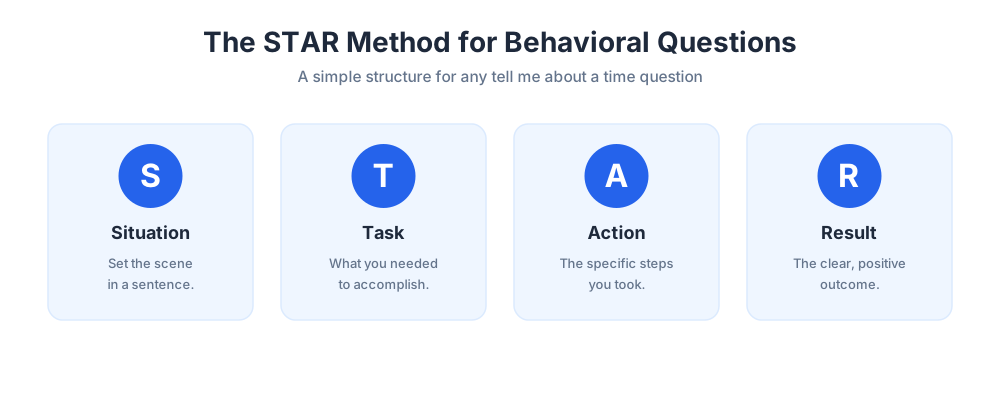
Behavioral interview questions ask for a real story rather than a general answer. The best way to handle them is the STAR method: describe the Situation, the Task, the Action you took, and the Result. It keeps your answer specific and easy to follow, and it shows the interviewer the skills behind the story.
Tell me about a time you dealt with a difficult customer
The interviewer wants proof you can handle conflict, not just talk about it. Pick a real situation with a clear, positive result, and name the skills you used, such as patience and clear communication.
Sample answer: "A customer was upset about a delayed order (Situation). My task was to fix it and keep their trust (Task). I apologized, expedited the shipment, and sent tracking updates myself (Action). The order arrived, and the customer thanked me and stayed with us (Result)."
Describe a time you turned an unhappy customer into a happy one
This question looks for the recovery skill at the heart of customer service. Choose a story where your effort changed the outcome.
Sample answer: "A customer wanted to cancel after a billing mistake. I owned the error, corrected the charge the same day, and explained what went wrong. They not only stayed but later told me it was the best support they had received."
Tell me about a time you received negative feedback
The interviewer is testing how you handle criticism. Show that feedback makes you better, not defensive.
Sample answer: "A manager told me my replies were accurate but felt a little cold. I took the feedback seriously, worked on a warmer tone, and within a month my customer satisfaction scores improved. I now treat feedback as free coaching."
This answer signals a coachable candidate, exactly the trait a team wants in a new hire.
Questions to ask your interviewer
An interview runs both ways. When the interviewer asks if you have questions, always say yes; it shows real interest in the customer service position. The right questions also help you decide whether the role is a genuine fit.
Strong questions to ask include how the team measures success, what a typical day looks like, how the company supports agents through hard interactions, and what growth paths exist. Ask about company policies and how the group handles a difficult product or service issue, since that reveals how the business really operates. Asking about training and feedback signals that you want to improve.
These same questions for employers double as a quick read on culture. Avoid asking only about pay and time off in the first conversation. Lead with questions about the work and the team, and the interviewer will remember you as a serious candidate who came prepared.
Customer service interview tips to stand out
A few simple habits separate a good interview from a great one. These essential tips apply whatever customer service role you are chasing, and they help any candidate present their skills clearly.
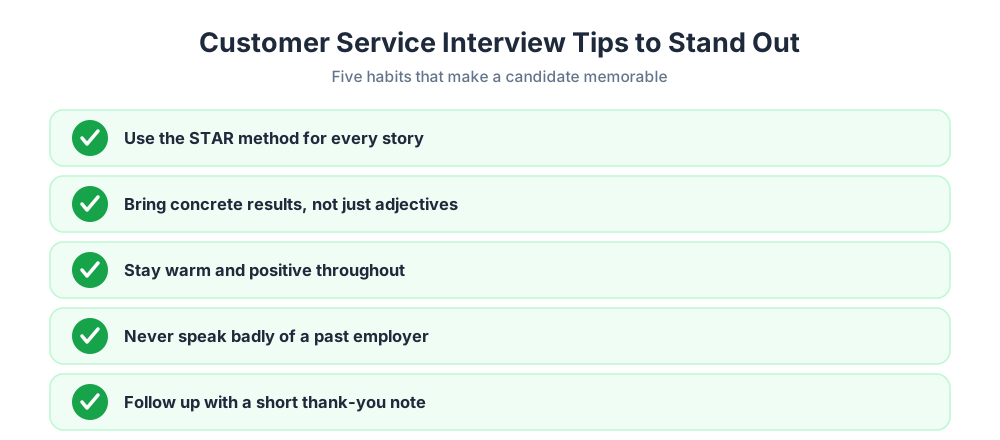
Use the STAR method so every behavioral answer stays specific. Bring real numbers or outcomes where you can, since concrete results are more convincing than adjectives. Mirror the company's own language about service, and let your communication style stay warm and positive throughout, because the conversation itself is a live sample of how you treat people.
Avoid the common mistakes too. Do not speak badly about a past employer, do not ramble, and never pretend you have a skill you lack. Honesty and a calm, friendly tone beat a perfect-sounding script every time, and they tell the team you will be straight with customers.
Finally, follow up. A short, polite thank-you note after the interview reinforces your communication skills and keeps a strong candidate fresh in the interviewer's mind. Treat the question-and-answer section above as your FAQs and revisit it the night before your next conversation.
For employers: running a strong customer service interview
If you are on the hiring side, the right interview questions help you find people who will genuinely care for your customers. A weak interview process leads straight to poor customer service later, so employers need a clear, consistent plan.
Mix question types. Use a few direct questions to learn the basics, then behavioral questions to see how a candidate has actually performed. Scenario questions, such as handling a customer who is angry, reveal real instincts that a polished resume cannot. A great customer service representative shows their judgment in those moments, not on paper.
Score every candidate against the same standard and the same qualities, so the hiring process stays fair. Look hardest for empathy, communication, and a real problem-solving habit, because product knowledge can be taught but those skills are harder to train. Strong interview strategies keep the bar steady from one candidate to the next.
How live chat experience strengthens your interview
Hands-on customer support experience gives you the specific stories that these interview questions reward. If you have worked a live chat queue, you already have real examples of fast replies, juggling several conversations, and calming a frustrated customer in writing. Previous customer service roles, even short ones, give a candidate a deep well of examples to draw on.
When you walk into a customer service representative interview, that experience shows. A candidate who has answered live chats can speak with confidence about real customer support, and the same stories work for customer support interview questions elsewhere. The right customer service experience makes every answer concrete and marks you as a customer service professional, not a beginner.
Chatim is a free live chat and chatbot tool that a customer service team can use to handle support on its website. For a candidate, time on a tool like this builds exactly the skills and communication habits interviewers look for, and for an employer, it gives new hires real experience fast. Either way, genuine customer conversations are the raw material of every interview answer, and this guide works best once you have a few of your own to tell.
Walk into your customer service interview ready
Customer service interview questions are predictable once you know the patterns. Prepare your stories, practice the common questions and answers above, use the STAR method for behavioral examples, and come with a few thoughtful ones of your own to ask.
Preparation is what turns nerves into confidence. Do the work in advance, be honest, stay warm, and you will walk into the interview ready to show why you belong in customer service.
Frequently Asked Questions
What questions are asked in a customer service interview?
Most customer service interviews mix three kinds of questions. Direct questions test your motivation and fit, such as 'Tell me about yourself' and 'Why do you want to work in customer service?'. Scenario questions check your instincts, like 'How do you handle an angry customer?'. Behavioral questions ask for a real story, such as 'Tell me about a time you dealt with a difficult customer'. Expect questions about your strengths and weaknesses, handling several customers at once, and what good service means to you. This guide covers all of them with sample answers.
What are the 7 qualities of good customer service?
There is no single official list, but the seven qualities most often cited are empathy, clear communication, patience, product knowledge, problem-solving, a positive attitude, and reliability. Empathy means understanding how the customer feels, communication means explaining things clearly, patience keeps you calm under pressure, product knowledge lets you actually help, problem-solving finds the fix, a positive attitude sets the tone, and reliability means following through. Interviewers look for evidence of these qualities in your answers, so weave them into your examples.
What are the 4 P's of customer service?
The 4 P's of customer service are commonly given as promptness, politeness, professionalism, and personalization, though the exact wording varies between frameworks. Promptness means responding quickly, politeness means a respectful and friendly tone, professionalism means staying composed and competent, and personalization means treating the customer as an individual rather than a ticket number. Treat the 4 P's as a simple memory aid for what good service feels like rather than a fixed rule.
What are 7 interview questions?
Seven customer service interview questions you should be ready for are: 'Tell me about yourself', 'Why do you want to work in customer service?', 'What does good customer service mean to you?', 'How do you handle an angry customer?', 'What would you do if you did not know the answer to a customer's question?', 'What are your greatest strengths and weaknesses?', and 'Tell me about a time you dealt with a difficult customer'. Prepare a clear, honest answer for each, using a real example wherever you can.
How do I prepare for a customer service interview?
Start by researching the company: its products, values, customer service style, and recent reviews. Read the job description and note the exact skills it asks for. Then prepare four or five real stories that show you solving a problem, calming an upset customer, or going the extra mile, and practice them out loud. Finally, prepare a few thoughtful questions to ask the interviewer. Preparation is what turns interview nerves into confidence.
How do you answer 'Tell me about yourself' in a customer service interview?
Keep it short, relevant, and under a minute. Give a quick summary of your customer-facing experience, mention one or two skills that fit the role, and end with why you want this specific job. Skip your full life story and anything unrelated to customer service. The goal is to set a confident tone and make the interviewer want to hear more.
How do you answer 'How do you handle an angry customer?'
Show a calm, clear process. Explain that you listen first and let the customer fully explain without interrupting, acknowledge how they feel, apologize for the trouble, and then move straight to a solution. If you have a real example of turning an angry customer into a satisfied one, share it briefly. Interviewers want to see composure and a genuine focus on resolving the issue.
What is the STAR method for interview answers?
STAR is a simple structure for behavioral interview questions. You describe the Situation, the Task you needed to accomplish, the Action you took, and the Result. It keeps your answer specific and easy to follow, and it stops you from rambling. Whenever a question starts with 'Tell me about a time', answer with STAR and end on a clear, positive result.
What skills should I highlight in a customer service interview?
Highlight the skills the role actually rewards: empathy, clear communication, patience, problem-solving, and the ability to stay organized under pressure. Back each one with a real example rather than just naming it. If you have hands-on support experience, such as working a live chat or phone queue, lean on it, because concrete stories are far more convincing than adjectives.
What questions should I ask the interviewer?
Always have questions ready. Strong ones include how the team measures success, what a typical day looks like, how the company supports agents through hard interactions, and what growth paths exist. Asking about training and feedback signals that you want to improve. Avoid leading with pay and time off in a first interview, and focus on the work and the team instead.
How do I answer 'What is your greatest weakness?'
Pick a real weakness you are genuinely working on, and explain the steps you are taking to improve. For example, you might say you used to take on too much yourself and have been practicing asking teammates for help sooner. Avoid fake weaknesses like saying you are a perfectionist, which interviewers see through. Honesty paired with a clear plan to improve is what they want to hear.
What is a good answer to 'Why do you want to work in customer service?'
Show genuine motivation rather than treating it as any job. A strong answer connects two things you enjoy, such as solving problems and working with people, and explains the satisfaction of helping a customer leave better off than they arrived. Avoid saying you simply need a job. Interviewers want to hear that this kind of work genuinely suits you.
How can I stand out in a customer service interview?
Stand out with preparation and authenticity. Use the STAR method so behavioral answers stay specific, bring concrete results rather than adjectives, mirror the company's own language about service, and stay warm and positive throughout, since the interview itself is a live sample of your customer service skills. Ask thoughtful questions, avoid speaking badly about past employers, and follow up with a short thank-you note afterward.
Related articles
More in Customer service → SaaS Customer Support: The Stage-by-Stage Guide (2026)
How SaaS customer support actually works at each stage: the right stack from founder-led live chat to a full support operation, channels, and metrics.
 How to Reduce Customer Churn: 5 Levers in Payback Order
Reduce customer churn by pulling five levers in payback order: payment recovery, onboarding, support quality, pricing fit, and a 90-day win-back.
 10 FAQ Page Examples That Actually Help Customers (2026)
10 FAQ page examples from Shopify, Airbnb, Slack, Nike and more, with the exact pattern each gets right and a checklist to build your own FAQ page.
 12 Customer Service Email Templates for Every Scenario (2026)
12 customer service email templates for complaints, refunds, delays, bugs and saying no, plus the five-line skeleton that keeps them sounding human.