Best Account-Based Marketing Software Platforms for 2026
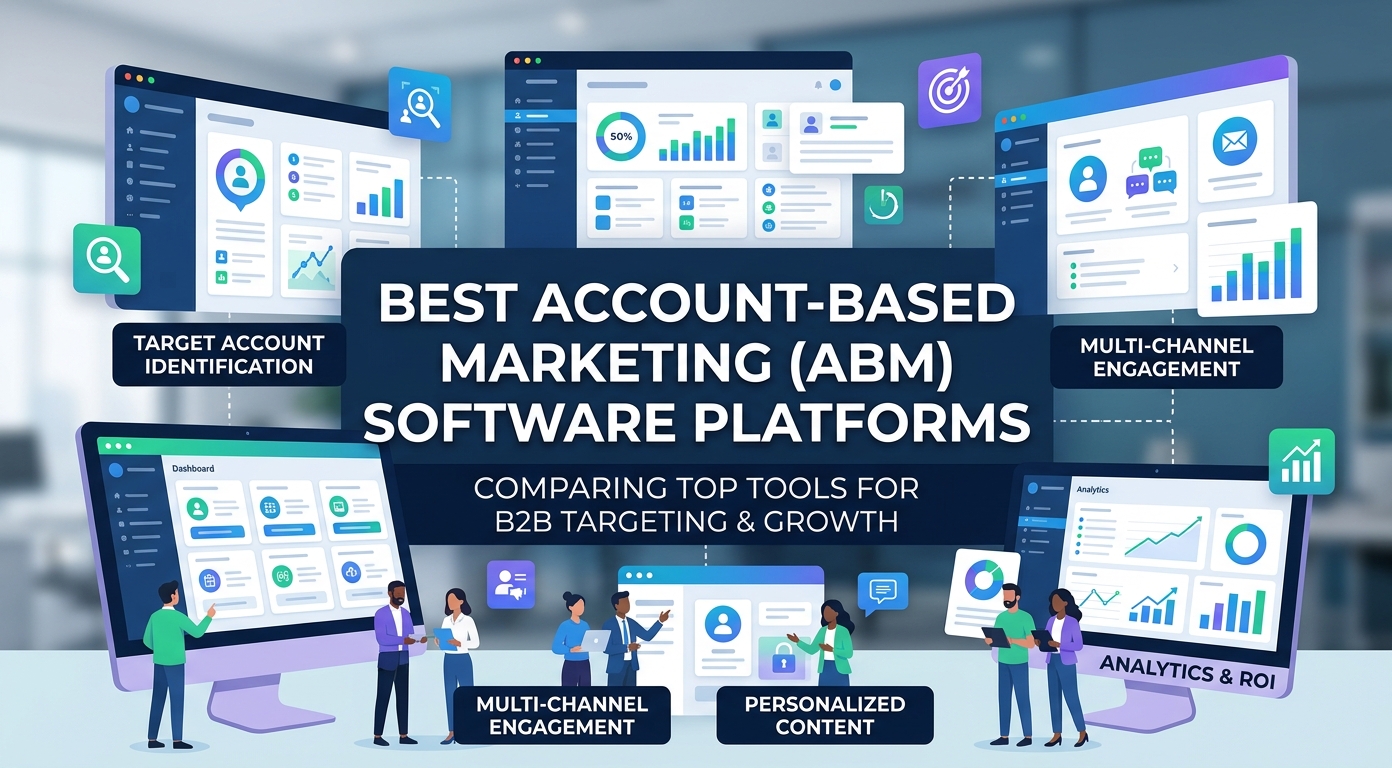
For B2B teams, chasing every lead is a slow way to grow. Account-based marketing flips the model: instead of casting a wide net, you focus on a short list of high-value accounts and win them deliberately. Account based marketing software is what makes that focus practical at scale.
The right ABM software helps you find the companies worth pursuing, coordinate sales and marketing around them, and measure whether the effort is paying off. Without it, account-based marketing is mostly spreadsheets and good intentions.
This guide explains what account-based marketing is, why ABM software matters, the key features to look for, and the best account-based marketing software platforms for B2B success in 2026.
Understanding account-based marketing
Account-based marketing, or ABM, is a B2B marketing strategy that treats individual accounts as markets of one. Rather than generating a high volume of leads, your marketing teams concentrate their effort on a defined set of target accounts.
It is a focused approach, and it works because B2B deals are won at the company level, not the single-lead level. ABM aligns the way you sell with the way B2B buyers actually buy.
It also reframes lead generation. In a B2B marketing strategy built on ABM, the question is not how many leads you collected, but whether the right companies are moving toward a deal.
What account-based marketing is
At its core, account-based marketing is the practice of choosing specific companies, then running coordinated campaigns aimed at the buying group inside each one. Marketing and sales agree on the accounts up front and pursue them together.
The goal is quality over quantity. A successful ABM strategy might target a few dozen value accounts rather than thousands of cold leads, and invest far more in each one.
This is why account engagement, not raw lead count, is the metric that matters. ABM asks how deeply your priority accounts are interacting with your brand.
Done well, ABM also strengthens customer relationships over time, because every interaction is relevant to that specific account rather than generic.
ABM vs traditional marketing
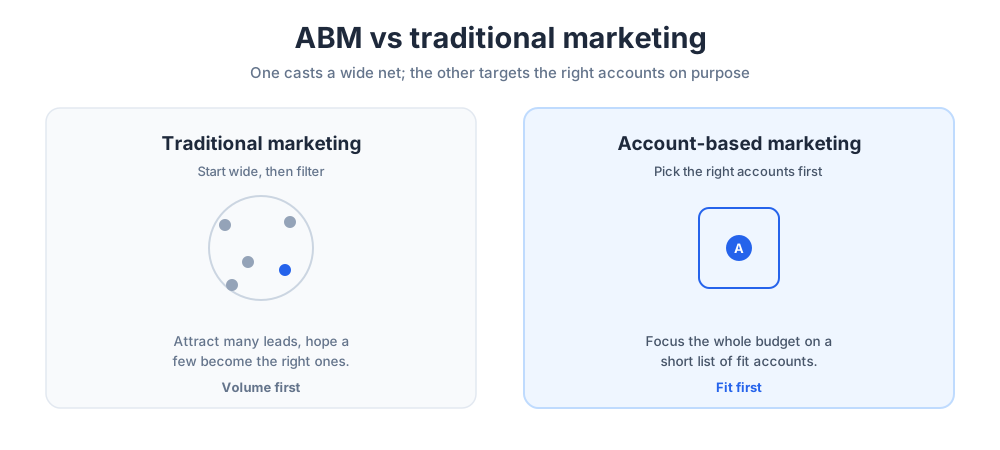
Traditional demand generation starts wide: attract many leads, then filter for the good ones. Account-based marketing starts narrow: pick the right companies first, then go deep.
Traditional marketing and ABM are not enemies. Many B2B teams run both, using broad campaigns for awareness and a focused ABM program for their largest, most suitable accounts.
The practical difference is where the effort goes. ABM spends its budget on a short list of fit accounts, so every ad, email, and sales touch reinforces the same goal.
Why you need account-based marketing software
You can run a small ABM program by hand, but it does not scale. Account based marketing software turns a manual, ad hoc effort into a repeatable system, and that is why most serious ABM programs run on dedicated tools.
An ABM solution connects the data, the campaigns, and the reporting, so your sales and marketing teams work from one shared view of every account.
It also protects the program from staff turnover, since the accounts, the history, and the workflows all live in the software rather than in one person's head.
Finding and prioritizing accounts
The first job of ABM software is to help you find the right companies. Good tools combine firmographic data, intent signals, and your own customer data to surface potential accounts that match your ideal customer profile.
They then help you prioritize. Not every account is equal, so the software ranks potential customers by fit and by buying signals, so your sales team works the best opportunities first.
This turns a vague wish list into a ranked target account list that marketing and sales both trust.
The payoff is focus. Your team spends its hours on the highest value customer accounts instead of spreading thin across weak leads.
Aligning sales and marketing
ABM only works when sales and marketing alignment is real. Account based marketing software gives both teams the same account list, the same data, and the same definition of success.
When marketing and sales efforts point at the same accounts, the handoff is smooth and no value customer falls through the gap between the two teams.
That shared system is also where revenue operations lives, keeping the whole go-to-market motion measured and accountable.
Alignment also tightens the sales process, because every rep works from the same account data and the same priorities as marketing.
Key features of ABM software
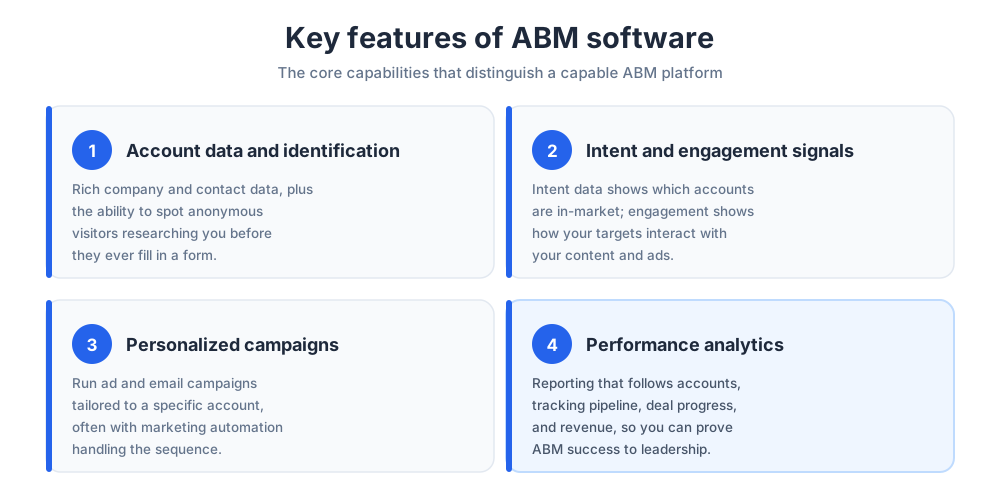
ABM platforms vary, but the strongest share a common core. These are the key features to weigh when you compare account-based marketing tools.
Run each platform on your shortlist against this list, so the comparison stays grounded in real abm efforts rather than marketing claims.
Account data and identification
Every ABM solution starts with data. Look for rich company and contact data, so you can build accurate lists of market accounts and reach the right people inside each one.
The best tools also identify anonymous website visitors, telling you which companies are researching you before they ever fill in a form.
Clean, current customer data is what keeps the rest of the system honest, so data quality is a feature worth testing.
Strong tools also enrich existing records automatically, so your customer relationship management systems stay current without manual cleanup.
Intent and engagement signals
Intent data shows which accounts are actively researching a problem you solve. That timing is gold, because reaching a company while it is in-market beats a cold outreach every time.
Engagement tracking shows the other half of the picture: how your target accounts are interacting with your content, ads, and emails.
Together, intent and account engagement signals tell your teams which accounts are warming up and deserve a faster response.
Watching engagement also shows which marketing campaigns are landing, so you can double down on what genuinely moves accounts.
Personalized campaigns and ads
ABM lives on personalization. Strong software lets you run abm campaigns, including ad campaigns and email, tailored to a specific account or industry.
Many tools include marketing automation, so a sequence of personalized touches runs without manual work. Personalized marketing campaigns make a small target list feel individually courted.
The aim is relevance at scale: each account feels personally addressed, even when the software is running dozens of ad campaigns at once.
Performance analytics and reporting
ABM is judged on accounts, not clicks, so reporting must follow accounts. Look for performance analytics that track pipeline, deal progress, and revenue by account.
Clear performance insights tell you which abm programs are working and which need a rethink, so budget flows to what performs.
Account-level reporting is also how you prove ABM success to leadership and justify the next year's investment.
The best dashboards turn raw numbers into clear performance insights, so a quick review tells you exactly where the program stands.
The best account-based marketing software platforms
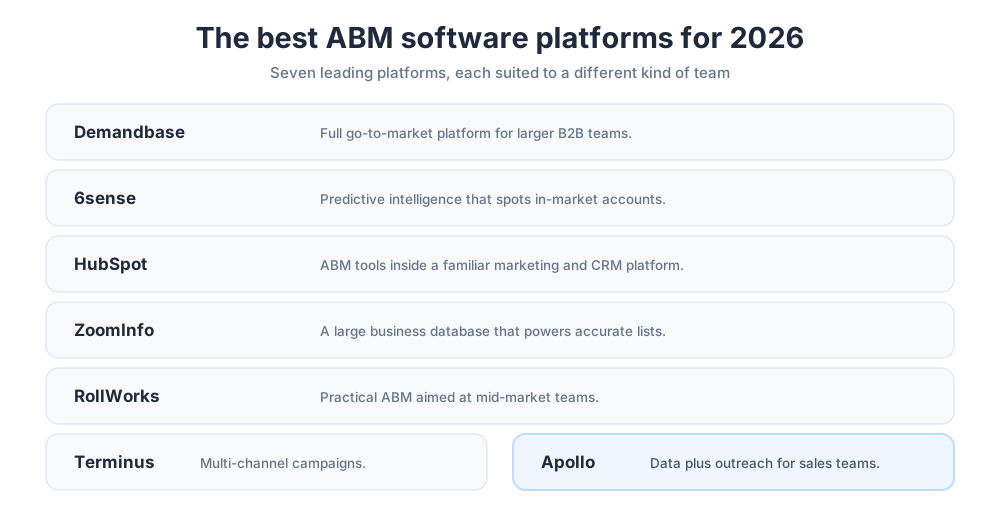
There is no single best tool, only the best fit for your team and your account list. Here are seven of the best account-based marketing software platforms to consider for 2026.
Some are dedicated ABM tools; others are broader marketing platforms with ABM features built in. Both approaches can work, so judge each option against your own needs rather than its reputation.
Demandbase
Demandbase is one of the best-known names in account-based marketing. It is a full go-to-market platform that combines account identification, intent data, advertising, and analytics in one place.
Demandbase suits teams that want a comprehensive ABM solution and have the resources to run it well. Its account intelligence is a particular strength.
It is best suited to larger B2B teams running mature abm programs, where its breadth genuinely pays off.
6sense
6sense is built around predictive intelligence. It uses intent data and AI to tell you which accounts are in-market, even before they raise their hand.
For teams that want to time their outreach precisely, 6sense is a frequent shortlist pick among ABM platforms.
Its predictive scoring helps marketing teams reach potential accounts earlier in the buying cycle than a reactive approach allows.
HubSpot
HubSpot offers ABM tools inside its broader marketing and CRM platform. For a team already using HubSpot, the ABM features are a natural, low-friction way to start account-based marketing.
It may not match a specialist platform for depth, but the tight CRM integration and gentle learning curve make HubSpot a strong entry point.
For a small team, starting ABM inside familiar marketing software lowers the barrier to a first campaign.
ZoomInfo
ZoomInfo is best known for its large business database. It is less a campaign tool and more a data engine, supplying the company and contact data that powers an ABM program.
Many teams pair ZoomInfo's data with another platform's campaigns and abm tools, using it to build accurate target lists.
Accurate, current customer data is the foundation of any abm strategy, and that is exactly what ZoomInfo is built to supply.
RollWorks
RollWorks focuses on making ABM accessible to mid-market teams. It combines account identification, advertising, and sales insights without the complexity of the largest platforms.
For a growing team that wants a practical ABM solution rather than an enterprise suite, RollWorks is worth a look.
It connects neatly to common marketing platforms, so a mid-market team can add ABM without replacing its stack.
Terminus
Terminus is a multi-channel ABM platform. It coordinates advertising, email, chat, and web personalization so a single account sees one consistent message across channels.
Terminus suits teams that run larger-scale personalized campaigns and want every channel working from the same account list.
Its multi-channel ad campaigns keep a target account engaged across the web, not just the inbox.
Apollo
Apollo blends a contact database with sales engagement tools. It is popular with sales-led teams that want data and outreach in one affordable package.
For a smaller B2B team building its first account-based marketing motion, Apollo is an accessible place to start.
For sales teams that want sales tools and contact data together, Apollo keeps the cost of entry low.
How to choose ABM software
With many account-based marketing tools available, a clear process keeps the decision grounded. Work through these steps before you commit.
The wrong tool is an expensive mistake, so it is worth taking the time to evaluate a short list properly rather than rushing the choice.
Match the software to your account list
Start with your accounts. A team chasing a few hundred large accounts needs different software from one running broad abm campaigns across thousands of companies.
Be honest about the size and shape of your target account list, because that shapes which platform fits.
An enterprise platform aimed at thousands of market accounts can overwhelm a team that simply needs to win twenty large accounts.
Check your existing tech stack
Your ABM software has to fit your marketing tech stack. Confirm it integrates with your CRM, your marketing automation platform, and your other sales tools.
A platform that connects cleanly to your customer relationship management systems saves a painful integration project later, and keeps data flowing both ways.
Confirm the link is genuinely two-way, so a deal closed in sales updates the marketing view of that account automatically.
Compare pricing and scale
ABM platforms are an investment, so compare pricing against the value you expect each platform to create. Check how pricing scales as you add users, accounts, and data.
Because published pricing changes often, confirm current figures with each vendor before you decide, and trial your shortlist where you can.
Weigh the cost against the size of the deals ABM is meant to win; for high-value customer accounts, a capable platform usually pays for itself.
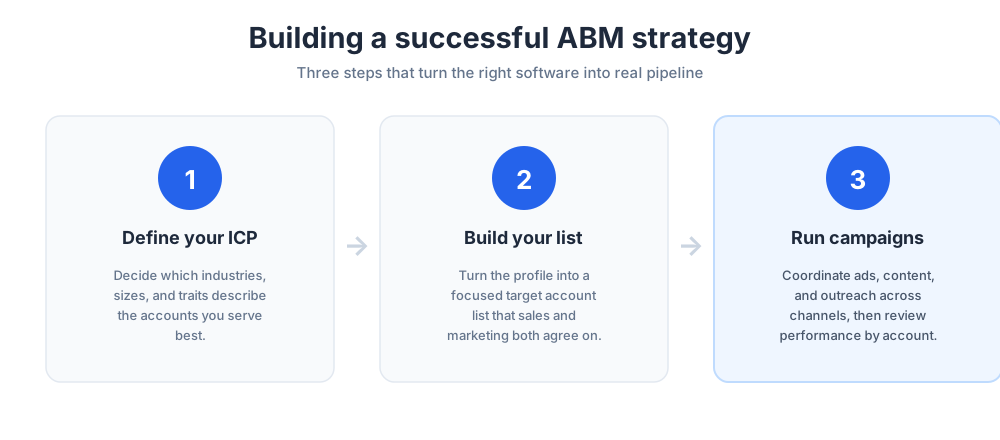
Building a successful ABM strategy
Software is only half the story. A successful ABM strategy depends on how you use the tools, not just which ones you buy.
The teams that succeed treat ABM as an ongoing program, not a one-off campaign, and refine it every quarter.
Define your ideal customer profile
Everything in ABM starts with a clear ideal customer profile. Decide which industries, company sizes, and traits describe the accounts you serve best.
A sharp profile keeps your abm efforts focused on suitable accounts and stops the program from drifting toward poor-fit companies.
Build your target account list
Next, turn the profile into a concrete list. Use your ABM software to find companies that match, then have marketing and sales agree on the final set of key accounts.
Keep the list a manageable size. ABM rewards depth, so a focused list of value target accounts beats a sprawling one every time.
Run coordinated campaigns
With the list set, run coordinated abm programs across channels. Marketing warms the accounts with ads and content while sales reaches out directly, all aimed at the same companies.
Review performance by account on a regular schedule, and adjust as you learn which market opportunities are converting.
ABM is not only about new deals. The same coordinated focus supports customer retention, since your best existing accounts keep getting relevant attention long after the first sale.
Common ABM mistakes to avoid
Even with good software, ABM programs can stumble. Two mistakes show up again and again.
Targeting too many accounts
The most common mistake is a target list that is too long. When the list grows past what your team can genuinely personalize, ABM quietly turns back into ordinary mass marketing.
A shorter list of large accounts, each given real attention, will outperform a long list every time.
Skipping sales and marketing alignment
The second mistake is treating ABM as a marketing-only project. Without true sales and marketing alignment, marketing targets one set of accounts while sales works another.
Account-based marketing only works when both teams own the same list, share the same data, and measure the same results together.
Conclusion
Account-based marketing is one of the most effective ways for a B2B company to win its most valuable customers, and account based marketing software is what makes the strategy practical.
The best platform is the one that fits your account list, your tech stack, and your budget. Demandbase, 6sense, HubSpot, and the other tools above each suit a different kind of team.
Define your ideal customer profile, build a focused target list, choose software that fits, and keep sales and marketing working as one. Done that way, ABM becomes a reliable engine for B2B growth.
Frequently Asked Questions
What is account-based marketing software?
Account-based marketing software is a tool that helps B2B teams run account-based marketing at scale. It identifies and prioritizes target companies, coordinates personalized campaigns across channels, aligns sales and marketing around the same account list, and reports on pipeline and revenue by account. Without it, ABM is mostly spreadsheets; with it, ABM becomes a repeatable system.
What is account-based marketing?
Account-based marketing, or ABM, is a B2B marketing strategy that treats individual companies as markets of one. Instead of generating a high volume of leads, marketing and sales agree on a defined list of high-value target accounts and pursue them together with coordinated, personalized campaigns. It works because B2B deals are won at the company level, not the single-lead level.
How does ABM software work?
ABM software combines firmographic data, intent signals, and your own customer data to surface accounts that match your ideal customer profile. It ranks those accounts by fit and buying signals, helps you run personalized ad and email campaigns aimed at each one, and tracks engagement and pipeline by account so both teams see the same progress.
What are the best account-based marketing software platforms?
There is no single best tool, only the best fit for your team and account list. Widely used options include Demandbase and 6sense for full go-to-market platforms, HubSpot for teams that want ABM inside a CRM, ZoomInfo for data, RollWorks for mid-market teams, Terminus for multi-channel campaigns, and Apollo for sales-led teams. Map your needs first, then trial a shortlist.
What features should ABM software have?
Look for strong account data and identification, including the ability to spot anonymous website visitors; intent and engagement signals that show which accounts are in-market; personalized campaign and ad tools, often with marketing automation; CRM integration; and account-level performance analytics. Rank these features by what your own team needs before comparing platforms.
How much does account-based marketing software cost?
ABM software is typically priced as an investment, with costs that scale by users, accounts, data, and feature tier. Enterprise platforms cost more than mid-market tools. Because published pricing changes often, confirm current figures with each vendor before deciding. Weigh the cost against the size of the deals ABM is meant to win, since a capable platform often pays for itself on high-value accounts.
Is ABM only for B2B companies?
Account-based marketing is designed for B2B, where deals are large, buying groups are complex, and a single sale can be worth pursuing for months. B2C businesses occasionally borrow ABM ideas for a small number of major partners or enterprise clients, but the strategy and the software are built for B2B teams selling to other companies.
What is the difference between ABM and traditional marketing?
Traditional demand generation starts wide: attract many leads, then filter for good ones. Account-based marketing starts narrow: pick the right companies first, then go deep with personalized campaigns. They are not enemies; many B2B teams run broad campaigns for awareness and a focused ABM program for their largest, best-fit accounts.
How do you build a successful ABM strategy?
Start with a clear ideal customer profile that defines the accounts you serve best. Turn it into a focused target account list that marketing and sales agree on. Run coordinated campaigns across ads, content, and direct outreach, all aimed at the same companies. Then review performance by account on a regular schedule and refine the program every quarter.
Does ABM software integrate with a CRM?
Yes, and a strong CRM integration is essential. ABM software works best when it shares data two ways with your CRM, so a deal closed in sales updates the marketing view of that account automatically. Before choosing a platform, confirm it connects cleanly to your CRM and the rest of your marketing tech stack.
What are common ABM mistakes to avoid?
The two most common mistakes are targeting too many accounts, which turns ABM back into ordinary mass marketing, and skipping sales and marketing alignment, which leaves the two teams chasing different lists. A short, focused account list and a single shared definition of success are what keep an ABM program effective.
Can small B2B teams use account-based marketing software?
Yes. While the largest ABM platforms suit enterprises, several tools are built for mid-market and smaller teams, and some marketing platforms include ABM features in a familiar interface. A small B2B team is often a strong fit for ABM, because focusing on a short list of high-value accounts uses a limited budget efficiently.
Related articles
More in Tools & productivity →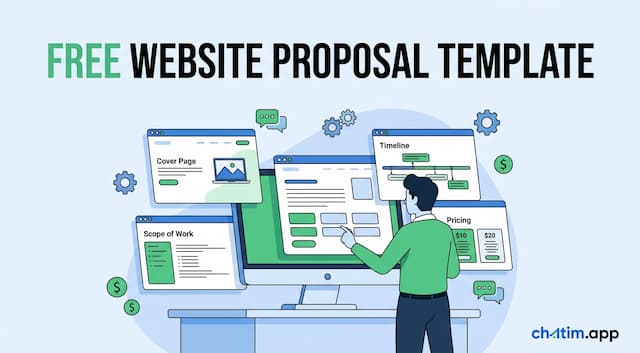 Website Proposal Template: 8 Sections That Win (2026)
A free website proposal template with all 8 sections copy-paste ready, plus the walkthrough: scoping, three-tier pricing, follow-up, and the expiry date.
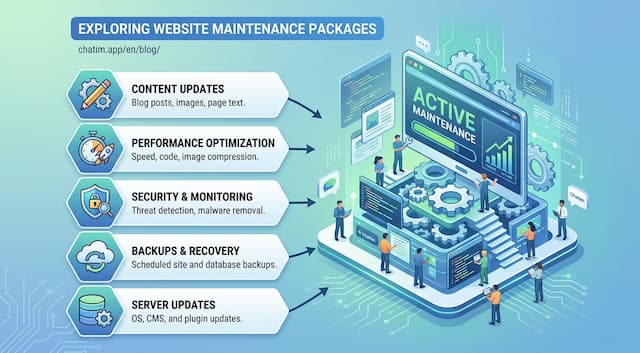 Website Maintenance Packages: What to Include & Charge (2026)
What goes into a website maintenance package, how providers price three tiers, the full maintenance checklist, and the recurring line items clients notice.
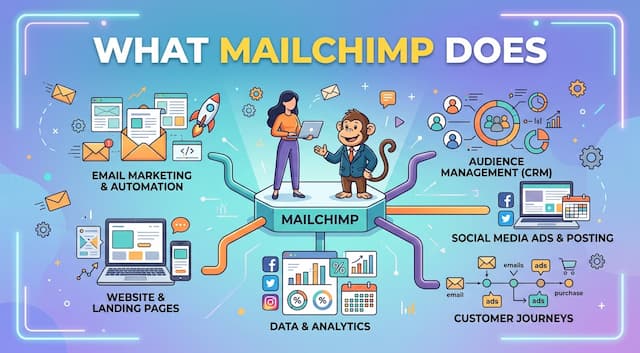 What Is Mailchimp? A Complete Guide to What It Does
Mailchimp is a leading email marketing platform. Learn what it is, what it does, its features and plans, and top alternatives.
 20 Best Email Tracking Software Tools to Use in 2026
20 email tracking tools compared: Mailtrack, HubSpot, Mixmax, Mailchimp, ZeroBounce. Pricing, free tiers, Gmail and Outlook picks for sales teams.