What Is an Ideal Customer Profile? ICP Definition & Guide
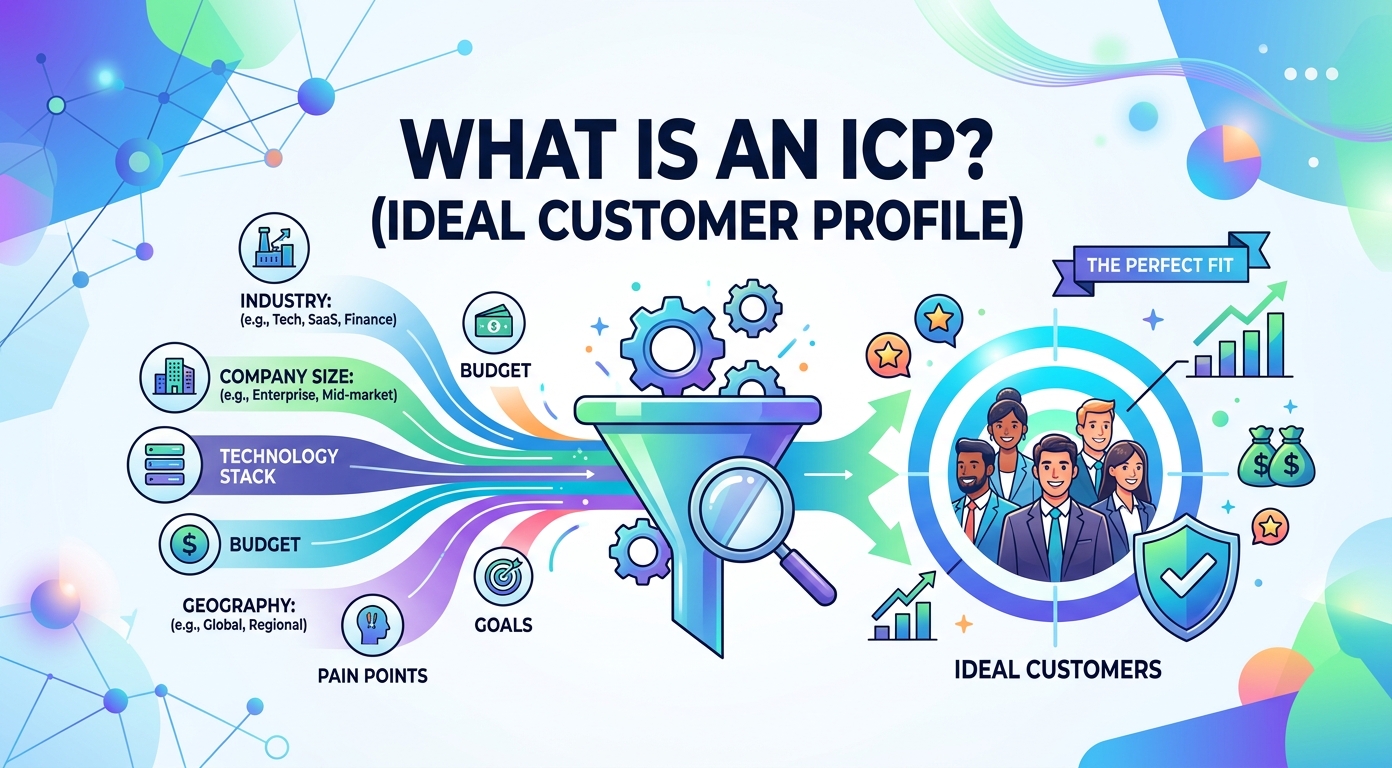
If your marketing reaches everyone, it reaches no one. The fix is an ideal customer profile: a clear, written description of the kind of company that gets the most value from your product and gives the most value back.
An ideal customer profile, or ICP, keeps sales and marketing focused on the businesses most likely to buy, stay, and grow. Without one, a team spreads its budget thin and chases leads that were never a good fit.
This guide explains what an ICP is, why it matters, what to include, and how to build one, with a simple layout you can copy.
What is an ideal customer profile?
An ideal customer profile is a description of the perfect customer for your product or service. In B2B, that customer is a company rather than a single person.
The ICP focuses on firmographic traits such as industry, company size, location, and revenue. It answers one practical question: which kind of business should sales and marketing spend their time on?
A good ICP is built from evidence, not guesswork. It draws on real customer records about who already buys, stays, and grows, so it points your effort at companies that behave like your best ones.
What an ideal customer profile includes
An ICP is short and specific. It usually names the industry, the company size, the revenue band, the buying triggers, and the goals and pain points that the product solves.
It is a working document, not a branding exercise. A sales rep should read the ICP in a minute and know whether the business in front of them is a fit customer or a distraction.
ICP vs buyer persona
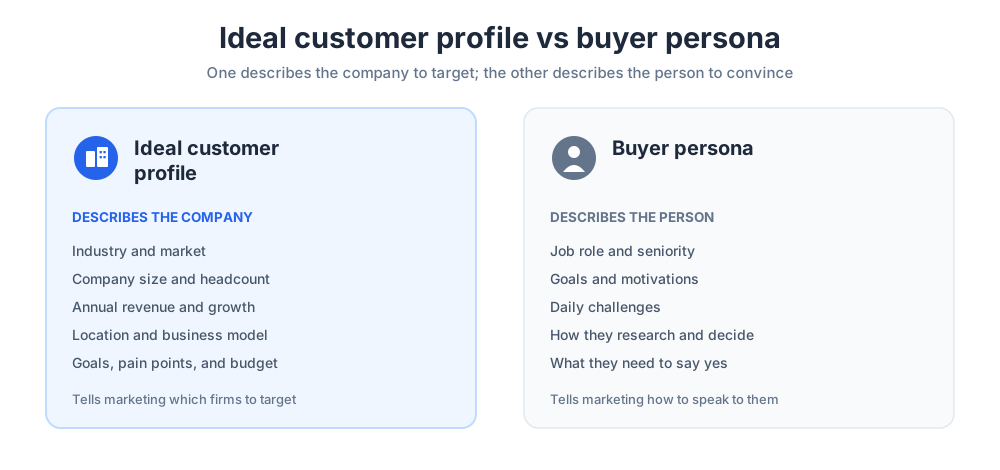
An ICP and a buyer persona are often confused, but they describe different things. The ICP describes the company you want to sell to. A buyer persona describes a person inside that company.
The ICP sets the firmographic fit: the right industry, size, and stage. The buyer persona then adds the human layer, with the role, goals, and motivations of the buyer who evaluates and approves the purchase.
You need both. The ICP tells marketing which companies to target; the buyer persona tells them how to speak to the buyer once a company is in view. Sales then works the deal knowing both the firm and the buyer.
Why an ideal customer profile matters
An ideal customer profile is not paperwork. It is a filter that makes every sales and marketing decision faster and cheaper.
Sharper marketing and sales
When marketing knows exactly which business to reach, every campaign gets sharper. Ad spend, content, and email all point at the same target, and that focus is the core of a strong marketing strategy.
Sales feels the same effect. Reps stop working low-fit deals and spend their hours on companies that match the ICP, the foundation of a successful sales strategy and tighter sales and marketing efforts.
This focus also aligns your wider plans. When your marketing strategies and sales strategies share one target, every email campaign and outbound touch reinforces the others, and the customer sees one consistent message.
Better lead qualification
An ICP turns a vague lead list into a ranked one. It gives the lead qualification process a clear yardstick: how closely does this account match the ICP?
That clarity helps sales and marketing agree on what a good lead looks like. Sales prospects that fit the ICP move down the sales funnel; the rest are politely set aside.
Stronger retention and revenue
Customers who match the ICP tend to stay longer. They get real value from the product, so customer retention improves and churn falls.
Those high-value customers also expand. A well-aimed ICP raises customer lifetime value and steadies revenue, because the business grows on companies that were a good fit from day one.
The ideal customer profile in B2B
The ICP is most powerful for a B2B business, where deals are larger and the buyer is an organization. B2B marketing depends on knowing which companies are worth the effort.
Firmographic data
Firmographic data is to an organization what demographic data is to a person. It covers industry, headcount, location, and growth stage, and it is the backbone of any B2B ICP.
For B2B companies, this data narrows a huge market down to a workable list. It tells your sales team which segment to pursue and which to skip.
Account signals that show intent
Beyond firmographics, account signals sharpen the picture. Hiring activity, funding rounds, new leadership, and tooling changes all hint that a business is ready to buy.
Watching these signals lets sales leaders time their outreach. An account that matches the ICP and just raised funding is a far warmer prospect than one that simply looks right on paper.
Ideal-fit accounts that show these signals deserve fast follow-up. Track the right metrics so sales, service, and product teams can prepare for the accounts most likely to become a paying customer.
What to include in an ideal customer profile
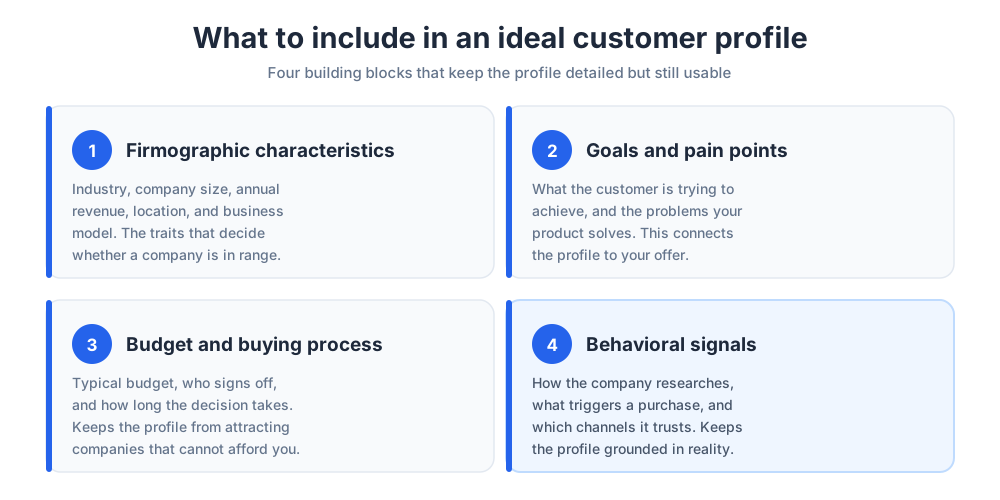
A useful ideal customer profile balances detail with brevity. These are the building blocks worth capturing.
Company and firmographic characteristics
Start with the firmographic traits: industry, company size, revenue, location, and business model. These traits decide whether an account is even in range.
List the key characteristics that your best accounts share, and be honest about the traits that consistently signal a poor fit.
Goals and pain points
Next, record what the customer is trying to achieve. Note the goals, the pain points, and the reasons a business would buy, such as saving time, cutting cost, or growing revenue.
This is where the ICP connects to your product. The clearer the pain, the easier it is to show how the product or service solves it.
Budget and buying process
Add the practical criteria: typical budget, who signs off, and how long the buying process takes. An ICP that ignores budget will keep attracting companies that cannot afford you.
Capturing the buying process also helps sales plan. Knowing the people involved shortens the path from first contact to a closed deal.
Behavioral signals
Finally, note behavioral signals: how the company researches, what triggers a purchase, and which channels it trusts. Tracking this behavior keeps the ICP grounded in how customers actually act.
Together these pieces give a detailed description of the business you most want to win.
How to create an ideal customer profile
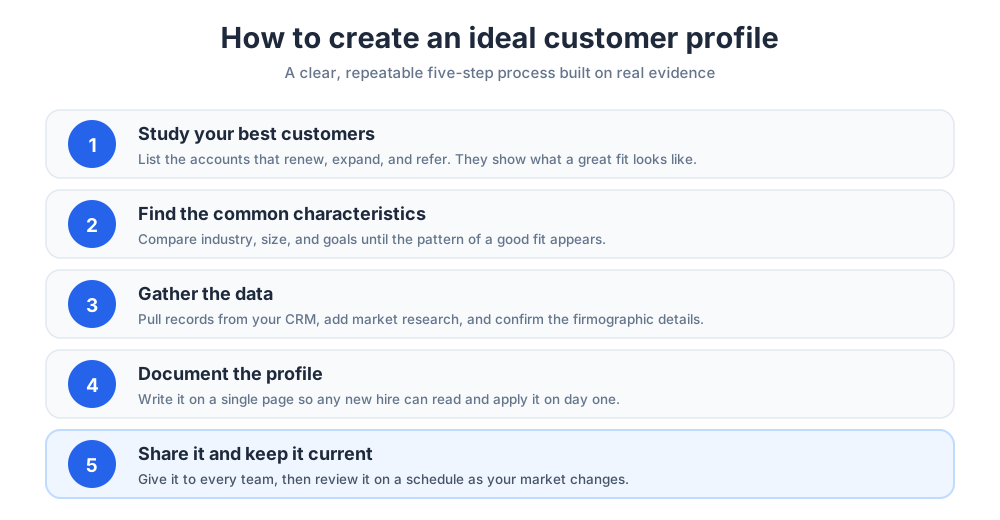
Building an ideal customer profile is a clear, repeatable process. Work through these five steps in order.
Study your best customers
The first step is to list your best current customers: the companies that renew, expand, and refer others. These valuable customers show what a great fit looks like in practice.
Look across your current customer base and pick the businesses you wish you had more of. They are the raw material for the whole ICP.
Find the common characteristics
Next, look for the common characteristics those companies share. Compare industry, size, and goals, and the pattern of a good fit will start to appear.
Talk to repeat customers directly. A short interview often reveals why they bought and stayed, which no spreadsheet can show on its own.
Gather the data
Now gather the data behind the pattern. Pull customer data from your CRM, layer in market research, and confirm the firmographic details so the ICP rests on facts.
Good customer notes belong here too. Survey responses and support tickets add the insights that raw numbers miss.
Document the profile
Write the ideal customer profile down in one place. A documented ICP beats one that lives only in a sales leader's head, because the whole company can use it.
Keep it to a single page. The goal is an ICP that any new hire in marketing operations can read and apply on day one.
Share it and keep it current
Share the finished ICP with your sales and marketing teams, the product group, and support, so every team targets the same companies.
Then revisit it. Markets shift, so review the profile on a schedule and update it as you learn more about which customers truly fit.
Where to find ideal customer profile data
An ICP is only as good as the data behind it. Three sources cover most of what you need.
Your CRM and customer data
Your CRM is the richest source. CRM data shows who bought, how fast they closed, how much they spend, and how long they stay.
Sorting those customer records by value and renewal reveals the companies your ICP should describe. Our CRM overview shows how that data is organized.
Customer feedback and interviews
Numbers explain what happened; people explain why. Customer interviews and survey responses uncover the goals and triggers behind a purchase.
These insights often reshape an ICP, surfacing a fit you would never spot in a dashboard alone.
Strong customer service notes are a quiet goldmine, since they record the exact words customers use. They also help sales spot an ideal fit faster.
External data tools
External tools fill the gaps. Company databases such as Crunchbase provide firmographic and funding data on businesses you have never sold to.
A Crunchbase search can size a market and find lookalike companies, while a CRM such as HubSpot keeps your own records and enrichment in one place. Together, internal records, Crunchbase, and b2b data providers give a full view of the market. A clean CRM database keeps all of it usable.
An ideal customer profile template
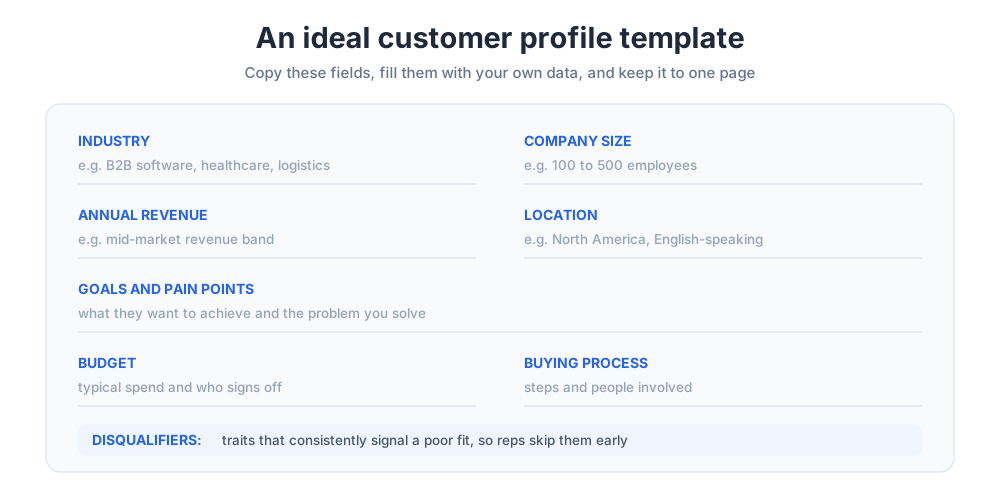
An ICP template turns the ideas above into a form you can fill in. It captures the firmographics, the goals and pain points, the budget, and the disqualifiers in one place.
Copy the layout below, complete it with your own data, and you have a working profile in an afternoon. Treat it as a living document, and lean on solid customer service notes to keep it honest.
Questions to ask when building your profile
The fastest way to draft an ICP is to answer a short list of ideal customer profile questions as a team.
Useful questions include: which customers bring the most revenue? Which close fastest and stay longest? Which industries and company sizes appear again and again? Which companies drained effort for little return?
Answering these honestly turns scattered opinions into a profile everyone can agree on and act against.
Common ideal customer profile mistakes
Even a well-meant ideal customer profile can go wrong. Two mistakes show up most often.
Making the profile too broad
A profile that tries to include everyone helps no one. If the description fits almost everyone, it gives sales and marketing no real filter.
A sharp, super-specific profile excludes more than it includes. Narrowing it feels risky, but that is exactly what makes the ICP useful.
Building it once and never updating
The second mistake is treating the profile as finished. Your product, market, and best customers all change, and a stale ICP slowly drifts away from reality.
Review the ICP against fresh data and customer metrics at least once or twice a year, and adjust it as the business learns.
Conclusion
An ideal customer profile is one of the highest-leverage documents a business can write. It tells marketing who to reach, tells sales who to pursue, and tells the product team who to build for.
Study your best customers, gather honest data, write a focused one-page ICP, and share it widely. Use this guide and the layout as your starting point.
Keep it current, and the ideal customer profile will steadily sharpen your marketing, your pipeline, and your growth for years to come.
Frequently Asked Questions
How do you define an ideal customer profile?
An ideal customer profile, or ICP, is a clear written description of the kind of company that gets the most value from your product and gives the most value back. In B2B it describes a company, not a person, using firmographic traits such as industry, company size, location, and revenue, plus the goals and pain points your product solves.
What is a customer profile example?
A simple example: a mid-market software company with 100 to 500 employees, in North America, growing fast, that struggles to keep customer support fast as it scales, has a budget for support tools, and where a support leader makes the buying decision. That short, specific description, backed by data, is a usable ideal customer profile.
What are the 4 customer personality types?
A widely used model splits buyers into four styles: analytical buyers who want data and detail, driver or assertive buyers who want speed and results, amiable buyers who want trust and reassurance, and expressive buyers who want vision and relationship. The exact labels vary by framework, but knowing a buyer's style helps you tailor how you sell once the ICP has identified the right company.
What makes a good customer profile?
A good customer profile is specific, built from evidence, and short enough to act on. It is based on your real best customers rather than guesswork, names clear firmographic traits and disqualifiers, fits on a single page, and is shared across sales and marketing. A good profile excludes more companies than it includes, and it is reviewed and updated as the business learns.
What is the difference between an ICP and a buyer persona?
An ideal customer profile describes the company you want to sell to, using firmographic traits like industry, size, and revenue. A buyer persona describes a person inside that company, with their role, goals, and motivations. The ICP tells marketing which companies to target; the buyer persona tells them how to speak to the buyer. Most teams need both.
Why is an ideal customer profile important?
An ICP keeps sales and marketing focused on the companies most likely to buy, stay, and grow. It sharpens campaigns, gives lead qualification a clear yardstick, and improves customer retention and lifetime value. Without one, a business spreads its budget thin and chases leads that were never a good fit.
What should an ideal customer profile include?
A practical ICP includes firmographic characteristics such as industry, company size, revenue, and location; the goals and pain points the product solves; the budget and buying process, including who signs off; and behavioral signals like how the company researches and what triggers a purchase. It should also name the traits that signal a poor fit.
How do you create an ideal customer profile?
Build an ICP in five steps. Study your best current customers, find the characteristics they share, gather supporting data from your CRM and market research, document the profile on a single page, then share it across sales and marketing teams. Review it on a schedule so it stays accurate as your market changes.
What is firmographic data?
Firmographic data is to a company what demographic data is to a person. It covers industry, headcount, revenue, location, business model, and growth stage. Firmographic data is the backbone of any B2B ideal customer profile, because it narrows a huge market down to a workable list of companies worth pursuing.
Where do you get the data for an ICP?
Three sources cover most needs. Your CRM shows who bought, how fast they closed, and how long they stay. Customer interviews and survey responses explain why they bought. External tools such as Crunchbase, and a CRM like HubSpot, add firmographic and funding data on companies you have not yet sold to.
How often should you update your ICP?
Review the ideal customer profile at least once or twice a year, and sooner if your product, pricing, or market shifts. A common mistake is building the profile once and never revisiting it; a stale ICP slowly drifts away from reality. Check it against fresh data and customer metrics, and adjust as the business learns.
Is an ICP only for B2B companies?
The ideal customer profile is most powerful in B2B, where deals are larger and the buyer is an organization, so the profile describes a company. B2C businesses use the same idea in a lighter form, focusing on customer segments and demographics instead of firmographics. The goal is the same: aim sales and marketing at the customers who fit best.
What is an ICP in sales and marketing?
In sales and marketing, an ICP is the shared definition of the perfect-fit company. Marketing uses it to target campaigns and content; sales uses it to qualify and prioritize prospects. Because both teams work from the same ideal customer profile, spending is more efficient and the pipeline fills with companies that are genuinely likely to close.
Related articles
More in Marketing & sales → Best SaaS Affiliate Programs in 2026: 7 Verified Picks
7 SaaS affiliate programs with every rate, duration, cookie, and payout term verified on the official pages, plus the four numbers that decide value.
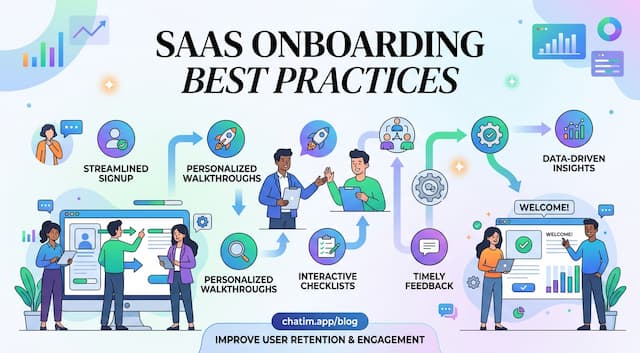 SaaS Onboarding Best Practices That Shrink Time to Value
SaaS onboarding best practices organized as a timeline: set expectations at signup, deliver value in session one, build the habit in week one, then measure.
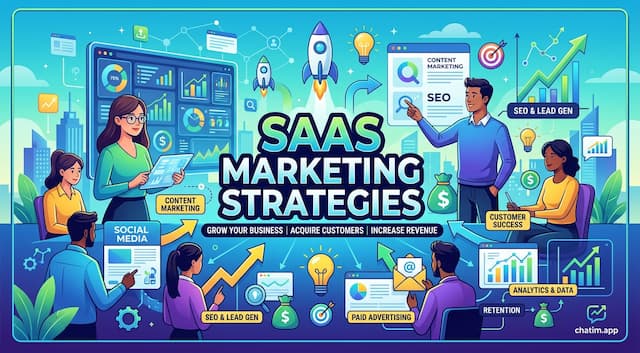 10 SaaS Marketing Strategies That Compound (2026)
Ten SaaS marketing strategies ranked by cost and time to results, the arithmetic that picks the right two or three for your price point, and what to skip.
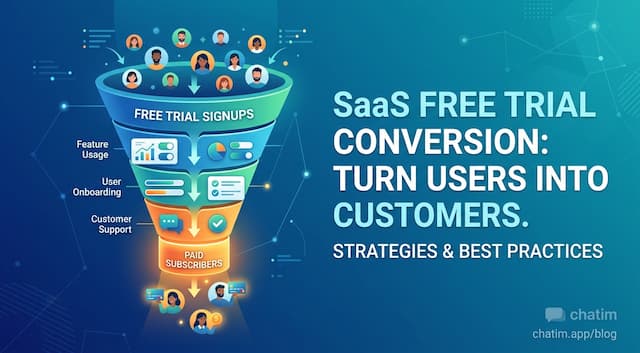 Free Trial Conversion: Fix Where Trials Actually Die
Forget trial conversion benchmarks: decompose the funnel, find which of the four deaths kills your trials, and apply the fix that matches, chat included.