How to Write a Product Review: A Step-by-Step Guide
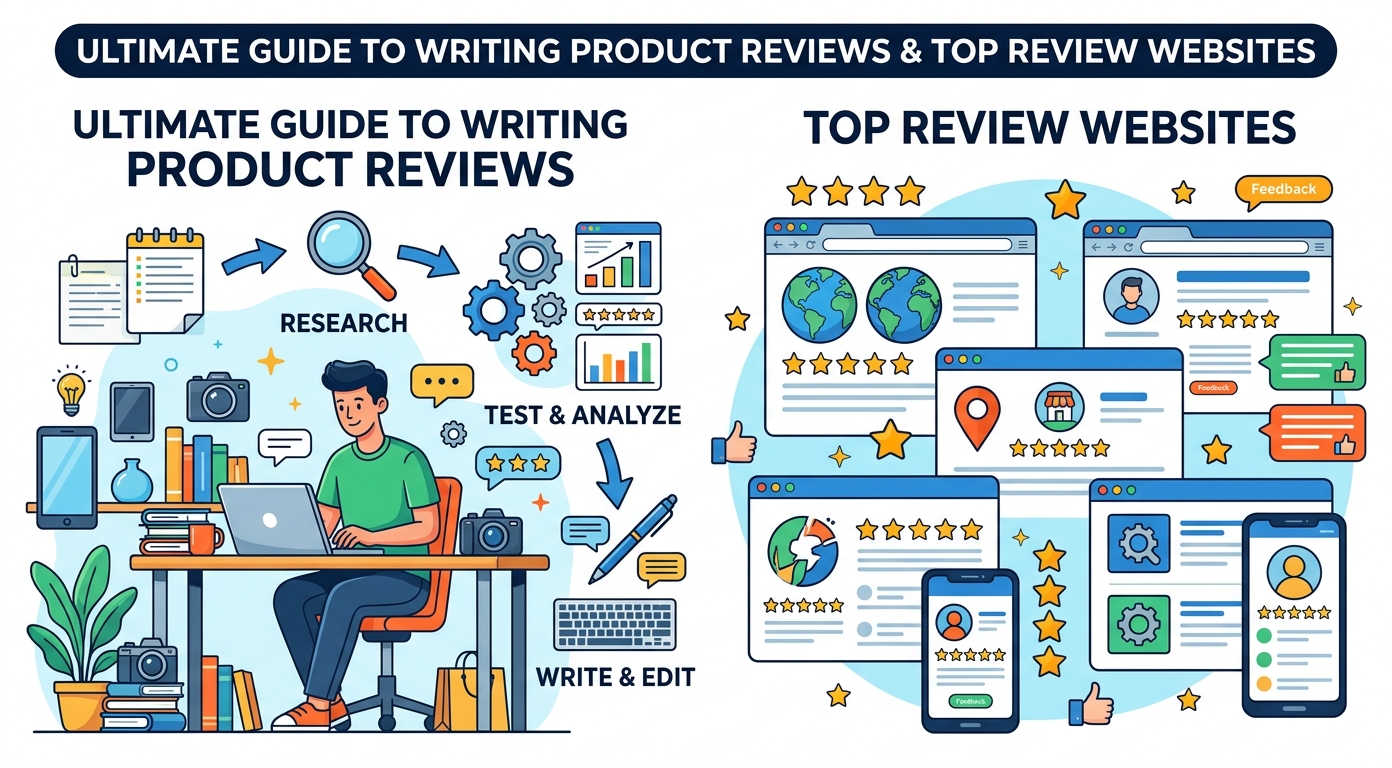
Knowing how to write a product review that a reader can trust is a real skill. A good product review does more than rate a product, it helps a reader make a confident buying decision by sharing honest, useful information.
This guide explains how to write a product review step by step: the preparation, the structure, the honesty rules, and the writing details that make a review genuinely helpful. It also lists the best product review websites where you can publish your work.
Whether you write reviews for a blog, an affiliate site, or an online store, the same principles apply. Quality product reviews are honest, specific, and written for the reader rather than the search engine, and that is exactly what this article will help you do.
What makes a product review good?
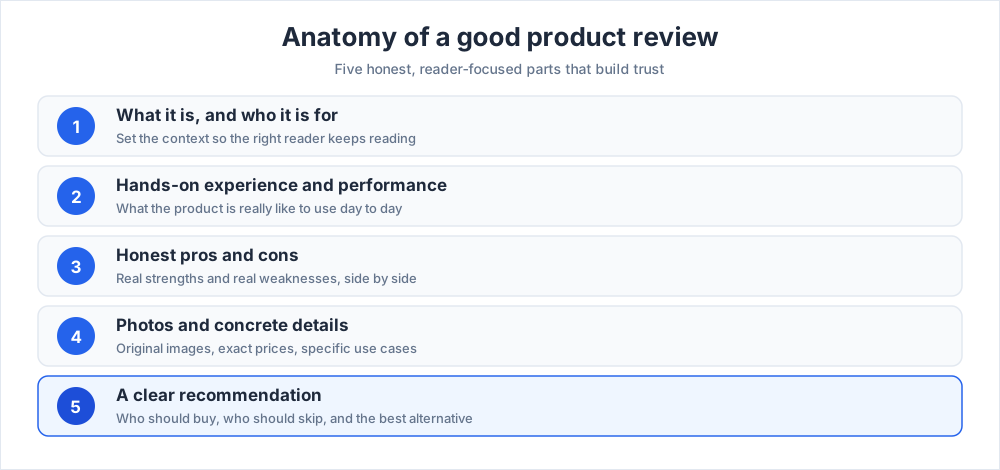
A strong product review gives a reader enough honest information to decide whether a product is right for them. It is built on real experience with the product, not a quick glance at the marketing page.
The strongest product reviews share three things: what the product is and who it is for, how the product performs in real use, and an honest verdict with clear pros and cons. Quality matters far more than word count.
A review like that builds trust. A reader who senses honesty will act on your recommendation, and search engines now rank this kind of original, experience-based content well above thin affiliate filler.
That trust is also the difference between a write-up people skim and one people act on. Honest, useful product reviews turn a reader into a buyer, and a buyer into a repeat visitor to your work.
Think of a review as a piece of content with one job: to inform a purchase. The more useful the information, the more that content earns its place in search results and in a reader's inbox, and the longer it keeps working for you.
How to write a product review, step by step
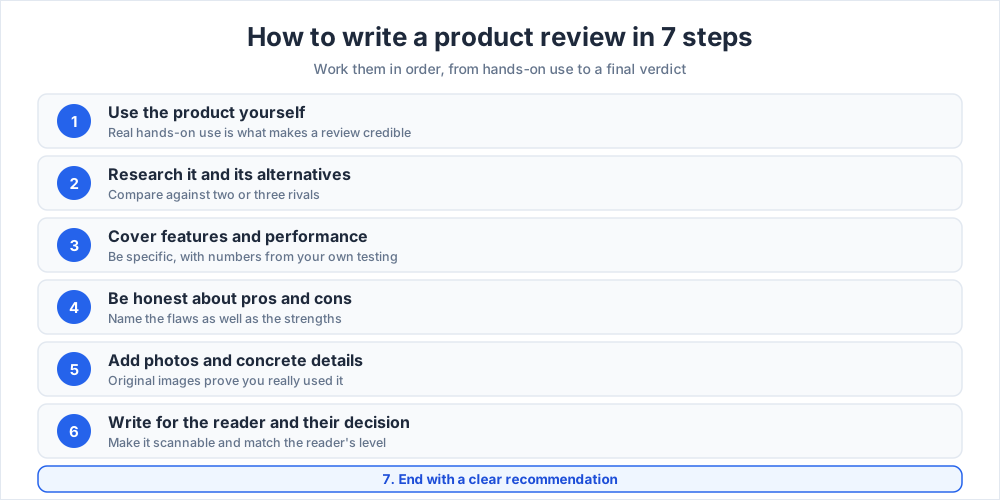
Here is the full process from start to finish. The seven steps below suit any product, from software to physical goods, and each one adds to the quality of the finished review.
Follow them in order. Skipping the early research and hands-on steps is the most common reason a product review reads as shallow or generic.
1. Use the product yourself first
The single biggest factor in a quality review is real use. Buy or test the product, use it the way an ordinary customer would, and take detailed notes as you go.
Hands-on use is what separates a credible review from a rewritten spec sheet. A reader can tell instantly when a writer has never actually touched the product, and that doubt undermines the whole article.
Spend enough time with the product to form a real opinion. A few days of genuine use gives you the specific information and honest thoughts a strong review depends on.
If you cannot spend enough time with the product to form that opinion, say so plainly. Honest limits build more trust with a reader than a confident verdict you have not actually earned.
2. Research the product and its alternatives
Good research gives a review depth. Read the product information from the maker, see what other online reviews say, and try the main alternatives so you can compare them fairly.
Comparison is what readers want most. Knowing how the product stacks up against two or three rivals turns a basic review into a genuinely useful buying guide.
This step also protects your credibility. Checking the facts and the brand's promises before you publish keeps your writing accurate and trustworthy.
3. Cover features, performance, and real experience
Walk through the product's main features and be specific. Instead of "great battery", write down how many hours it lasted in your own testing.
Then cover performance and the overall experience: what the product is like to live with day to day, where it shines, and where it frustrates. Concrete details beat vague praise every time.
Tie every feature back to the reader. A feature only matters in a review when you explain what it actually does for the person using the product.
List the features that genuinely matter and skip the ones that do not. A long spec dump is not information, it is noise, and good writing means choosing which features to explain in real depth.
4. Be honest about the pros and cons
Every product has weaknesses. A write-up that lists only positives reads like an ad and quietly destroys trust, so be honest about the cons alongside the pros.
Honesty is also good for results. Readers reward a reviewer who warns them about a flaw, and they return to your blog the next time they face a purchase.
Balance does not mean negativity. State what the product does well, state where it falls short, and let the reader weigh the trade-off for their own situation.
5. Add photos and concrete details
Original photos prove you actually used the product and make a write-up far more convincing than stock images. Show the product in real settings, flaws included.
Concrete details do the same job in words: exact measurements, real prices, and specific use cases. This kind of detailed information is what a reader and a search engine both value most.
6. Write for your readers and their decision
Keep the reader and their buying choice at the centre of the writing. Open by saying clearly who the product is for, and structure the review so a busy reader can scan it in seconds.
Match the writing to the type of product and the reader's level. A review of professional software needs different information from a review of a simple kitchen gadget, so adjust the depth and the language to fit.
7. End with a clear recommendation
Close every product review with a clear verdict. Tell the reader who should buy the product, who should skip it, and what the best alternative is.
A vague ending wastes the trust you built. A confident recommendation, backed by everything above, is what turns a review into a real buying choice for the reader.
A balanced verdict also ages better. When the product improves or slips over time, an honest write-up is far easier to update without losing the reader's trust.
Product review guidelines: honesty and disclosure
A few guidelines keep your product reviews credible. Honesty comes first: never overstate a product, and never hide a real flaw to please a brand or an affiliate program.
Disclosure comes second. If a piece contains affiliate links, or you received the product free, say so clearly. Most regions require it, and affiliate sites that disclose openly keep their readers' trust.
Quality is the third area, and it is where Google matters. Google's product review guidelines reward original writing, real use, accurate claims, and genuine detail, and Google search now ranks experience-based reviews well above thin content.
So good practice and good rankings point the same way. Write honest, useful content for the reader, and Google tends to reward the same content your audience already trusts.
One more habit helps: write the kind of content you would want to read yourself. Honest, well-organized writing signals quality to a reader long before any search engine sees the page.
The best product review websites
Once your review is written, where you publish it matters. The best product review websites already have the audience and the trust, so a piece posted there reaches far more people than one sitting alone on a new site.
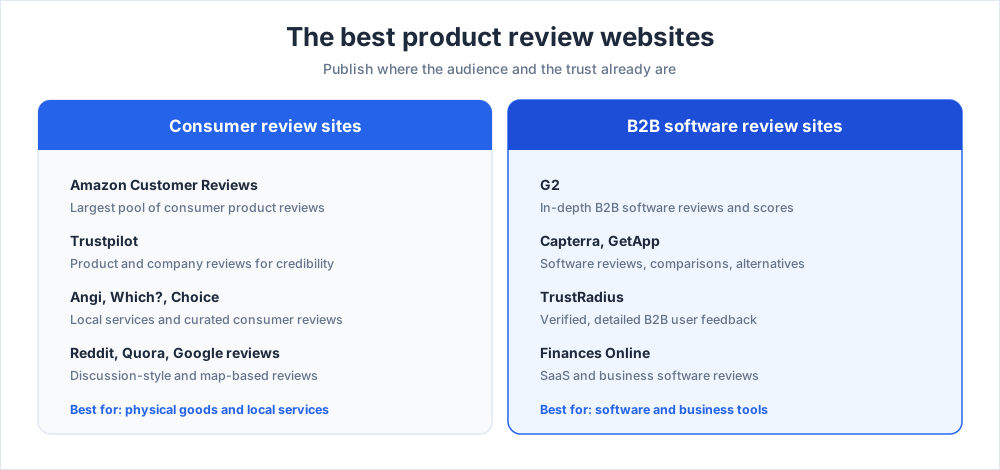
Consumer product review sites
These platforms collect reviews from everyday shoppers across products and services:
- Amazon Customer Reviews: the largest pool of consumer product reviews, tied directly to product listings.
- Trustpilot: product and company reviews widely used to build brand credibility.
- Angi: reviews of local service providers, including repair, plumbing, and home work.
- Which? and Choice: curated, independent consumer reviews and product ratings.
- Reddit and Quora: honest, discussion-style reviews and recommendations from real users.
- Google reviews: the reviews shown beside a business in Google search and Google Maps.
B2B software review sites
For software and business tools, these sites carry detailed, verified reviews:
- G2: in-depth B2B software reviews with verified user scores.
- Capterra: software reviews organized across hundreds of categories.
- GetApp: user reviews, product comparisons, and alternatives for business apps.
- TrustRadius: B2B software reviews with detailed, verified user feedback.
- Finances Online: reviews focused on SaaS and business software.
Publish your review on the most relevant site, then share it on your own blog and social channels so it reaches the widest possible audience. Encourage fresh reviews there too, since recent feedback keeps a product page useful.
Wherever you publish, keep one version on a property you own. A review on a site you control is content you can update freely, so the post stays accurate as the product changes.
Final tips for writing great product reviews
Writing great product reviews comes down to a few habits: use the product, study it properly, be honest, and write for the reader rather than the algorithm.
A few last tips. Keep the writing scannable with short paragraphs and clear headings. Update an old piece when the product changes. Always end with a clear recommendation, and add original images wherever you can.
The best reviewers treat writing as a craft. Each new review sharpens the next, and the information you gather along the way makes future product reviews faster to write and easier to trust.
Put in the effort, and each review becomes an asset. A genuinely helpful article keeps earning trust, traffic, and sales long after you publish it, which is the real payoff of doing the work well.
For more on turning content into growth, see our guides to collecting customer feedback and driving traffic to your website, and consider adding Chatim live chat to answer the product questions your readers ask before they buy.
Frequently Asked Questions
How do you write a product review example?
Write a product review by working through a clear structure. Open by saying what the product is and who it is for, then describe your hands-on experience, walk through the main features and performance, and give honest pros and cons. Add original photos and concrete details, then close with a clear verdict. A simple example: 'This blender is best for small kitchens. After two weeks of daily use, it crushed ice well and stayed quiet, but the jar is small and the lid is fiddly. Recommended for solo users, not for batch cooking.'
How to write product reviews?
To write product reviews that readers trust, follow seven steps: use the product yourself first, research it and its alternatives, cover the features and real performance, be honest about the pros and cons, add photos and concrete details, write for the reader and their buying decision, and end with a clear recommendation. Real experience and honesty matter more than length, and they are what search engines now reward.
What are some good 5-star review examples?
A good 5-star review is specific, not just enthusiastic. Instead of 'Great product!', it explains why: what the buyer used it for, what stood out, and who else would benefit. A strong example reads like, 'Five stars. I bought this for daily commuting and it has lasted six months of hard use without a scratch. Setup took five minutes, battery easily lasts a full day, and support replied within an hour. Ideal for anyone who needs something reliable.' The detail is what makes it credible and useful to the next shopper.
What are the 5 C's of literature review?
The 5 C's of a literature review are an academic framework: Cite the relevant sources, Compare what they say, Contrast where they disagree, Critique their strengths and weaknesses, and Connect them to your own research question. It applies to academic writing rather than product reviews, but the same compare, contrast, and critique mindset is useful when reviewing a product against its alternatives.
How long should a product review be?
Long enough to answer the reader's questions and no longer. Quality matters more than word count. A simple product might need a few hundred words; a complex one may justify two thousand. The test is whether a reader can finish the review and confidently decide whether to buy. Cut anything that does not help that decision.
How do I write an honest product review?
Use the product yourself, state both the pros and the cons, and never hide a real flaw to please a brand or an affiliate program. If you received the product free or your review contains affiliate links, disclose it clearly. Honesty is what builds trust with readers, and a review that warns about a weakness is more persuasive, not less.
Do I need to use the product to review it?
Yes, whenever possible. Real, hands-on use is the single biggest factor in a credible product review, and readers and search engines can both tell when a writer has never touched the product. If you genuinely cannot test it long enough to form an opinion, say so plainly in the review rather than pretending otherwise.
How do I write a product review for affiliate marketing?
Write it the same way as any honest review, then disclose the affiliate relationship clearly. Affiliate sites that recommend only products they would genuinely use, and that include honest cons, keep their readers' trust and convert better over time. A review that reads like an ad loses both trust and rankings, so honesty is the better long-term strategy even for monetized content.
What should a product review include?
A complete product review includes what the product is and who it is for, your hands-on experience and how it performs, a comparison with the main alternatives, honest pros and cons, original photos and concrete details such as prices and measurements, and a clear final recommendation. Disclosure of any affiliate links or free products belongs there too.
Where can I post product reviews?
You can post product reviews on your own blog or affiliate site, and on dedicated review websites. For consumer products, Amazon Customer Reviews, Trustpilot, Angi, Which?, Choice, Reddit, Quora, and Google reviews all reach large audiences. For business software, G2, Capterra, GetApp, TrustRadius, and Finances Online carry detailed B2B reviews. Publishing on a relevant platform and then sharing the review on your own channels reaches the widest audience.
How do I make my product review rank on Google?
Google's product review guidelines reward original, experience-based content, so the best way to rank is to write a genuinely useful review: real hands-on use, specific detail, honest pros and cons, original photos, and a clear recommendation. Thin reviews that just rewrite the maker's spec sheet rarely rank. Write the review your reader actually needs, and Google tends to reward the same page.
What is the difference between a review and a testimonial?
A product review is a balanced evaluation that covers both strengths and weaknesses to help a reader decide. A testimonial is a short, positive endorsement, usually published by the company itself for marketing. Reviews are most useful to a reader precisely because they include the cons; testimonials only show the upside.
How do I write a product review that converts?
A product review converts when the reader trusts it. Be honest about pros and cons, write from real experience, compare the product to its alternatives, and end with a clear recommendation so the reader knows exactly what to do next. Trust drives the click far more than hype does, so an honest review almost always out-converts a glowing one.
Related articles
More in Customer service → SaaS Customer Support: The Stage-by-Stage Guide (2026)
How SaaS customer support actually works at each stage: the right stack from founder-led live chat to a full support operation, channels, and metrics.
 How to Reduce Customer Churn: 5 Levers in Payback Order
Reduce customer churn by pulling five levers in payback order: payment recovery, onboarding, support quality, pricing fit, and a 90-day win-back.
 10 FAQ Page Examples That Actually Help Customers (2026)
10 FAQ page examples from Shopify, Airbnb, Slack, Nike and more, with the exact pattern each gets right and a checklist to build your own FAQ page.
 12 Customer Service Email Templates for Every Scenario (2026)
12 customer service email templates for complaints, refunds, delays, bugs and saying no, plus the five-line skeleton that keeps them sounding human.