Marketing Communication Tools: The Complete Guide

Marketing communication tools are the methods and software a business uses to reach an audience, carry a message, and turn attention into sales. Choosing the right set is one of the highest-leverage decisions a marketing team makes.
The mix is wider than it used to be. Traditional tools still work, but they now sit alongside email, social media, and automation software that did not exist a generation ago.
This guide explains what these tools are, walks through the five traditional options and the main digital ones, and shows how to choose the right mix, measure what they return, and avoid the common mistakes.
What is a marketing communication tool?
A marketing communication tool is any channel or platform a company uses to carry a message to its audience. An advert, an email, a social media post, and a chat widget are all examples, even though they look very different.
The purpose of marketing communication is constant across all of them: reach the right people, tell them something useful, and move them toward a purchase. The tool is simply the vehicle that carries the message.
It helps to sort the options into groups. Traditional tools include advertising, sales promotion, and PR. Digital tools include email marketing, social media, and customer relationship management software. Most companies use a blend, because no single channel reaches everyone.
Whatever the format, every tool does the same job for your brand: it builds a relationship between the business and the people most likely to buy. Seen that way, the question is never which tool is best, but which combination fits your audience.
Different tools also suit different jobs. Some are built to win new customers, others to deepen customer relationships after a sale. A clear view of the product or service you sell, the wider set of services you offer, and the customer experience you want to deliver makes it far easier to tell which tool belongs in your plan.
Why marketing communication tools matter
Good communication is what separates a brand people remember from one they scroll past. The right setup makes that communication consistent, measurable, and efficient.
They build brand awareness. Every advert, post, and email puts your brand in front of potential customers and slowly turns strangers into a name they recognize and trust. Strong brand recall is what makes every later message land more easily.
They drive sales. The right tools guide a customer from first contact to purchase, and a coordinated set shortens that journey. They also support customer retention, since the same tools keep existing customers engaged long after the first sale.
They protect a consistent brand voice. When a team runs every channel from a shared plan, customers get the same tone and the same promise wherever they meet your brand, and that consistency compounds into trust.
They give you data. Digital tools in particular report on what works, so a business can move budget toward the options that earn it. That feedback loop is the real reason a modern marketing program beats guesswork.
There is a compounding effect, too. The marketing communication tools you set up today keep paying back tomorrow: email lists and newsletters grow, a content library deepens, and brand recognition builds with every campaign. For most consumers, a familiar brand feels safer than an unknown one, so a steady set of communication tools quietly lowers the cost of every future sale and strengthens the business over time.
The 5 traditional marketing communication tools
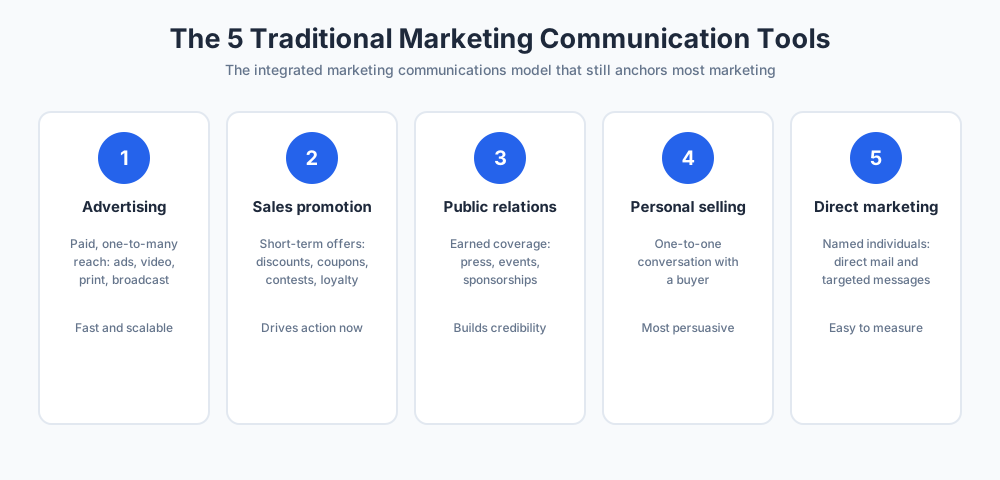
Integrated marketing communications, or IMC, is the practice of coordinating every channel so the message stays consistent. The classic model names five traditional tools, and they still anchor most marketing today.
Advertising
Advertising is paid, one-to-many communication: search ads, display, video, print, and broadcast. It is the fastest way to put a message in front of a large audience, and it scales up or down easily. The trade-off is cost, so advertising works best when you know exactly who you want to reach and what you want them to do.
Sales promotion
Sales promotions are short-term incentives that push a customer to act now: discounts, coupons, contests, loyalty programs, and point-of-sale offers. They are powerful for clearing stock or launching a product. Used too often, though, they can train customers to wait for the next deal, so promotions work best in planned bursts.
Public relations
It shapes how the public sees your brand through earned coverage rather than paid space: press releases, media stories, events, and sponsorships. It builds credibility that advertising cannot buy, because the message reaches people through a third party your audience already trusts.
Personal selling
This tool is direct, person-to-person communication between a representative and a buyer. It is the most expensive option per contact, but also the most persuasive. That makes it a fit for high-value or complex products, where a real conversation is what closes the deal.
Direct marketing
This tool speaks to named individuals through direct mail, telemarketing, and targeted digital messages. Because it reaches a specific person with a specific offer, it is easy to measure. Direct marketing is also a natural bridge between traditional channels and the digital tools below.
Digital marketing communication tools
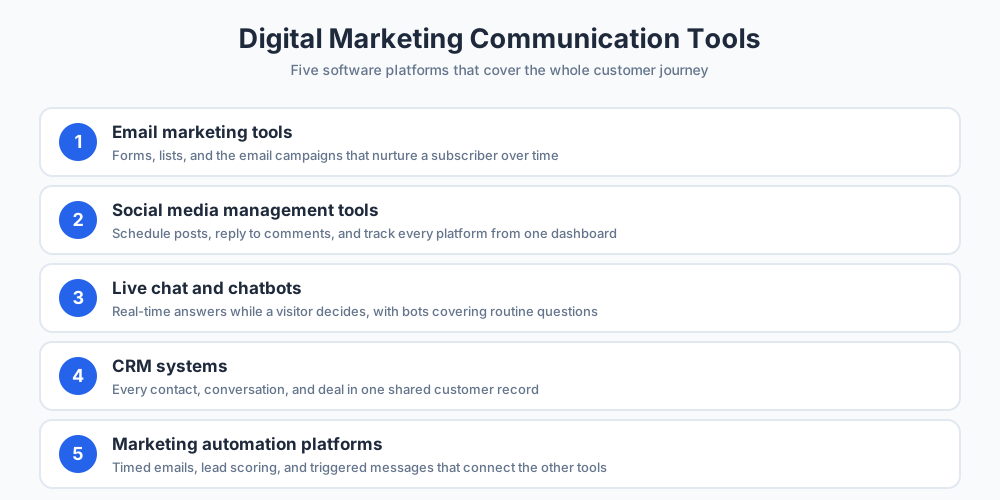
The digital marketing communication tools below are software platforms rather than broad channels. Each one runs a part of your communication, and used together they cover the whole customer journey from first click to repeat purchase.
Email marketing tools
Email marketing is still one of the most cost-effective channels a business has. These platforms handle sign-up forms, lists, and the email campaigns that nurture a subscriber over time. Good email software reports on opens and clicks, so each newsletter and campaign gets sharper. Email communication remains a workhorse because the audience has chosen to hear from your brand.
Social media management tools
Social media is where much of today's brand conversation happens. These platforms let a team schedule posts, reply to comments, and track results across all your social media platforms from one dashboard. They turn scattered activity on social media into a planned program, and social media marketing pairs naturally with influencer marketing and video marketing.
Live chat and chatbots
Live chat brings communication into real time. A chat widget answers questions while a visitor is still deciding, and chatbots handle routine messaging around the clock so no lead waits for a reply. Instant messaging like this is also a quiet sales tool, since a fast answer often turns a browser into a buyer.
CRM systems
A CRM, or customer relationship management system, stores every contact, conversation, and deal in one place. CRM systems keep customer relationships organized so marketing, sales, and support all work from the same record. That shared view is what makes communication feel personal even at a large scale.
Marketing automation platforms
Marketing automation connects the other tools together. It sends a timed email after a sign-up, scores leads, and triggers the next message based on what a customer does. Automation does not replace good marketing; it removes the repetitive work so the team can focus on strategy and creative.
More options worth adding
Beyond the core tools, a few more channels deserve a place in most marketing communication plans.
Content marketing and your blog
Content marketing earns attention instead of buying it. A company blog, guides, and videos answer the questions your audience is already asking, which builds trust and brings in steady organic traffic. Content also feeds every other channel, since one strong article becomes social posts, a newsletter, and more. A content management system makes publishing and updating that content simple.
Webinars and events
Webinars, seminars, and trade shows put your brand in front of an engaged audience, in person or live online. Anyone who registers is signaling real interest, which makes events a strong tool for lead generation as well as for building authority. Trade shows in particular still attract serious buyers.
Newsletters and direct mail
A regular newsletter keeps your business top of mind between purchases, and well-timed postal mail still cuts through in a crowded inbox era. Both are simple, low-cost ways to stay in touch with the customers and consumers who already know your brand.
Calling and messaging tools
Business phone and messaging platforms keep live conversations organized. Tools such as RingCentral bundle calls, video, and messaging in one place, and RingCentral and Nextiva are common picks for teams that handle a lot of customer calls about their products and services. Whether you choose RingCentral, Nextiva, or another provider, the goal is to keep voice in the communication mix, because some questions are still best answered by talking.
How marketing communication campaigns come together
A single tool rarely works alone. Most results come from coordinated marketing campaigns that combine several tools toward one clear goal.
Strong campaigns start with an objective and an audience, then pick the marketing tools that fit. A product launch might pair ads for reach, email campaigns for the existing list, and social media for the conversation, with every piece carrying one message.
Sequencing matters inside a campaign. Early on, awareness-focused marketing tools such as ads and content do the heavy lifting; later, direct-response marketing tools and email campaigns convert that interest into sales. The toolkit stays the same, but the emphasis shifts as the customer moves closer to a purchase.
Keep the message steady across the campaign. When campaigns look and sound the same in an advert, an email, and a social post, each touch reinforces the last, and the whole effort works harder than its separate parts. That consistency is what turns scattered marketing tools into one coherent customer experience.
Give every campaign a budget and a deadline. Clear limits keep a team focused and make it obvious which marketing tools earned their place once the campaigns end. Reviewing finished campaigns is also the fastest way to plan better ones, because real results beat assumptions every time.
How to choose the right marketing communication tools
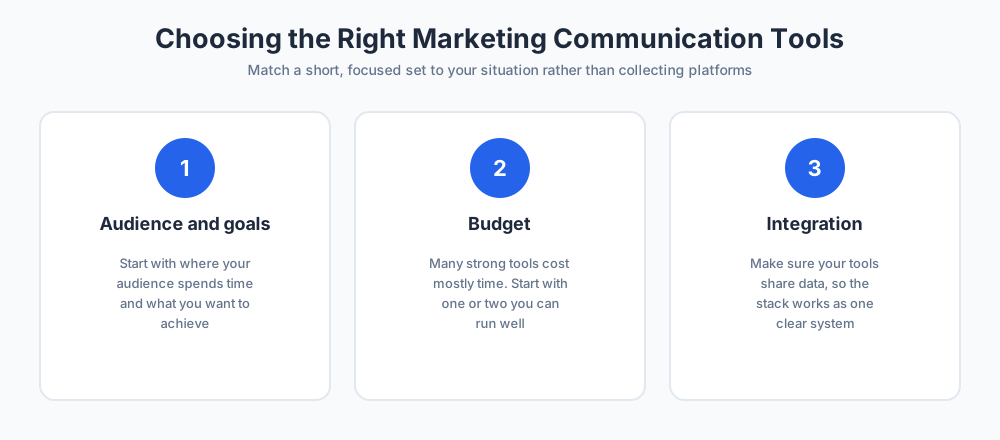
No business needs every tool. Choosing the right marketing tools is about matching a short, focused set to your business situation rather than collecting platforms.
Start with your audience and goals
Begin with where your audience already spends time and what you want to achieve. A goal of brand awareness points toward social media and content; a goal of fast sales points toward advertising and sales promotions. Let the goal and your situation pick the tool, not the other way around.
Match tools to your budget
Be honest about your marketing budget. Many strong tools, including email and a company blog, cost mostly time. Paid channels add up quickly, so start with one or two you can run well rather than spreading a thin budget across ten half-used platforms.
Make sure your tools work together
The best results come when your tools share data. A CRM that feeds your email platform, plus automation that ties the channels together, prevents silos and gives you one clear view of every customer. Check that any new tool fits the stack you already run.
One more rule: revisit the choice regularly. The best communication tools for a young brand are rarely the right ones at scale, and the products and services you sell will change too. Treat your toolkit as something you review every year, not a decision you make once, so your communication tools always match the brand you are building.
How to measure marketing communication effectiveness
A tool only earns its place if you can see what it returns. Measuring marketing communication keeps the budget honest and the strategy sharp.
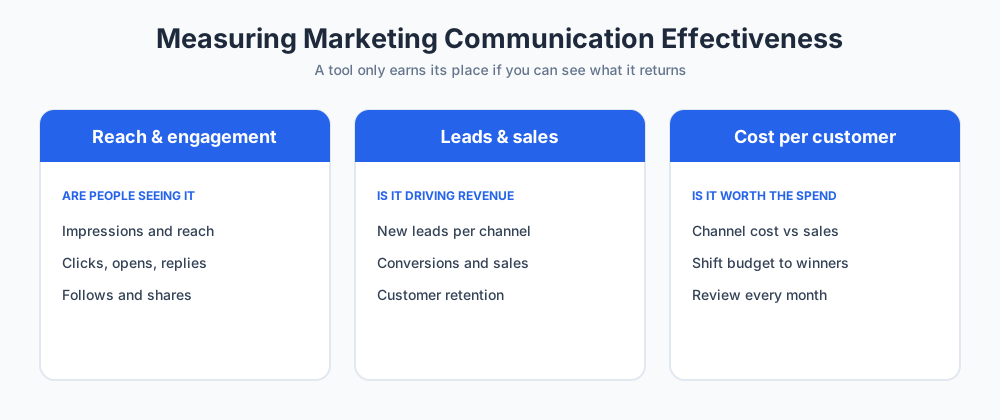
Track a few numbers per channel: reach, engagement, leads, and sales. Compare the cost of each channel against the potential customers it reaches and the sales it produces, and shift budget toward the marketing efforts that genuinely perform.
Use the data your digital platforms already provide. Email platforms, social media schedulers, and your CRM all report automatically, and simple surveys can fill the gaps with direct customer feedback about your products and services.
Review the numbers on a regular schedule. A marketing communication strategy improves through steady, small adjustments rather than one big overhaul, so a monthly look at the results is usually enough to keep every campaign on track.
Common marketing communication mistakes
A few habits quietly undo the value of even a strong toolkit. Watching for them keeps your communication efforts on track.
The first is an inconsistent message. When the brand voice on social media does not match the email or the advert, the audience gets confused and trust slips. Every channel should tell the same story.
The second is collecting tools instead of using them. Ten half-configured platforms serve customers worse than three the team knows well, so add a new tool only when a clear need appears.
The third is ignoring the data. If nobody reviews the results, the budget keeps flowing to channels that no longer work. Measurement is not optional; it is how communication strategies improve.
The fourth is treating every channel the same. A message that works as a quick social post can fall flat as a formal email, so adapt the format to each tool while keeping the core promise intact. The strongest brands tune the delivery without ever changing the story, which is the heart of effective marketing communication.
Marketing communication trends to watch
Marketing communication keeps shifting, and a few trends are worth planning around.
The first is omnichannel communication. Customers move between social media platforms, email, and chat in a single buying journey, and they expect a consistent experience across all their communication channels. Tools that connect them are now essential rather than optional.
The second is artificial intelligence. AI now drafts copy, segments an audience, and powers a chatbot that holds a natural conversation, which lets a small team do the work of a much larger one.
The third is a steady move toward online marketing and community management, as brands invest in owned audiences they can reach without paying for every impression.
The constant underneath the trends is the customer. Whatever marketing tools you adopt, strong customer engagement and a clear, honest message will always matter more than the technology that carries them.
Final thoughts
The best marketing communication tools are the ones that fit your audience, your goals, and your budget. Start with a focused set, learn it well, and add more only when the data says to.
Blend the traditional tools with the digital ones, keep the message consistent across every channel, and let measurement guide where the next dollar goes. Done well, the right toolkit turns scattered effort into steady growth for the business.
For more, see our guides to social media for business and what a CRM is, and explore Chatim live chat to add real-time communication to your toolkit.
Frequently Asked Questions
What is a marketing communication tool?
A marketing communication tool is any channel or platform a company uses to carry a message to its audience. Advertising, email, social media, and a live chat widget are all marketing communication tools, even though they work very differently. The format changes, but the job is the same: reach the right people, tell them something useful, and move them toward a purchase.
What are the 5 IMC tools?
Integrated marketing communications, or IMC, traditionally names five tools: advertising, sales promotion, public relations, personal selling, and direct marketing. Advertising is paid one-to-many communication, sales promotion uses short-term incentives, public relations earns coverage, personal selling is one-to-one, and direct marketing reaches named individuals. IMC means coordinating all five so the message stays consistent.
What are the 5 marketing tools?
It depends on who you ask. The classic answer is the five IMC tools: advertising, sales promotion, public relations, personal selling, and direct marketing. A modern digital answer would name email marketing, social media, a CRM, marketing automation, and live chat. Most businesses end up using a blend of the traditional and digital options rather than just five.
What is the 3-3-3 rule in marketing?
The 3-3-3 rule is an informal guideline rather than a fixed standard, and a few versions circulate. One common version says a message should grab attention in the first 3 seconds, hold it for 3 minutes, and stay memorable for 3 days. Others apply it to content planning. Treat it as a rough prompt to be fast, clear, and memorable, not as a strict formula.
What are the main types of marketing communication tools?
They fall into two broad groups. Traditional tools include advertising, sales promotion, public relations, personal selling, and direct marketing. Digital tools are software platforms such as email marketing, social media management, live chat and chatbots, CRM systems, and marketing automation. Channels like content marketing, webinars, and newsletters sit alongside both. Most plans blend several groups.
How do businesses choose the right marketing communication tools?
Start with your audience and goals, not a feature list. A goal of brand awareness points toward social media and content; a goal of fast sales points toward advertising and promotions. Match the shortlist to your budget, since many strong tools cost mostly time. Finally, check that the tools share data, so your stack works as one system.
What are the best digital marketing communication tools?
There is no single best tool, but five digital categories cover most of the customer journey: email marketing tools, social media management tools, live chat and chatbots, CRM systems, and marketing automation platforms. Used together they handle awareness, conversation, conversion, and retention. The right pick within each category depends on your size, budget, and existing software.
How does omnichannel communication improve marketing?
Customers move between social media, email, and chat in a single buying journey, and omnichannel communication keeps the experience consistent across every channel. That means the same message, tone, and information wherever a customer meets your brand. The result is less confusion, more trust, and a smoother path to purchase, because no channel contradicts another.
How can a business measure marketing communication effectiveness?
Track a few numbers per channel: reach, engagement, leads, and sales. Compare the cost of each channel against the customers it produces, and shift budget toward what performs. Use the reports your digital tools already provide, add simple surveys for direct feedback, and review the results on a regular monthly schedule rather than waiting for one big audit.
What are some emerging trends in marketing communication tools?
Two trends stand out. The first is omnichannel communication, where tools connect social, email, and chat so the journey stays seamless. The second is artificial intelligence, which now drafts copy, segments audiences, and powers chatbots that hold natural conversations. Both let a small marketing team do more, but a clear, honest message still matters more than the technology.
What is the difference between traditional and digital marketing communication tools?
Traditional tools, such as advertising, public relations, and direct mail, are broad channels that carry a message outward. Digital tools are software platforms, such as email marketing, social media management, and a CRM, that also collect data on what works. Traditional tools build reach and credibility; digital tools add targeting and measurement. Most businesses need both.
How much should a business spend on marketing communication tools?
There is no single right figure. Many strong tools, including email and a company blog, cost mostly time rather than money. Paid channels add up quickly, so it is better to start with one or two tools you can run well than to spread a thin budget across ten. Let the results, not a fixed percentage, guide where the budget goes.
Is email still an effective marketing communication tool?
Yes. Email remains one of the most cost-effective channels a business has, because the audience has chosen to hear from you. Email marketing tools handle forms, lists, and the campaigns that nurture a subscriber over time, and they report on opens and clicks so each message improves. For most businesses, email is still a workhorse, not a relic.
What is integrated marketing communication?
Integrated marketing communication, or IMC, is the practice of coordinating every channel and tool so the message stays consistent. Instead of running advertising, email, social media, and PR as separate efforts, IMC aligns them around one story and one goal. The payoff is a clearer brand: customers hear the same promise wherever they meet your business.
Related articles
More in Tools & productivity → Website Proposal Template: 8 Sections That Win (2026)
A free website proposal template with all 8 sections copy-paste ready, plus the walkthrough: scoping, three-tier pricing, follow-up, and the expiry date.
 Website Maintenance Packages: What to Include & Charge (2026)
What goes into a website maintenance package, how providers price three tiers, the full maintenance checklist, and the recurring line items clients notice.
 What Is Mailchimp? A Complete Guide to What It Does
Mailchimp is a leading email marketing platform. Learn what it is, what it does, its features and plans, and top alternatives.
 20 Best Email Tracking Software Tools to Use in 2026
20 email tracking tools compared: Mailtrack, HubSpot, Mixmax, Mailchimp, ZeroBounce. Pricing, free tiers, Gmail and Outlook picks for sales teams.