Live Chat Statistics and Trends to Know
Live chat has become one of the most important customer service channels for modern businesses. The real question is how important, and that is exactly what live chat statistics help answer.
This guide rounds up what the live chat data consistently shows in 2026: how customers feel about live chat, how live chat compares with other support options, how it shapes sales, and where the trends are heading next.
Rather than leaning on a single unverified number, it focuses on the patterns that appear again and again across customer research, so you can plan your own live chat with real confidence.
Why live chat statistics matter
Every business runs on limited time and budget. The data helps you decide whether live chat deserves a place in that budget, and how large a place it should get.
Used well, the numbers answer practical questions. Do customers actually want live chat? Does live chat lift sales? How fast does a chat reply need to be?
The key live chat statistics below are drawn from the broad consensus of customer research. No two reports agree on every figure, but the direction of the data is remarkably consistent.
That consistency is the point. When the same finding shows up across many studies, it is a safe foundation for a decision about your own customer service.
Across the research, the benefits of live chat cluster in three areas: a smoother customer experience, faster support, and stronger sales. Those benefits compound over time, and each of the benefits is covered in the sections below.
What live chat statistics say about customer preference
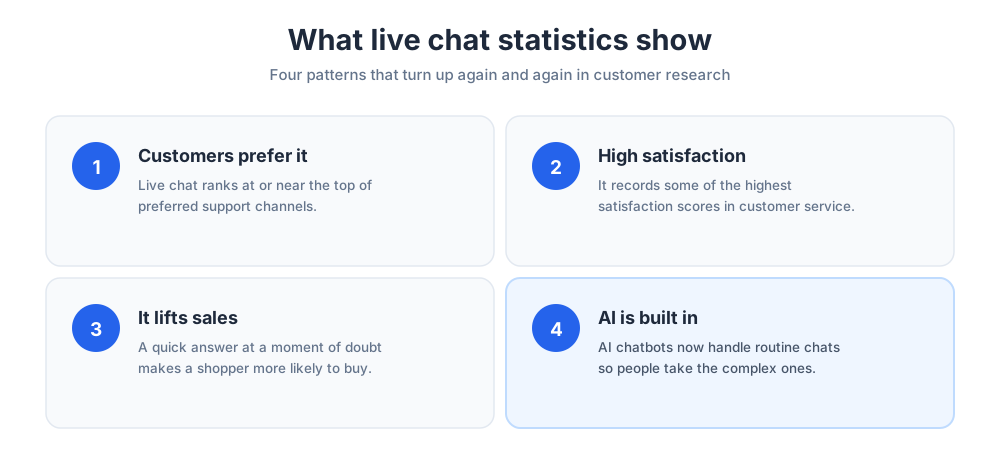
The clearest finding across years of research is simple: people like live chat. When customers are asked which support option they prefer, live chat consistently ranks at or near the top.
That preference has grown steadily as more websites add live chat and more consumers get used to the experience. What was once a novelty is now a basic expectation.
For a business, this is the headline statistic. A customer service channel that customers actively want is rare, and live chat is one of the few.
Customers favor live chat for speed
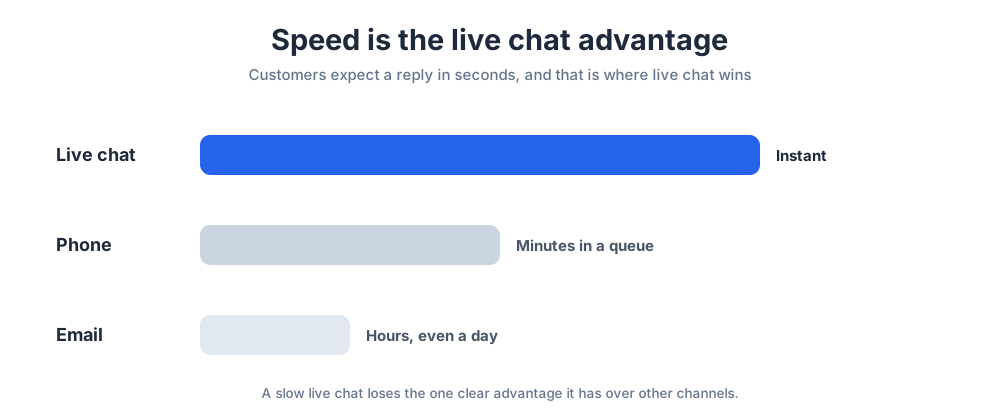
The main reason is speed. Live chat gives an answer in the moment a question appears, with none of the hold music of a phone call or the long wait of an email.
Survey after survey points to the same cause. Convenience and instant help are why live chat has become a preferred support channel for so many consumers.
Speed also lowers effort. A customer can ask a quick question without leaving the page, which is why live chat fits so naturally into the buying journey.
Live chat versus phone and email support
Phone support still matters for complex or sensitive issues, and email support suits anything that needs a written record. Each one has a real job.
But for quick questions, the data shows customers increasingly choosing chat. Live chat is faster than a phone queue and far faster than email.
The pattern holds across age groups. Younger consumers lean hardest toward live chat, yet older consumers adopt it too once they have tried it.
The takeaway is not to drop phone support or email. It is to make live chat the easy front door for the everyday customer support questions that most teams field.
Customer satisfaction and the live chat experience
Preference is one thing; satisfaction is another. Here the live chat data is just as encouraging for any support team.
Across customer research, live chat regularly records some of the highest satisfaction scores in customer service. When live chat is run well, people genuinely like using it.
What a positive live chat experience delivers
A good chat does more than close a ticket; it lifts the whole customer experience and leaves the customer feeling helped quickly.
That feeling builds customer loyalty. A customer who has had a good chat trusts the brand a little more, and trust is what keeps people coming back.
The effect spreads, too. Customers who report a good experience are more likely to return, to recommend the business, and to forgive an occasional mistake. Lasting customer loyalty often starts with one helpful chat.
What a poor live chat experience costs
The reverse is also true. A bad chat, usually a slow reply or a scripted, unhelpful answer, can do real damage to the customer experience.
Survey results consistently show that a bad chat is remembered. It quietly pushes people toward competitors and undoes the channel's good work.
The lesson is balance. Live chat only pays off when the experience is good, so a half-staffed, sluggish chat can cost more goodwill than it earns.
Response time statistics
If one quality defines live chat, it is speed. The statistics on response time are blunt: customers expect a fast reply, and patience runs out quickly.
Speed is also the main reason customers pick chat over slower customer service channels in the first place. A slow live chat loses the one clear advantage it has.
Consumer expectations on speed
Customer patience has only grown thinner over time. Most people now expect a live chat reply in seconds rather than minutes.
A slow first response is the single most common complaint the channel attracts. Even a brief automated greeting helps, because it confirms the message landed and a person is on the way.
The practical takeaway is clear. The average live chat should open quickly, and follow-up replies should keep a steady, conversational pace until the question is solved.
Meeting that consumer expectation is mostly a staffing and tooling problem, and it is one of the most fixable issues in customer service.
Live chat statistics on sales and revenue
Live chat is not only a support channel. The statistics show it is also a sales tool, and often an underused one.
Used deliberately, a chat conversation can guide a hesitant shopper toward a confident decision at the exact moment it matters most.
How live chat impacts sales
Research into buying behavior consistently finds that live chat lifts sales in a positive direction. A shopper who gets a quick answer at a moment of doubt is simply more likely to finish the purchase.
This is why many online stores place a chat widget on pricing and product pages. A timely message can rescue a sale that hesitation would otherwise have lost.
It also raises sales quality. An agent answering a product question can point a customer to a better-fit option, which lifts both satisfaction and order value.
For a deeper look at turning chats into customers, see our guide to live chat lead generation.
Live chat, conversions, and revenue
The revenue effect compounds over time. Live chat lifts conversions on the first visit, and the relationships it builds encourage repeat sales later.
Those conversations also feed the rest of the business. The questions customers ask reveal what confuses them, which sharpens product pages and marketing.
Across the data, the message is steady. A well-run live chat service tends to pay for its own cost, which is rare for a support tool. The revenue it influences is real, even when it is hard to measure to the dollar.
Live chat across channels and devices
Live chat no longer lives only on a desktop website. A large and growing share of chats now happen on mobile, so the chat box has to work cleanly on a small screen.
A clumsy mobile chat is a quiet leak. If the box covers the content or the keyboard hides the conversation, customers simply give up.
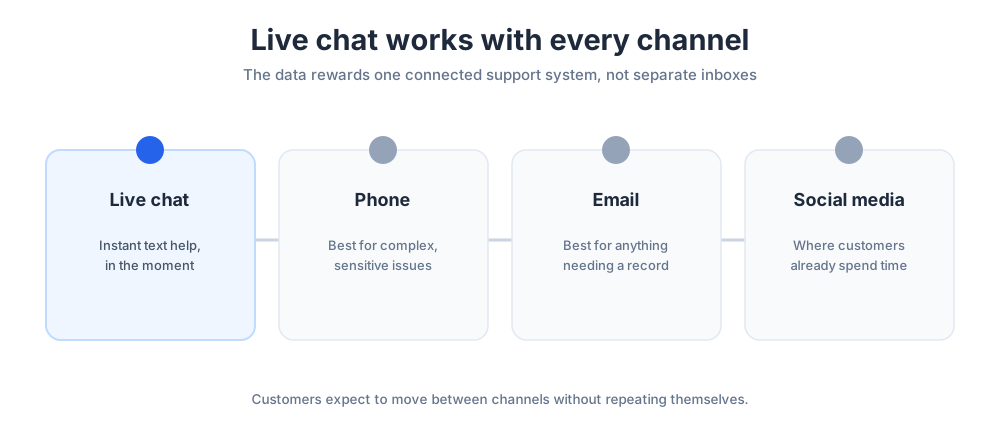
Live chat also connects to other channels. Many businesses now run live chat alongside social media and messaging apps, and customers expect to move between these tools without repeating themselves.
Treating chat, email, and social media as one joined-up customer service system, rather than separate inboxes, is now the standard the statistics reward.
Live chat software market trends
This market has grown quickly, and the chat trends point firmly upward. New tools arrive every year, and established platforms keep adding features. The live chat software on the market has never been stronger.
For buyers, a healthy live chat market is good news. More competition means better software across a wider range of prices, from free plans to enterprise suites.
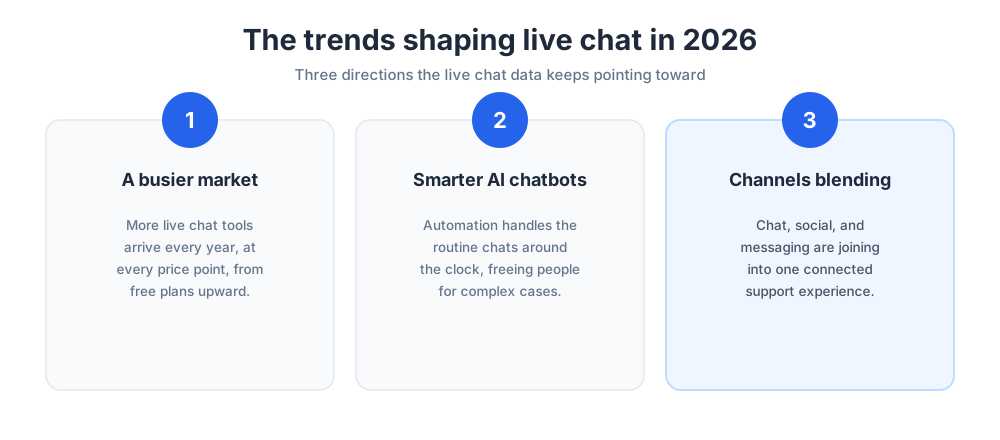
The market is also consolidating around a few capabilities: automation, simple integrations, and clear reporting. A modern live chat solution is expected to do all three well. Whether a vendor writes it as live chat or livechat, a capable livechat tool now helps turn quiet website consumers into engaged buyers.
Our guide to the best live chat software compares the current options in detail, so you can match a tool to your size and budget.
AI and chatbot trends in live chat
No look at live chat data for 2026 is complete without AI. The chatbot statistics all point the same way: automation is now a core part of live chat.
This is the biggest shift the industry has seen in years, and it is changing what a chat support team spends its day doing.
AI chatbots and the end of scripted responses
Early bots relied on rigid scripts and frustrated as many customers as they helped. A wrong-menu loop is nobody's idea of good support.
Modern AI assistants are different. They understand plain language, answer real questions, and hand off cleanly to a person when a chat needs one.
The trend is a blend, not a replacement. Automation handles the routine, repetitive chats, and people take the complex ones, which is the model the data now supports.
For most live chat users, the result is a faster answer at any hour, with a human still available when the question is genuinely hard.
The disadvantages the data reveals
Live chat is not flawless, and honest statistics show its limits. Knowing them helps you plan around them.
The most common disadvantage is staffing. Live chat support has to be covered during the hours customers expect it, and an unstaffed chat box is worse than no chat at all.
Most of these limits trace back to one fact: live chat support is only as strong as the team behind it. A small customer support team can still deliver excellent live chat support, as long as the coverage hours are honest and the chat support volume is planned for.
Quality can also slip under load. During peak times, chat support agents juggle several conversations at once, and a rushed reply hurts the experience.
None of this is a reason to avoid live chat. It is a reason to plan: pair chat support with AI help, set clear schedules, and protect quality support as volume grows.
Live chat metrics worth tracking
Industry statistics tell you what is normal. Your own customer service metrics tell you how you actually compare, and where to improve.
Track the basics first: first response time, chat session length, and resolution rate. These three reveal most quality problems on their own.
Add customer engagement metrics, such as how many visitors start a chat, watch whether customer engagement rises over time, and gather customer feedback after each chat.
Watched together, these numbers turn raw chat activity into a clear picture of customer service quality, and they show quickly whether a change is working.
How to act on these live chat statistics
The live chat statistics all point one way. Customers want live chat, they want it fast, and they reward the businesses that pair live chat with excellent customer service.
Acting on that is straightforward. Add a chat widget where buying questions happen, and staff the customer support behind it for genuine coverage rather than token hours.
Blend in AI for routine load, measure the result with the metrics above, and improve one thing at a time. Strong live chat customer support is built, not bought.
It also helps to picture the people behind the data. The consumers who choose live chat are not a niche group; they are a large part of your audience, and those consumers expect the same quick help every time. Give them capable live chat support, and routine conversations quietly turn into loyal customers.
For the wider picture, see our guide to customer service. Read this way, live chat statistics are not trivia; they are a steady signal that one support method keeps earning its place, and the businesses that act on it turn live chat into a real advantage in 2026.
Keep going with our guides to live chat best practices.
Frequently Asked Questions
Do live chat agents get paid well?
Pay for a live chat agent varies widely by country, experience, and whether the role is in-house or outsourced. In most markets it sits in the range of a customer support representative's salary, and it is often lower in common outsourcing regions. Because wages shift over time, check current local job listings for accurate figures.
What are the disadvantages of live chat?
The main disadvantage is staffing: live chat only works during the hours it is covered, and an unstaffed chat box is worse than none. Quality can also slip under heavy load when agents juggle several chats at once. Both problems are manageable with realistic schedules, AI help for routine questions, and planning for peak volume.
Which is the best live chat software?
There is no single best live chat software. The right choice depends on your team size, budget, and whether your focus is support or sales. Compare options on response tools, automation, integrations, and reporting, and trial one or two with real visitors. Our guide to the best live chat software walks through the current options in detail.
Is live chat safe?
Reputable live chat software is safe to use. Look for encryption of data in transit, access controls for agents, and compliance with privacy rules such as GDPR. As with any tool that handles customer data, safety depends on the vendor's security practices and on configuring the tool correctly, so review each provider's security documentation before you commit.
What is live chat?
Live chat is a support channel that lets a customer and a business hold a real-time text conversation through a small chat window on a website or app. It answers questions in the moment, without the wait of a phone queue or an email. It is used for customer support and, increasingly, for guiding shoppers toward a purchase.
Do customers prefer live chat over other channels?
For quick questions, the research consistently points that way. When customers are asked which support channel they prefer, live chat regularly ranks at or near the top, mainly because of speed and convenience. Phone and email still matter for complex or sensitive issues, so the goal is to offer live chat alongside them, not instead of them.
How fast should a live chat response be?
As fast as possible. Customers now expect a first reply in seconds rather than minutes, and a slow first response is the most common complaint live chat attracts. Even a brief automated greeting helps, because it confirms the message was received and a person is on the way. Speed is the main advantage live chat has, so protect it.
Does live chat increase sales?
For most websites, yes. Research into buying behavior consistently finds that a shopper who gets a quick answer at a moment of doubt is more likely to complete the purchase. This is why many stores place a chat widget on pricing and product pages. Live chat also lifts repeat sales by building a stronger relationship over time.
Is live chat better than phone or email support?
It is not strictly better; it is better for a specific job. Live chat wins for quick, in-the-moment questions because it is faster than a phone queue and far faster than email. Phone support suits complex or emotional issues, and email suits anything that needs a written record. Most businesses run all three and route each request to the right one.
What percentage of customers use live chat?
Exact figures differ by source, industry, and how the question is asked, so a single precise number is unreliable. What the data agrees on is the direction: a large and growing share of customers use live chat when it is offered, and adoption is higher among younger and mobile audiences. The trend has pointed steadily upward for years.
Are AI chatbots replacing live chat agents?
AI is reshaping live chat rather than replacing the people in it. AI chatbots now handle routine, repetitive chats well, which frees human agents for complex and sensitive cases. The model the data supports is a blend: automation for the predictable volume, and people for the conversations that genuinely need judgment and empathy.
What live chat metrics should I track?
Start with first response time, chat session length, and resolution rate, since these reveal most quality problems. Add customer engagement metrics, such as how many visitors start a chat, and gather customer feedback with a short rating after each conversation. Reviewed together, these numbers show whether your live chat is improving.
Is live chat worth it for a small business?
Often, yes. Live chat lets a small team answer buyers personally and compete with larger rivals on service. It needs honest coverage hours rather than a big team, and a lightweight tool with AI support can cover quiet periods. Start small, place the chat where buying questions happen, and measure the result before expanding.
What is the future of live chat?
The clear trend is a blend of automation and human support. AI chatbots will keep taking on routine questions, while people focus on complex, high-value conversations. Live chat will also keep merging with other channels, so customers can move between chat, social media, and messaging without repeating themselves. The channel is growing, not fading.