How to Save a Struggling Business: 8 Steps to Recovery
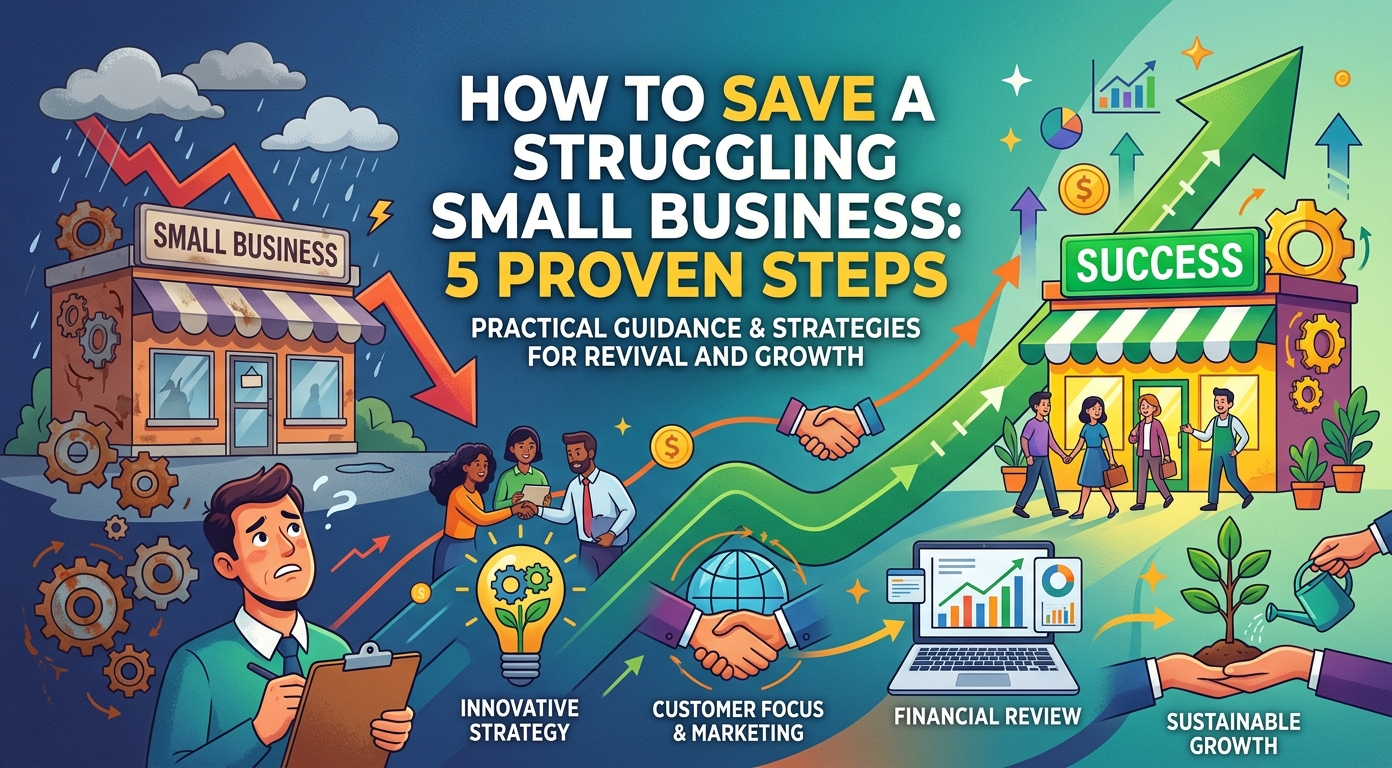
Knowing how to save a struggling business starts with a hard truth: most struggling businesses are not killed by one dramatic event, but by small problems left unattended until reserves run low. The good news is that a business in trouble is rarely past the point of no return. With an honest diagnosis and a clear plan, business owners turn things around far more often than the headlines suggest.
This guide lays out a practical, step-by-step plan for how to save a struggling business, written to help business owners who need to act this quarter, not next year. It covers why companies fail, an eight-step recovery plan, the funding worth knowing about, and how to tell the recovery is working.
Can you save a failing business?
Yes, in most cases you can. Many a successful business has come through a stretch when survival was genuinely in doubt. A failing business usually has more time than its owner feels it does, because the warning signs show up well before the money actually runs out.
What separates a business that recovers from one that does not is rarely luck. It is the willingness to face the numbers early, make unpopular decisions quickly, and follow a plan instead of hoping next month will be better. Recovery has ups and downs, and the first few weeks are usually the hardest.
The real question behind how to save a struggling business is not whether it can be done, but whether you will act before the runway disappears. This guide treats failure as a problem to solve, not a verdict, and assumes you are ready to move.
Why struggling businesses fail: the common causes
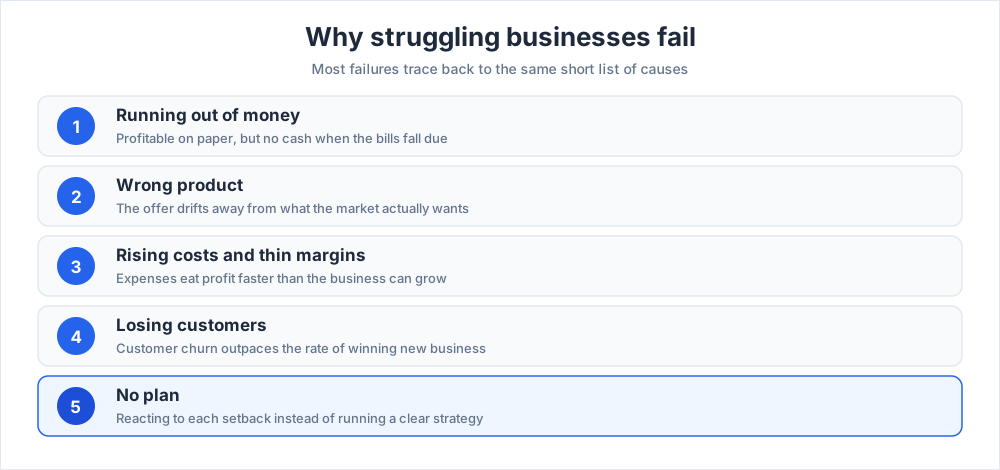
Before you fix anything, name the problem. Most companies in trouble fail for the same handful of reasons, and a struggling business usually suffers from several of them at once.
Run an honest eye over the list below. If two or three of these things feel familiar, that is normal, and it is also fixable.
- Running out of money: profitable on paper, yet unable to pay the bills on time.
- Wrong product: what you sell no longer matches what the market wants.
- Rising costs and thin margins that eat profit faster than the business can grow.
- Losing customers faster than new ones come in.
- No plan: reacting to each setback instead of running a strategy.
None of these are fatal on their own. They become fatal when business owners ignore them, and the road to failure is usually paved with warning signs that were visible months earlier. The sooner you name the cause, the more options you keep.
The turnaround plan: 8 steps to save a struggling business
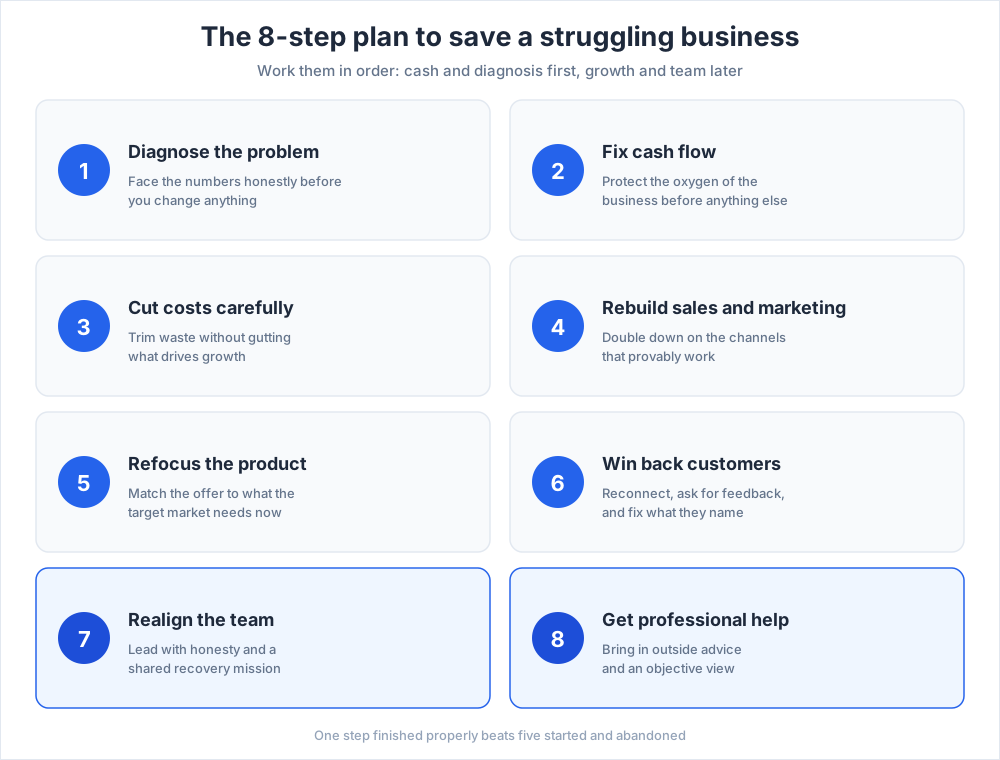
The eight steps below run in order of priority. Work them top to bottom: cash and diagnosis first, growth and team later. This sequence is the practical answer to how to save a struggling business.
Trying to do everything at once is how good intentions stall. One step, finished properly, beats five started and abandoned.
Step 1. Diagnose the problem and face the numbers
You cannot fix what you have not measured. Step one is a cold, honest audit: cash on hand, the monthly burn rate, the income trend, margins by product, and the real reason customers leave.
Most business owners delay this step because the numbers are uncomfortable. Do it anyway. A clear picture will help you see the problem plainly, and it usually reveals more room to move than it felt like there was. This is strategic planning under pressure, not guesswork.
Write down the single most urgent threat. If the answer involves cash, step two is already waiting.
Step 2. Fix cash flow before anything else
Cash flow is the oxygen of a struggling business. A company can be profitable and still fail if cash flow problems leave it unable to pay wages or suppliers this month.
Start with the basics: chase overdue invoices, slow non-urgent payments, and build a simple 13-week forecast so you can spot trouble coming. Many cash flow issues are really timing issues, the money is owed to you, it just has not arrived yet.
If the gap is structural rather than a matter of timing, move quickly to the costs and funding steps. Do not let a solvable shortfall become the reason the business closes.
Step 3. Cut costs without gutting the business
Cutting costs buys time, but cut the wrong things and you damage the recovery. Sort every expense into three buckets: keeps the lights on, drives income, and nice to have.
Cut the nice-to-have things immediately and renegotiate the essentials. Many business owners cut the wrong costs first, so protect anything that drives income, because a company that saves money by starving its own growth only shrinks faster. Automation can trim routine costs too: see our guide to automating small business tasks.
Cost control is about discipline, not panic. The goal is a leaner business that still has the muscle to grow, not a hollowed-out shell.
Step 4. Rebuild the sales and marketing engine
A struggling business often has a sales problem hiding under a money problem. If revenue is the issue, rebuilding how you sell and promote comes next.
Focus on what is provably working. Double down on the channels that bring profitable customers, pause the ones that do not, and tighten your pricing strategy so each sale contributes a real margin. For ideas that fit a tight budget, see our guide to low-cost digital marketing.
Quick sales wins matter here. Early income is what funds the rest of the recovery, so favour tactics that produce results within weeks, not quarters.
Step 5. Refocus the product on the right target market
If customers have drifted away, the cause may be poor market fit. A product that once sold itself can fall out of step with what the target market now needs.
Talk to your best clients to help refocus the offer. Ask what they value, what they would miss, and what they would happily pay more for. Use the answers to sharpen the product, drop the parts that no longer earn their place, and match the offer to real demand.
Step 6. Win back customers and clients
Losing customers is one of the most common reasons businesses struggle, and winning them back costs less than finding new ones. Reconnect with lapsed customers, ask for honest feedback, and fix the issues they raise. Our guide to gathering customer feedback shows how to do this well.
Personal, responsive communication is what makes customers feel valued again. Live chat, fast replies, and a real effort to help go further than a discount. A struggling business that rebuilds trust with the customers it still has steadies its income base.
Step 7. Realign the team and leadership
A struggling business is hard on the team. Morale drops, the best people start looking elsewhere, and productivity falls just when you need it most.
Leading well here means honesty. Tell the team what the situation is, what the plan is, and what part each person plays in the recovery. People can handle hard news; what they cannot handle is being kept in the dark.
A small, motivated team that understands the mission will out-work a larger, anxious one. Protect the people who drive the turnaround.
Step 8. Get professional help and advice
You do not have to do this alone, and the businesses that recover rarely do. Outside help brings an objective view and experience your own team does not have.
An accountant or turnaround advisor can pressure-test the plan. A mentor who has run a business through hard times offers advice you can trust. Many regions also provide free or low-cost help for small businesses through government programs and local organisations.
Asking for help early is a sign of good judgement, not weakness. The sooner you bring in outside support, the more options stay open.
Funding options for a struggling business
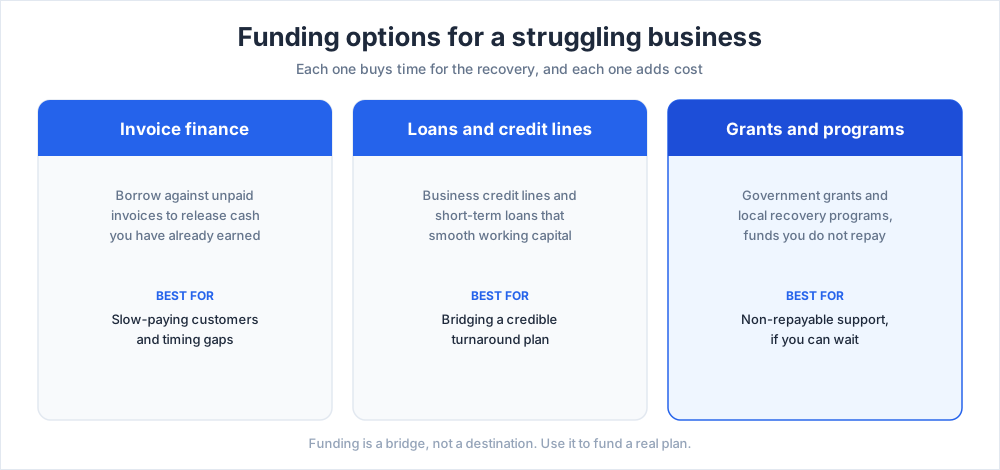
If diagnosis and cost control still leave a gap, outside funding can bridge it. The options below buy time for the recovery to work, but every one of them adds cost, so use them deliberately.
Funding is a bridge, not a destination. It works when it buys time for genuine change, and backfires when it only delays a hard decision.
Invoice finance and cash flow funding
This option is worth knowing first. It lets you borrow against unpaid invoices, releasing money you have already earned but not yet collected. For a business whose income is tied up with slow-paying customers, it is one of the faster ways to free up working capital.
Other working-capital tools, such as business credit lines and short-term loans, work in a similar way. They smooth timing gaps, but they are not a cure for a business that is fundamentally unprofitable.
Loans, grants, and financial support
Small business loans, government grants, and local recovery programmes deserve a serious look. Grants in particular are funds you do not repay, though they take time to secure.
Be honest about whether new debt genuinely helps or simply delays the reckoning. Borrowing makes sense when it funds a credible plan, not when it papers over a business model that has not changed.
How to tell the recovery is working
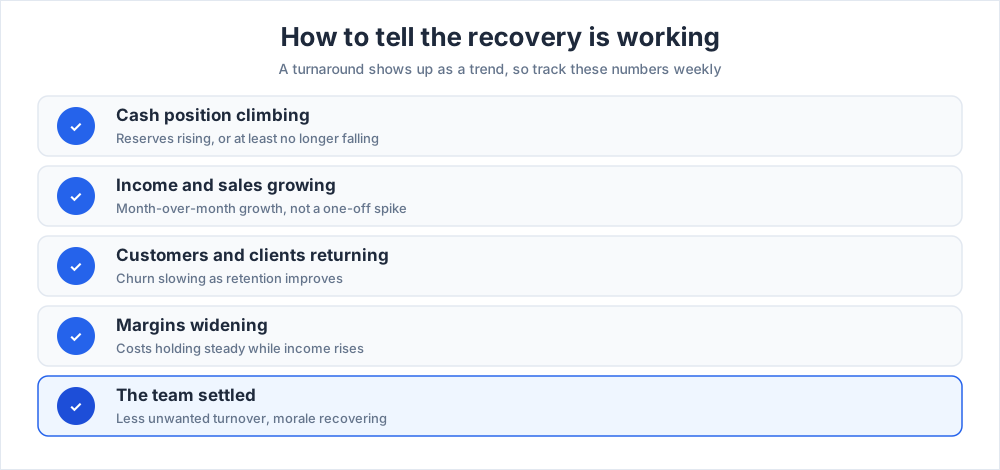
Progress shows up as a trend, not a single moment. Track a few numbers every week so the data can help you see business recovery taking hold, in the revenue and the margins, while there is still time to adjust.
These are the signals worth a weekly check.
- Cash position climbing, or at least no longer falling.
- Income and sales growing month over month.
- Returning customers and repeat clients, with churn slowing.
- Costs holding steady while income rises, so margins widen.
- The team settled, with less unwanted turnover.
If the numbers move the right way for two or three months, the recovery is real. If they do not, return to step one, because the diagnosis missed something.
Watch profitability, not just the top line. A company can grow sales and still fail if each sale loses money. A durable recovery means revenue and margin improving together.
Mistakes that turn setbacks into business failure
Recovery efforts fail in predictable ways. Avoid the mistakes that turn a survivable setback into a permanent one:
- Waiting too long to act, so options close one by one.
- Cutting marketing to reduce spending, then starving the recovery of income.
- Protecting ego over the numbers and refusing outside input.
- Treating a short-term gap as the whole problem when the model is broken.
- Hiding the situation from the team until good people leave on their own.
Most of these come from acting on emotion instead of the plan. When in doubt, return to the numbers and the next step.
Key takeaways and your next steps
Knowing how to save a struggling business comes down to sequence: diagnose honestly, fix cash flow, control costs, secure funding if you need it, then rebuild the way you sell, the product, customer relationships, and the team.
The rules are simple. Act early, protect cash, keep the team informed, and do not be too proud to ask for help. A few practical tips carry most of the weight: watch the numbers weekly, treat every setback as data, and fix things one at a time.
A struggling business is not a verdict, it is a problem, and problems have steps. The lesson is to move before the runway runs out, and let the numbers, not fear, make the calls.
Pick the first step you have been avoiding and do it today. Momentum is its own fuel, and most turnarounds begin with one honest decision. For more on the customer side of recovery, see our guides to customer service fundamentals and lead generation for small businesses, and consider adding Chatim live chat to win back the customers a struggling business cannot afford to lose.
Frequently Asked Questions
Can you save a failing business?
Yes, in most cases you can. A failing business usually has more time than its owner feels it does, because the warning signs appear well before the money runs out. What separates a business that recovers from one that does not is rarely luck: it is facing the numbers early, making unpopular decisions quickly, and following a turnaround plan instead of hoping next month improves. The earlier you act, the more options stay open.
Why do 90% of small businesses fail?
The claim that 90% of small businesses fail is widely repeated but not well supported by the data. Broader figures suggest roughly half of small businesses are still operating after five years, with the failure rate highest in the first two years. When businesses do fail, the common causes are cash flow problems, weak market fit, running out of money, poor management, and ignoring early warning signs. The encouraging part for any struggling business is that those causes are mostly fixable when they are caught early.
What is the 3 month rule in business?
The 3 month rule is the guideline that a business should keep at least three months of operating expenses in reserve as a cash buffer. It gives you a runway to absorb a slow quarter, a late-paying client, or an unexpected cost without an immediate crisis. For a struggling business, dropping below that three-month cushion is an early signal to act on cash flow now, before the shortfall becomes urgent.
What are the 5 C's of business?
The 5 C's most relevant to a struggling business are the 5 C's of credit, the factors a lender weighs before approving funding: Character (your track record and credit history), Capacity (whether cash flow can service the debt), Capital (what you have invested yourself), Collateral (assets that secure the loan), and Conditions (the loan purpose and the wider economy). A separate marketing framework, the 5 C's of marketing, covers Company, Customers, Competitors, Collaborators, and Climate. If you are seeking funding to save your business, the 5 C's of credit are the ones to prepare for.
What is the first thing to do when your business is failing?
Diagnose before you act. The first step is a cold, honest audit of the numbers: cash on hand, monthly burn rate, the income trend, margins by product, and the real reason customers leave. Most business owners delay this because the numbers are uncomfortable, but a clear picture of the problem is the foundation every other recovery step is built on. Once you know the single most urgent threat, you know where to start.
How do I fix cash flow problems in a small business?
Start with the basics: chase overdue invoices, slow down non-urgent payments, and build a simple 13-week cash forecast so you can see trouble coming. Many cash flow issues are really timing issues, money is owed to you and just has not arrived yet. If the gap is structural rather than a matter of timing, move on to cutting costs and, if needed, funding options such as invoice finance, which releases cash tied up in unpaid invoices.
How long does it take to turn around a struggling business?
A turnaround is a trend, not a single moment. Most recoveries show their first clear signs within one to three months: cash position stabilizing, sales growing month over month, and customer churn slowing. A full turnaround commonly takes six to eighteen months depending on how deep the problems run. Track the numbers weekly so you can tell early whether the plan is working or needs adjusting.
What funding options are available for a struggling business?
The main funding options are invoice finance (borrowing against unpaid invoices to release cash you have already earned), working capital tools such as business credit lines and short-term loans, and small business loans, government grants, and local recovery programs. Grants are especially valuable because they do not have to be repaid, though they take time to secure. Funding buys time for a turnaround to work, but it adds cost, so use it to fund a credible plan rather than to delay a hard decision.
Should I take on debt to save my business?
Debt makes sense when it funds a credible turnaround plan, for example bridging a timing gap while a fixed sales engine ramps up. It is a poor idea when it only papers over a business model that has not changed, because you are then adding cost to a problem you have not solved. Before borrowing, be honest about whether the new funding helps the recovery or simply delays the reckoning.
How do I win back customers I have lost?
Reconnect directly with lapsed customers and clients, ask for honest feedback, and fix the issues they name. Personal, responsive communication is what makes customers feel valued again, and tools like live chat and fast replies often go further than a discount. Winning back an existing customer usually costs less than acquiring a new one, which makes customer retention one of the highest-return moves for a struggling business.
How do I keep employees motivated during a turnaround?
Lead with honesty. Tell the team what the situation is, what the plan is, and what part each person plays in the recovery. People can handle hard news; what they cannot handle is being kept in the dark. A small, motivated team that understands the mission will out-work a larger, anxious one, so protect and communicate clearly with the people who drive the turnaround.
When should I consider closing instead of saving the business?
Consider closing when an honest diagnosis shows the core model cannot be made profitable, when further funding would only add debt to an unfixable problem, or when the personal and financial cost of continuing outweighs any realistic recovery. Closing in a controlled way, with debts and obligations handled properly, is sometimes the more responsible decision. A turnaround advisor or accountant can give objective input on whether the business is genuinely savable.
Can a struggling business recover without outside help?
Some do, but the businesses that recover rarely go it alone. Outside help, an accountant, a turnaround advisor, or a mentor who has run a business through hard times, brings an objective view and experience your team does not have. Many regions also offer free or low-cost help for small businesses through government programs. Asking for advice early is a sign of good judgement, not weakness.
Related articles
More in Marketing & sales → Best SaaS Affiliate Programs in 2026: 7 Verified Picks
7 SaaS affiliate programs with every rate, duration, cookie, and payout term verified on the official pages, plus the four numbers that decide value.
 SaaS Onboarding Best Practices That Shrink Time to Value
SaaS onboarding best practices organized as a timeline: set expectations at signup, deliver value in session one, build the habit in week one, then measure.
 10 SaaS Marketing Strategies That Compound (2026)
Ten SaaS marketing strategies ranked by cost and time to results, the arithmetic that picks the right two or three for your price point, and what to skip.
 Free Trial Conversion: Fix Where Trials Actually Die
Forget trial conversion benchmarks: decompose the funnel, find which of the four deaths kills your trials, and apply the fix that matches, chat included.