8 Payment Reminder Email Templates for 2026
The right payment reminder email template can be the difference between a 30-day payment cycle and a 90-day one. The templates below cover the friendly, professional side of accounts receivable communication: pre-due reminders, due-date notifications, gentle follow-ups, payment plan offers, and clear account statements. The focus is on courteous, customer-relationship-first wording rather than escalation or pressure language.
This guide includes 8 ready-to-paste payment reminder email templates, a friendly-cadence framework, best-practice writing tips, and an FAQ covering the most common questions about professional payment reminder emails. Adapt the templates to your brand voice, plug in the variables, and ship. If an account reaches the point where escalation or formal collections language is needed, that is a separate conversation that should involve your finance lead and qualified legal counsel for your jurisdiction.
Why payment reminder email templates matter
Payment reminder email templates do four things that ad-hoc reminder emails cannot:
- Speed. A finance or operations team that uses templates sends 3-5x more reminder emails per week. More reminders sent means more invoices paid on time.
- Consistency. Every customer gets the same tone, the same level of detail, the same friendly cadence. Consistency is the foundation of a professional AR process.
- Tone control. Payment reminders can come across as awkward or pushy if written ad hoc. Templates bake in the right friendly-but-clear tone that protects the customer relationship while making the ask clear.
- Cash-flow predictability. Teams that ship structured reminder email sequences cut days-sales-outstanding (DSO) measurably within 90 days of adopting templates. Customers respond to clear, professional, consistent communication.
The 8 payment reminder email templates below are organized by stage. Start with the framework, pick the templates you need, and customize the variables in brackets for your team and brand.
A friendly payment reminder cadence
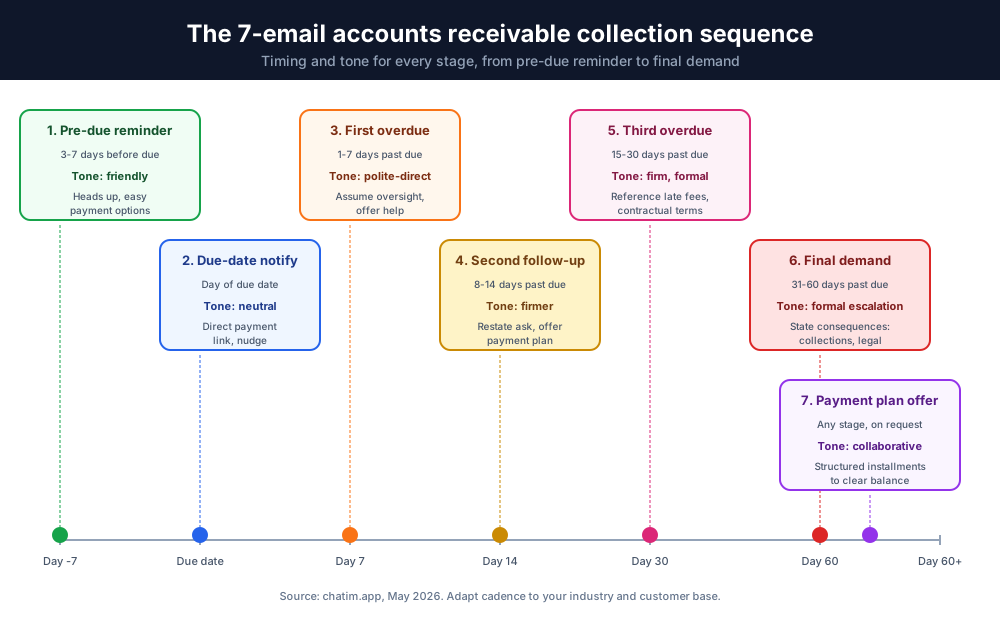
A predictable payment reminder email sequence reduces the emotional load on your team and trains customers to pay on time. The recommended cadence below is the one most-cited by finance and operations teams across SaaS, ecommerce, and B2B services for the first 2-3 weeks past due, before any account would need internal escalation.
| Timing | Tone | Goal | |
|---|---|---|---|
| 1. Pre-due reminder | 3-7 days before due date | Friendly, helpful | Confirm receipt of invoice, remind of upcoming due date |
| 2. Due-date notification | Day of due date | Friendly, neutral | Confirm payment is due today, share easy payment options |
| 3. Gentle first follow-up | 3-7 days past due | Polite, helpful | Assume oversight, offer help, share payment link |
| 4. Friendly check-in | 10-14 days past due | Polite, supportive | Check that nothing is wrong, offer a payment plan |
| 5. Payment plan offer | Any stage, on customer request | Collaborative | Offer a structured path to clear the balance |
If an account stays unpaid past this cadence, that is the point to involve your finance lead, account owner, and (where appropriate) legal counsel. The templates in this guide are designed for the courteous side of accounts receivable, not for any formal collections process.
8 professional payment reminder email templates
The 8 payment reminder email templates below cover the friendly cadence above plus the most-requested variants (account statement, Net-30 courtesy reminder, thank-you-for-paying confirmation). Copy, adapt, and paste.
Template 1: Pre-due friendly payment reminder
When to send: 3-7 days before the invoice due date.
Subject: Friendly reminder, Invoice #[12345] due on [Due Date]
Dear [Customer Name],
I hope you are doing well. This is a friendly reminder that Invoice #[12345] for $[Amount] is due on [Due Date]. We wanted to give you a heads up so you have plenty of time to process it.
If you have already scheduled payment, please ignore this note. If not, you can pay using [Payment Methods or Link].
Let me know if you have any questions about the invoice.
Best regards,
[Your Name]
[Your Position] at [Your Company]
[Your Contact Information]
Template 2: Due-date payment notification
When to send: Day of the due date.
Subject: Invoice #[12345] is due today
Hi [Customer Name],
Quick note to let you know that Invoice #[12345] for $[Amount] is due today. To make it easy, here is the payment link: [Payment Link].
If payment is already on the way, thank you. If you need a copy of the invoice or have a question, just reply to this email.
Thanks,
[Your Name]
[Your Position]
Template 3: Gentle first follow-up (3-7 days past due)
When to send: 3 to 7 days after the due date.
Subject: Following up on Invoice #[12345]
Dear [Customer Name],
I am following up on Invoice #[12345] for $[Amount], which was due on [Due Date].
I understand things get busy, so I wanted to check in and make sure the invoice did not get lost in the shuffle. You can settle the balance here: [Payment Link].
If there is an issue with the invoice, please let me know and I will get it resolved right away.
Thank you,
[Your Name]
[Your Position]
Template 4: Friendly check-in (10-14 days past due)
When to send: 10 to 14 days after the due date.
Subject: Checking in on Invoice #[12345]
Dear [Customer Name],
I have not heard back about Invoice #[12345] for $[Amount], which was due on [Due Date], and I wanted to make sure everything is alright on your end.
If you are running into a cash-flow issue or have a question about the invoice, please reach out, we are happy to discuss a payment plan or work through anything that needs clarifying. You can also settle the balance here when ready: [Payment Link].
Looking forward to hearing from you.
Thank you,
[Your Name]
[Your Position]
[Phone Number]
Template 5: Payment plan offer
When to send: Any stage of the sequence, when the customer requests flexibility or is unable to pay in full.
Subject: Payment plan for Invoice #[12345]
Hi [Customer Name],
Thank you for reaching out about Invoice #[12345] for $[Total Amount]. I understand cash flow can be tight, and we want to find a path forward that works for both of us.
Here is a payment plan proposal:
- Installment 1: $[Amount] due [Date]
- Installment 2: $[Amount] due [Date]
- Installment 3: $[Amount] due [Date]
If this works, just reply with "agreed" and I will send you a confirmation. If you need different terms, let me know what would work and I will see what I can do.
Best,
[Your Name]
[Your Position]
Template 6: Account statement email
When to send: Monthly, or when a customer has multiple outstanding invoices.
Subject: Your account statement, [Month Year]
Hi [Customer Name],
Attached is your monthly account statement showing all open invoices and current balances. Here is the summary:
- Invoice #[12345] dated [Date], $[Amount], due [Date]
- Invoice #[12346] dated [Date], $[Amount], due [Date]
- Invoice #[12347] dated [Date], $[Amount], outstanding
Total outstanding balance: $[Total]
You can pay any open invoice using [Payment Link]. Please reply if you need anything corrected or want to discuss any of these.
Thanks,
[Your Name]
[Your Position]
Template 7: Net-30 reminder for B2B customers
When to send: For B2B customers on standard Net-30 terms, sent 25 days after invoice date.
Subject: Net-30 invoice #[12345] due in 5 days
Hi [Customer Name],
This is a courtesy reminder that Invoice #[12345] for $[Amount] is due in 5 days, on [Due Date], per our Net-30 terms.
To make processing easy, here is the invoice link with payment options: [Payment Link]. We accept ACH, wire, credit card, and check.
If you need a copy of the invoice resent to AP or a different point of contact, just let me know and I will route it.
Best,
[Your Name]
[Your Position]
[Your Company]
Template 8: Payment-received thank-you
When to send: Within 24 hours of receiving payment, especially after a follow-up cycle.
Subject: Thank you, Invoice #[12345] paid
Hi [Customer Name],
Thank you for paying Invoice #[12345]. The payment has been received and the account is fully up to date.
A receipt is attached for your records. If you need anything else, just reply to this email.
Have a great rest of your week,
[Your Name]
[Your Position]
Best practices for writing payment reminder emails
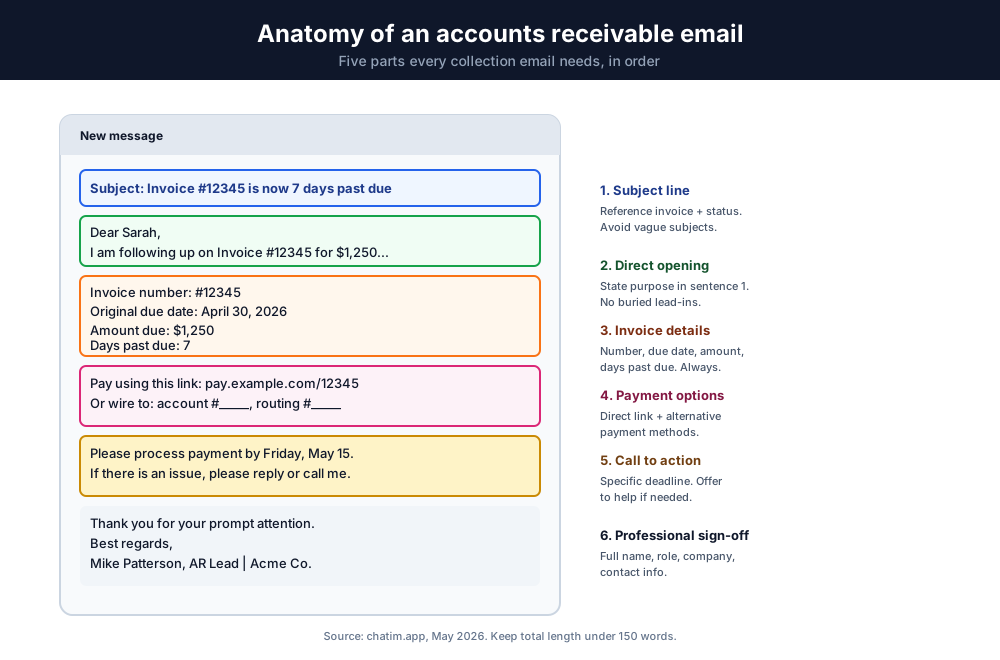
The 8 templates above will cover most situations, but every payment reminder email is more effective when it follows these six core principles.
Be polite and direct from the first sentence
The strongest payment reminder emails open with a clear statement of why you are writing: "I am following up on Invoice #[12345], which was due on [Date]." Buried lead-ins ("I hope this email finds you well, I wanted to check in...") delay the ask and confuse the reader. Be warm, but get to the point in sentence one.
Include all the invoice details, every time
Every payment reminder should include the invoice number, original due date, and amount due. Customers receive dozens of vendor emails per week; if they have to look up which invoice you mean, the email gets buried. Repetition of the same details across the email sequence also creates a clean paper trail for the account record.
Offer easy payment options in every email
Embed a direct payment link in every email. If you do not have a payment portal, list the bank wire details, ACH account info, or accepted credit cards explicitly. The easier it is for the customer to pay, the faster they pay.
Keep tone consistent and supportive across the sequence
The friendly cadence above stays helpful and supportive throughout. Avoid sharp tone jumps within the first 14 days, when most overdue accounts are simply oversights or process delays on the customer side. Save formal escalation for cases that genuinely require finance-team or legal-counsel involvement, and handle those off-template with proper review.
Follow up promptly and consistently
If you do not receive a response to one reminder email, send the next email in the sequence on schedule. Inconsistent follow-up trains customers that your AR process is fragile and easy to ignore. Consistent follow-up trains them that paying you on time is the path of least resistance.
Keep the tone customer-focused, not punitive
Frame every reminder as "let us make this easy together" rather than "you have failed to pay." Customer-focused language preserves the relationship for future business and reduces the risk of dispute or churn.
The payment reminder tone spectrum
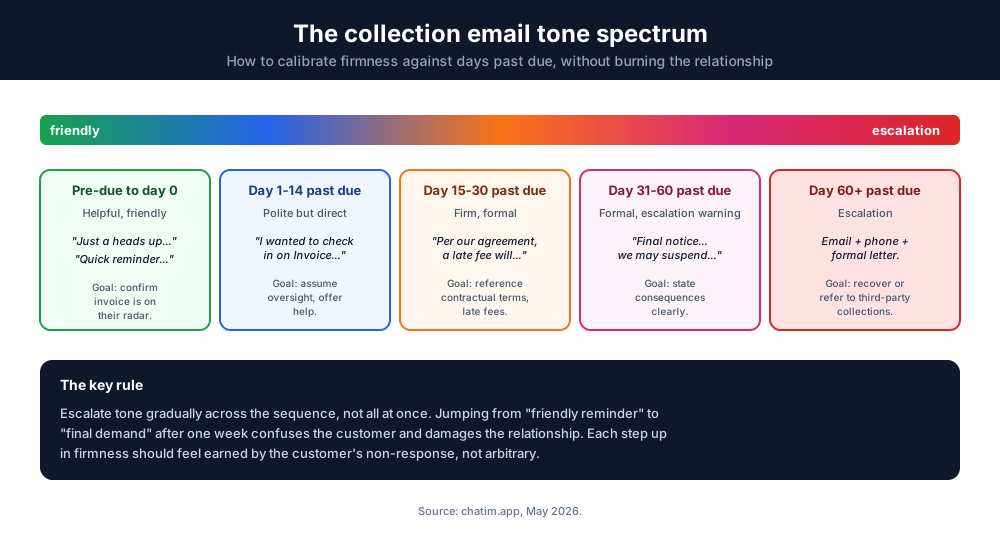
The single hardest part of writing payment reminder emails is calibrating tone. Too soft and customers ignore the email; too aggressive and you burn the relationship. The friendly framework below maps the right tone to each stage of the first 14 days past due.
Pre-due (3-7 days before): Helpful and friendly. "Just a heads up..." Goal: confirm the invoice is on their radar.
Day of due date: Friendly and neutral. "Quick reminder..." Goal: nudge without pressure.
3-7 days past due: Polite and helpful. "I wanted to check in on..." Goal: assume oversight, offer help, share the payment link.
10-14 days past due: Supportive. "I have not heard back, wanted to make sure everything is alright..." Goal: open the door for a payment plan or a conversation about anything blocking payment.
Beyond 14 days, the account is no longer in the "friendly reminder" zone. At that point, loop in your finance lead and account owner, talk to the customer by phone, and handle the conversation off-template with input from qualified counsel where appropriate.
Tools and software for AR automation
The payment reminder email templates above are designed to be sent manually or scheduled through a basic email client. As your team scales past 50-100 invoices per month, AR automation tools eliminate the manual sending and tracking work.
QuickBooks Online and Xero include built-in reminder scheduling tied to invoice due dates, suitable for SMB use. Sage Intacct and NetSuite add multi-currency reminder sequences for mid-market and enterprise. Dedicated AR automation platforms like Versapay, BlueSnap AR Automation, Tesorio, and Upflow ship the full friendly reminder cadence with payment portals and CRM integration. For most teams under 1,000 invoices per month, building the sequence into QuickBooks or Xero is enough.
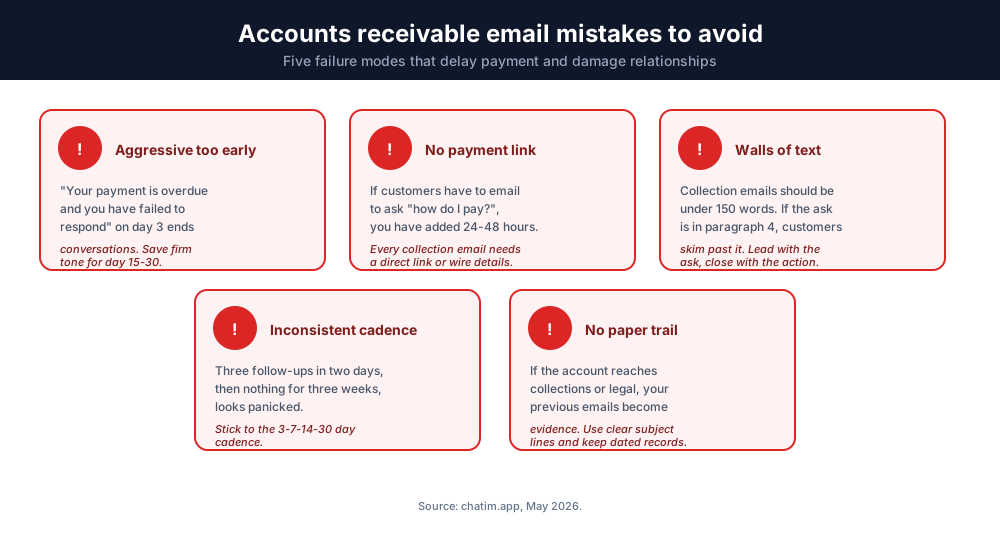
Payment reminder email mistakes to avoid
The wrong reminder email can damage the relationship and delay payment. The five most common mistakes:
Mistake 1: Opening with aggressive language too early
Sharp language on day 3 past due ends conversations. The first 14 days should stay friendly and supportive; anything firmer belongs in a finance-led conversation off-template.
Mistake 2: No payment link or unclear payment options
If the customer has to email back to ask "how do I pay?", you have added a 24-48 hour delay. Every reminder email needs a direct payment link or wire instructions.
Mistake 3: Walls of text and buried asks
Payment reminder emails should be under 150 words. If the ask is in paragraph 4, customers skim past it. Lead with the ask, support with the details, close with the action.
Mistake 4: Inconsistent send cadence
Sending three follow-ups in two days, then nothing for three weeks, looks panicked and unprofessional. Stick to the 3-7-14 day cadence.
Mistake 5: No clear paper trail
Use a clear subject line that references the invoice number, copy yourself or your AR inbox on every send, and keep dated records of every touchpoint. A clean record is useful for internal handoffs and for the customer account history regardless of what comes next.
Payment reminder email templates FAQ
The picks above cover the friendly reminder templates and framework. The FAQ below answers the rest of the common questions on payment reminder emails, invoice follow-ups, and accounts receivable automation.
For more guidance on professional customer communication, see our guides on how to apologize professionally in email, customer service fundamentals, customer service slogans, email tracking software, Chrome extensions for Gmail, and our free invoice generator that pairs cleanly with this AR workflow.
Frequently Asked Questions
How do you write a payment reminder email?
A strong payment reminder email follows a five-part structure: (1) a clear subject line referencing the invoice number, (2) a direct opening that states the purpose in sentence one, (3) the invoice details (number, original due date, amount), (4) an easy payment option (direct payment link or wire instructions), and (5) a clear call to action with a specific date. Keep the email under 150 words. Match the tone to the stage of the friendly reminder cadence: helpful for pre-due reminders, polite for first follow-ups, supportive for the 10-14 day check-in.
What is a payment reminder email template?
A payment reminder email template is a reusable email format with placeholder variables (customer name, invoice number, amount, due date) that finance and operations teams use to communicate with customers about outstanding invoices. Templates speed up the reminder process, ensure tone consistency, and create a clean paper trail in the account record. The 8 payment reminder email templates in this guide cover the friendly reminder cadence from pre-due reminder through the 10-14 day check-in, plus variants for payment plans, account statements, Net-30 reminders, and a thank-you-for-paying confirmation.
How do you write a payment reminder politely?
Polite payment reminder emails open with a warm but direct first sentence ("I am following up on Invoice #12345, which was due on [date]"), include all invoice details, offer easy payment options, and close with a clear next step. The tone should stay consistent and supportive across the first 14 days rather than jumping to firm language. Assume oversight, not bad intent. Customer-focused phrasing ("let me know if there is an issue with the invoice") protects the relationship and tends to get better response rates than punitive phrasing.
How do you politely ask for a payment?
Three rules for polite payment requests: (1) lead with the ask, do not bury it after pleasantries. "I wanted to check in on Invoice #12345" is better than "I hope you are well. I noticed..." (2) Include the invoice details so the customer can act immediately, do not make them look anything up. (3) Offer to help: "Let me know if there is an issue with the invoice or if you need a payment plan." This signals that you are a partner working with them, not pressing them, and tends to lift response rates on the first follow-up.
What should I include in a payment reminder email?
Every payment reminder email should include: (1) the invoice number, (2) the original invoice date, (3) the original due date, (4) the amount owed, (5) a direct payment link or wire instructions, (6) your contact info for questions, and (7) a clear next-step suggestion. Keep the email under 150 words. Avoid technical jargon and corporate stiffness. The friendly reminder tone stays consistent across the first 14 days past due; anything firmer is best handled by your finance lead and account owner off-template, with input from qualified counsel where appropriate.
How many follow-up emails should I send for an overdue invoice?
The recommended friendly reminder cadence in this guide has 4-5 follow-up emails over the first 14 days: pre-due reminder (3-7 days before), due-date notification (day of), gentle first follow-up (3-7 days past), and a friendly check-in (10-14 days past). A payment plan offer can be sent at any stage if the customer asks. After 14 days, if the account is still unpaid, loop in your finance lead and the account owner and have a direct conversation by phone or video rather than continuing with templated reminder emails.
How long should I wait before sending a payment reminder email?
Send the first reminder 3-7 days BEFORE the due date (pre-due friendly reminder). Send a due-date notification on the day the invoice is due. The first follow-up after the due date should land 3-7 days past due, and a friendly check-in 10-14 days past due. Waiting longer than 7-10 days between follow-ups in the friendly cadence signals that the invoice is low priority for your team and tends to slow customer response. After the 14-day check-in, handle the conversation off-template.
What is a friendly payment reminder email?
A friendly payment reminder is the first email in the cadence, typically sent 3-7 days before the invoice due date. The tone is warm and helpful, not pushy. The goal is to confirm the customer has the invoice, remind them of the upcoming due date, and make payment easy. A friendly payment reminder template should include the invoice number, due date, amount, payment link, and a one-line offer to help if there is a question. Friendly reminders catch many customers who would otherwise pay late and meaningfully improve days-sales-outstanding.
How do you write a follow-up email for an unpaid invoice?
A follow-up email for an unpaid invoice should clearly state the invoice number and the original due date in the subject line and the opening sentence. Acknowledge that the customer may have missed it or that there may be an issue with the invoice ("I wanted to check in and make sure the invoice did not get lost in the shuffle"). Provide a direct payment link or alternative payment instructions, and an open offer to discuss a payment plan or any blocker. Keep the tone helpful and supportive across the first 14 days; firmer conversations belong off-template and involve your finance lead.
What is a payment chaser email?
A payment chaser email is another name for a payment reminder or invoice follow-up email, commonly used in UK and Commonwealth English. The format is the same as a US-style payment reminder: clear subject line referencing the invoice number, direct opening, invoice details, payment options, and a clear next step. For UK B2B invoices, your finance lead can advise on whether the Late Payment of Commercial Debts (Interest) Act applies and what statutory interest or recovery costs are appropriate to reference.
Should I automate accounts receivable emails?
Yes, for teams sending more than 50-100 invoices per month, AR automation is one of the highest-ROI process improvements available. Tools like QuickBooks Online, Xero, Sage Intacct, NetSuite, Versapay, BlueSnap, Tesorio, and Upflow ship pre-built reminder sequences with payment portals and CRM integration. Automation reduces days-sales-outstanding (DSO) measurably within 90 days for most teams. For teams under 50 invoices per month, manually sending the 8 templates in this guide on a calendar reminder schedule is sufficient and avoids the platform fees.
What is the best subject line for a payment reminder email?
The best subject lines for payment reminder emails are clear and specific. Strong examples: "Friendly reminder: Invoice #12345 due on [date]" for pre-due reminders, "Invoice #12345 is due today" for due-date notifications, "Following up on Invoice #12345" for the gentle first follow-up, and "Checking in on Invoice #12345" for the 10-14 day check-in. Avoid vague subjects ("Quick question", "Following up" without context) because they get skipped. Avoid all-caps or urgent-flag language ("URGENT!!!") because it gets filtered as spam and damages the customer relationship.
What tone should I use for a payment reminder email?
For the friendly reminder cadence, the tone should stay consistent and supportive across the first 14 days past due. Pre-due reminders are warm and helpful. Due-date notifications are neutral and brief. The 3-7 day follow-up is polite and helpful. The 10-14 day check-in is supportive and opens the door for a conversation about anything blocking payment. Sharp tone jumps within this window tend to end conversations and damage the customer relationship; gradual escalation is more effective for the small share of accounts that genuinely need it.
Can I include a late fee in a payment reminder email?
Late fees and interest charges are governed by the original contract or terms of service the customer agreed to, and by local law in many jurisdictions. Before referencing a late fee in a reminder email, confirm that the late-fee terms are in your signed contract or invoice terms, that the amount complies with applicable laws in your customer's jurisdiction, and that you have your finance lead's sign-off on the wording. The friendly reminder templates in this guide stay focused on the original invoice amount; late-fee or interest references are best handled off-template with proper review.