Sorry for the Inconvenience: Phrases & Templates (2026)
"Sorry for the inconvenience" along with its variants like "apologies for any inconveniences" and "we sincerely apologize for the inconvenience caused" is one of the most-used phrases in customer service, support emails, and HR communication. This 2026 guide covers what the phrase actually means and how to spell "inconvenience" correctly. It also walks through every common variant (and when each one fits), genuine alternatives for when "sorry for the inconvenience" is feeling overworked, and 5 email templates you can copy. Looking for a complete letter to copy instead of a phrase to drop in? See our apology letter to customer guide.
What does "sorry for the inconvenience" mean?
The phrase "sorry for the inconvenience" is the standard expression of regret when something has caused another person discomfort, trouble, or a disruption. Whether it's a delay, a misunderstanding, a billing error, or a technical issue, the phrase acknowledges the impact on the other person and signals that you take responsibility for it. The meaning of "sorry for the inconvenience" comes down to one thing: I see that this caused you trouble, and I'm taking responsibility. (When customers ask about the sorry for the inconvenience meaning, this is the short version.)
It works because it's empathetic and concise. The downside: it can sound generic if you stop there. The most effective uses pair the phrase with the specific issue ("Sorry for the inconvenience caused by the delay in shipping your order #1234"), which makes the apology feel personal instead of canned and shows the customer you understand their experience.
You will see the phrase written several ways: "apologies for the inconvenience caused", "my apologies for any inconvenience", "we sincerely apologize for the inconvenience caused", or simply "sorry for inconvenience". They all express the same regret; the tone shifts depending on whether you want formal vs. casual, and "I" vs. "we".
How to spell "inconvenience"
If you're wondering how to spell inconvenience, the correct spelling is inconvenience: i-n-c-o-n-v-e-n-i-e-n-c-e. Common typos include "inconv", "inconvienence", and "inconvinience". British and American English both use the same spelling for the noun. The verb form ("apologise") changes between them: apologise with an "s" is British / Australian, apologize with a "z" is American.
Useful inconvenience synonyms when you want to vary your wording: disruption, hassle, trouble, disturbance, hiccup, annoyance, setback. Each carries a slightly different weight: "trouble" feels personal, "disruption" feels operational, "hiccup" feels casual.
Phrase cheat sheet: which apology phrase fits which situation
Most uses of "sorry for the inconvenience" fall into one of ten variants. Here's when each one fits, plus the right plural and possessive forms so you don't end up writing "apologies for any inconvenience caused" when "we apologize for the inconvenience" was the right call.
| Situation | Phrase to use | When it fits |
|---|---|---|
| Standard service hiccup | We apologize for the inconvenience | The default. Use it for one-off delays, glitches, or minor disruptions in delivery or service. |
| Personal note from you | My apology for the inconvenience / My apology for any inconvenience / My apologies for any inconvenience / My apologies for the inconvenience / My apology for inconvenience | When you personally are responsible, not the company at large. |
| Direct first-person | I apologize for the inconvenience / I apologize for any inconvenience / I am sorry for the inconvenience / I am sorry for any inconvenience caused | Manager, owner, or account rep writing in their own voice. |
| Specific event already happened | Apology for the inconvenience caused / Apology for any inconvenience caused / Apologize for the inconvenience / Apologize for any inconvenience caused / Apology for any inconvenience | When you're acknowledging the impact of something specific that's done. |
| Multiple issues at once | Apologies for any inconveniences / Apologies for any inconveniences caused / Sorry for any inconveniences caused / Apologies for the inconveniences | Plural: when there is more than one disruption to acknowledge. |
| Future or ongoing impact | We apologize for any inconvenience this may cause / Sorry for any inconvenience this may cause / Sorry for the inconvenience this may cause / I apologize for any inconvenience this may have caused | Scheduled maintenance, planned downtime, service outages, or pricing changes. |
| British / Australian audience | We apologise for any inconvenience / I apologise for any inconvenience / Apologise for any inconvenience / Apologise for the inconvenience caused | Same meaning, "apologise" with an "s" for UK/AU readers. |
| Casual short note | Sorry for any inconvenience / Sorry for inconvenience / Sorry for the inconvenience caused / Sorry for inconvenience caused / Sorry for any inconvenience caused / Sorry for the inconvenience cause / Sorry for causing inconvenience | A friendlier, less formal tone for retail or DTC brands. |
| Personal "your" framing | Sorry for your inconvenience / Sorry for your inconvenient / Sorry for the inconvenient / Sorry for this inconvenience / Sorry for all inconvenience | When you want to centre the customer's experience in particular. |
| Casual "oops" moment | Oops, sorry about that / Sorry, oops on our end / A quick oops from us | A friendly, low-stakes acknowledgment for tiny errors like a typo or a stray notification. |
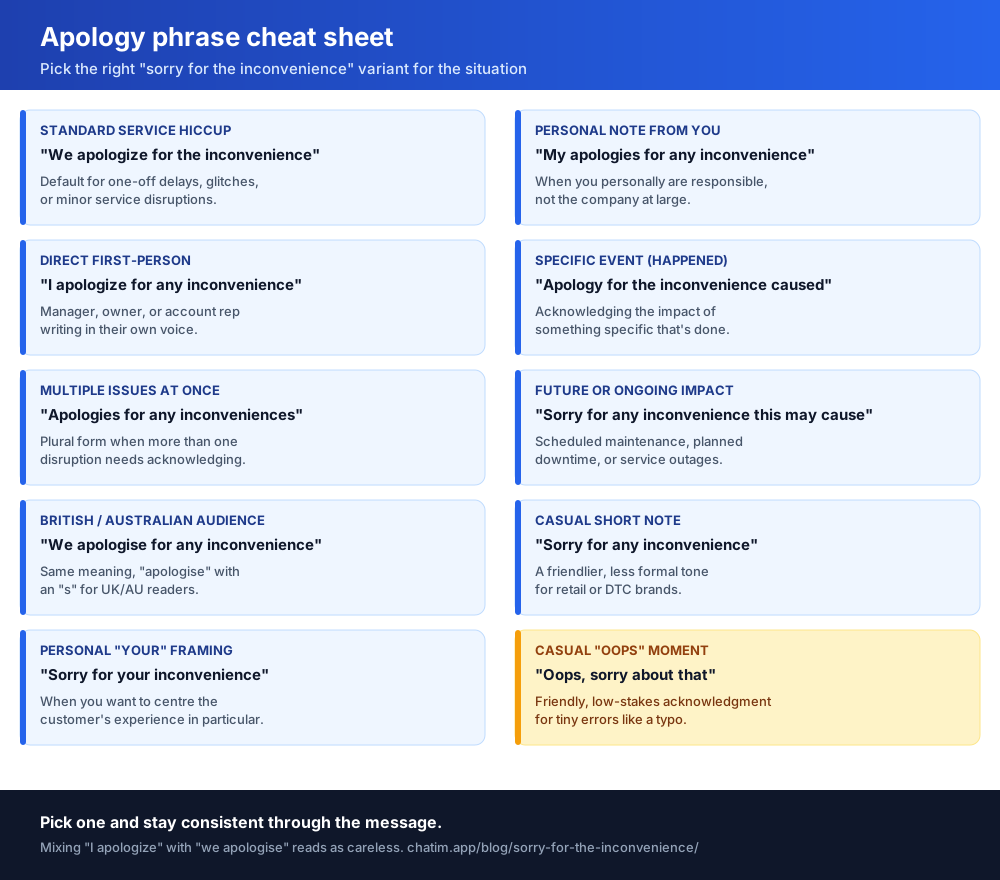
Pick one and stay consistent through the rest of the message. Mixing "I apologize" in line one and "we apologise" in line three reads as careless, which is exactly the impression an apology is supposed to undo.
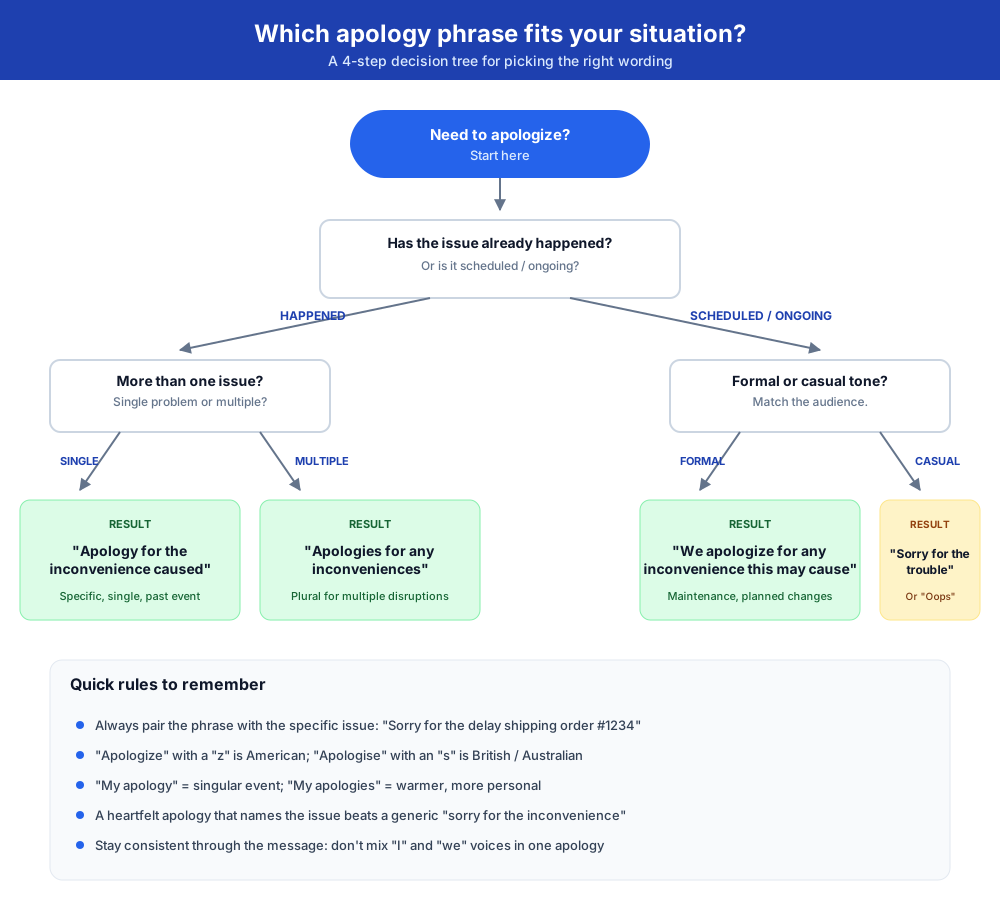
Common causes that prompt an apology for inconvenience
In both personal and professional situations, inconveniences happen for many reasons. Some are inside your control; others aren't. Here are the most common situations where you'll need to apologize:
- Service disruptions. Technical issues, system outages, or unforeseen complications can all lead to delays or service unavailability.
- Product issues. Defective products being shipped, backorders, or unfulfilled orders are common reasons for an apology to a customer. A damaged package or missing item also lands here.
- Miscommunications. Misunderstandings, unclear instructions, or misinterpretation of information can cause confusion. "I apologize for the confusion" or "Sorry for confusion" both work here.
- Billing errors. A mistake in transactions, overcharges, or incorrect invoicing creates real frustration.
- Schedule changes. Unexpected changes in appointments or meeting times can disrupt plans for everyone involved.
In all of these situations, the right wording de-escalates frustration. Phrases like "we sincerely apologize for the inconvenience caused" or "sorry for any inconvenience this may cause" show you're taking responsibility, while specific references to what went wrong make the apology feel real instead of formulaic.
Why a sincere apology beats a generic one
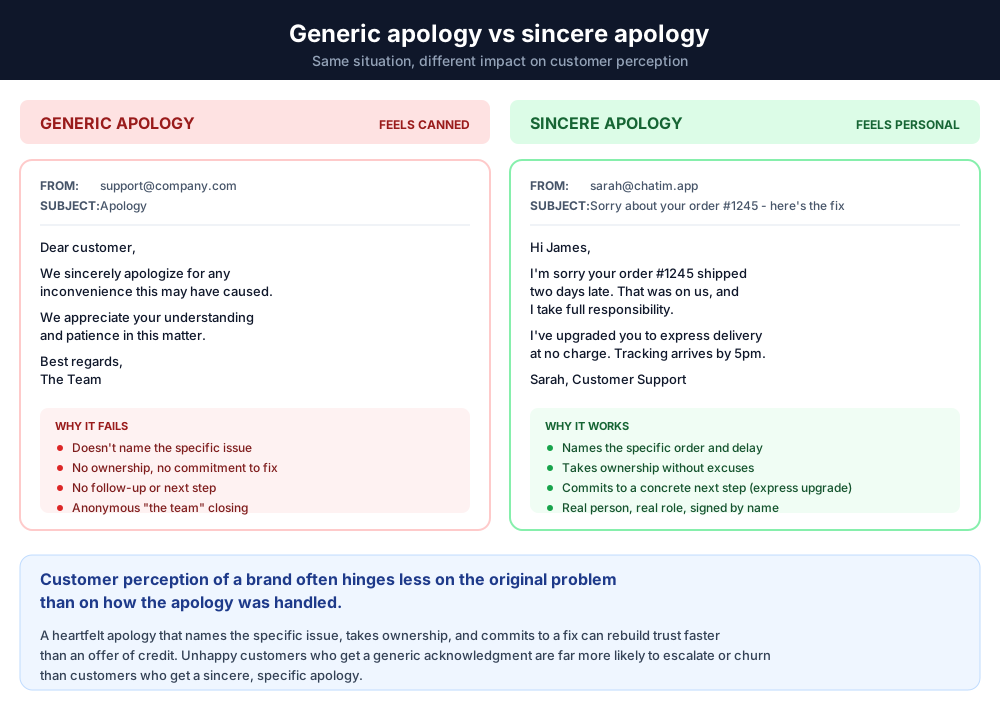
A generic apology and a heartfelt apology read very differently to the reader. The first feels like a form letter; the second feels like someone actually saw what happened and cared enough to address it specifically. Customer perception of a brand often hinges less on the original issue than on how the apology was handled.
A good apology has three things working in its favor: it names the specific issue, it takes ownership without hedging, and it commits to a next step. A generic apology, by contrast, leaves the customer with a bad experience because the apology itself feels canned. "We apologize for any inconvenience this may have caused" with no further context can read as worse than no message at all.
The negative impact of a poor apology compounds quickly. Unhappy customers who receive a generic acknowledgment are more likely to escalate or churn than customers who receive a heartfelt apology that addresses their specific situation. Trust, once dented, takes deliberate work to rebuild, and a sincere apologies-first message is the cheapest form of that work.
A few practical markers of a sincere apology vs a generic one:
- Names the specific issue, not "the inconvenience". "The delay shipping order #1245" beats "any inconvenience" every time.
- Takes ownership without excuses. "Our team made a mistake" beats "the system flagged it". No excuses, no blame-shifting.
- Commits to a next step. A refund, a replacement, an updated timeline, or a personal follow-up shows the solution is already in motion.
- Matches the urgency. A billing error gets a same-day reply; a small delivery hiccup can wait until end-of-day.
- Closes the loop. A follow-up message after the fix lands tells the customer their concerns mattered and demonstrates continued care.
Empathy is the thread running through all of these. When customer concerns are met with genuine understanding rather than a templated reply, the original problem often becomes a moment that strengthens the relationship rather than damaging it. A real genuine apology can rebuild trust faster than an offer of credit, because it shows the brand is paying attention to the customer experience, not just to the transaction.
Alternatives to "sorry for the inconvenience"
"Sorry for the inconvenience" is polite and widely accepted, but it can feel overused or generic. More creative alternative phrases often make an apology feel more sincere, more specific, and more personal.
Here are empathetic alternatives to "sorry for the inconvenience" you can use depending on the situation:
- "I apologize for any inconvenience this may have caused." A more formal and professional alternative.
- "Thank you for your understanding." Shifts focus to gratitude rather than yet another apology.
- "We appreciate your patience while we resolve this." Acknowledges the other person's time and patience, moving the focus from the mistake to the action.
- "I regret any confusion this has caused." Specific to miscommunication or misunderstanding.
- "We're working on resolving this issue as quickly as possible." Instead of apologizing again, this signals that something is being done.
- "We are sorry for the inconvenience and are looking into it now." A two-part version that combines apology with action.
- "Please accept my apologies." A formal alternative; "Accept my apologies" or "Please accept my apologies for the inconvenience" both work in business email.
- "I sincerely apologize." Direct and personal; another way to say sincerely is "with regret" or "with full responsibility".
- "Sorry for the trouble." Casual variant for retail, DTC, or peer-to-peer messages.
- "I want to make amends for this." Goes beyond saying sorry by signalling restitution.
When crafting your apology, match the tone to the context. "Please accept my apologies for the inconvenience" sounds more formal; "sorry for the confusion" reads as more casual and friendly. The wrong tone (too formal in a casual context, or vice versa) undermines the apology more than the original mistake did. These alternative ways of acknowledging the issue keep your customer communication fresh and avoid the same canned line in every reply.
How customer service teams handle apologies at scale
For a small team, every apology can be hand-written. For a customer service team handling hundreds of customer service interactions a day, that doesn't scale, but generic templates feel hollow. The middle ground most growing support organizations land on is templates with mandatory personalization fields.
A typical customer support workflow looks like this:
- Tier 1. A customer service team member uses a saved template, but is required to fill in the order number, the specific issue, and the resolution before sending. The customer experience stays personal even when the language is structured.
- Tier 2. When the issue is urgent (a service outage, a delivery problem, a defective package), the support team escalates to a senior agent who writes a fully custom message. Urgency dictates how the message is escalated.
- Tier 3. A manager personally follows up after the resolution to confirm continued support and that the customer is back on track.
This way, scale doesn't have to mean genericness. Every customer gets a response that addresses their specific problems while the team can still handle volume.
A few patterns that high-performing customer support teams share:
- Pre-built apology phrases for common situations. A delivery delay template, a billing error template, a service outage template, each with mandatory personalization fields that prevent the message from feeling generic.
- Clear escalation rules. A customer service team that knows when to escalate avoids the "another way to say sorry" trap, where multiple repetitive apologies replace one substantive resolution.
- A single owner per case. Continued support from one person beats hand-offs that force the customer to re-explain their concerns.
- Post-resolution follow-up. A brief "is everything working now?" message turns a moment of frustration into demonstrated care, and often improves customer satisfaction more than an apology alone.
- Internal feedback loops. Every formal apology gets logged so the team can spot service outages, repeated package problems, or process gaps.
The seriousness with which a team treats this workflow shows up in customer satisfaction scores within weeks. Teams that systemize the apology, without removing the human review step, typically see customer satisfaction recover faster than teams that either skip the apology or send purely templated ones.
The best apology is the one you don't have to send.
Add Chatim live chat to your website and resolve customer issues in real time, before they turn into apology emails.
How to apologize without saying sorry
If you've already apologized once or twice in a single conversation, repeating "sorry" starts to feel hollow. Knowing how to apologize without saying sorry is a small skill that reads as more confident and more action-oriented. Try these instead:
- "Thank you for your patience." Reframes the moment around the customer, not the mistake.
- "I appreciate you flagging this." Treats the customer as a partner in fixing the issue.
- "That should not have happened, and here's what we're doing about it." Acknowledges fault without using "sorry" directly.
- "I understand how this looks from your side." Empathy without apology, useful when you're not actually at fault but want to validate the experience.
- "You're absolutely right to call this out." A version of "I am sorry to hear that" that lands as more proactive.
Other words for sorry, when you genuinely want a synonym, include regretful, contrite, apologetic, remorseful. Another word for sincerely is genuinely, honestly, with full responsibility, in earnest. Pick the one that matches your voice.
Email templates: how to apologize for the inconvenience by email
Writing an apology email is tricky. You want to express regret, take responsibility, and offer a solution or next step without sounding canned. The 5 email templates below cover the most common situations. Copy any of them, swap in the bracketed details, and you have a complete apology email ready to send.
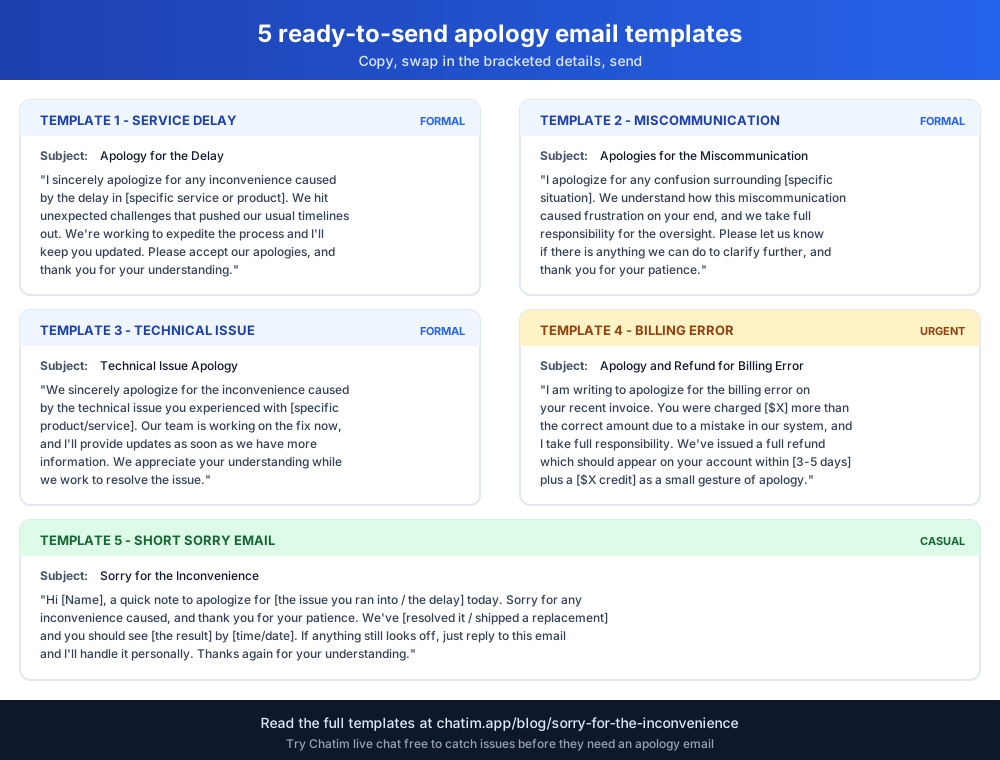
Template 1: Apology for service delay
Subject: Apology for the Delay
Dear [Recipient's Name],
I sincerely apologize for any inconvenience caused by the delay in [specific service or product]. We understand how important this is to you, and unfortunately we hit some unexpected challenges that pushed our usual timelines out.
We are doing everything we can to expedite the process, and I'll keep you updated as soon as I have more information. Please accept our apologies, and thank you for your understanding.
Best regards,
[Your Name]
Template 2: Apology for miscommunication
Subject: Apologies for the Miscommunication
Dear [Recipient's Name],
I apologize for any confusion surrounding [specific situation]. We understand how this miscommunication caused frustration on your end, and we take full responsibility for the oversight.
Please let us know if there is anything we can do to clarify further, and thank you for your patience as we work on improving our process.
Sincerely,
[Your Name]
Template 3: Apology for technical issues
Subject: Technical Issue Apology
Dear [Recipient's Name],
We sincerely apologize for the inconvenience caused by the technical issue you experienced with [specific product/service]. Our team is working on the fix now, and I'll provide updates as soon as we have more information.
We appreciate your understanding and patience while we work to resolve the issue. If you have further concerns, please reach out to me directly.
Kind regards,
[Your Name]
Template 4: Apology for a billing error
Subject: Apology and Refund for Billing Error
Dear [Recipient's Name],
I am writing to apologize for the billing error on your recent invoice from [Company Name]. You were charged [$X] more than the correct amount due to a mistake in our system, and I take full responsibility for the disruption this caused.
We have already issued a full refund for the overcharge, which should appear on your account within [3-5 business days]. As a small gesture of apology, I am also adding [a $X credit / a one-month subscription extension] to your account.
Thank you for catching this, and again, I'm sorry for the inconvenience.
Kind regards,
[Your Name]
Template 5: Short sorry email (quick template)
Subject: Sorry for the Inconvenience
Hi [Recipient's Name],
A quick note to apologize for [the issue you ran into / the delay / the mistake on our end] today. Sorry for any inconvenience caused, and thank you for your patience.
We've [resolved it / updated your account / shipped a replacement] and you should see [the result] by [time/date]. If anything still looks off, just reply to this email and I'll handle it personally.
Thanks again for your understanding.
[Your Name]
[Company Name]
Catch issues before they need an apology.
Chatim live chat sits on your site 24/7 so customers get answers in real time instead of writing complaint emails. Add Chatim free in under 2 minutes →
Apologizing for an inconvenience is a small but critical part of customer service, account management, and team communication. Whether you're saying "sorry for any inconvenience this may have caused", "please accept my apologies", or one of the alternatives above, sincerity and specificity are what make the apology land. Pair the right phrase with a clear acknowledgment of what went wrong and an action you're taking to fix it, and you'll turn a frustrated customer into a more loyal one.
Bookmark the cheat sheet above and keep the templates handy. Next time you're in a position where you need to apologize for the inconvenience, you'll have the right wording ready, in the right tone, for the right audience.
Frequently Asked Questions
What does "sorry for the inconvenience" mean?
"Sorry for the inconvenience" is a standard expression of regret used when something has caused another person trouble, discomfort, or a disruption: a service delay, a billing error, a miscommunication, or a defective product. The meaning of "sorry for the inconvenience" comes down to one thing: I see that this caused you trouble, and I'm taking responsibility. The phrase works best when paired with the specific issue, so it doesn't sound canned.
Should I write "sorry for the inconvenience" or "apologize for the inconvenience"?
Both are correct and widely used. "Sorry for the inconvenience" is slightly more casual and personal; "apologize for the inconvenience" (or "we apologize for the inconvenience") feels more formal and corporate. Customer service emails commonly use the apologize version; personal one-to-one notes often use the sorry version. Pick whichever matches your tone and stay consistent through the message.
What's the difference between "my apology" and "my apologies"?
Both are correct. "My apology" is singular and works when you're apologizing for one specific thing ("My apology for the inconvenience caused by yesterday's outage"). "My apologies" is the plural form and reads as a slightly warmer, more personal note ("My apologies for any inconvenience"). Pick one and stay consistent.
Is it "apologize" or "apologise" for the inconvenience?
Both spellings are correct, just different regional standards. "Apologize" with a "z" is American English. "Apologise" with an "s" is British and Australian English. The spelling of "inconvenience" itself is the same in both: i-n-c-o-n-v-e-n-i-e-n-c-e. Match the spelling to your audience: "we apologize for any inconvenience" for a US reader, "we apologise for any inconvenience" for a UK reader.
How do you apologize without saying sorry?
Try one of these alternatives. "Thank you for your patience" reframes the moment around the customer. "I appreciate you flagging this" treats them as a partner. "That should not have happened, and here's what we're doing about it" acknowledges fault without using the word sorry. "You're absolutely right to call this out" lands as proactive. "I understand how this looks from your side" works when you're not actually at fault but want to validate the experience.
What are alternatives to "sorry for the inconvenience"?
Common alternatives include "I apologize for any inconvenience this may have caused" for formal use, "Please accept my apologies" for formal business email, "Thank you for your understanding" when leading with gratitude, "We appreciate your patience while we resolve this" when leading with action, "I regret any confusion this has caused" for miscommunication, and "Sorry for the trouble" for casual use. Pick the one that matches your tone and the specific situation.
How do you spell "inconvenience"?
The correct spelling is i-n-c-o-n-v-e-n-i-e-n-c-e. Common typos include "inconvienence" and "inconvinience". British and American English use the same spelling for the noun. Synonyms you can use to vary your wording: disruption, hassle, trouble, disturbance, hiccup, annoyance, setback.
Why does a sincere apology beat a generic one?
A generic apology ("We apologize for any inconvenience this may have caused" with no specifics) feels canned and can leave a customer with a worse experience than no message at all. A sincere apology names the specific issue, takes ownership without excuses, commits to a clear next step, and matches the urgency of the situation. Customer perception of a brand often depends less on the original problem than on how the apology was handled, and a heartfelt apology can rebuild trust faster than a refund or credit alone.
How can a live chat tool reduce the need for apology emails?
Most apology-for-the-inconvenience emails come from issues that could have been resolved in real time: a confused checkout step, a sizing question, a missing tracking number. Adding live chat or a chatbot to your website catches these before they turn into complaint emails. Tools like Chatim handle the most common questions automatically and route complex ones to your team, which means fewer apology emails to write in the first place.